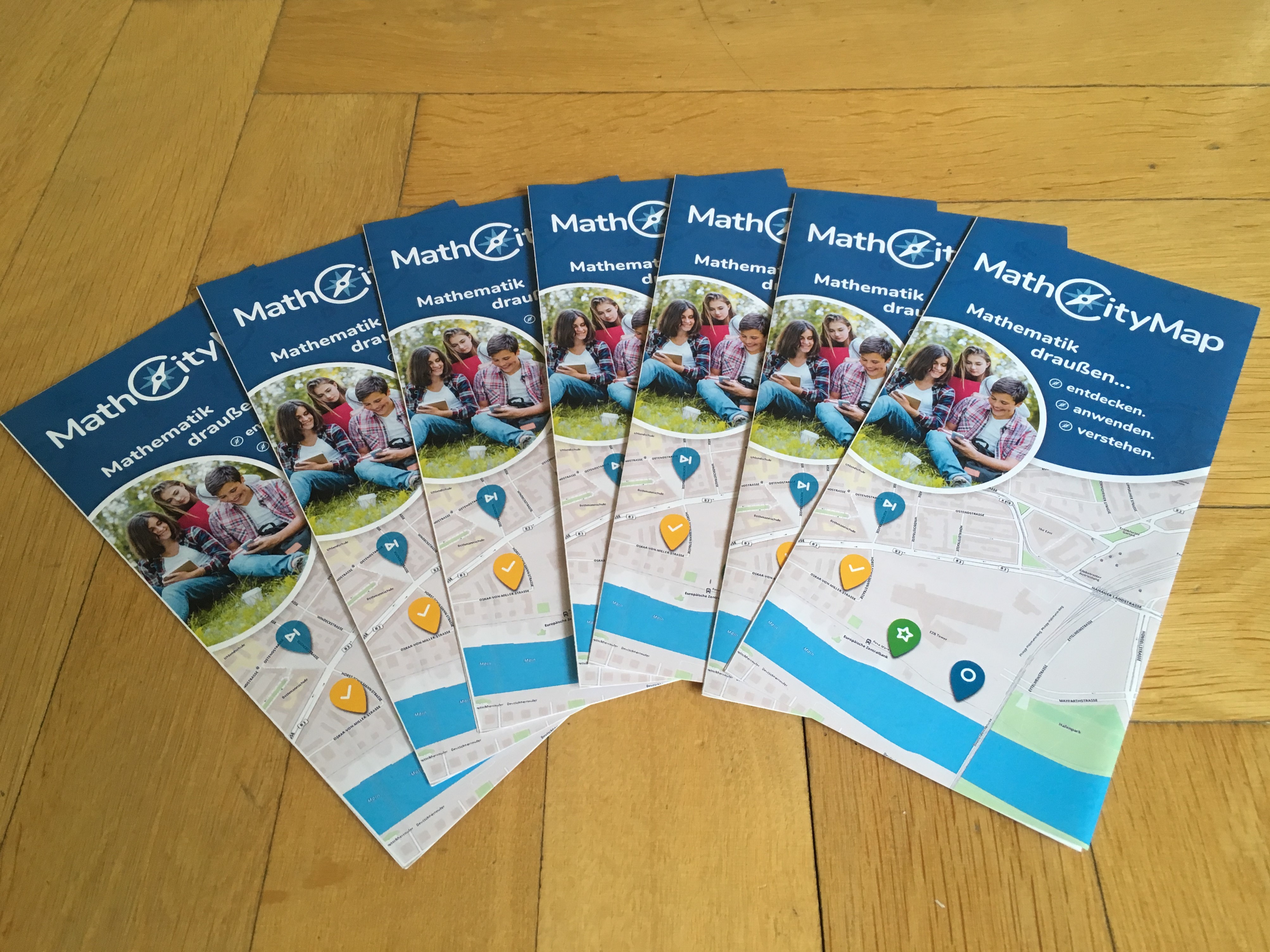
MATHE.ENDTECKER (Math Explorer) is a program funded by Stiftung Rechnen in cooperation with Goethe University. MathCityMap gives the technical, didactical and pedagogic basis for this special program.

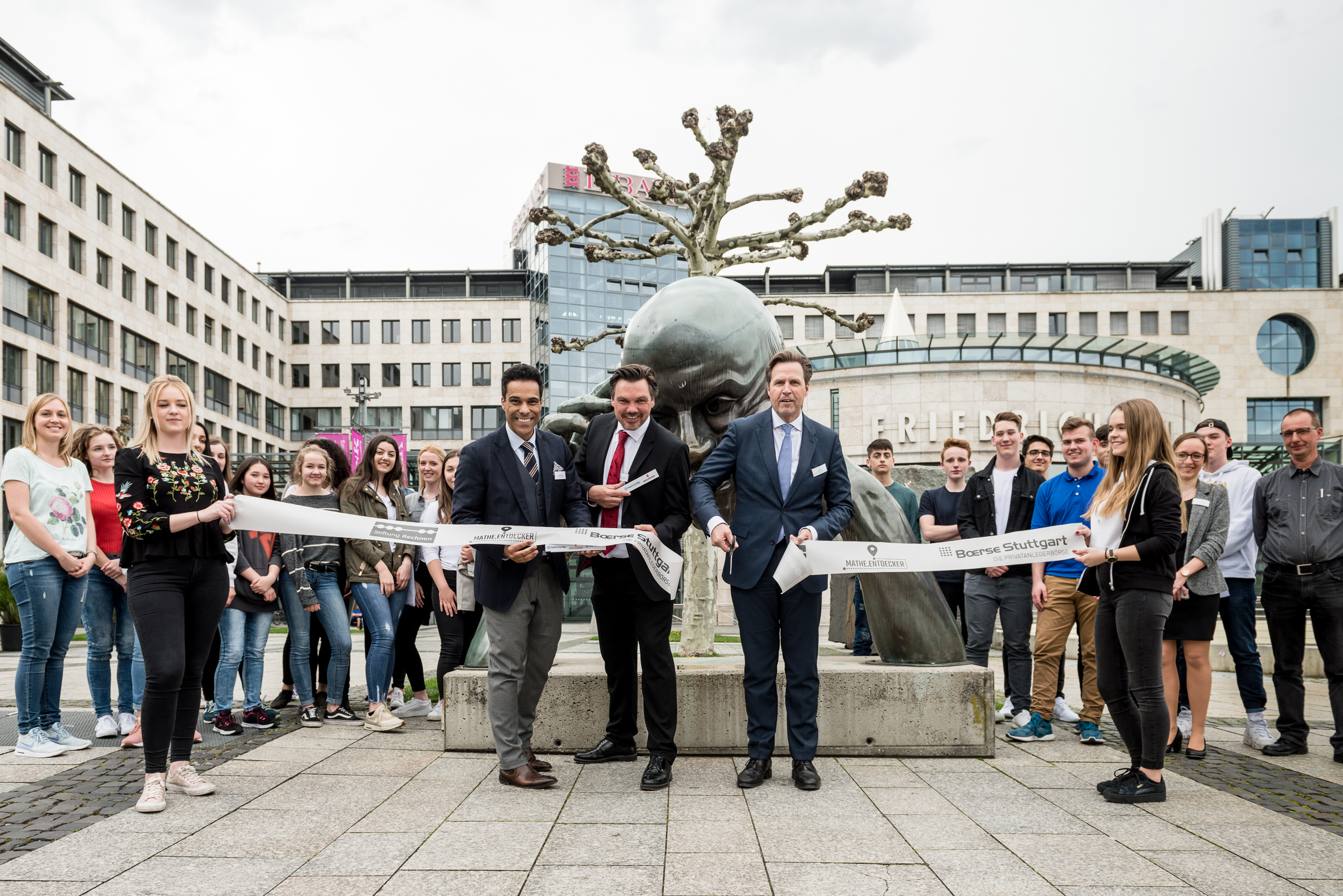
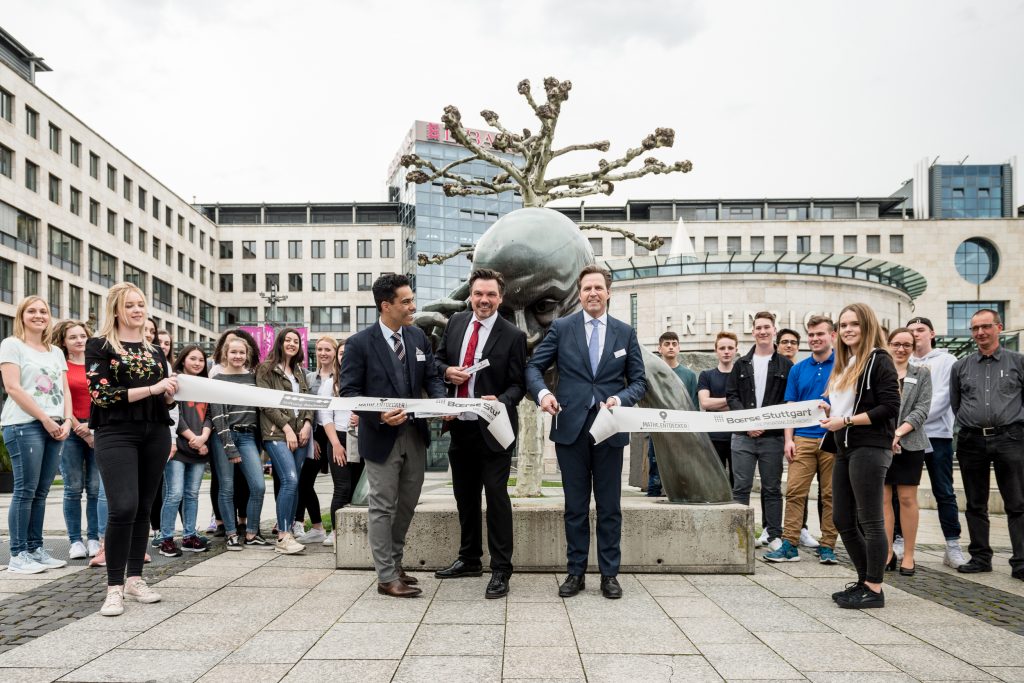
Through the opening of these trails at Stuttgart’s exchange through Patrick Dewayne (Ambassador of Stiftung Rechnen), Dr. Oliver Hans (head of Stuttgart’s exchange) and Prof. Dr. Matthias Ludwig (Goethe University, working group MATIS I), MCM reached a new level in terms of dissemination and cooperation with Stiftung Rechnen and further partners.

Dr. Oliver Hans, Prof. Dr. Matthias Ludwig, Patrick Dewayne,  (c) Philipp Tonn

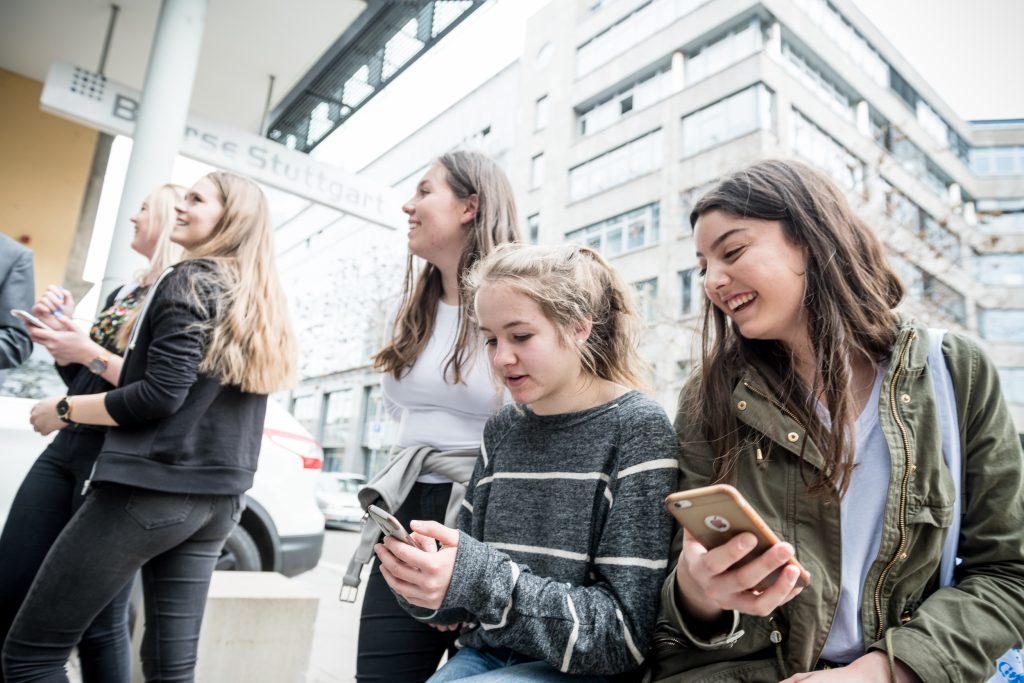
On Thursday, 12.04., students from 11. grade of a commericial high school in Schorndorf were able to test one of the four trails. The feedback was positive, especially the connection of being outside, acting independently, doing mathematics and using mobile devices was mentioned. It is planned to created further trails in Schorndorf with help of MathCityMap.

Students of Johann-Philipp-Palm school in Schorndorf

The MCM team from Frankfurt is looking forward for further tasks.

Ceremonial cutting off the tape in front of the sculpture “thinker” close to Stuttgart’s exchange. From left to right:Patrick Dewayne, Prof. Dr. Matthias Ludwig, Oliver Hans. Students of Johann-Philipp-Palm school Schorndorf.

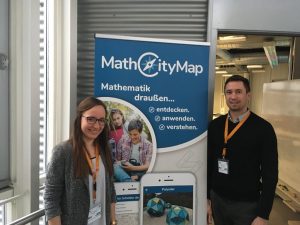
As part of the 109. MNU Bundeskongress, we were able to use and present MCM in the Bavarian capital city.

Iwan Gurjanow and Simone Jablonski presented the MathCityMap idea in a workshop, which asked the teachers to test and create MCM tasks. The trail around TU Munich-Garching can be found here.

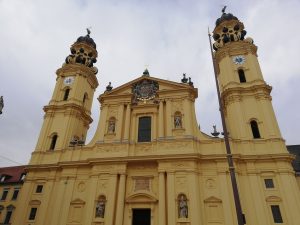
In Munich’s city center numerous tasks could be created as well. Through a wide range of historical buildings and interesting objects, we can create a trail that involves a variety of tasks. It will be available in our portal soon.

Special thanks to the organisators and the participants for their active cooperation and constructive talks. We are sure that the MCM team will come back to Munich!

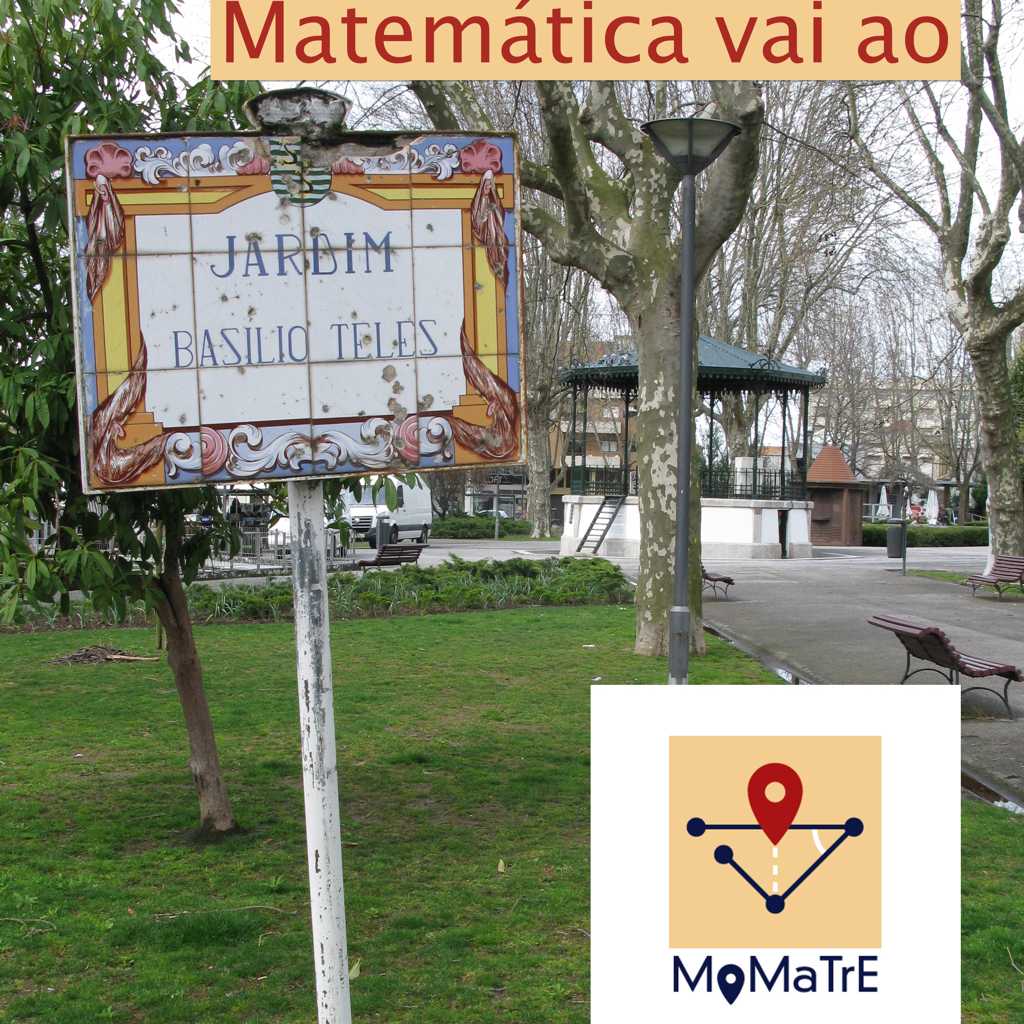
Through the cooperation project MoMaTrE (Mobile Math Trails in Europe – www.momatre.eu), MathCityMap could be presented on an international level in various ways.

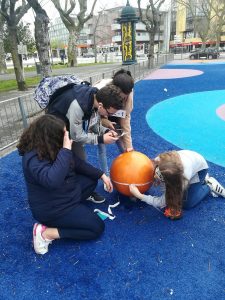
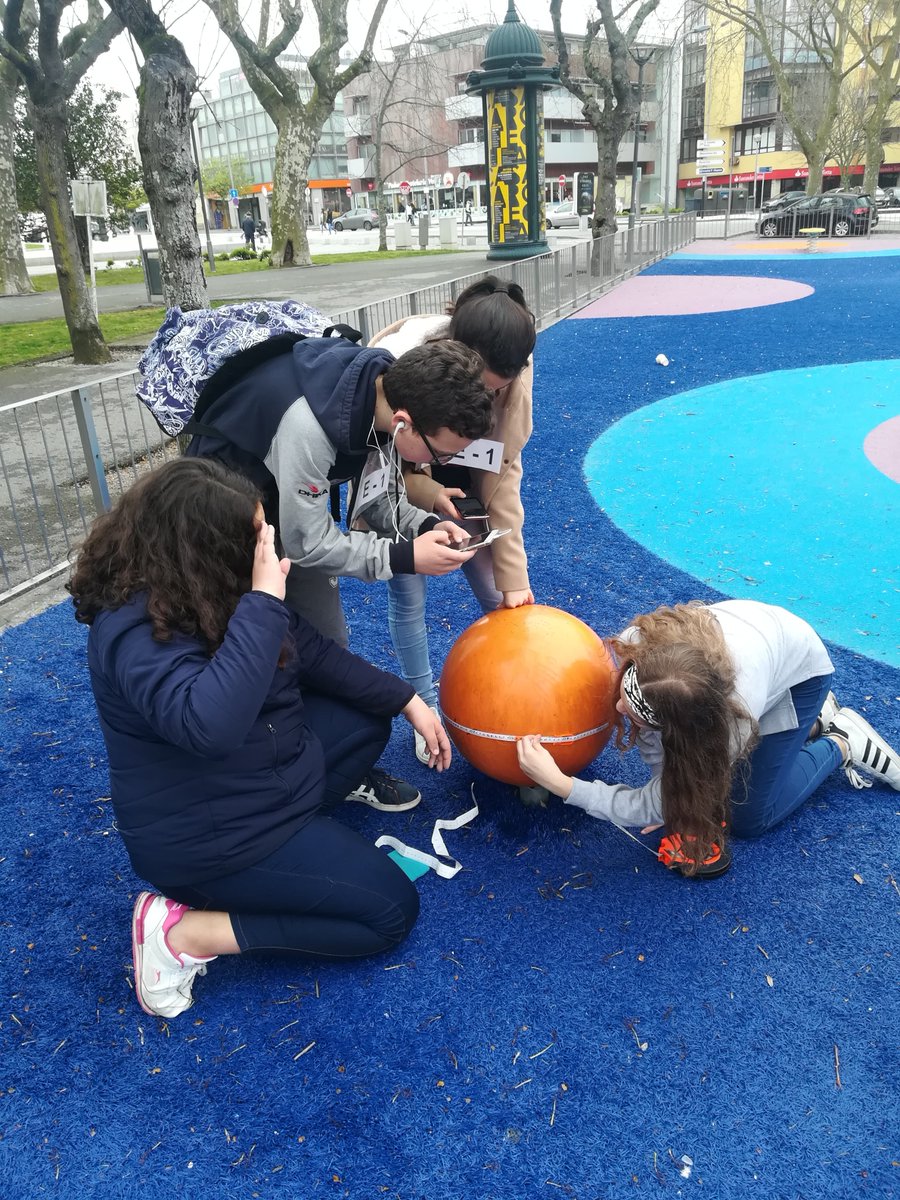
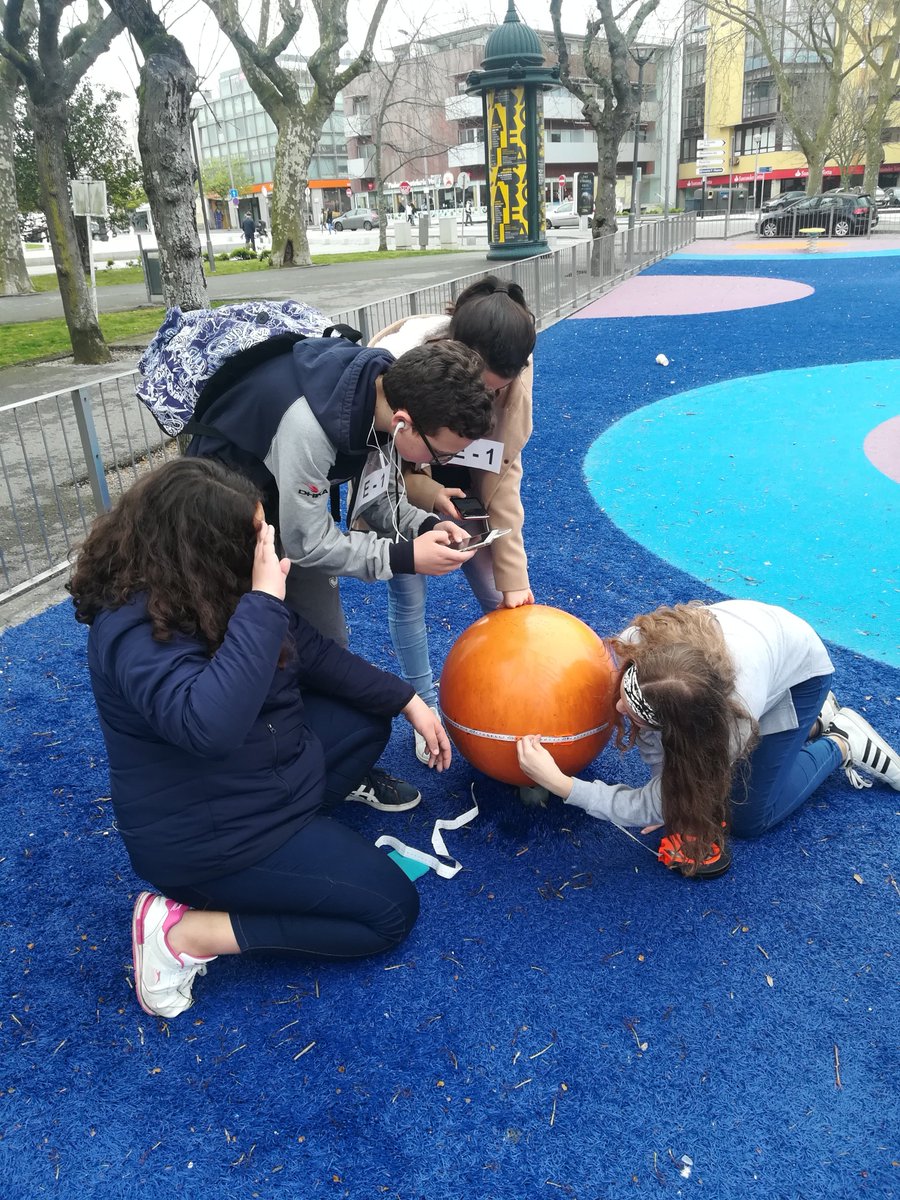
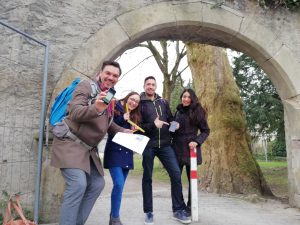
On 23.03., about 170 students at the age of 12-18 years took part in the activity “Mathematics goes to the Garden” which was organized by the MoMaTrE partners in Portugal and involved diverse MathCityMap tasks.

Special thanks to Amélia Caldeira for the photo, which shows a group while measuring. Further impressions can be found on our Twitter Account (@mathcitymap).

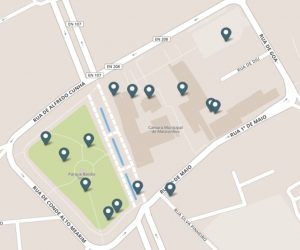
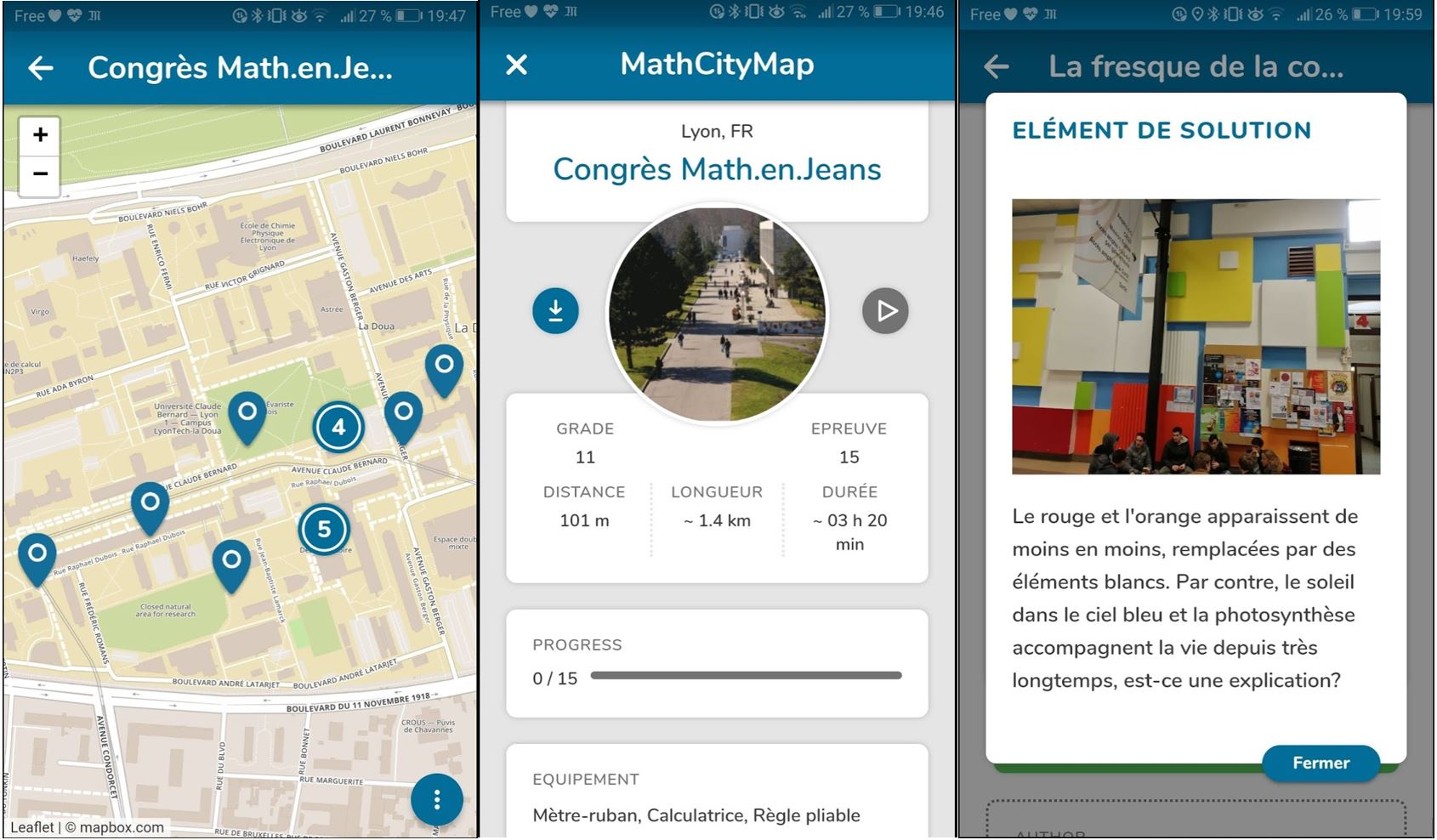
Also in Lyon, France, MathCityMap could be presented successfully at the beginning of the week as part of the congress Math en Jeans. Here a special thanks to Christian Mercat. The involved trail, which can be seen in the picture, can be found here.

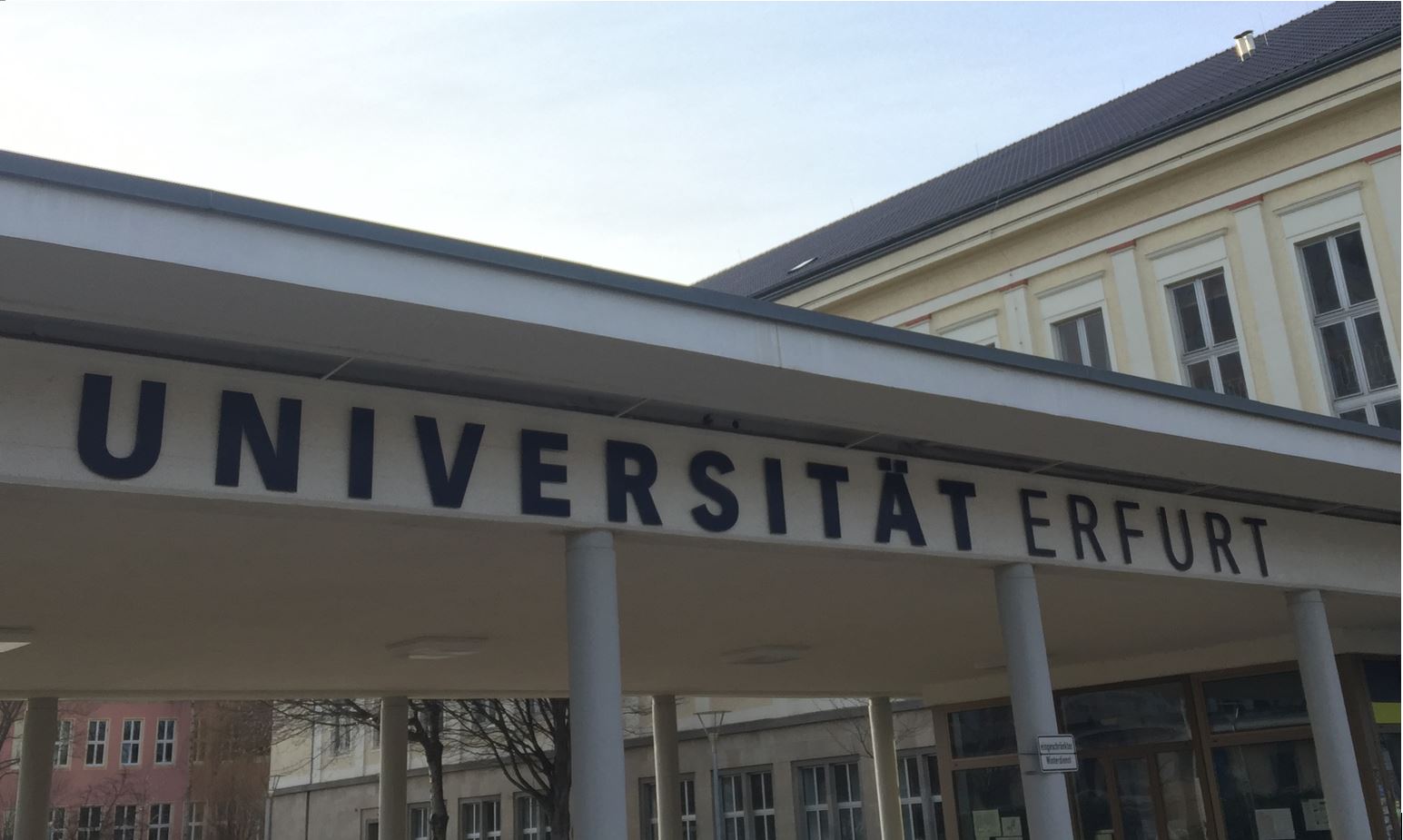
Doing outdoor mathmatics with MathCityMap works in any weather. Iwan Gurjanow and Matthias Ludwig visited the cathedral city Erfurt on Wednesday 21.03. and Thursday 22.03. On the 24th Days of the maths and science lessens of the ThiLLM, we were able to present MathCityMap. While the preparations on Wednesday took place in cold but sunny weather, there were some brave teachers who ignored the sleet and solved MCM tasks at the campus of the University of Erfurt and later created own MCM tasks in the portal. Of course, in such a beautiful city, we were also searching for tasks in the city center. The finished trail in Erfurt’s old town will be presented here in the next few days.

Friends of special dates and numbers might already have noted it in their calendar: Today is Pi Day. Based on the American spelling of today’s date (3/14) and the beginning of the number Pi with its first two decimals, the 14th March is perfect to celebrate Pi. Therefore, today everything at MCM revolves around the circle and we would like to celebrate this with the help of one of our various tasks on the topic of the circle.


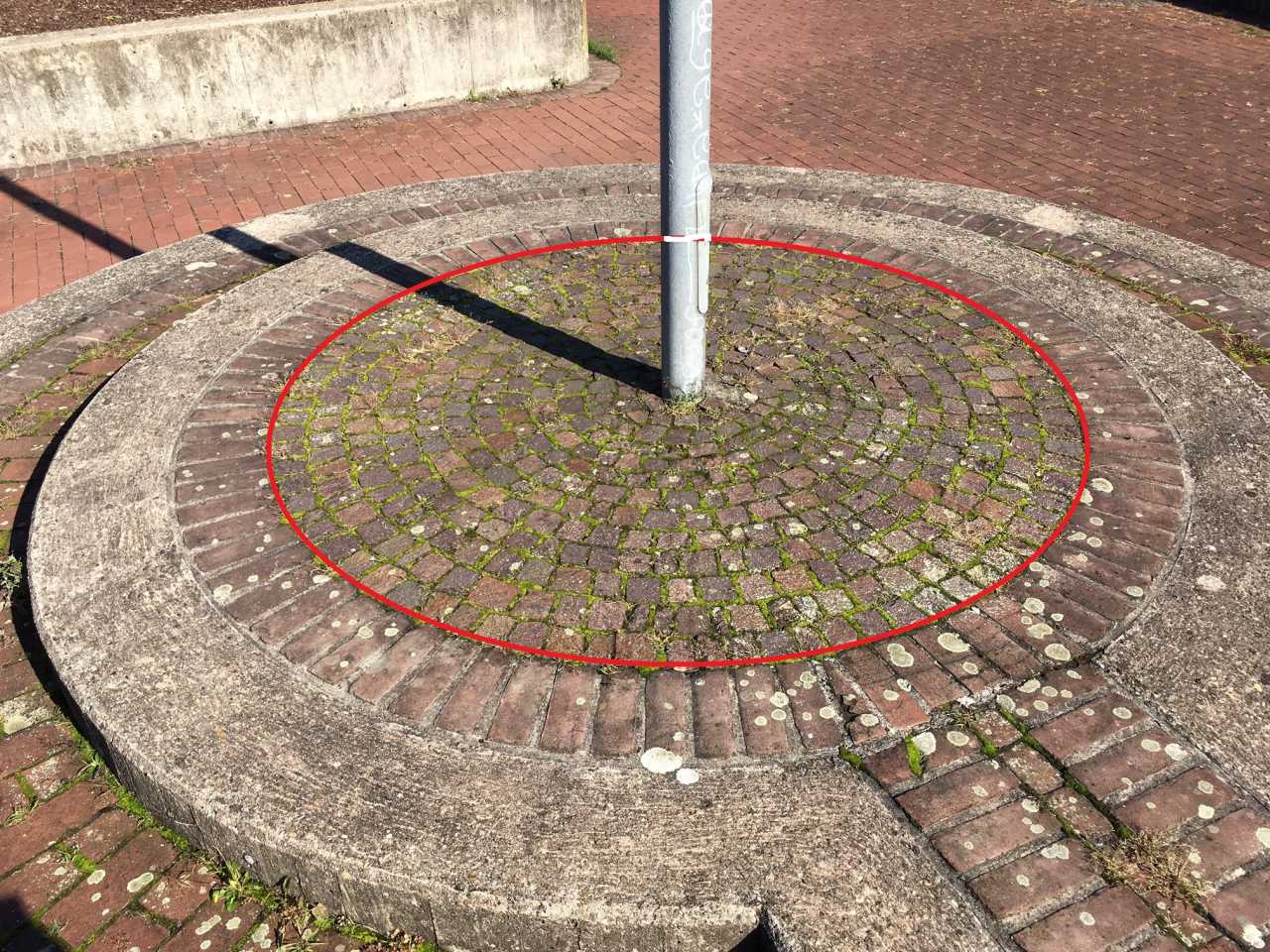
Task: Paving stones in a circle (Task number: 2007)

How many paving stones are in the red marked area?


Despite various approaches, the number Pi is central while solving the problem. On the one hand, it is possible to determine the number of paving stones in a certain area (for example one square meter) and to project them to the total area. The task can be solved particularly clever by considering a paving stone as a unit and expressing the radius of the circle by the number of stones.

This is just as one example of many tasks in which the number Pi is relevant in everyday life and for the math trail idea (e.g. traffic signs, advertising pillars, trees). In this sense: Happy Pi day!

By the way: the task is part of a trail around the Stuttgart’s stock exchange. They were created by our team and will be officially opened in April.

Thanks to Georgios Fesakis, who educates maths teachers at Aegean University of Rhodos, MCM is now available in Greek.  We wish all Greek users and students a lot of fun during creating and solving tasks in the Aegean sun. By the way: at Easter, the MCM team will visit Greece and help to take the first steps.

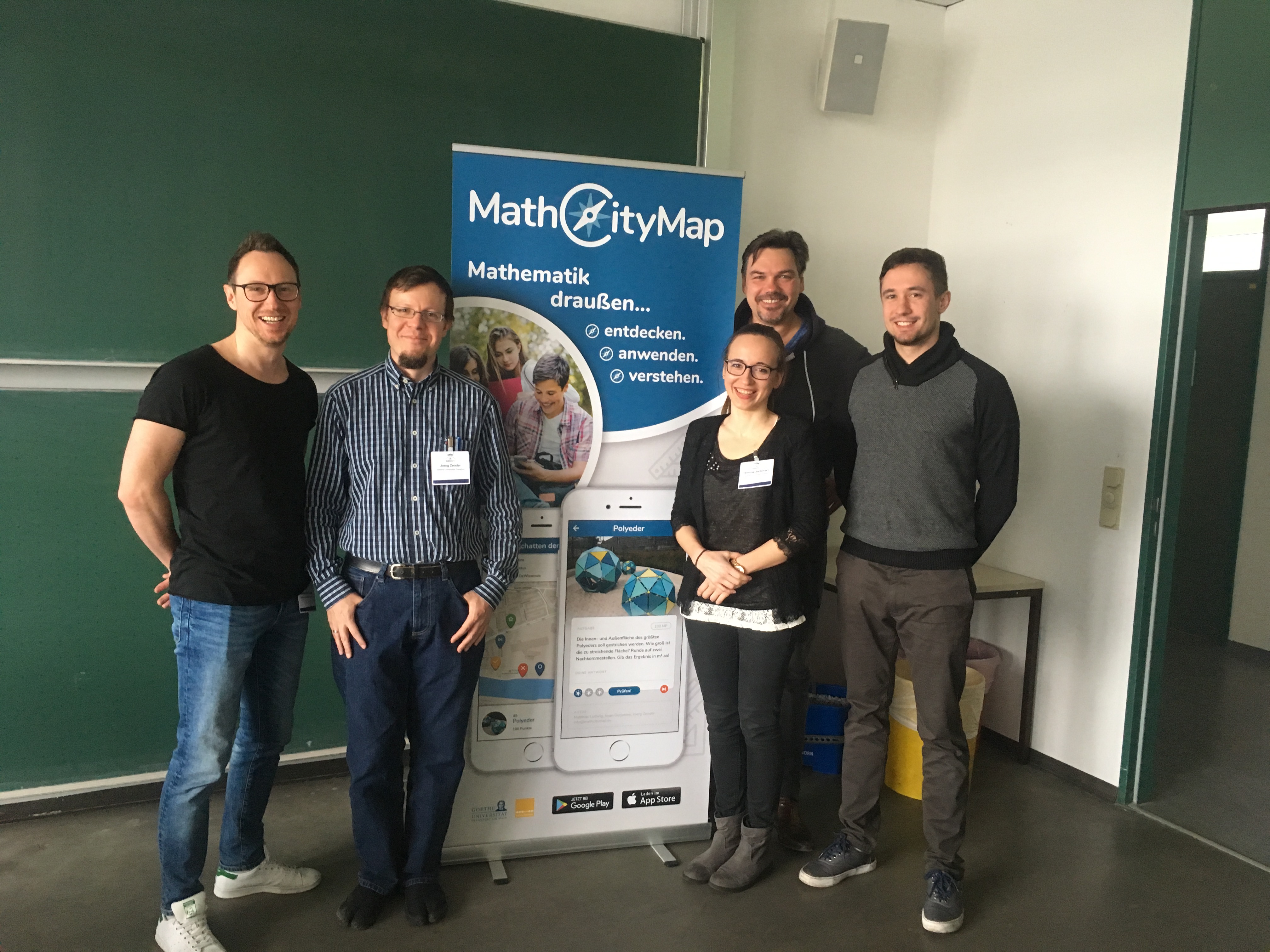
As part of the joint meeting of GDM and DMV in Paderborn from 05.03. – 09.03.2018, MathCityMap was presented in various ways. First of all, on 06.03. Matthias Ludwig spoke on the Erasmus + project MoMaTrE (Mobile Math Trails in Europe), in which the cooperation partners and goals were presented on an international level. On 08.03., Iwan Gurjanow presented his research results in the field of motivation and gamification (points and leaderboard) while running a math trail. In addition, Joerg Zender considered the Math Trail idea from the point of view of performance, which led to interesting discussions on 09.03.

A special highlight for the entire team is the prize which Daniel Birnbaum and Matthias Ludwig won at the poster session. On the poster, the future-oriented technology Augmented Reality was presented, as well as first ideas to use it in school and MCM.

During the entire conference, the participants had the opportunity to test a trail in the city center of Paderborn. Of course, we took the chance and ran the trail from the perspective of the task solver with lots of fun and ambition.

At this point, we want to thank Max Hoffmann and the students of the Pelizaeus-Gymnasium for creating the tasks! Likewise, we would like to thank all interested in the project for the exciting questions and discussions.