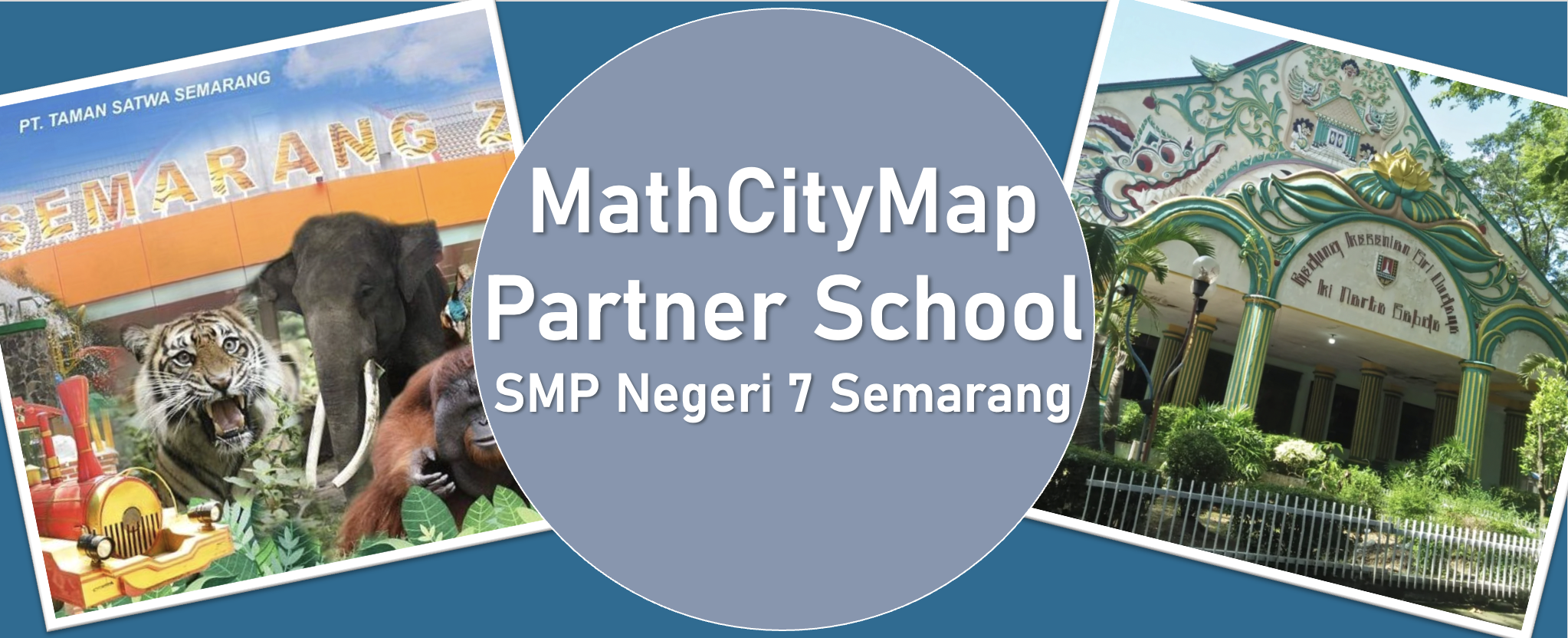
It is with great pleasure that we welcome SMP Negeri 7 Semarang as the very first MathCityMap Partner School in Indonesia! The school is situated in Semarang, a port city on the north coast of Java, and is a state secondary school.

Drs. Bavo Manon Nugroho, M.Pd., a teacher at SMP Negeri 7 Semarang, has been deeply involved in the project and has already created and published a considerable number of trails.

Four of the trails, for example, take you through Semarang Zoo – a place that may seem an unusual setting for maths at first glance, but which actually offers plenty of opportunities to explore the subject. Another trail takes a different approach and is deliberately designed to be playful.

Here is a small selection of the new trails from Semarang, which are ready to be explored:

MATEMARDIKNAS TRAIL X – 6720816
MATEMARDIKNAS TRAIL Y – 2620815
SEMARANG ZOO TRAIL – 2316915
MATEMARDIKA-A – 2411289
FUN TRIP SMP 7 SEMARANG – 352171

We look forward to many more varied trails from Indonesia and to a close and lasting collaboration!

The package containing the official partner school badge and the MCM assessment tools has already been presented in person on site by Prof. Matthias Ludwig, and we look forward to receiving further applications from all over the world.

All further information on the partner school programme and the requirements for application can be found both in the article on the first MCM partner school and on the homepage of our MaSCE³ project.


We are delighted to welcome Gymnasium Rüsselsheim as a new MathCityMap Partner School in Germany!

Teacher Melanie Oelke gives us exciting insights into her work with MathCityMap and shares her positive experiences with her school classes.

« I used MathCityMap for the first time in June 2026 with my Year 6 and Year 7 classes. My aim was for the pupils to revise the key learning content of the school year whilst recognising the link between the maths they learn in class and their everyday lives.

For Year 6, I therefore created a trail that focused primarily on revising fractions. For example, the children were asked to work out the proportion of benches with backrests or to determine what proportion of school lockers were yellow.

The Year 7 pupils mainly calculated the surface areas of objects in the school playground. I came up with the idea for this trail when we were calculating the construction costs for a window pane as part of a textbook exercise. I thought to myself: ‘There must be a more visual way of doing this!’ In the trail, the children therefore had to work out the cost of the tiles for the steps in the school building. They were very motivated by this trail because it helped them to better estimate the school’s overall cost.

The children were already familiar with using digital tools in maths lessons. Above all, however, the competitive aspect of MathCityMap proved to be particularly beneficial. In Year 6, the pupils explored different approaches to solving the problem within their groups, with the aim of finding the correct solution and scoring the most points. As a teacher, I found this particularly rewarding, as we were then able to discuss the advantages of the various approaches in class.

I’m really looking forward to creating and developing trails for my other year groups as well. »

We’re delighted with the great commitment shown and look forward to many more trails from Rüsselsheim!

The package with the official partner school badge and the MCM measuring instruments has already been delivered and we are looking forward to receiving more applications from all over the world.

All further information on the partner school programme and the requirements for application can be found both in the article on the first MCM partner school and on the homepage of our MaSCE³ project.


We are delighted to welcome Spojená škola in Dudince as another MathCityMap Partner School in Slovakia!

Teacher Marcela Čunderlíková shares a brief account of her experiences using MathCityMap Trails in the classroom:

„I have found mathematical walks to be an interesting and practical way of connecting mathematics with real life when working with pupils. During the walks, pupils solved tasks directly in the school environment or its surroundings, allowing them to apply their mathematical knowledge in practice.

The activity supported their independence, cooperation, and logical thinking.

I particularly appreciated the fact that the pupils were more active and enjoyed the mathematical tasks more. When implementing the activities, it was necessary to consider the appropriate difficulty of the tasks, group organisation, and time management.

I would therefore recommend incorporating mathematical walks into lessons as a way of making learning more engaging and providing a practical application of mathematical knowledge.“

Their first public trails can be found under the following codes:

  • Mathematics in the Spa Town – 1332331
  • Mathematics for First Graders – 4832028
  • Mathematics for First Graders 2 – 0732275

We are excited to have Spojená škola in Dudince on board and look forward to their continued contributions to making mathematics visible and engaging beyond the classroom.

The package with the official partner school badge and the MCM measuring instruments has already been delivered and we are looking forward to receiving more applications from all over the world.

All further information on the partner school programme and the requirements for application can be found both in the article on the first MCM partner school and on the homepage of our MaSCE³ project.


We are delighted to welcome IES Plurilingüe Castro da Uz as another Partner School Plus to our network!

Teacher María Trastoi Rego gives us an insight into her many years of experience using MathCityMap in maths lessons at her school in Spain:


“IES Plurilingüe Castro da Uz, a MathCityMap Associated School, has been integrating this tool into its Mathematics teaching practice for several academic years. During this time, our students have participated as users of the platform, completing contextualized routes and tasks that enabled them to discover mathematics in their surroundings and apply curricular content to real-life situations.

During the current academic year, we took a further step in this journey. As part of the « Geometry in Space » unit, the students in the 4th year of compulsory secondary education (15–16 years old) assumed an active role as content creators for the platform. Working in small groups, they identified elements of the school environment that could be explored mathematically, carried out measurements, designed problems related to both plane and solid geometry, and created complete MathCityMap tasks ready to be published on the platform.

As a result of this work, we created two routes on MathCityMap, which include the tasks designed by the students themselves. These routes are fully functional educational resources and demonstrate the students’ ability to apply the knowledge they acquired to authentic problem-solving situations while also enriching the collection of resources available to the MathCityMap community.

This experience proved to be highly valuable from a pedagogical perspective. Moving from being users of the platform to becoming activity designers enabled students to develop a deeper understanding of mathematical concepts, strengthen their mathematical, digital, and scientific competences, improve their communication and teamwork skills, and increase their motivation by seeing that their work could be used by other learners.

Furthermore, this change in approach is fully aligned with the active learning methodologies promoted at our school. It supports project-based learning, encourages student autonomy, and strengthens the connection between mathematics and the real world.

Looking ahead to the next academic year, we plan to continue developing this initiative. While this first phase focused on designing tasks and routes within the school grounds, our next objective is to extend the project to the urban environment by creating new routes throughout different areas of our town. In this way, we aim to offer richer and more varied learning experiences that allow students to explore the mathematics found in architecture, urban planning, and other elements of public spaces.”


We are delighted to welcome IES Plurilingüe Castro da Uz into our growing network of Partner Schools Plus and look forward to more new trails from Spain!

The package with the official partner school badge and the MCM measuring instruments is on its way and we are looking forward to receiving more applications from all over the world.

All further information on the partner school programme and the requirements for application can be found both in the article on the first MCM partner school and on the homepage of our MaSCE³ project.
We warmly welcome ZŠ Marcelová as our new MathCityMap Partner School!

The school shares its experiences:

“During our teaching practice at the school, university students visited mathematics classes to engage and motivate pupils through interactive activities. At our school, we continuously try to teach mathematics in an interactive way, helping students not only improve their calculation skills but also recognize mathematics in the world around them. We believe that MathCityMap is an excellent opportunity to connect mathematics with real-life situations and make learning more enjoyable and meaningful for our students.”

Two new trails are now available to explore:

We’re looking forward to an exciting collaboration with ZŠ Marcelová and to discovering inspiring new trails from Slovakia!

The package with the official partner school badge and the MCM measuring instruments is on its way and we are looking forward to receiving more applications from all over the world.

All further information on the partner school programme and the requirements for application can be found both in the article on the first MCM partner school and on the homepage of our MaSCE³ project.
With summer break just around the corner, many schools have project days or project weeks on their schedules – an ideal opportunity to experience math outside the classroom. MathCityMap offers a wide range of possibilities for this: Students can explore existing trails or get creative and develop their own math problems. Dennis Kern, a teacher at Frankfurt’s Adorno-Gymnasium, tells us what such a project week can look like:

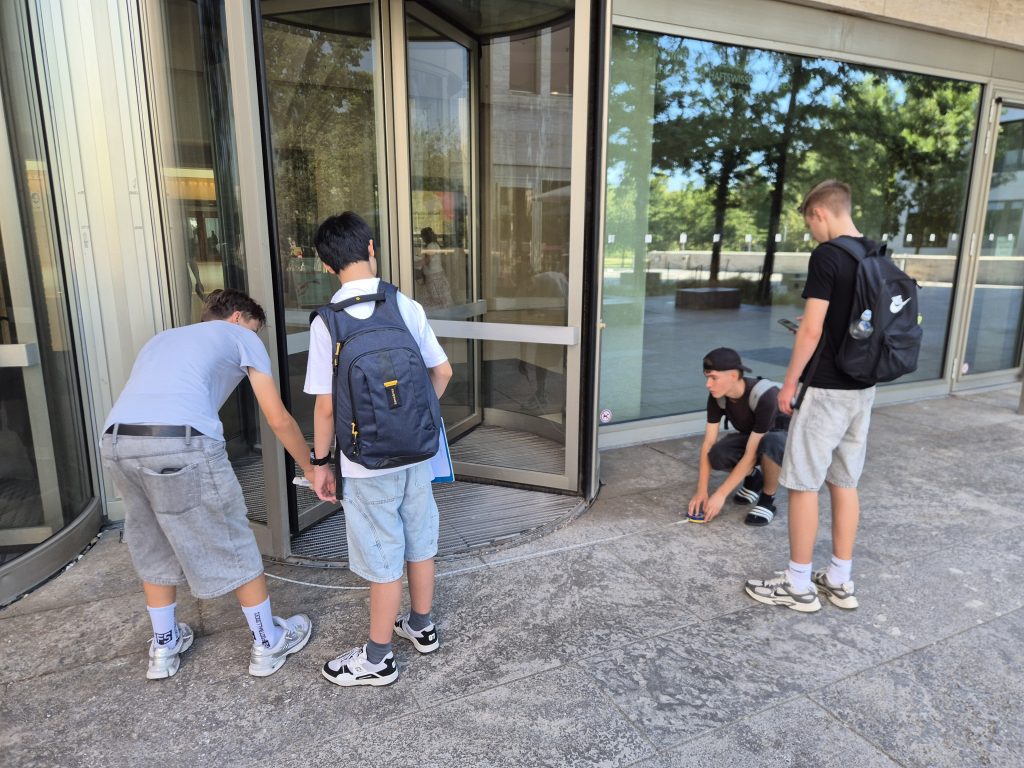
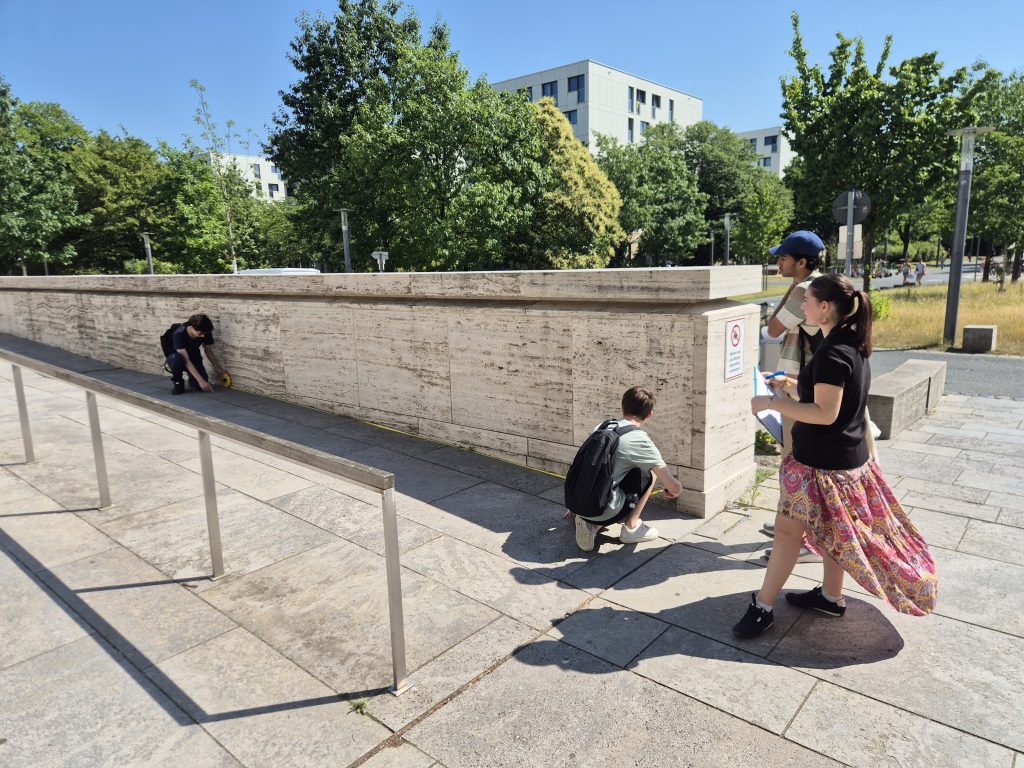
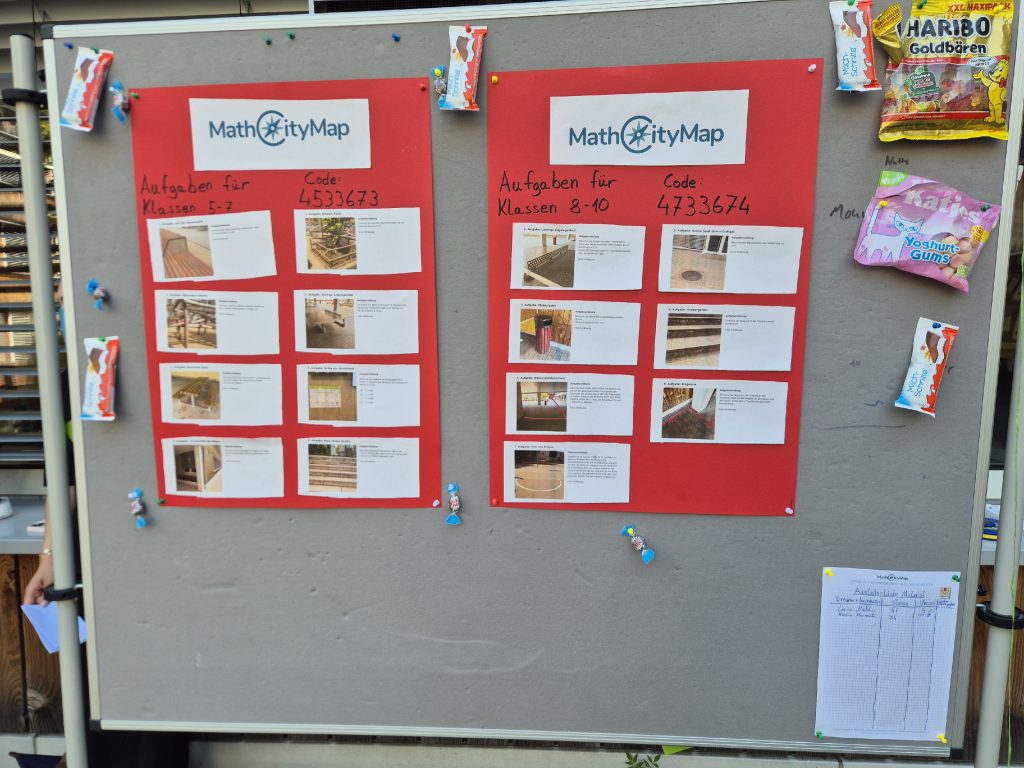
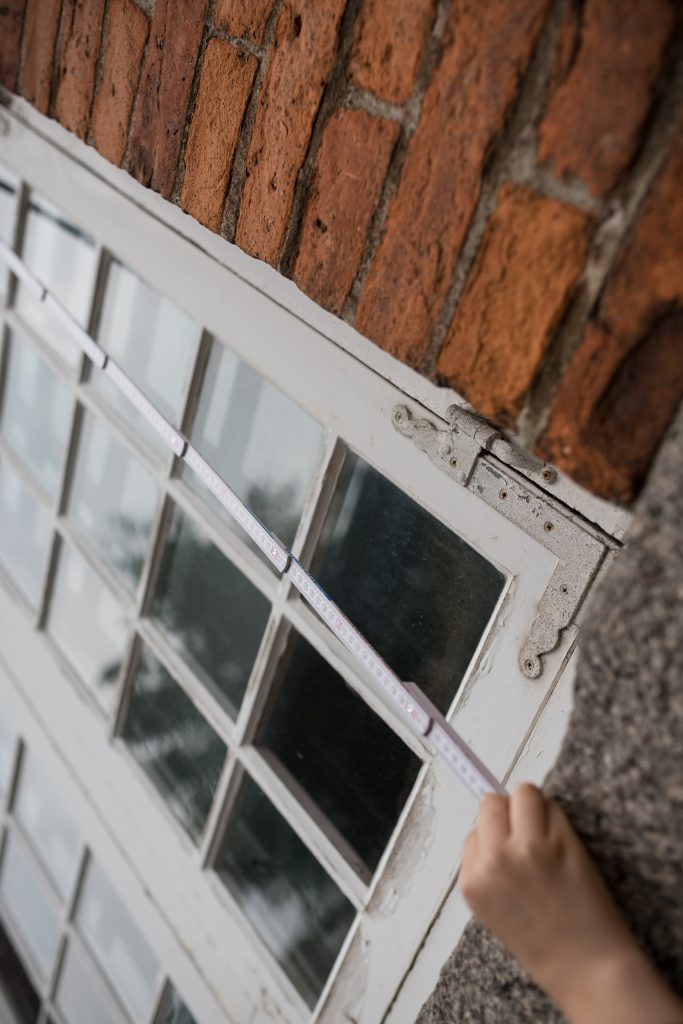
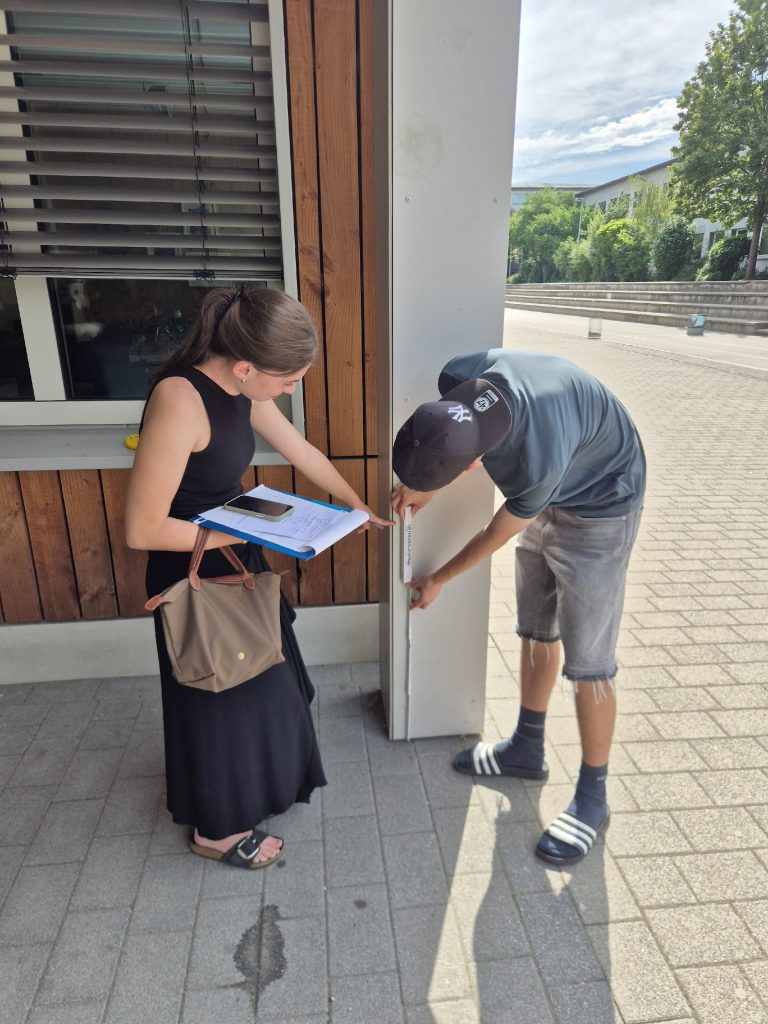
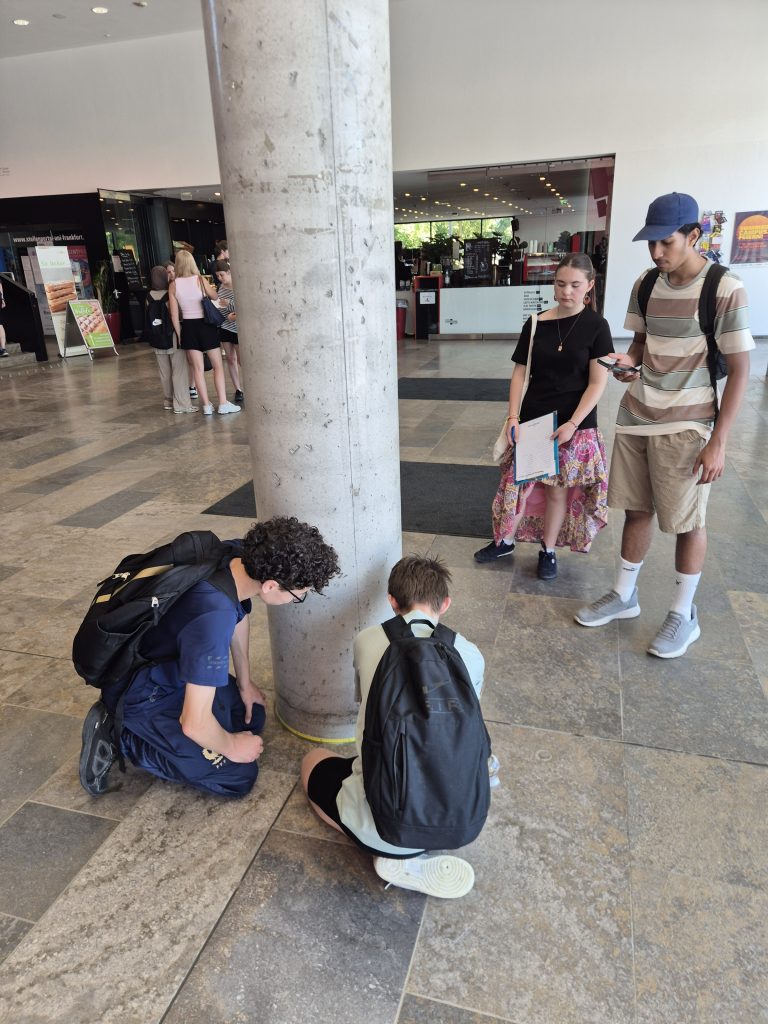
“The first project week at the newly established Adorno-Gymnasium in Frankfurt was a complete success. The teachers offered a total of 45 different projects, including the MathCityMap project. On Monday, the 11 enthusiastic and engaged students participating in this project first got to know the app by working through an exciting trail on the Westend campus of Goethe University. In the process, they learned how the app works and became familiar with several possible problem formats. They used a digital classroom to create a shared framework. On Tuesday and Wednesday, they were able to get creative and, using their student accounts, created a total of 15 tasks in the schoolyard. The students used ping-pong tables, basketball hoops, a dining table, and much more to calculate areas, lateral surfaces, volumes, angles, and scales. During the final presentation of all projects on Thursday, students from all projects were able to walk around and check out the other projects. The MathCityMap project proudly presented its own tasks and invited participants to try them out and solve them using the measurement tools. A total of two trails were created – one for younger students in grades 5 through 7 and one for older students in grades 8 through 10. »

A successful example of how MathCityMap can be used during project weeks: From getting to know the app to developing their own trails, a sustainable project was created in just a few days—one that will also benefit future students. Thank you very much for sharing your experience!

Préparation des cours avec les comptes des élèves

Grâce aux comptes élèves de MathCityMap, vous pouvez permettre à vos élèves de créer leurs propres activités en plein air. Outre la méthode traditionnelle consistant à suivre un parcours Mathtrail, cela leur offre une occasion unique d’aborder les choses sous un angle mathématique. Vous trouverez ici des instructions détaillées pour vous aider à préparer vos élèves à cette activité.

Étape 1 – Découvrez un parcours MathCityMap

Avant le cours prévu sur la création de tâches, vous devriez familiariser vos élèves avec le concept de MathCityMap.

Demandez-leur de parcourir un parcours mathématique et de noter leurs impressions sur les exercices.

Étape 2 – Changement de perspective et enjeux organisationnels

Changez ensuite de perspective avec eux : discutez de l’idée de créer des tâches individuelles et un parcours mathématique collectif comme projet de classe.

Précisez davantage quels seront les objectifs de vos élèves dans le cadre de ces activités : s’agira-t-il, par exemple, d’exercices de modélisation ? Ce parcours mathématique est-il destiné à un public spécifique, comme les plus jeunes élèves ? Ou bien est-il prévu pour un événement particulier, tel que la prochaine fête de l’école ? Combien d’activités faut-il créer ?

Il est conseillé de clarifier ces points au préalable afin de s’accorder sur le type d’exercices, les thèmes abordés et le public cible. Vous pouvez également donner à vos apprenants des conseils pour la création d’exercices.

Autres instructions

We are happy to announce Základná škola Nábrežie mládeže 5, Nitra as our new MathCityMap Partner School!

Three trails comprising a total of 19 tasks have already been created and published. They can be found in the portal under the following codes:


Teacher Eva Grunnerová reports her experiences:

“The tasks were developed in cooperation with students of our school. They subsequently implemented and solved them together with younger classmates, which helped identify and eliminate shortcomings in the wording of individual assignments.

We consider mathematical walks to be an innovative teaching method that effectively connects theoretical knowledge with its practical application in a real-world environment while also supporting active student learning.”


We are thankful for the engagement and are looking forward to continuing working together.


The package with the official partner school badge and the MCM measuring instruments is on its way and we are looking forward to receiving more applications from all over the world.


All further information on the partner school programme and the requirements for application can be found both in the article on the first MCM partner school and on the homepage of our MaSCE³ project.
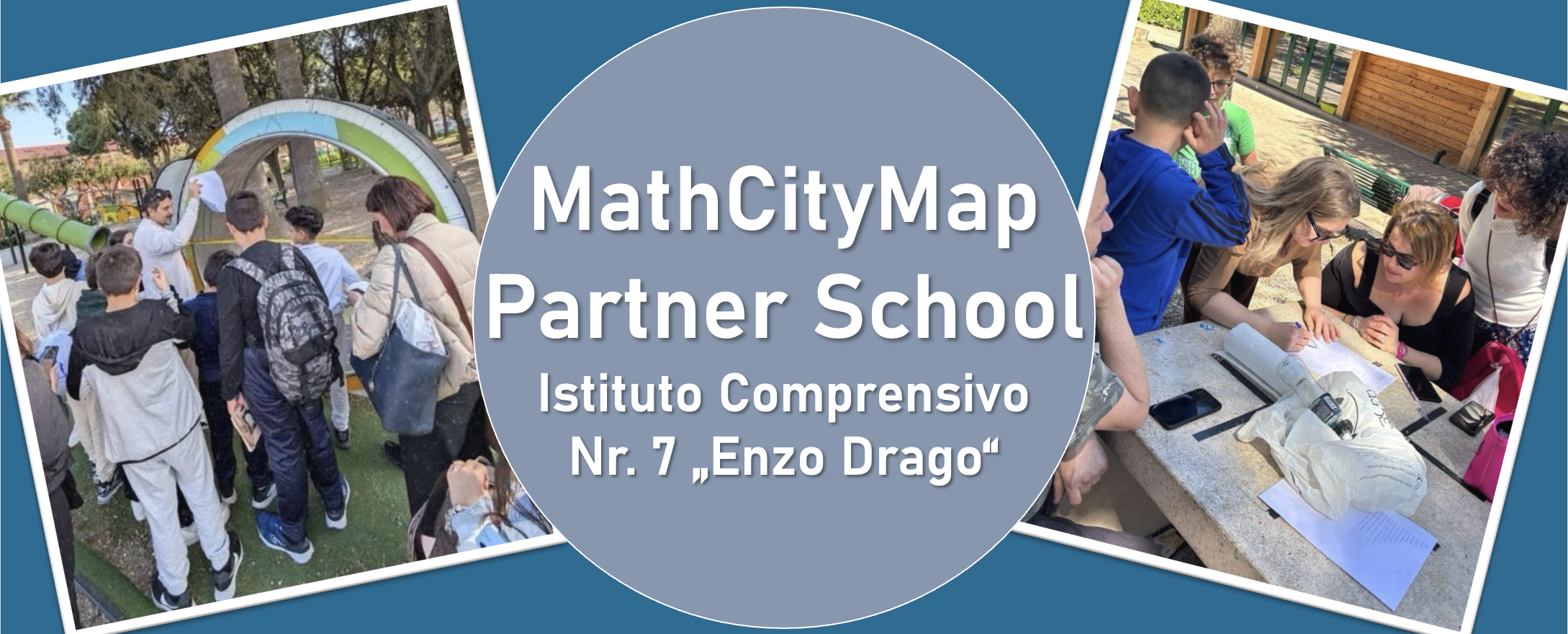
We are very pleased to welcome l’Istituto Comprensivo n. 7 “Enzo Drago” in Messina as a new MathCityMap Partner School!


Teacher Virginia Ruggeri shares her experiences with MathCityMap:

“At our school, we have successfully developed and trialled various outdoor educational activities based on the MathCityMap platform, aimed at promoting active, hands-on and engaging mathematics learning through exploration of the local area and problem-solving in real-world contexts.

In particular, the following courses have been developed and already tested with students:


  • “Math in Action” – Code: 7931657
  • “Calcoli in villa” – Code: 3831314
  • “Matematica in Villa” – Code: 8931302


All the courses have been designed with the aim of bringing mathematics to life outdoors, encouraging problem-solving, collaboration and motivation among pupils. The activities have been enthusiastically embraced by pupils from both the school and the local school district.”


We are thrilled to welcome l’Istituto Comprensivo n. 7 “Enzo Drago” to the growing network of schools using MathCityMap and look forward to seeing many more exciting trails from Italy in the future!


The package with the official partner school badge and the MCM measuring instruments has already been delivered and we are looking forward to receiving more applications from all over the world.


All further information on the partner school programme and the requirements for application can be found both in the article on the first MCM partner school and on the homepage of our MaSCE³ project.
 

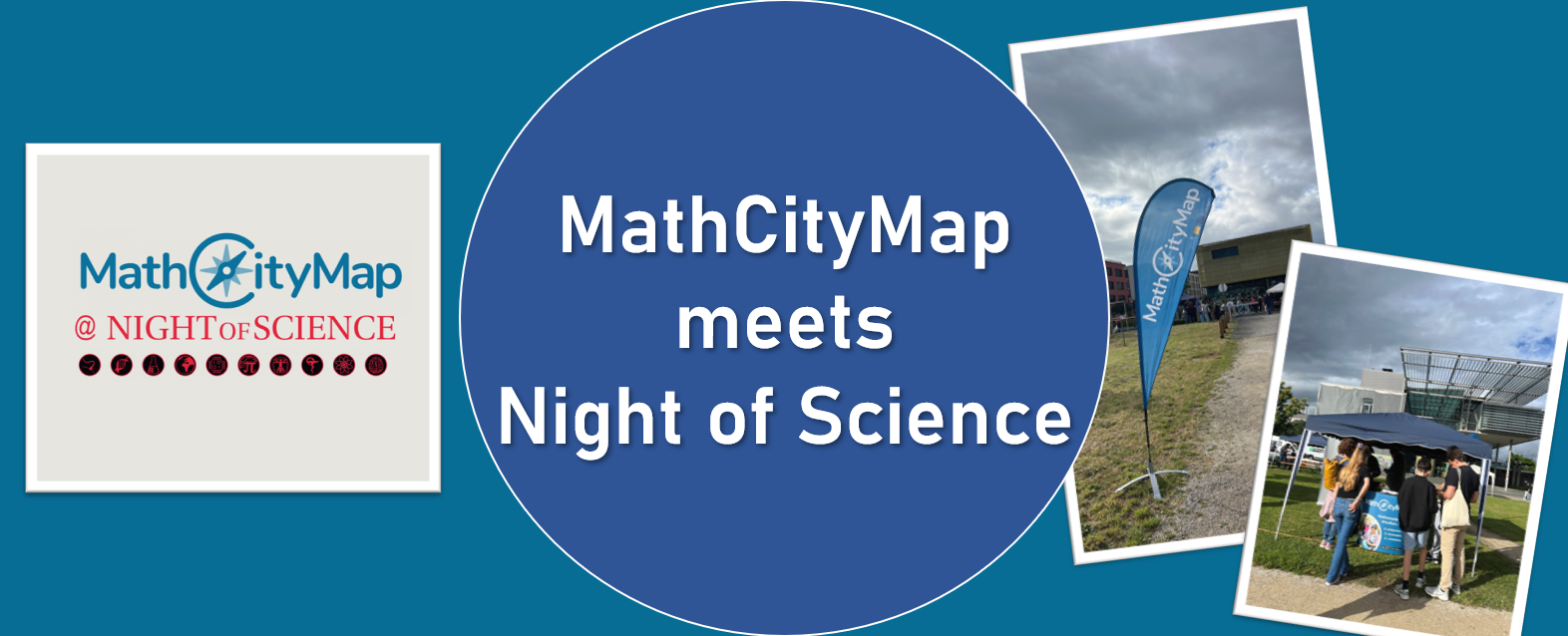
On Friday, June 12, the Frankfurt MathCityMap team took part in the Night of Science at the Riedberg Campus of Goethe University Frankfurt. This year marked the 20th edition of the science festival, which is organized by students. For us, it was already our second time participating in the event.

The changeable weather did not stop visitors from stopping by our booth. Throughout the evening, we had many engaging conversations about MathCityMap and the idea of bringing mathematics outdoors. Those who wanted to do more than just listen could try out the app themselves by taking part in the specially designed “Night of Science ’26″ Trail (Code: 3732886) and exploring the campus through mathematics.

From the opening at 5:00 p.m. until late in the evening, our booth attracted a steady stream of visitors. We were able to show many people how mathematical content can be combined with movement, exploration, and digital media – and perhaps even inspire a few of them to discover the world of outdoor mathematics.

Another highlight of the evening was the talk “Doing Mathematics Outdoors – What’s the Benefit?” at 10:15 p.m. The presentation introduced the MathCityMap system as well as the scientific background and research findings that support learning beyond the traditional classroom setting.

We would like to thank all visitors for their interest, the inspiring conversations, the valuable feedback, and their enthusiasm for our project. A special thank you goes to the organizers of the Night of Science, whose dedication once again made this wonderful event possible.