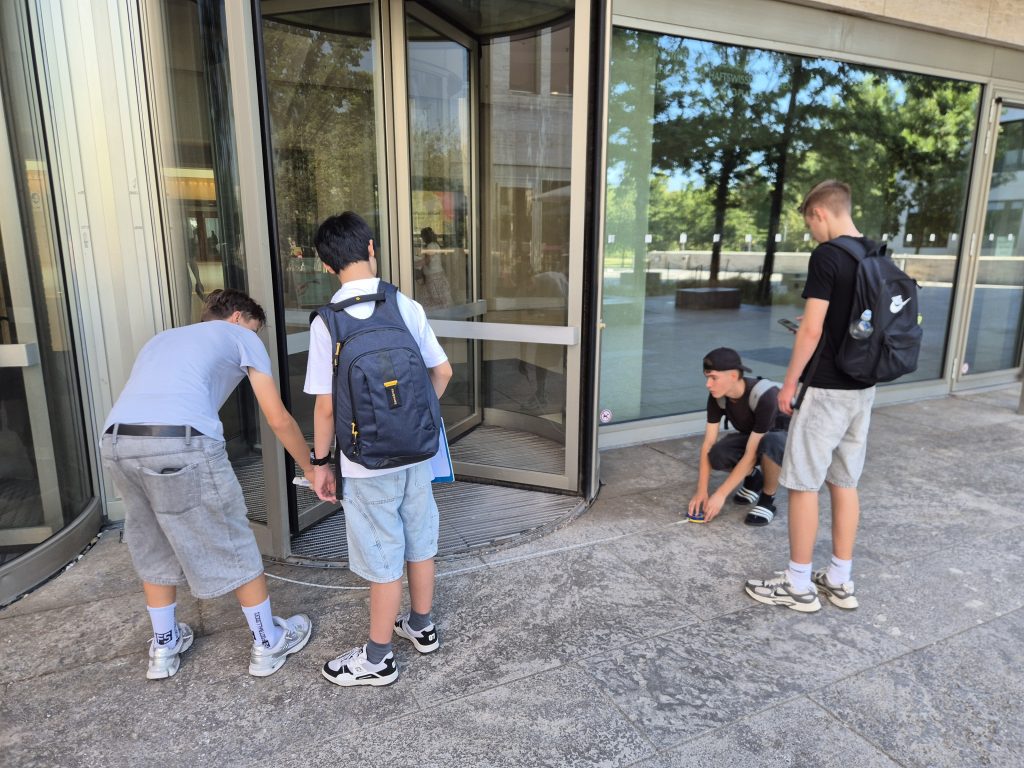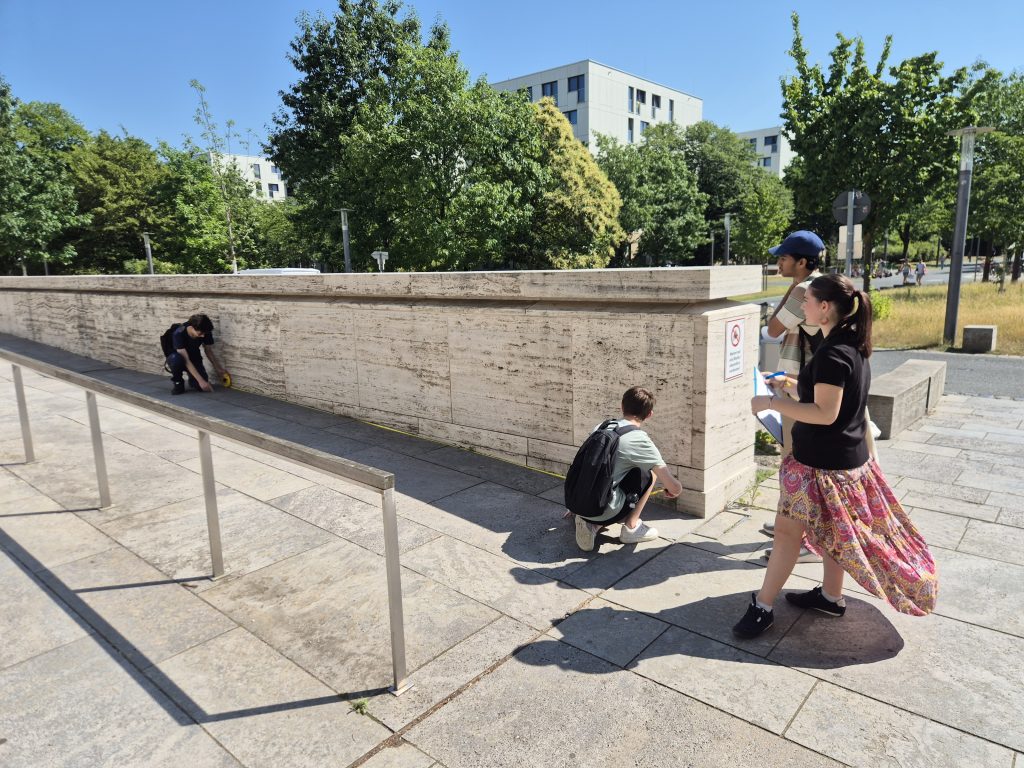
With summer break just around the corner, many schools have project days or project weeks on their schedules – an ideal opportunity to experience math outside the classroom. MathCityMap offers a wide range of possibilities for this: Students can explore existing trails or get creative and develop their own math problems. Dennis Kern, a teacher at Frankfurt’s Adorno-Gymnasium, tells us what such a project week can look like:

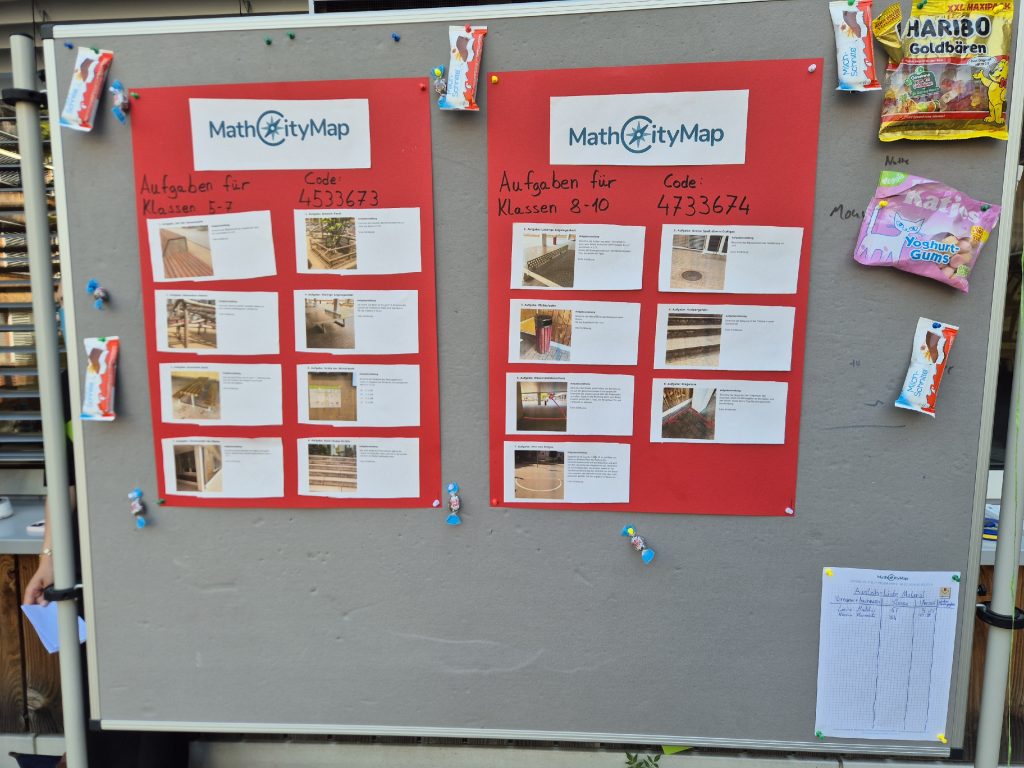
“The first project week at the newly established Adorno-Gymnasium in Frankfurt was a complete success. The teachers offered a total of 45 different projects, including the MathCityMap project. On Monday, the 11 enthusiastic and engaged students participating in this project first got to know the app by working through an exciting trail on the Westend campus of Goethe University. In the process, they learned how the app works and became familiar with several possible problem formats. They used a digital classroom to create a shared framework. On Tuesday and Wednesday, they were able to get creative and, using their student accounts, created a total of 15 tasks in the schoolyard. The students used ping-pong tables, basketball hoops, a dining table, and much more to calculate areas, lateral surfaces, volumes, angles, and scales. During the final presentation of all projects on Thursday, students from all projects were able to walk around and check out the other projects. The MathCityMap project proudly presented its own tasks and invited participants to try them out and solve them using the measurement tools. A total of two trails were created – one for younger students in grades 5 through 7 and one for older students in grades 8 through 10.“

A successful example of how MathCityMap can be used during project weeks: From getting to know the app to developing their own trails, a sustainable project was created in just a few days—one that will also benefit future students. Thank you very much for sharing your experience!

Medsebojno ocenjevanje in oblikovanje poti

With MathCityMap’s student accounts, you can let your students create their own outdoor activities. In addition to the classic math trail, this offers a unique opportunity to explore mathematical concepts. This step-by-step guide will show you how to improve your activities and combine them into a shared trail.

Korak 1 – Začnite medsebojni pregled

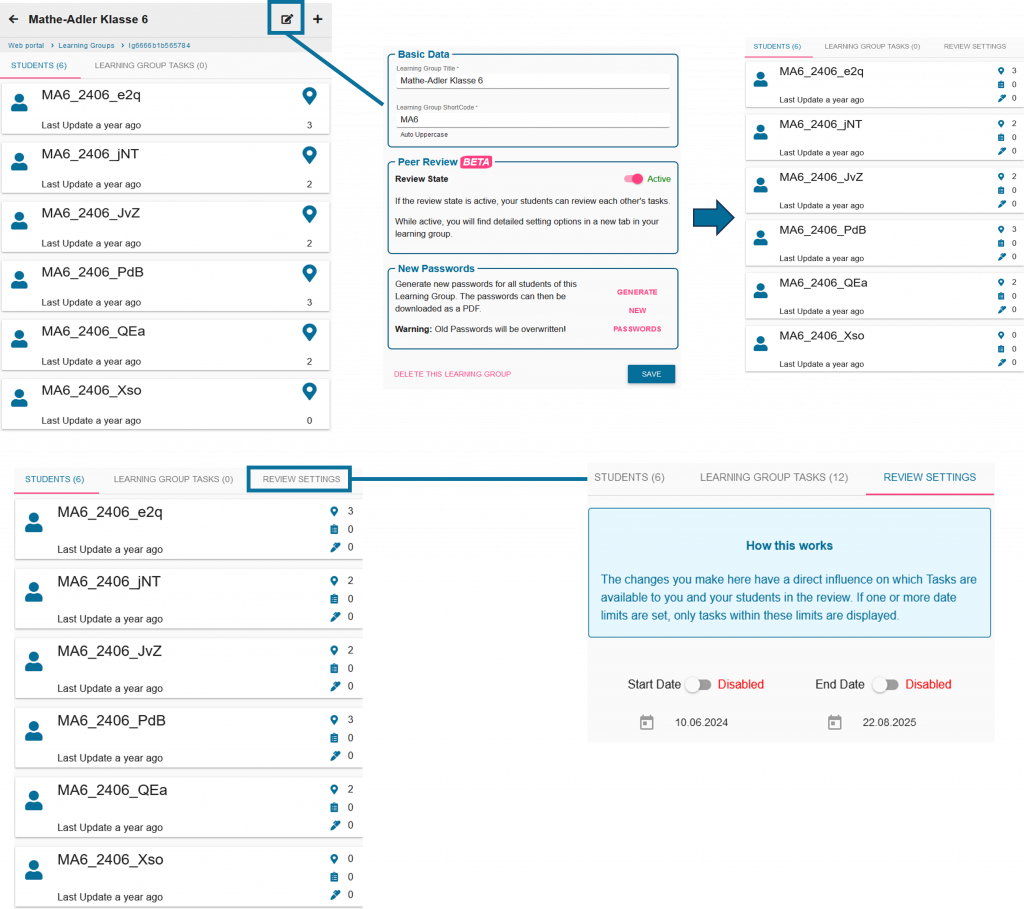
Ko bodo vaši udeleženci na spletnem portalu ustvarili svoje naloge, lahko začnete z medsebojnim pregledovanjem. To pomeni, da je treba spletni portal tehnično nastaviti tako, da bodo udeleženci lahko vanj vnašali komentarje.

Aby ste to urobili, kliknite na symbol úprav vedľa vašej študijnej skupiny a aktivujte recenziu od rovesníkov.

Čas začetka in konca lahko nastavite tudi v nastavitvah pregleda.

Korak 2 – Organizacija medsebojnega pregleda

Z učenci se dogovorite, katere manjše skupine bodo preizkušale katere naloge. Učenci bodo nato ponovno odšli na prosto s svojimi merilnimi pripomočki.

Poleg tega jim pri dajanju ustrezne povratne informacije pomaga delovni list za medsebojno ocenjevanje (glej stran z gradivom) v obliki kontrolnega seznama.

Korak 3 – Napišite komentarje in upoštevajte povratne informacije

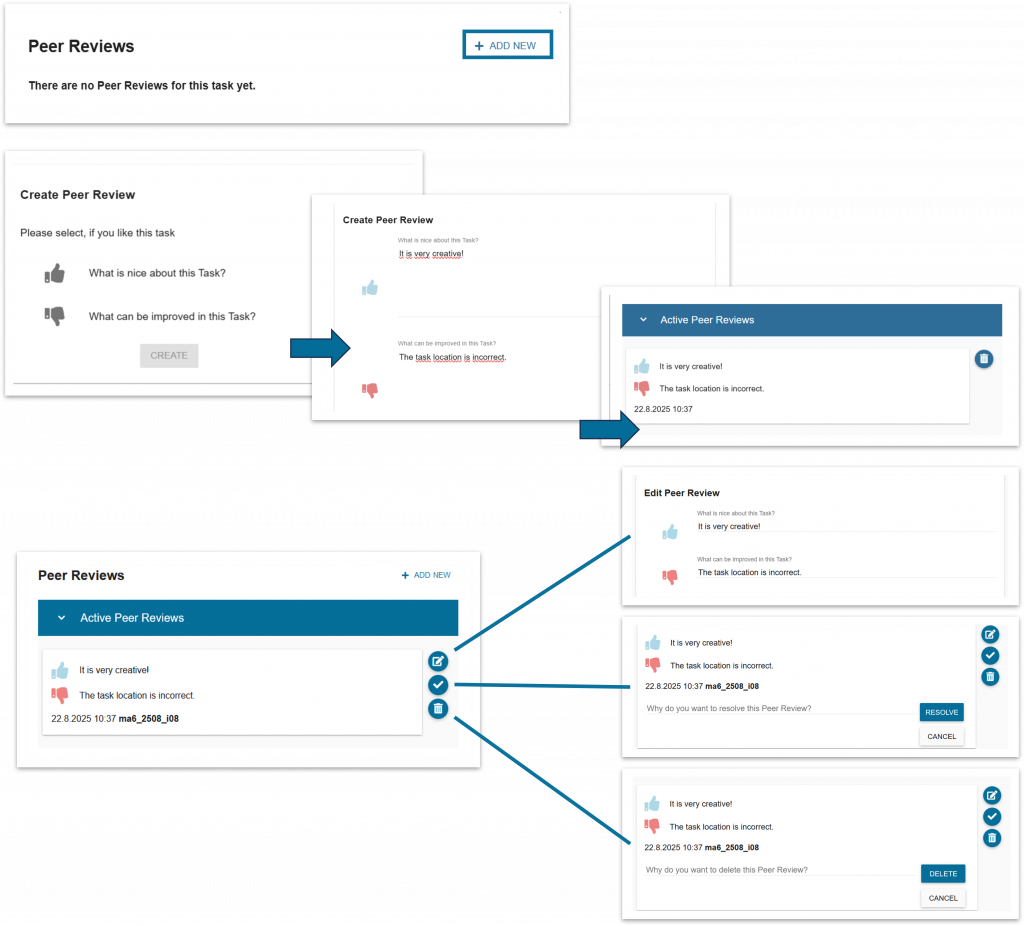
Ko so naloge preverjene, udeleženci v spletni portal vnesejo svoje povratne informacije.

Prav tako lahko pregledujete komentarje svojih udeležencev in po potrebi posredujete.

Nato učencem dajte čas, da upoštevajo povratne informacije iz razreda in naloge popravijo.

Korak 4 – Ustvarite pot

Ko vsi udeleženci zaključijo ta postopek, lahko iz njihovih nalog sestavite pot.

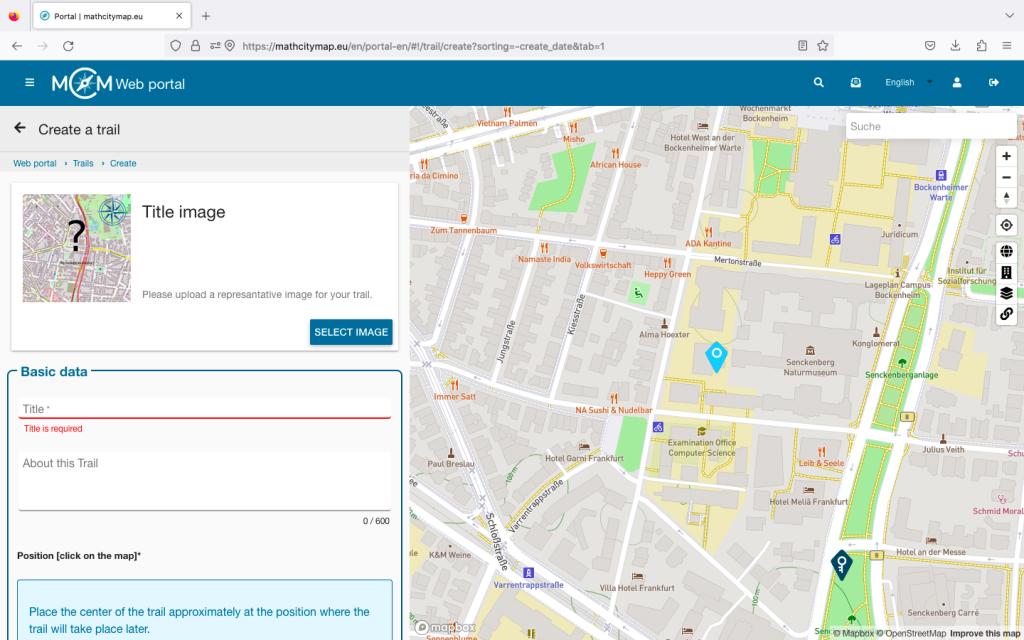
To deluje prek običajnega polja za pot.

Naloge učencev so vedno prikazane kot rožnate oznake.

Dodatna navodila

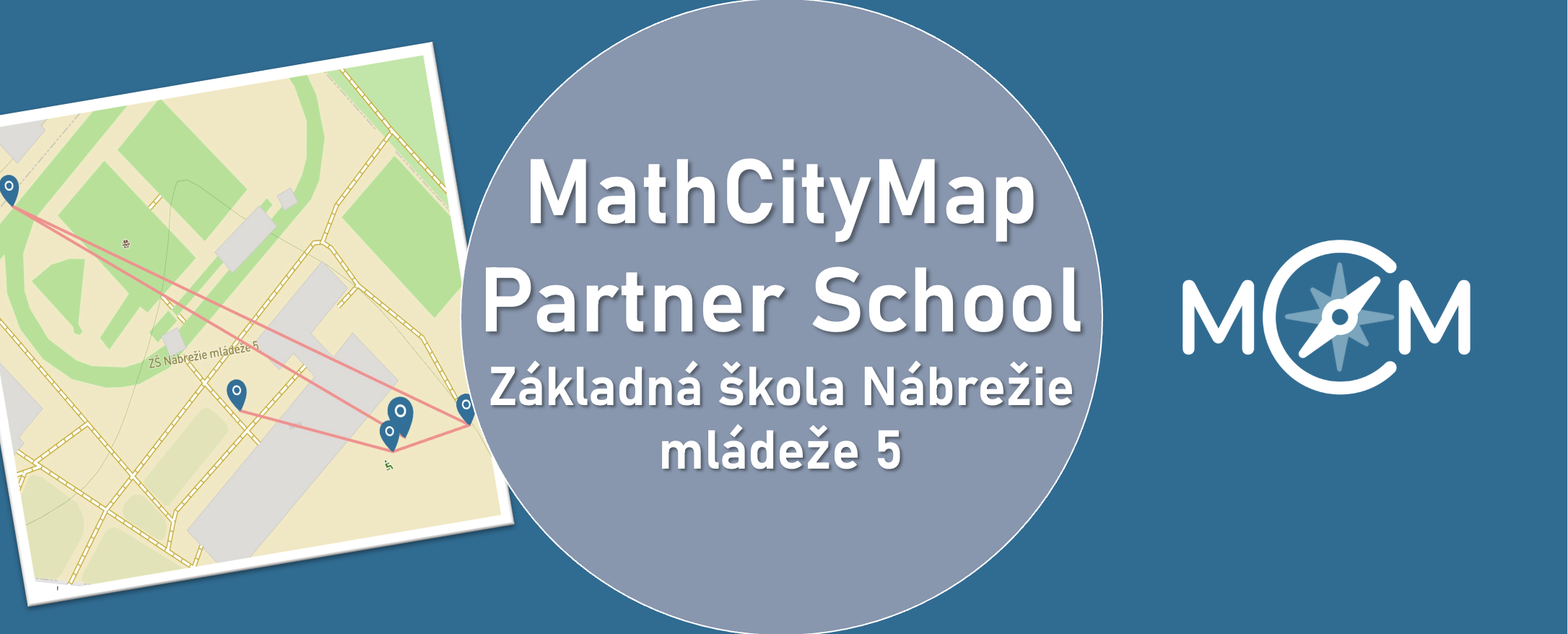
We are happy to announce Základná škola Nábrežie mládeže 5, Nitra as our new MathCityMap Partner School!

Three trails comprising a total of 19 tasks have already been created and published. They can be found in the portal under the following codes:


Teacher Eva Grunnerová reports her experiences:

“The tasks were developed in cooperation with students of our school. They subsequently implemented and solved them together with younger classmates, which helped identify and eliminate shortcomings in the wording of individual assignments.

We consider mathematical walks to be an innovative teaching method that effectively connects theoretical knowledge with its practical application in a real-world environment while also supporting active student learning.”


We are thankful for the engagement and are looking forward to continuing working together.


The package with the official partner school badge and the MCM measuring instruments is on its way and we are looking forward to receiving more applications from all over the world.


All further information on the partner school programme and the requirements for application can be found both in the article on the first MCM partner school and on the homepage of our MaSCE³ project.
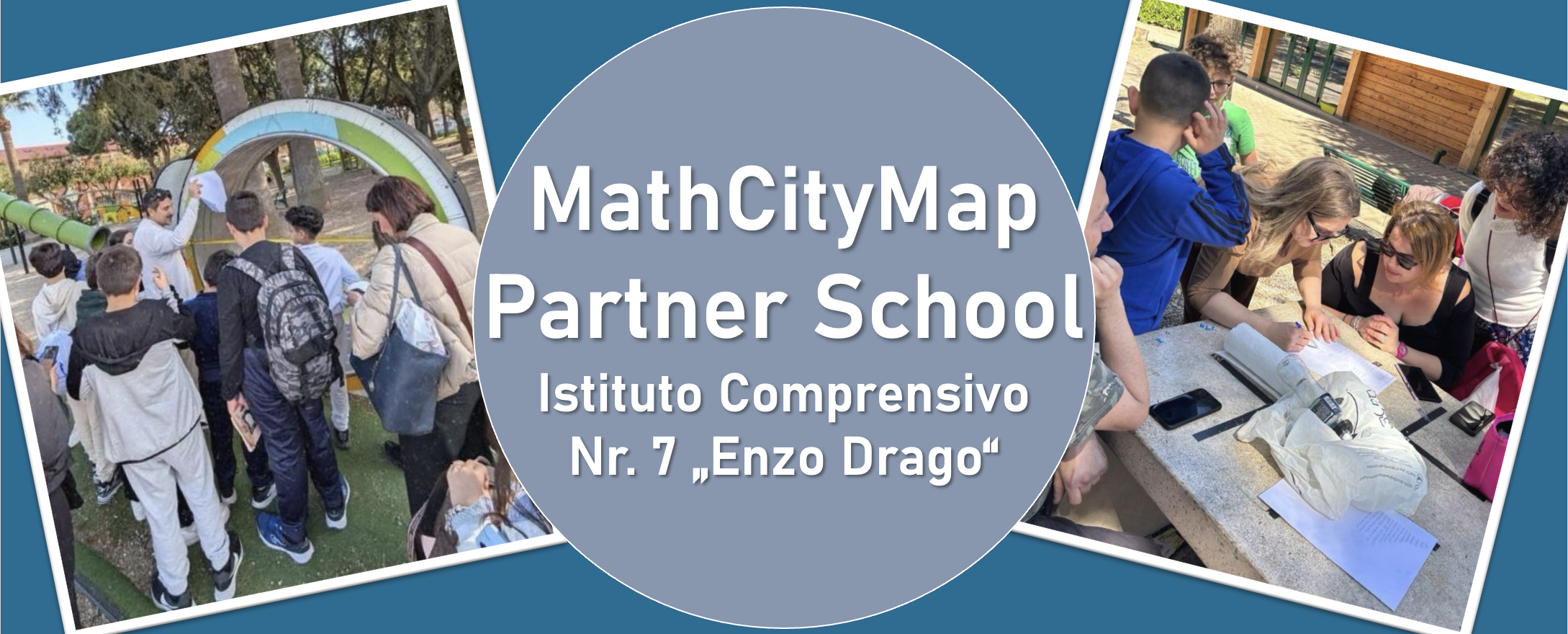
We are very pleased to welcome l’Istituto Comprensivo n. 7 “Enzo Drago” in Messina as a new MathCityMap Partner School!


Teacher Virginia Ruggeri shares her experiences with MathCityMap:

“At our school, we have successfully developed and trialled various outdoor educational activities based on the MathCityMap platform, aimed at promoting active, hands-on and engaging mathematics learning through exploration of the local area and problem-solving in real-world contexts.

In particular, the following courses have been developed and already tested with students:


  • “Math in Action” – Code: 7931657
  • “Calcoli in villa” – Code: 3831314
  • “Matematica in Villa” – Code: 8931302


All the courses have been designed with the aim of bringing mathematics to life outdoors, encouraging problem-solving, collaboration and motivation among pupils. The activities have been enthusiastically embraced by pupils from both the school and the local school district.”


We are thrilled to welcome l’Istituto Comprensivo n. 7 “Enzo Drago” to the growing network of schools using MathCityMap and look forward to seeing many more exciting trails from Italy in the future!


The package with the official partner school badge and the MCM measuring instruments has already been delivered and we are looking forward to receiving more applications from all over the world.


All further information on the partner school programme and the requirements for application can be found both in the article on the first MCM partner school and on the homepage of our MaSCE³ project.
 

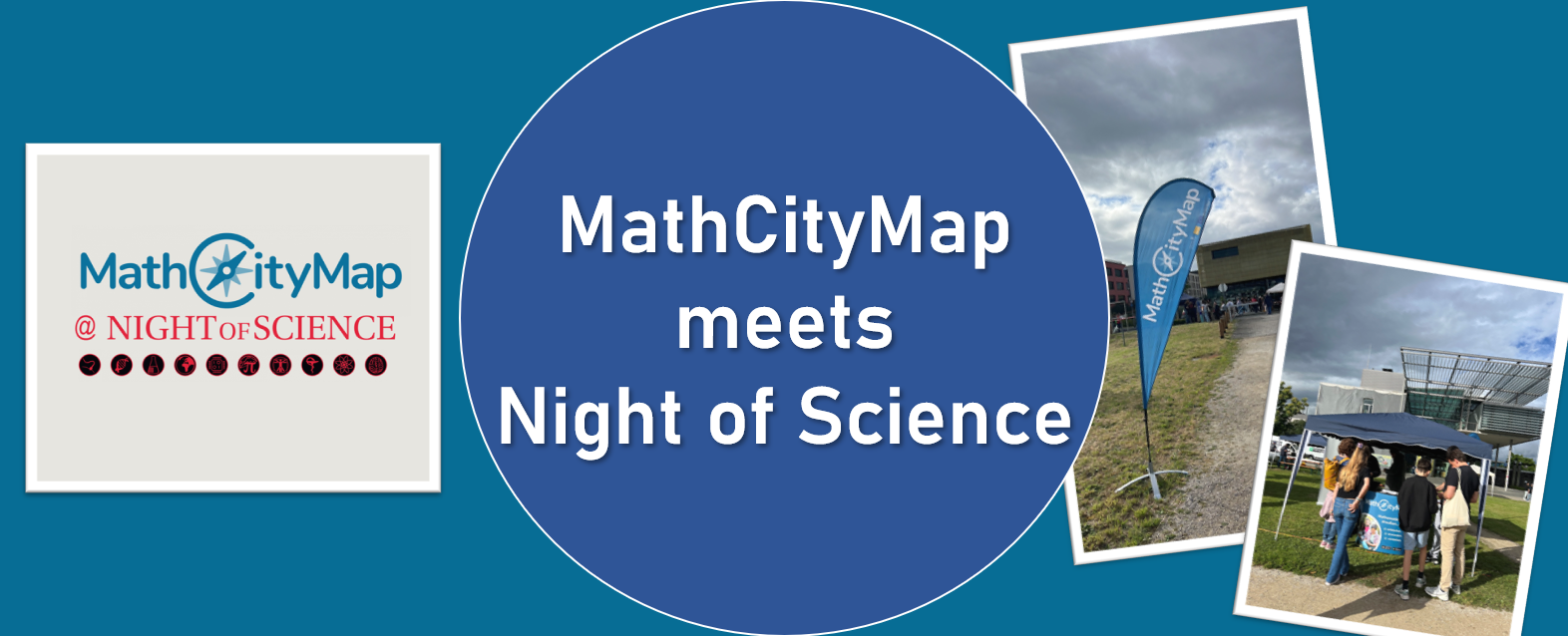
On Friday, June 12, the Frankfurt MathCityMap team took part in the Night of Science at the Riedberg Campus of Goethe University Frankfurt. This year marked the 20th edition of the science festival, which is organized by students. For us, it was already our second time participating in the event.

The changeable weather did not stop visitors from stopping by our booth. Throughout the evening, we had many engaging conversations about MathCityMap and the idea of bringing mathematics outdoors. Those who wanted to do more than just listen could try out the app themselves by taking part in the specially designed “Night of Science ’26″ Trail (Code: 3732886) and exploring the campus through mathematics.

From the opening at 5:00 p.m. until late in the evening, our booth attracted a steady stream of visitors. We were able to show many people how mathematical content can be combined with movement, exploration, and digital media – and perhaps even inspire a few of them to discover the world of outdoor mathematics.

Another highlight of the evening was the talk “Doing Mathematics Outdoors – What’s the Benefit?” at 10:15 p.m. The presentation introduced the MathCityMap system as well as the scientific background and research findings that support learning beyond the traditional classroom setting.

We would like to thank all visitors for their interest, the inspiring conversations, the valuable feedback, and their enthusiasm for our project. A special thank you goes to the organizers of the Night of Science, whose dedication once again made this wonderful event possible.

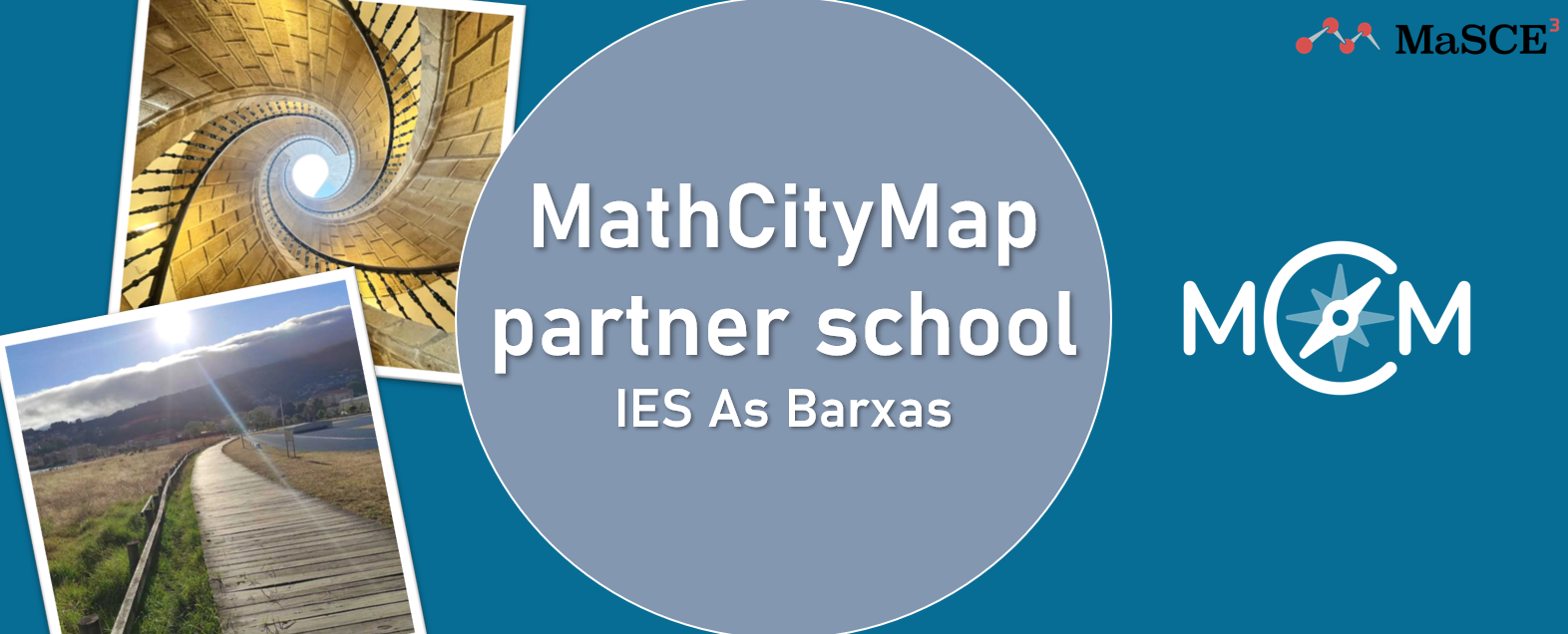
We are delighted to welcome IES As Barxas as a new MathCityMap Partner School!

They have already created and published two trails which can be found under the following codes:

One of these trails was created collaboratively by students under the supervision of their teacher, providing them with the opportunity to actively engage in the development of mathematical tasks. The school looks forward to further expanding this type of activity and to collaborating with other secondary schools and colleagues in the region.

We warmly welcome the school to our growing MathCityMap community and look forward to more inspiring tasks and trails from Spain!

The package with the official partner school badge and the MCM measuring instruments is on its way and we are looking forward to receiving more applications from all over the world.

All further information on the partner school programme and the requirements for application can be found both in the article on the first MCM partner school and on the homepage of our MaSCE³ project.
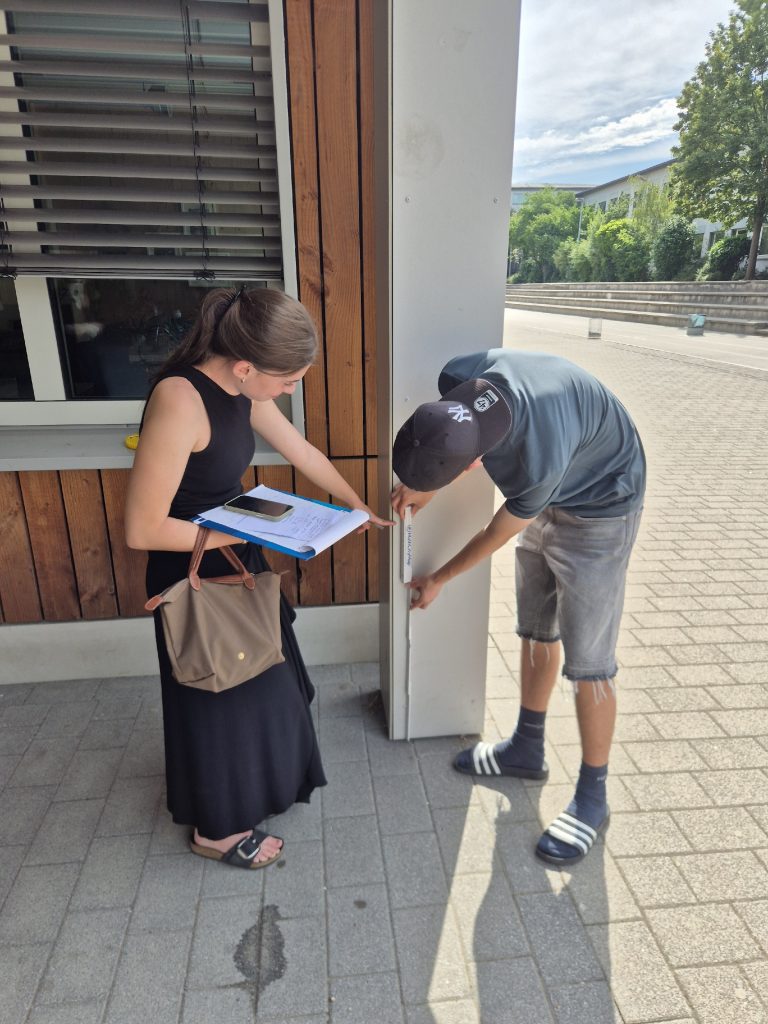
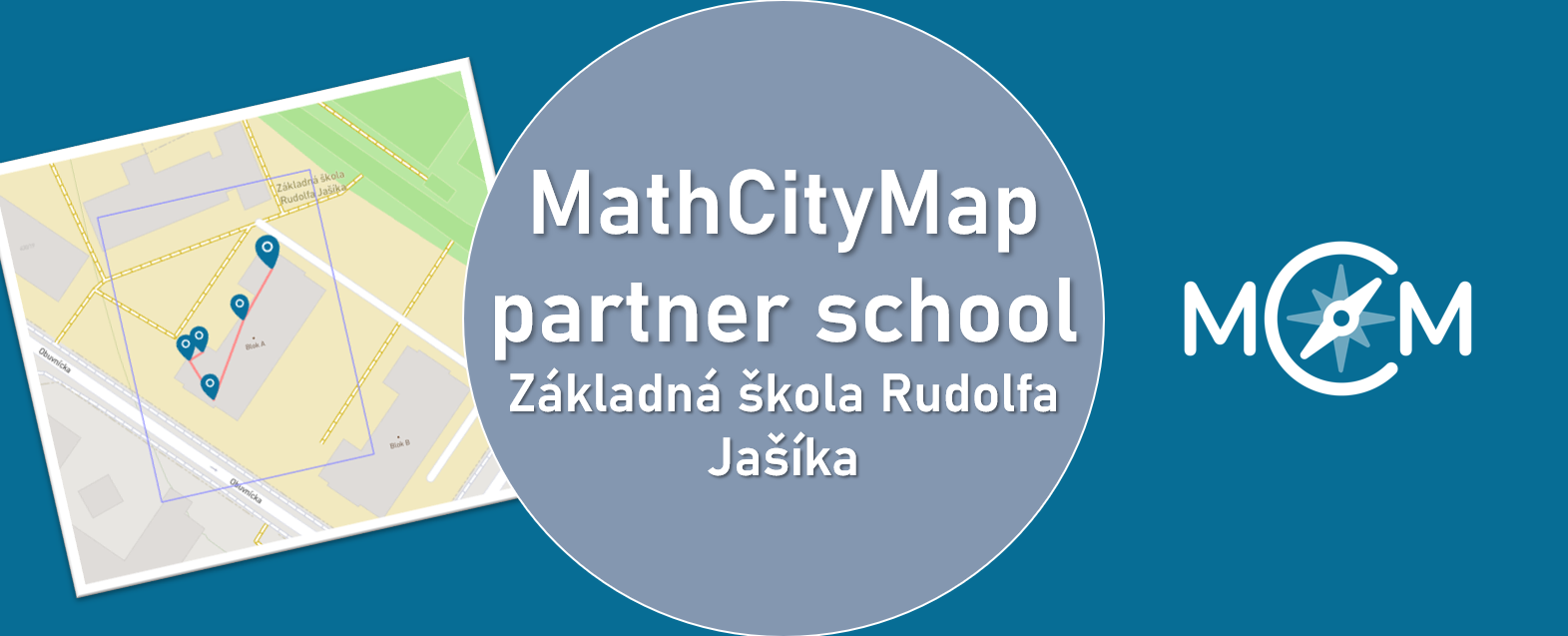
We are happy to welcome Základná škola Rudolfa Jašíka as our new MathCityMap partner school! The teacher Petra Hačková reached out to us with a report on the school’s activities with MCM:

„Implementing math trails represented a significant challenge for us. From the initial idea and planning to task creation and execution with the students, we had the opportunity to observe how this activity can revitalize a „boring“ math lesson, as students often call it. Through math trails, we were able to demonstrate the practical significance of mathematics to our students.

The students‘ evaluations of these activities were mostly positive. They especially appreciated the physical movement, the opportunity to learn outside the classroom, and the group work. It was particularly interesting to observe a change in attitude toward mathematics among some of the weaker students, or those who previously found math dull and disliked the subject.

From the perspective of the supervising teacher, we confirmed that math trails can be an effective tool for reinforcing curriculum material. Furthermore, they play a crucial role in developing key competencies such as: collaboration and teamwork, critical thinking and observation, independence and autonomy, practical application of acquired knowledge.

Preparing math trails requires time and careful planning, but the feedback from students confirms that it was time well spent. We believe that math trails have the potential to become an integral part of teaching at our primary school, and we hope to inspire other colleagues and teachers to join this emerging trend.“

Student feedback following the math trails activities: „I enjoyed it because it was something completely different from a regular math lesson. The tasks weren’t too difficult, and overall, it was fun solving problems with my friends. It might have improved my view of math a little. I would definitely want more activities like this because we learn more during them. I’d describe the trail as a showcase of math in everyday life.“

Their trails can be found via the following trail codes:

We are excited to have Základná škola Rudolfa Jašíka on board and look forward to their continued contributions to making mathematics visible and engaging beyond the classroom.

The package with the official partner school badge and the MCM measuring instruments are on their way and we are looking forward to receiving more applications from all over the world.

All further information on the partner school programme and the requirements for application can be found both in the article on the first MCM partner school and on the homepage of our MaSCE³ project.
Dear MathCityMap Community,

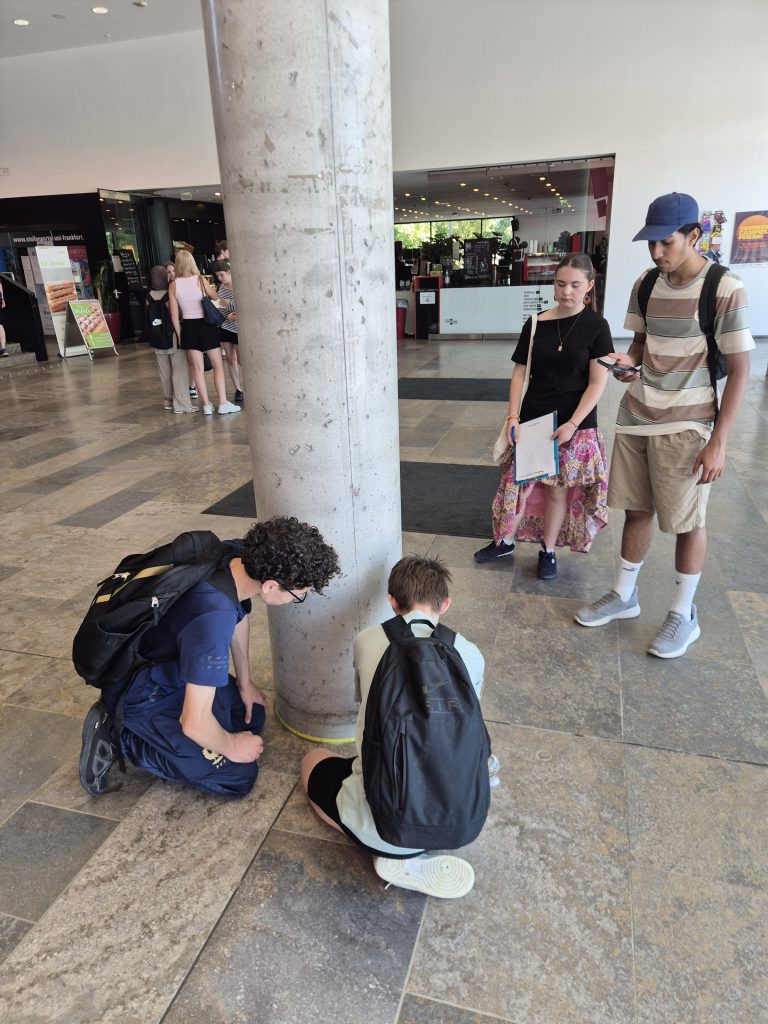
last week, our first international student and teacher meeting took place in Seville. We had a fantastic week full of exciting activities, international collaboration, and excellent weather for doing mathematics outdoors!

On Monday, the MCM team as well as all school groups and their teachers arrived. In the evening, we held a welcome session in which all teams introduced themselves and an overview of the week was presented.

Tuesday was filled with joint activities in various small groups. We began with a more intensive get-to-know-each-other session, where everyone had the opportunity to talk with participants from all groups. Afterwards, the first mixed teams were formed. These groups were initially language-based but included students from different schools. In these teams, the participants took part in a Math Trail Challenge in the nearby María Luisa Park. All teams collected many points, and at the end there was, of course, a small award ceremony.

After a longer lunch break, there was an input session on what makes a good MathCityMap task and what aspects need to be considered when creating tasks. The newly learned knowledge was immediately tested in a Kahoot quiz. Afterwards, there was time for all kinds of MCM-related questions directed to the team. In the early evening, participants first took part in a selfie challenge in randomly assigned teams before the working groups for the week were formed. These teams immediately faced their first challenge: building the tallest tower possible using 20 sheets of paper.

On Wednesday, the individual teams, accompanied by one or two teachers, headed into the city to create their own tasks. To do this, they explored different areas of Seville. In the afternoon, the tasks were transferred into the portal. During this process, the students supported each other and could ask the MCM experts questions at any time.

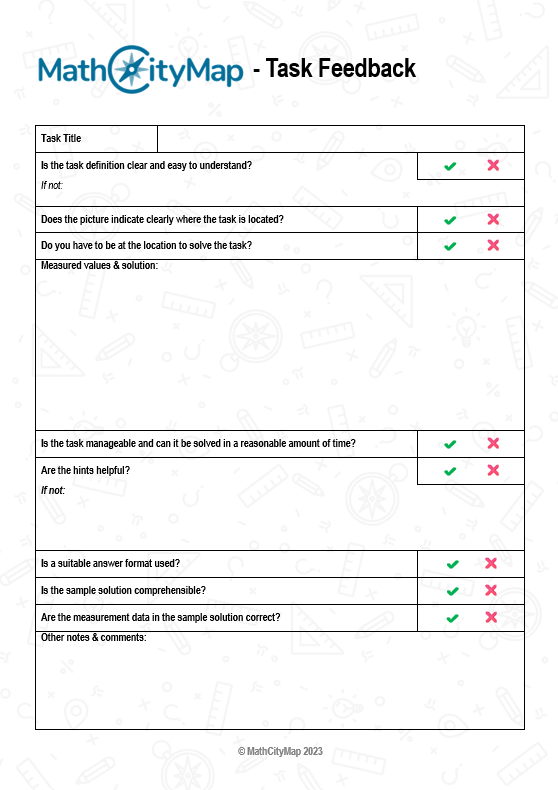
On Thursday, each team reviewed another team’s trail. Equipped with the task feedback form (available for download on our materials page), the groups tested another team’s tasks and checked whether they were solvable and whether the sample solutions and hints were helpful. Students from Seville also joined the activities. Afterwards, we had the opportunity to visit their school, where we received a tour and enjoyed a traditional Spanish lunch. In the afternoon, everyone had time to upload their feedback to the portal, revise their own tasks, and finalize their trails.

On Friday morning, we took part in a guided city tour, during which we learned even more about the history of Seville. We also revisited several places and objects that had appeared in the students’ tasks.

Afterwards, the closing session took place, during which we looked back at photos from the week together and presented awards for the trails and tasks. The highlight of the session was the videos the teams had created throughout the week. In these videos, they documented their working process and presented their trails in impressive and creative ways. In the afternoon, everyone had some free time before the big departure day on Saturday.

The videos will be uploaded to our Instagram account in the coming days. Until then, there are already a few impressions from the week available to see.

We are very happy that everything went so well and would like to sincerely thank all students and teachers for the wonderful collaboration. We very much hope that we will be able to organize a meeting like this again in the future.

We are thrilled to announce our first partner school PLUS: Escola Básica e Secundária Pintor José de Brito in Portugal! The school has been using MathCityMap actively in their lessons and tested the student accounts multiple times. They have sent us a short report on their recent experiences:

„Working in pairs, the students of a 10th-grade class created tasks covering various topics. Initially, they experienced difficulties, not in using the application, but in creating the task statements. These difficulties were gradually overcome with the teacher’s help, although she allowed them to create the tasks freely.

Ten of the tasks created by the students were selected to form a trail, with code 0831714, which
was applied to two other classes at the school. The students who completed the trail were more enthusiastic than usual because the tasks had been created by their peers rather than by the teacher. The students who created the tasks were also curious to know their classmates’ opinions about their work.“

The PARTNER SCHOOL PLUS badge is a new distinction for partner schools that actively engage their students in creating real-world math tasks. It also comes with a new set of measureing tools. To find out how to become a partner school or partner school PLUS, visit the partner school network page

We thank Escola Básica e Secundária Pintor José de Brito for their continuous work with MCM and are looking forward to keep working together! The package with the partner school PLUS badge and the measuring tools is on the way to Portugal.

We are excited to announce our new MathCityMap partner school from Portugal: the Escola Secundária Augusto Gomes, located in Matosinhos! The mathematics teacher Dra Ana Louro has sent us a report on her experiences:

„Over the course of the current academic year (2025/2026), we have developed six geo-referenced maths trails covering the 7th, 8th and 9th year curricula (codes: 4831440, 2331439, 2331438, 3631437, 3631436 and 2631435), comprising 30 tasks created in collaboration with our 10th-year pupils from classes 10L and 10M2.

The trails were completed in time for our school’s Pi Day celebrations, running from 9th to 16th March, during which all 15 classes from Years 7, 8 and 9 took part in the trails. A particularly rewarding feature of the initiative has been the peer tutoring element: the 10th-year students who created the trails have been accompanying and guiding their younger peers throughout the exploration, bringing an enriching collaborative dimension to the whole experience.

This project opens doors to some very promising continuations: involving new classes in the
creation of further tasks, organising inter-school visits to solve each other’s trails, or
expanding the routes to other areas of the municipality. Mathematics no longer fits within
four walls.“

The package with the official partner school badge and the MCM measuring instruments are already on their way and we are looking forward to receiving more applications from all over the world.

All further information on the partner school programme and the requirements for application can be found both in the article on the first MCM partner school and on the homepage of our MaSCE³ project.