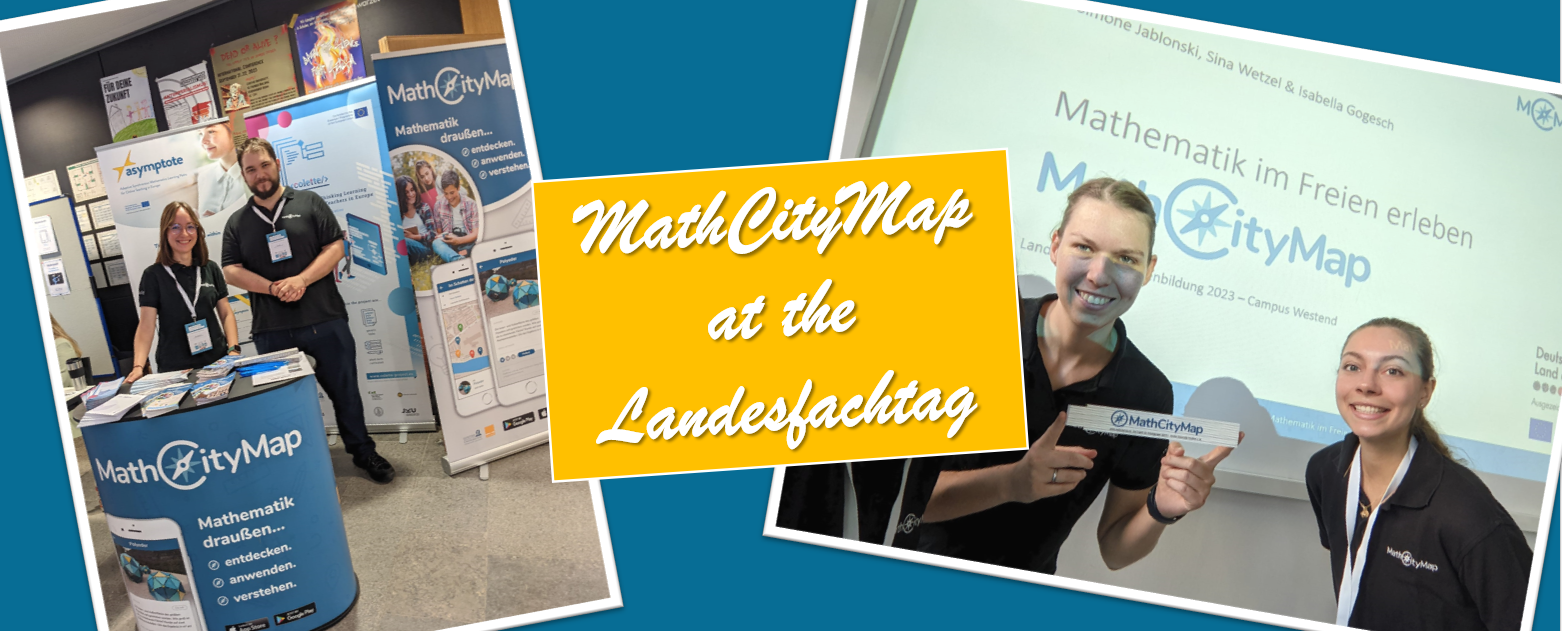
Yesterday, MathCityMap was not to be missed at the State of Hesse’s Landesfachtag 2023 on the topics of media education and digitalization. Framed in a great program of lectures and presentations, which was organized by the Goethe University Frankfurt and the Hessian Ministry of Education, our Frankfurt MathCityMap team was on site and could, for example, inform and inspire many of the teachers about the possibilities of MathCityMap as a learning environment with a small pop-up station.

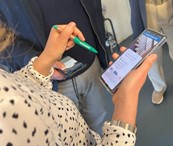
In addition, there was a comprehensive workshop on MathCityMap, in which a total of 13 teachers from primary and secondary schools participated. After a theory-based introduction by our team, the teachers went out to the university campus, where they took on the role of students and tried out a trail with the MathCityMap app.

We were very pleased about the great interest at the Landesfachtag and are already excited to see which new trail ideas will be implemented at schools in Hesse!

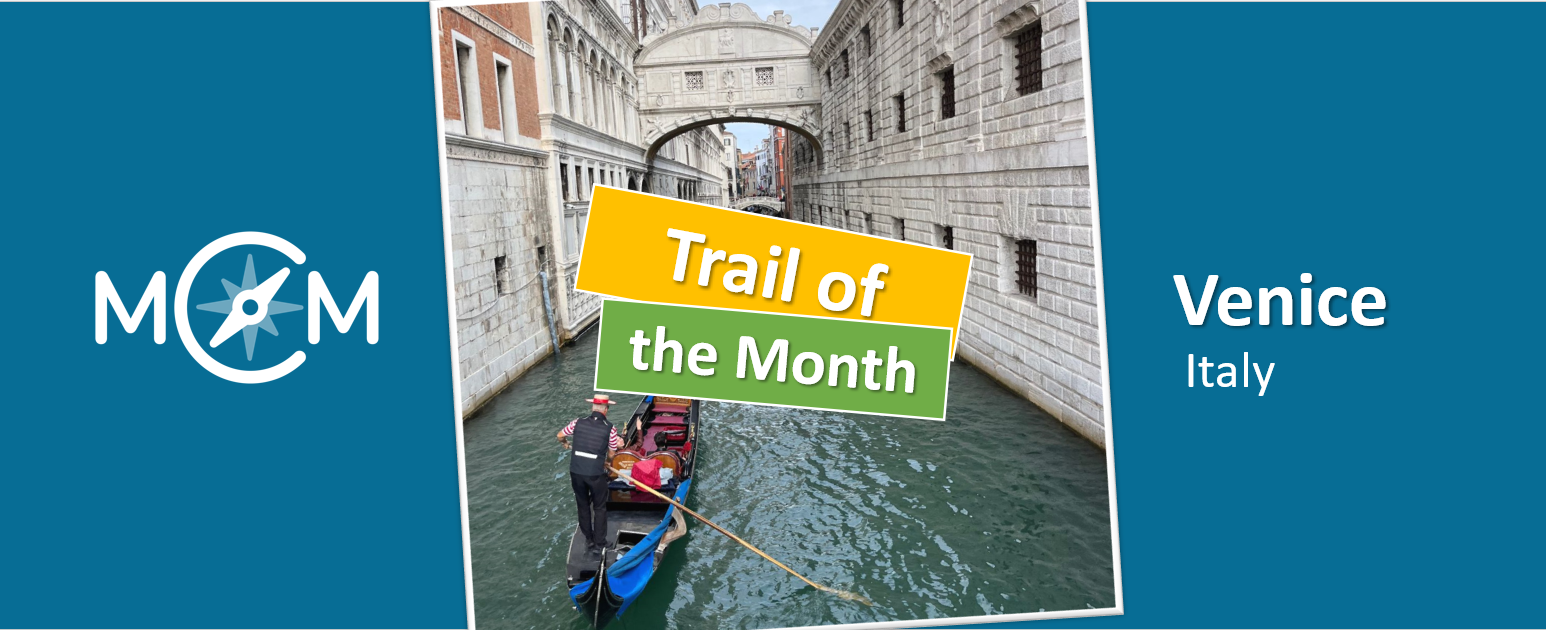
The trail of the month August is located in a city that is always worth a visit and now can also be rediscovered through mathematical eyes. We are talking about Venice and the mathtrail “Altstadt Venedig” (Oldtown Venice), which, as the name suggests, leads through the narrow streets and over the bridges in the old town.

The trail, which can be found on the web portal here and in the app under the code 2616643, was created by Günter Kämpfert, a math teacher from the city of Hanover in Germany, and the students in his upper secondary school class.

In a short interview, Mr. Kämpfert gives us an insight into his work with MathCityMap so far and the creation of this wonderful mathtrail.

How did you come across the MathCityMap project?

A few years ago, I came across the MathCityMap project through a didactic article in the magazine “mathematik lehren”.
After initial experiments with existing trails in Hanover, the students in my upper-level course were asked to create their own tasks.
After getting to know an existing trail in Hanover, we first tested the procedure by creating small tasks in the school and on the school grounds.

Please describe your mathtrail. What is special about the trail?

For the study trip to Venice in October 2022, the students in my upper-level course were to create their own MathCityMap tasks in the old city of Venice. To do this, they worked in small groups on tasks that they then had to present and explain in a short written paper. The existing mathtrail was created from the existing tasks of the whole course. The old town of Venice offers many historical buildings, archways and bridges, which can be discovered and viewed with mathematical eyes in a completely new – and different – way. Creating mathematical tasks should encourage people to perceive their own environment as a place where mathematics can occur.

How do you use MCM and why?

The existing app can be easily used by all students on their mobile phones. Photos that are needed for an assignment can be created directly with the cell phone and inserted into the app. Working with the app is largely intuitive. For working on assignments, we have set up a group in the app so that all students can access the assignments shared in it. In addition, this also enables everyone to support each other. For working on the tasks that are created in school, we use the helpful trail code, which also allows the tasks that have not yet been published to be used.

Describe your favorite task on the trail. How can it be solved?

The “Bridge Arch” task deals with what is probably one of the most impressive experiences of any Venice tourist walking through the old city: countless bridges and canals. The Ponte del Teatro is located in the heart of Venice, crosses the Rio San Luca and is a modern bridge in the style of ancient Venetian architecture. The context of the task (a necessary modification of the bridge arch) is fictitious, but conceivable. To solve the task, the bridge arch can be modeled in a simplified way using a quadratic function. For this purpose, suitable measured values must first be collected and the function equation of the corresponding parabola must be determined. A stretching factor may only shift the high point of the parabola so far that the slope at the edges of the arc does not exceed 45 degrees. This condition results in the stretch factor we are looking for, which can now be used to calculate the position of the new high point of the parabola. With these coordinates, the permissible elevation of the bridge arch high point can then be calculated.

The first half of 2023 was also an exciting time for all students and teachers who wanted to get to know Mathtrails in Portugal. In May and June, a total of 300 students and teachers participated in events as part of our MoMaTrE project. These events were accompanied by Professor Amélia Caldeira from the University of Porto and a special guest was certainly the Councilor for Education, Fernando Paulo, who could convince himself of the enthusiasm that mathematics can trigger outside. In the context of the events a great video was created, which we of course do not want to withhold.


Further events and trainings for MathCityMap and our partner project ASYMPTOTE are already planned for fall 2023 and spring 2024 in Portugal. These will be especially promoted by SPM (Sociedade Portuguesa de Matemática) to all schools in northern Portugal.

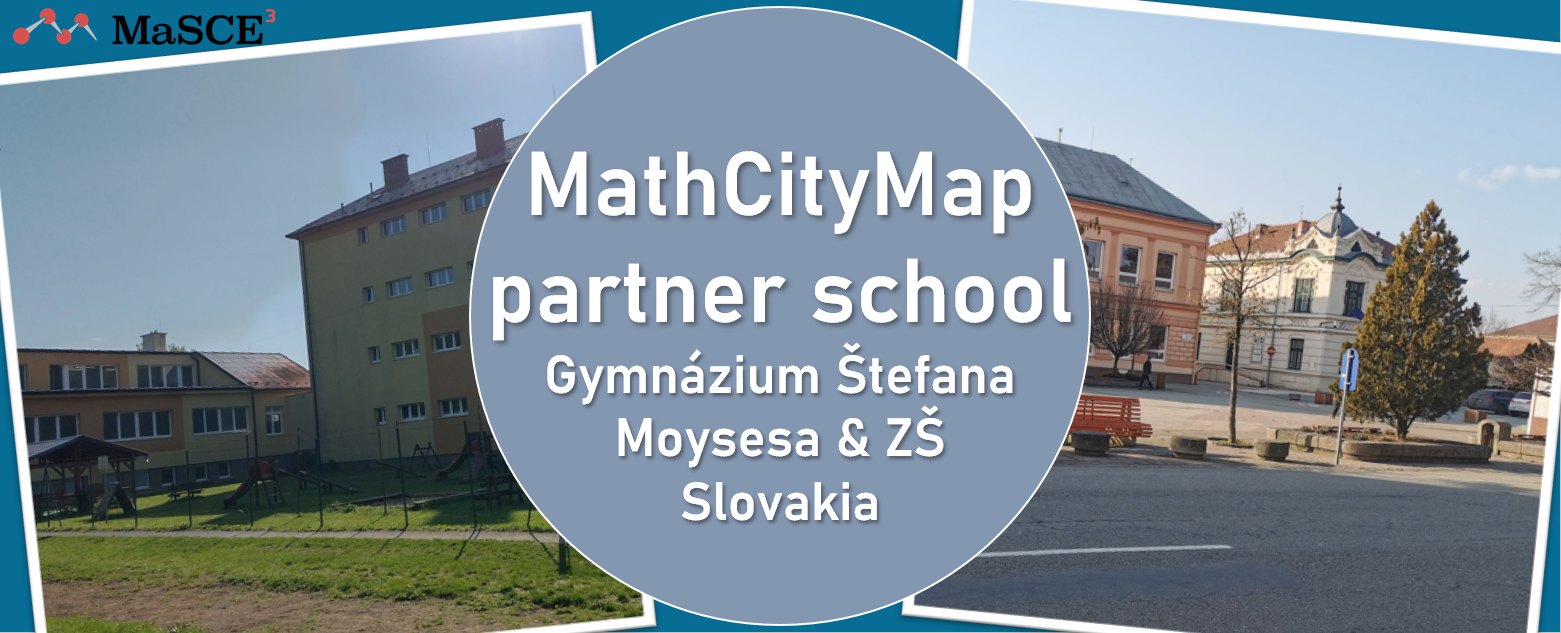
Not one but two new partner schools in Slovakia are introduced this week! Gymnázium Štefana Moysesa in Moldava nad Bodvou and Základná škola in Bánovce nad Bebravou both successfully applied and are now partner schools five and six in Slovakia.

Gabriela Kövesiová, a math teacher from Gymnázium Štefana Moysesa told us that: “All math teachers of this school decided to organize a mathtrail for the students of this small town in the east of Slovakia. Together they prepared two trails near the school, one for the 6th grade students and one for the 7th grade students. They also tested the trails with the students of two classes, and then these students created their own math problems in small groups. In this way, the third walk was created, with the tasks coming from the learners. Mathtrails are a great opportunity to see math in a different light. Here, many students learned how to use measuring devices and understood that math is all around us. They enjoyed working in teams and solving different problems together and understood that together they can achieve anything. We thank you for the opportunity to be part of this great project, and we wish that the network of practical mathtrails will grow with more and more high-quality routes, providing unforgettable experiences to its users.”Also the Základná škola in Bánovce nad Bebravou gave us a little insight into their application process through the teacher Marián Igaz:


Also the Základná škola in Bánovce nad Bebravou gave us a little insight into their application process through the teacher Marián Igaz:

“One of the reasons we were interested in creating Mathtrails was to take a different approach to teaching math. Tasks written in books focus to a small extent on the application of acquired mathematical knowledge in practice. We welcome the use of tablets or folding rulers in the classroom and find this very interesting and motivating for children. A few initial trails have convinced us that the children enjoy doing these tasks. We have developed our own tasks to bring more quality to math lessons and we think we have fulfilled our intention.

MathCityMap impressed us because we saw great potential in combining theoretical knowledge with everyday situations. The children have the opportunity to work in groups and compete with each other, which they find very amusing. At the same time, they have the opportunity to gain practical experience by measuring lengths in geometry. In addition to measuring, they also learn about the approximate distance between different objects. Mathtrails are very attractive to students and add variety to the teaching process.”

Of course, the package with the official partner school plaque and the MCM measuring instruments is already on its way to both schools and we are very much looking forward to receiving further applications from all over the world.

All further information about the partner school program and the requirements for the application can be found in the article about the first MCM partner school as well as on the homepage of our project MaSCE³.


A mathtrail that fits perfectly into our category “Popular Mathtrails” is the trail “Prechádzka na ZŠ Duklianska pre 5 ročníkn” which was created by the experienced MathCityMap author Silvia Haringová in the Slovakian town of Bánovce nad Bebravou. Consisting of a total of six tasks, the trail gained 119 app downloads in June.

In a short interview, Silvia tells us how this came about:


What is the trail about? What is your favourite task of the trail?

The trail is designed to repeat the curriculum of the 5th grade. In the trail pupils solve, for example how many times longer does it take to decompose a plastic bag than paper or they find out how many euros it cost to replace the posts on the fence that borders the playground.

My favourite task in this trail is “Volleyball court”.

This is an application task in which pupils help the janitor find out the sum of the lengths of all the yellow stripes of the volleyball court, because the janitor wants to repaint them.


Why do you think the trail was it downloaded that often?

The trail was downloaded often, because at the end of the school year, the teachers let all the 5th grade students solve this trail, but it was also solved by the 9th graders, who gradually solved the trails for the 5th to 8th grade. The teachers let them repeat the curriculum of the entire second grade of elementary school in this way.


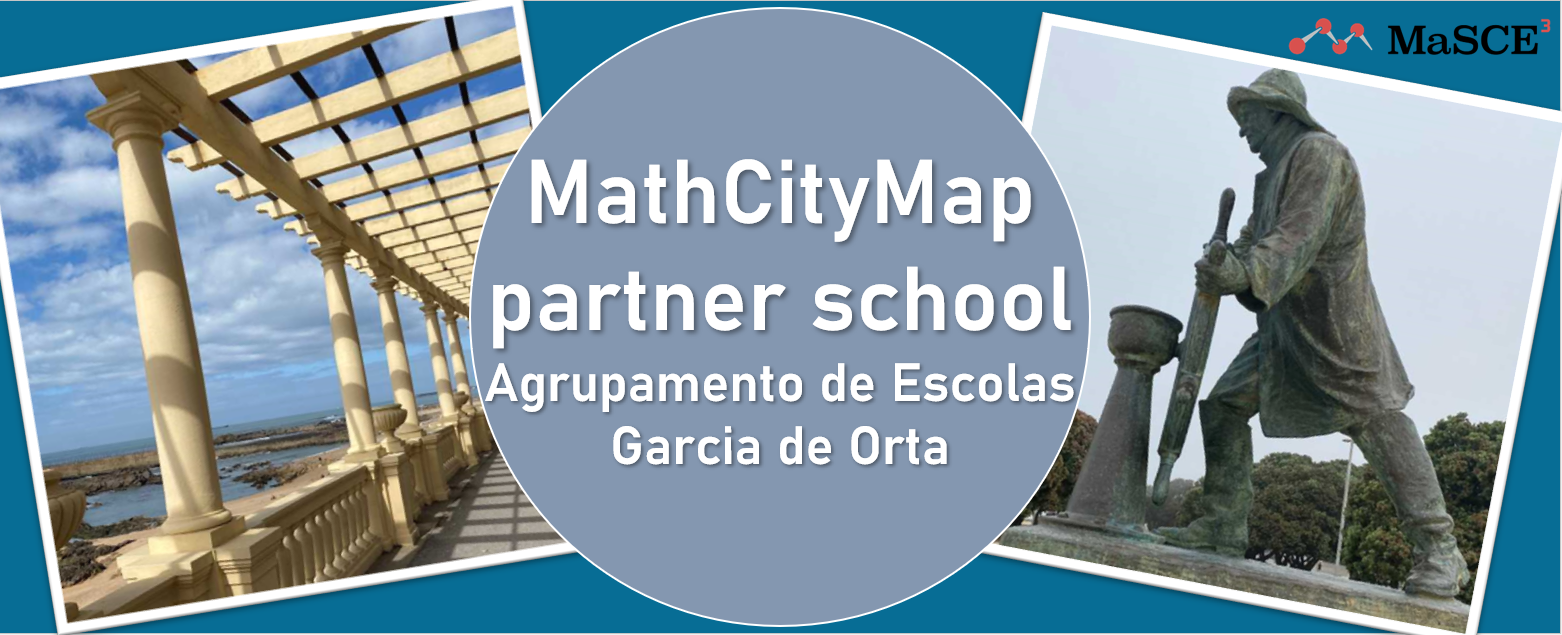
Already the seventh partner school in Portugal! We are very pleased that the Garcia de Orta school association has successfully applied to become the first partner school in the northern Portuguese city of Porto.

The application was made with two of the numerous trails that have since been created and published at and around the school:

Um passeio na Foz do Dourowhich can be found in the app under the code 013089.

Also, “Escola Garcia de Orta“, a classic school trail that has the code 592281.

In their application, the school writes: “We are committed to creating and using this challenging application, in the creation of mathematical trails, to use with our students, with the aim of motivating and enhancing the study of Mathematics.” In addition, it makes an appeal to other schools, which we of course support: “Get to work, Mathematics is everywhere!”


The package with the official partner school plaque and the MCM measuring instruments is already on its way to Portugal and we are looking forward to receiving more applications from all over the world.

All further information about the partner school program and the requirements for the application can be found in the article about the first MCM partner school as well as on the homepage of our project MaSCE³.


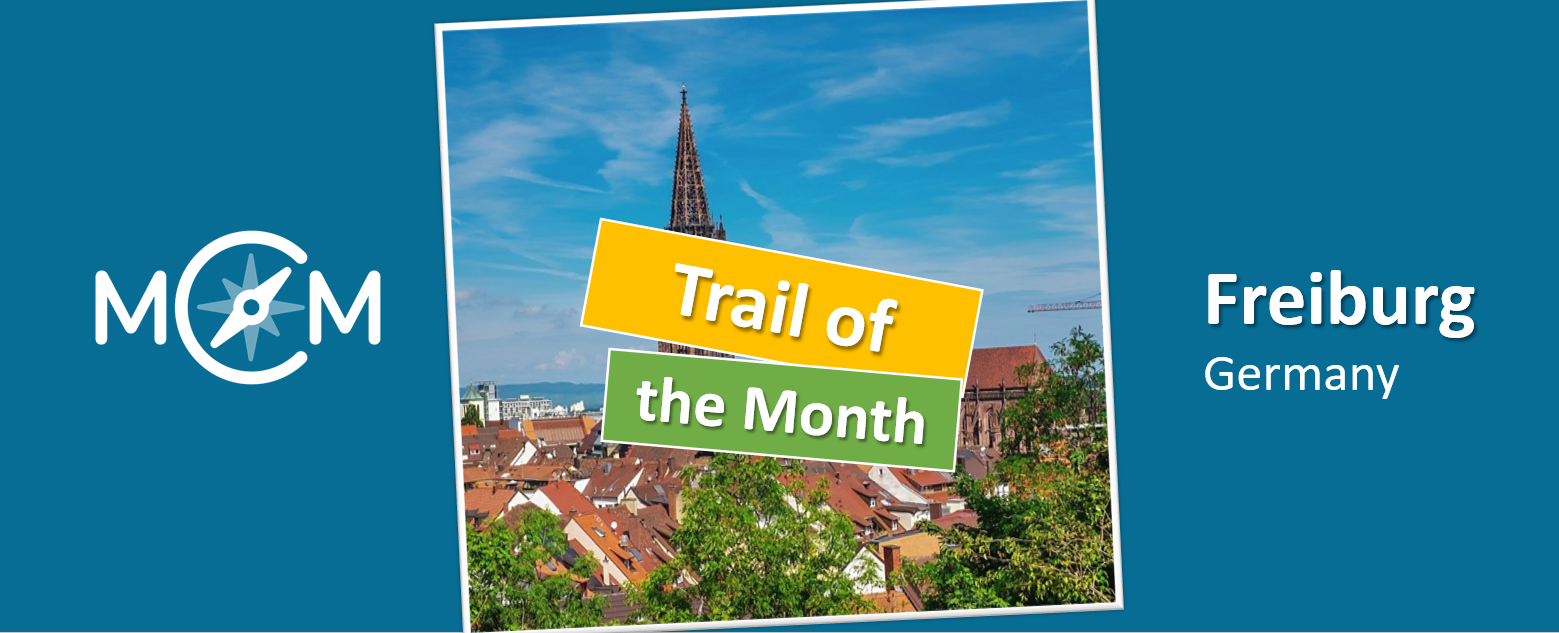
As our Trail of the Month for June, we would like to introduce the Mathtrail Freiburg, which, as the name suggests, is located in the southern German city of Freiburg. The trail can be found in the app under the code 1412574 and in the web portal under this link.

The trail consists of a total of eight tasks on diverse mathematical topics and was created as part of the international ICSE Academy project. What ICSE is and what makes this trail special is described in a short interview with one of the authors, Silvia Haringová.


Where is your trail located? What is special about your trail?

The trail is situated in the historic centre of the city of Freiburg im Breisgau. This trail was designed as an illustration for partners of the project ICSE Academy by Silvia Haringová, Janka Medová and Martin Cápay from Constantine the Philosopher University in Nitra, Slovakia.


What is the project ISCE and why was working with MCM benefitial for the project?

The International Centre for STEM Education at the University of Education Freiburg, Baden-Würtenberg, Germany (ICSE) is a research and networking centre focusing on a future-oriented development of STEM education in Europe. It is working closely together with the ICSE Consortium and other Partners in European projects to further develop and disseminate innovative teaching approaches in STEM education. Currently, they are working on various projects concerning environmental socio-scientific issues (MOST, ENSITE), the empowerment of girls in STEM (GEM) and the development of transversal skills in class rooms (STEMKey), as well as the professional development of teachers (3C4Life).

The ICSE Academy is a project where universities, schools and school authorities from 13 European countries work together aiming at development of STEM teacher education, both initial teacher education and  professional development of in-service teachers. As shown by our work in Slovakia, MCM trails have big potential in stimulating teacher collaboration and co-design. Furthermore, MCM trails also fit with European priorities as defined in ICSE Academy project, they prepare pupils for life in digital era, teach them to collaborate and communicate their ideas, provide reasoning and also offer the opportunities to bring environmental issues in mathematics education.


Describe your favorite task on the trail. How can it be solved?

We create trails in different cities and states and the triangular shape is usually hard to find, so we were very happy to come across it in the city centre. Because of this fact, my favourite task is called Kornhaus passage.

The task is related to a triangle made of stone blocks. The user has to determine the circumference and the area of this triangle. For this, corresponding measurement data must be collected. Afterwards, one only needs the formulas for the perimeter and the area of a triangle.


We are very happy to welcome the Colegio de Ciencias y Humanidades (CCH), the first Mexican MathCityMap partner school in our international partner school network!

CCH applied with two trails, which can be found on the web portal and in the MCM App as follows:

  • El Paseo matemático CCH Naucalpan 2022, Code: 3910980
  • El Paseo matemático CCH 2023, Code: 4813875

David Sánchez, a teacher at CCH, initiated the application and tells us about the school community’s enthusiasm for Mathtrails and MathCityMap:

Due to the International Mathematics’ day, the “Colegio de Ciencias y Humanidades (CCH)” campus Naucalpan inagurated the 2023 Mathematical Walk edition.  

Currently, the initiative belongs to “CCHN” Mathematician, College Academic and Library Director Dr. Ignacio Renero Ambros who has been a user and promoter of the MathCityMap application for two years among students and colleagues.  

The idea of carrying out a first Mathematical Walk started in 2022, once everyone came back to face-to-face classes at “Universidad Nacional Autónoma de México” was announced. By the time, one of the problems to be faced was that students didn’t know their campus at all because of the pandemic, in addition to the fact that most of them had remained seated in front of their electronic devices for long time. Thus, with the necessity of knowing the most important buildings of the campus and promoting the physical activation, a tour was designed with twelve Mathematical challenges that would address Arithmetic and Geometry basic topics.   

Thanks to the motto “Walk, Calculate and Make History”, the “CCH Naucalpan 2022 Math Walk” was well received, and generated nearly 300 downloads. Some of his challenges were related to calculating areas between two figures, determining inaccessible altitudes, Mathematical language, evaluating expressions, and even searching for numerical clues in the library.  

This remarkable experience encouraged the head of the library to prepare a second tour, but now dedicated especially to second-year high school students. Due to this, on March 14th in a contest against the clock, more than a hundred students faced 10 new tasks dedicated to the calculation of inaccessible angles, equations of ellipses, circumferences and even horizontal shooting. Some of the challenges whose names were recognized the most were “El bebedero del diablo” (The Devil’s Drinker) , “Un grito de sed desesperado” (A Desperated Cry of Thirst) and “La escalera de Dios” (The Ladder of God)

The school received the news of the publication of the second route in MathCityMap after the teams won the 2023 Math Walk so it was decided to apply to this platform to be part as an Associated School, becoming the first school in Mexico with this recognition.  

“El Matematico” from CCH campus Naucalpan will give the first MathCityMap workshop for teacher in this inter annual period so he hopes to get several collaborators for his most ambitious project, which will be called “University City, Mathematical City”, a mega route inspired by the work of Ítalo Calvino and whose headquarters will be the campus at “Máxima Casa de Estudios” in Mexicowhich can be traveled by bicycle.

All further information about the partner school program and the requirements for the application can be found in the article about the first MCM partner school as well as on the homepage of our project MaSCE³.

For the Trail of the Month for May, we head to the city of Ávila in Spain, located west of Madrid. Here, the Sociedad Castellana y Leonesa de Matemáticas de Ávila created the mathtrail “XV OLIMPIADAS MATEMÁTICAS”. The trail is available in the MathCityMap app under the code 281469 and can be found in the web portal under this link.

The trail consists of a total of 12 tasks dealing with different mathematical topics and was designed in the Parque de los Patos, a park in the heart of Ávila.

Rubén Jiménez Jiménez, a member of the Sociedad Castellana y Leonesa de Matemáticas de Ávila, who was also involved in creating the mathtrail, tells us about the background of the trail in a short interview.


How did you come across the MathCityMap project?

Our association and our work is closely interwoven with the FESPM, one of the largest associations for mathematics teachers in Spain. MathCityMap was presented by FESPM at several meetings and since then we have been using the app and the application in our activities. The trail presented here was created as part of our Mathematics Olympiad, which we are now running for the second time with MathCityMap. It’s always been a very successful experience.


Where is your trail located? What is special about your trail?

This Mathtrail was designed to be used in a park in our city, Ávila, Spain. It’s thought to be used by children between 14 and 16 years old. The environment where we work is an amazing place with a lot of kids’ enterteinment, trees, flowers, a lake, some peculiar litters made of a cilinder shape and many more interesting mathematical objects.


How do you usually use MCM?

We use MathCityMap in groups of five pupils so that the students can work in a collaborative way. We study different Mathematics topics, such as Trigonometry, Congruence, Angles, Solids, Pythagoras, Triangles with the help of MCM.

In order to be able to work on the tasks of our trails, our students are always equipped with the necessary tools, such as a tape measure, folding rule and calculator.


Describe your favorite task on the trail. How can it be solved?

Measuring a cilinder litter is my favorite task of the trail. Although it is quite easy, I like this task because the pupils have to decide which measures they need, in this case, height and diametre.

In my opinion, all tasks are rich to learn Mathematics. Each one offers something different to all students.  


In our new category “Popular Mathtrails” we want to present a mathtrail once a month that has had a particularly high number of app downloads in recent weeks.

In the month of April, one of the most popular trails was the “Thales-30-03-2023” trail, which was created by the mathematics teacher Daniel Partal Garcia in the city centre of Granada, in Spain.

Daniel normally uses MathCityMap as a teaching method in his mathematics classes at Maristas High School in Granada, as he tells us in a short interview. However, he is also involved, together with other colleagues, in the Spanish mathematics association THALES, which organised a competition between 10 schools in Granada using MathCityMap on 30 March.

A total of about 400 students between the ages of 14 and 16 took part in the competition, where the aim was to solve as many of the 25 tasks on the trail as possible and collect points. The students worked in groups of four and each group downloaded the trail, which was certainly the reason for the great success of this trail.

Of course, the winners of the competition also received prizes in the form of calculators, USB sticks and books sponsored by the companies CASIO, BEEP technology and EDELVIVES. A local newspaper also reported on the many students who explored the city centre of Granada equipped with smartphones and measuring tools.

For Daniel and his colleagues, the competition with MathCityMap was a complete success and they are already planning a repeat with a new trail in March 2024.