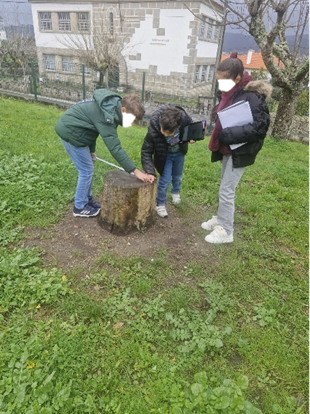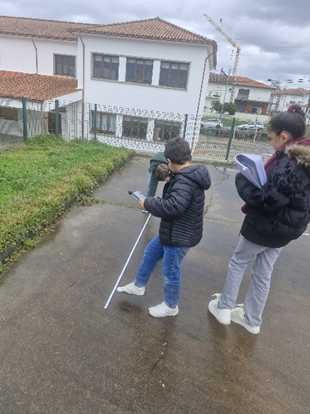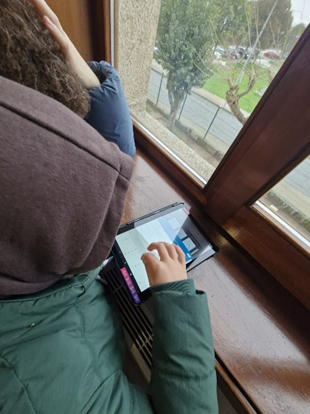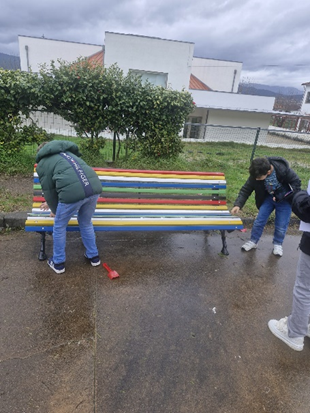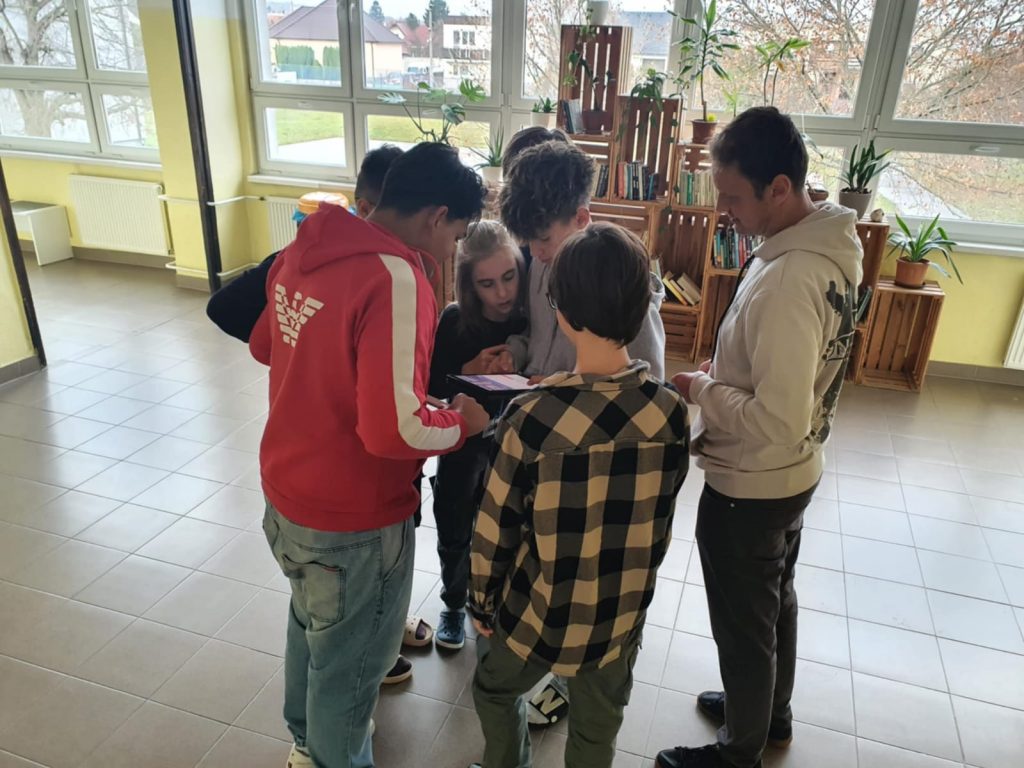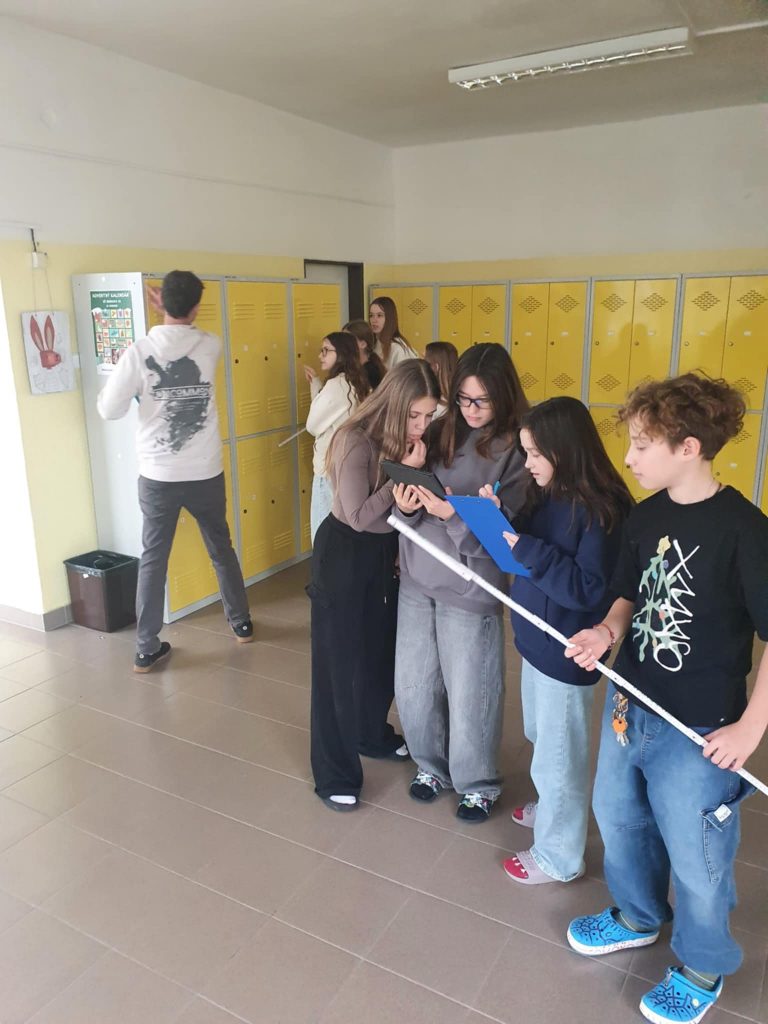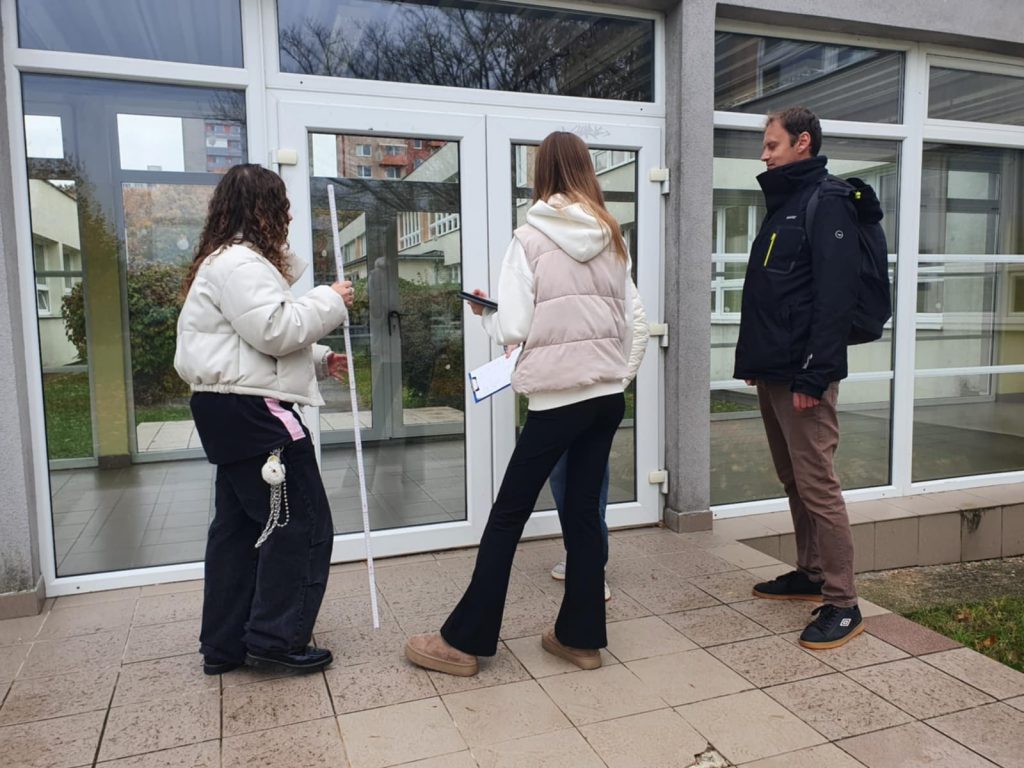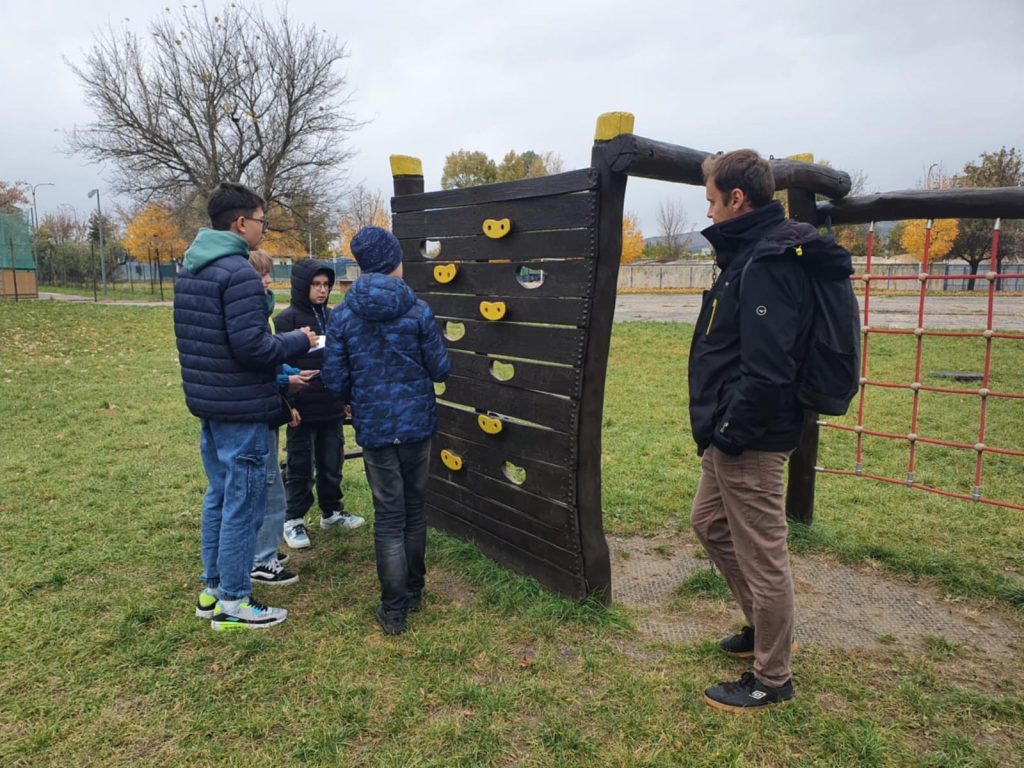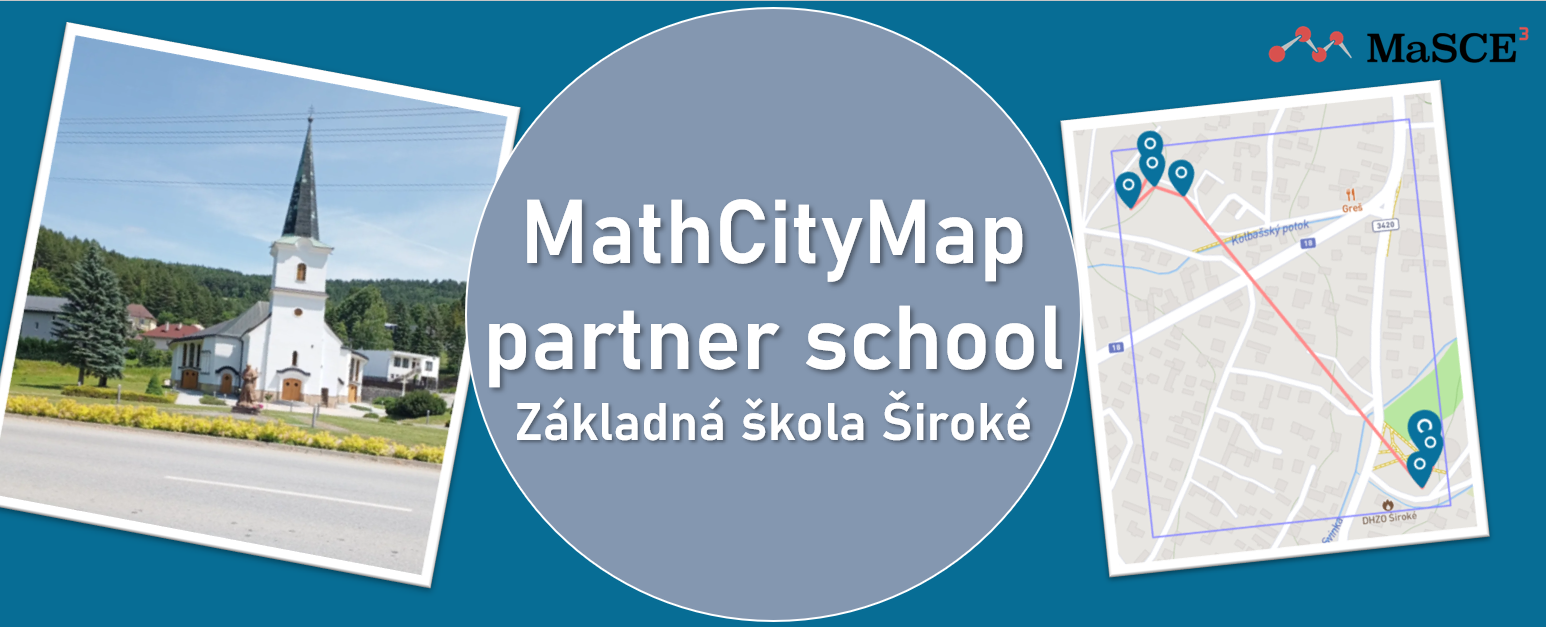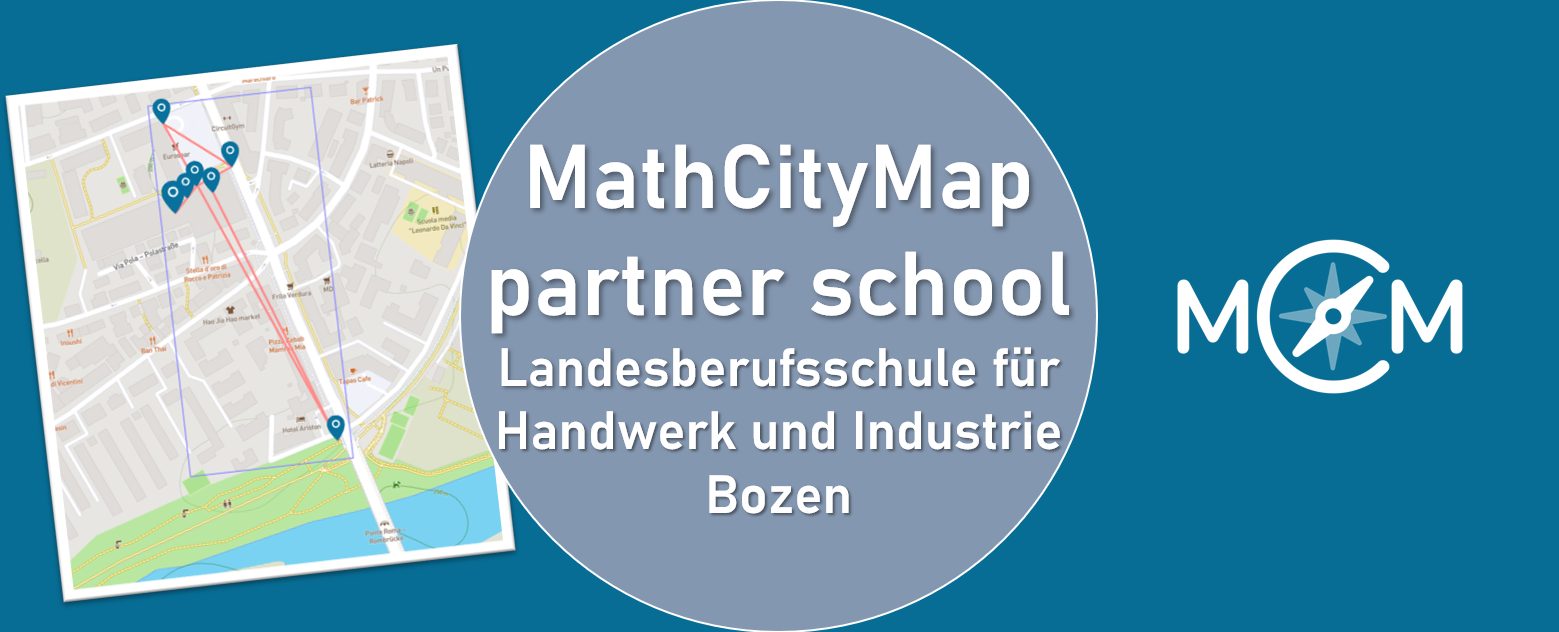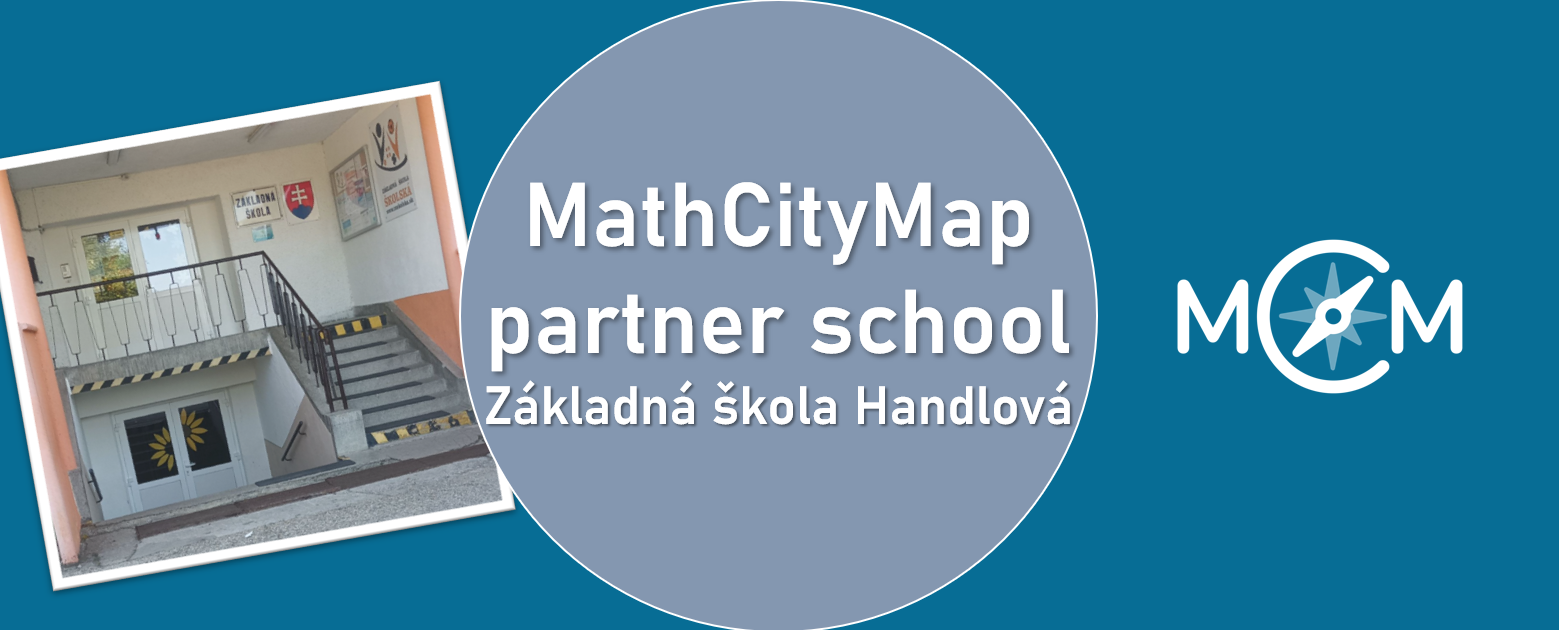
We are very pleased to welcome the Landesberufsschule für Handwerk und Industrie Bozen as a new MathCityMap partner school. After the school’s teachers participated in a MathCityMap training in 2024, the school has now officially published its first two trails:

The feedback from the students has been very positive. Designed as small outdoor learning activities, the trails offer a welcome change from regular classroom lessons. The spacious area in front of the school and the nearby river provide a pleasant outdoor learning environment.

The trails were carried out with two fourth-year classes from the technical school for computer science as well as a basic vocational class. Equipped with the necessary tools, the groups were able to work independently, with occasional input from the teachers when needed. One important takeaway: a short briefing in the classroom makes the on-site activities run much more smoothly.

Thanks to the frequent double lessons, the trails with their seven tasks can easily be completed within one teaching unit – including travel time there and back.

We thank the Landesberufsschule für Handwerk und Industrie Bozen for their commitment and warmly welcome them to the MathCityMap community!

The package with the official partner school badge and the MCM measuring instruments is on its way and we are looking forward to receiving more applications from all over the world.

All further information on the partner school programme and the requirements for application can be found both in the article on the first MCM partner school and on the homepage of our MaSCE³ project.

On Thursday, December 4th, our third MathCityMap Partner School Meeting took place – once again a very enriching exchange on the use of MathCityMap in the classroom.

This time, the focus was on our new feature, the student accounts. With them, students can independently create their own MCM tasks and thus further develop their problem-solving and problem-posing skills. After an overview of other recent MCM updates and a short introduction, there was a hands-on phase during which participants could try out the new feature directly.

The meeting was attended by part of the MCM team, several project partners, and numerous teachers from Slovakia, Portugal, Spain, Germany, and Italy. Participants took the opportunity to ask many questions. We were particularly pleased with the positive feedback and the valuable suggestions for improvement, which will now be incorporated into the further development of the system.

At the end of the online meeting, we took a group photo to capture this successful event.

We would like to thank all participants and are already looking forward to the next meeting!

If you’re reading this, you’ve already discovered it: our website is now shining in a brand-new design! We’re excited to offer you a more modern, clearer, and hopefully even more enjoyable user experience.

We’re especially happy to introduce our new step-by-step tutorials for both the app and the web portal. These guides walk you through the most important features one step at a time — perfect for new users and for anyone who wants to rediscover certain functions at their own pace.

As with any major relaunch, there may still be a few minor issues or display problems in the first days. If you notice anything that doesn’t work as expected, please let us know — ideally by sending an email to info@mathcitymap.eu.

Thank you for your support, and enjoy exploring our new website!
Your MathCityMap Team

We are very pleased to welcome Mittelschule Tabor as a new MathCityMap partner school!

At the beginning of this school year, a workshop day took place at the school: students from grades 2 to 4 explored their school building and schoolyard using MathCityMap trails. The four trails created by their teachers (trail codes 2329200, 6929201, 4929196 und 3429202) took the children on a mathematical discovery tour through their everyday environment.

Whether measuring tables and seating areas, estimating the amount of waste in the classroom, or comparing surfaces, tiles, and angles – the 11- to 14-year-old students experienced mathematics in a new and engaging way.

Working in small teams, the children collaborated with great motivation, searched for solutions, and supported each other. Their teachers reported high levels of concentration, enthusiasm, and team spirit during the trails. It was particularly emphasized that the activities not only strengthened mathematical skills but also promoted movement, communication, and cooperation.

We would like to sincerely thank Mittelschule Tabor for their commitment and wonderful collaboration – and we warmly welcome them to the MathCityMap community!

We are very pleased to share the following article by Patrick Schreiber, mathematics teacher at Vöhlin-Gymnasium Memmingen, which was recently published in a local newspaper. In his text, he describes how the MathCityMap app combines mathematics and city exploration in an exciting way.
We are delighted to feature the article here on our website – offering a glimpse into the practical implementation of our project.

The trail (4528465) created by him is now publicly available and invites everyone to discover Memmingen from a completely new – mathematical – perspective.

In the following you’ll find the complete newspaper article (translated from German):

The Vöhlin mathematics teacher Patrick Schreiber has, with the help of the MathCityMap app, created a trail for students and for all those who enjoy facing small and larger mathematical challenges while exploring Memmingen at the same time. The free software is provided by the team around Prof. Dr. Matthias Ludwig of the Goethe University Frankfurt. The GPS-guided tour through the city follows the route provided by the city information office under the title “Memmingen – City of Freedom Rights.” Stations include, among others, the Frauenkirche, the Freedom Fountain, and the Kramerzunft. It deals with geometric objects, combinatorial aspects, and functional relationships that are hidden behind concrete objects, in buildings, paths, and patterns.

At the stairs leading from Herrenstraße up to the Martinskirche, one has to calculate how many steps the staircase would need to be extended in order to reach the top of the Martinsturm. At the fountain on the marketplace, the task is to calculate the base area, with the measuring tape function on the smartphone providing assistance. Things get noticeably trickier at the Lotzerhaus.

Whereas math lessons in the classroom often make students’ heads spin and cause frustration, MathCityMap offers mathematics at concrete objects – outside, right in the middle of city life. And it’s all about teamwork: solutions are developed together, and successes are celebrated together. The whole thing can, of course, also be organized as a competition. And if the right idea or formula is missing, the app gives helpful hints – all without the pressure of grades. A great idea for a school excursion, a few math lessons in the fresh air, but also for locals of Memmingen or visitors. The app is available at www.mathcitymap.eu. The Memmingen Math Trail is publicly accessible there. Trails can be found for many locations across Europe.

You might have read it in our last MCM update post or come across it in the web portal already: Say hello to the Content Gallery — the newest source of inspiration for your MathCityMap tasks. Designed as a collaborative collection of the most creative, diverse, and high-quality public math tasks, this gallery showcases interesting tasks created by teachers, MathCityMap experts and developers.

Why a Gallery?

As educators explore their environments, they discover math in the most unexpected places — whether it is a tree, a sculpture, or a playground. Until now, these gems were scattered. The Content Gallery brings them together in one place, making it easier to browse, learn, and get inspired by real-world examples.

How to get there:

In the web portal, you’ll now find a new button in the menu bar at the top. Click on the image symbol, and the content gallery will open. You can browse tasks across different object categories. When you click on an object, related tasks in English and German will appear. If you’re looking for something specific, use the filters on the left side. By clicking on a task, you’ll access its detailed information — including the solution — and you can even copy the task to create a similar one in your own area.

Whether you’re looking to refresh your next trail or simply curious about how others integrate math into everyday objects, the Content Gallery is here to spark your creativity.

On the weekend of September 19–21, there was a festive atmosphere on Frankfurt’s Opernplatz: the Polytechnic Society Foundation celebrated its 20th anniversary—and MathCityMap was there!

It was a special honor for us to be part of these celebrations. The foundation recognized the potential of MathCityMap early on and provided us with active support, especially in the early days. We were therefore all the more delighted to be there with our team.

At our booth, we were able to introduce MathCityMap to numerous visitors – from people who happened to be passing by to math enthusiasts to representatives of other projects. Many were interested and enthusiastic about the idea of learning math outdoors.

Away from our booth, the anniversary celebration also offered a diverse and exciting program: numerous initiatives and projects presented themselves and ensured a varied weekend full of exchange, discoveries, and inspiration.

We would like to thank the Polytechnic Society Foundation for the invitation and support. It was a pleasure to be part of this special celebration!

We are delighted to welcome Základná škola sv. Marka as a new partner school in the MathCityMap network! Under the guidance of teacher Kristína Mrázová, the students regularly use mathematical learning trails to experience mathematics in a practical and creative way.

Three trails have already been published and can be accessed using the following codes:
1. ZŠ sv. Marka (Code: 3912202)
2. Jarná prechádzka na ZŠ sv. Marka (Code: 6815304)
3. ZŠ sv. Marka II. (Code: 1317889)

The teacher reports about the experiences she has made with her class:
„The pupils enjoyed solving mathematical trails outside the classroom. Working in groups, they applied their knowledge to real objects and practical examples. They supported each other, discussed different strategies and discovered that mathematics can be useful and fun in everyday situations. Mathematical trails are regularly used at our school, and this activity is very popular among the pupils.“


The package with the official partner school badge and the MCM measuring instruments is on its way and we are looking forward to receiving more applications from all over the world.

All further information on the partner school programme and the requirements for application can be found both in the article on the first MCM partner school and on the homepage of our MaSCE³ project.
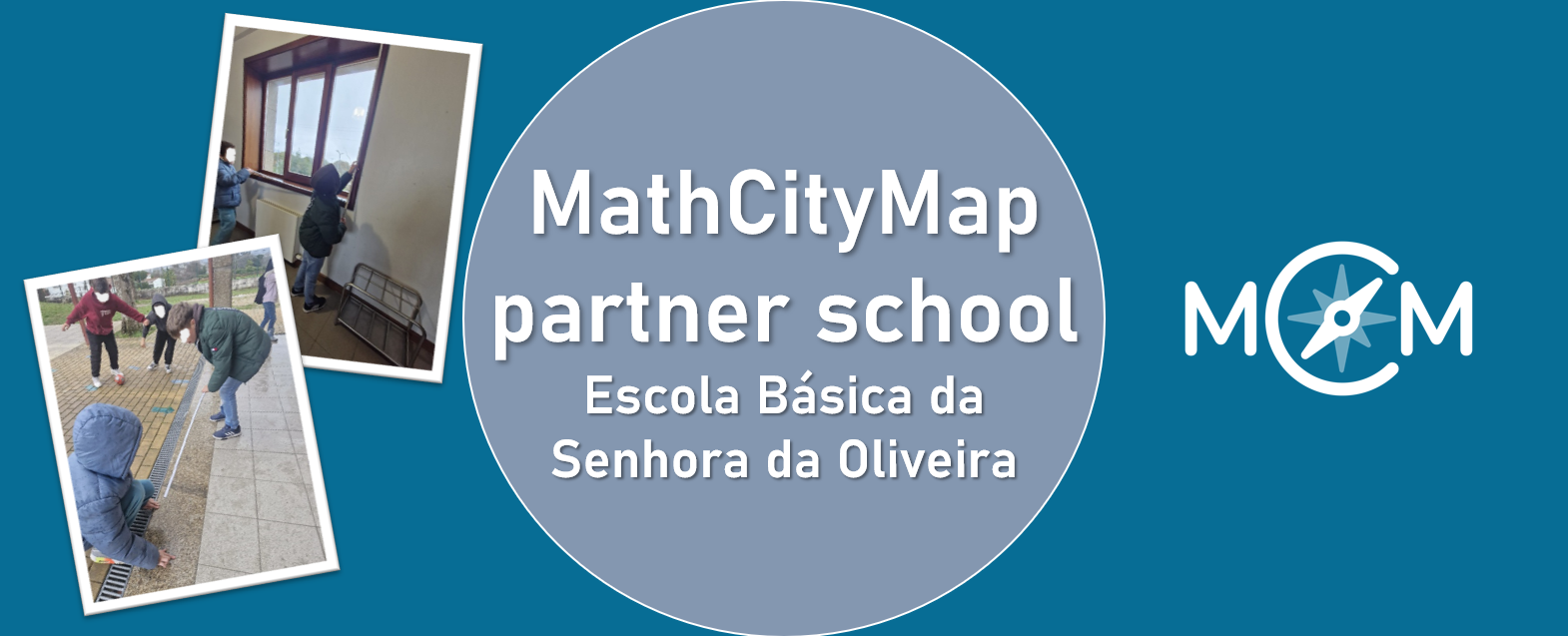


We are very happy to announce the Colegio Internacional de Sevilla – San Francisco de Paula as a new MathCityMap partner school! They have created, tested and published two trails in the area of their school.

Trail 1: „Matemáticas por el centro de Sevilla” (Code: 051918)

Trail 2: „Plazas al cuadrado” (Code: 1328831)

Together, these two trails feature more than 15 tasks that encourage students to interact with their surroundings in mathematically rich ways—measuring, estimating, reasoning, and discovering patterns hidden in the architecture, spaces, and structures of the city.

According to their teacher Francisco Rodríguez Tamayo the students particularly enjoyed the tasks related to Fibonacci and the one called “A Plaza Nueva hay que volver” – a task for Betis football fans.

In the next academic year, MathCityMap activities will be included in the school’s curriculum as part of the Middle Years Programme.

We warmly welcome the school to our growing MathCityMap community and look forward to more inspiring tasks and trails from Spain!

The package with the official partner school badge and the MCM measuring instruments is on the way and we are looking forward to receiving more applications from all over the world.

All further information on the partner school programme and the requirements for application can be found both in the article on the first MCM partner school and on the homepage of our MaSCE³ project.
We are delighted to welcome HTL Steyr as a new MathCityMap partner school! They started working with our platform last school year and have already created and tested two trails.

Trail 1: Steyr city center (“Styr Innenstadt” – Code 4822049)

The trail was created as part of math class by 11th grade students under the guidance of their teacher. It leads through the historic city center of Steyr and focuses on geometric and everyday questions in public spaces. Two groups of 9th grade students then tested the trail and it was revised based on their feedback.

Trail 2: Trail around HTR Steyr (“Trail um die HTR Steyr” – Code 3728627)

This trail leads around the HTL school building and is located in a traffic-calmed area. It includes tasks from different subject areas, some of them relate to the building structures and outdoor facilities of the school and its surroundings.

Teacher Anja Schneiderbauer reports on her students’ experiences:

“The project was received positively across the board—both by the younger test groups and by the older students who were involved in the creation of the trails. Particular emphasis was placed on the change from the usual lessons and the opportunity to see and apply mathematics in a practical context. My personal fear that it would be more suitable for younger students was completely unfounded. On the contrary, the older students were enthusiastic about being able to apply mathematics outdoors.” 

We look forward to many interesting tasks and trails in Steyr in the future!

The package with the official partner school badge and the MCM measuring instruments is already on the way and we are looking forward to receiving more applications from all over the world.

All further information on the partner school programme and the requirements for application can be found both in the article on the first MCM partner school and on the homepage of our MaSCE³ project.