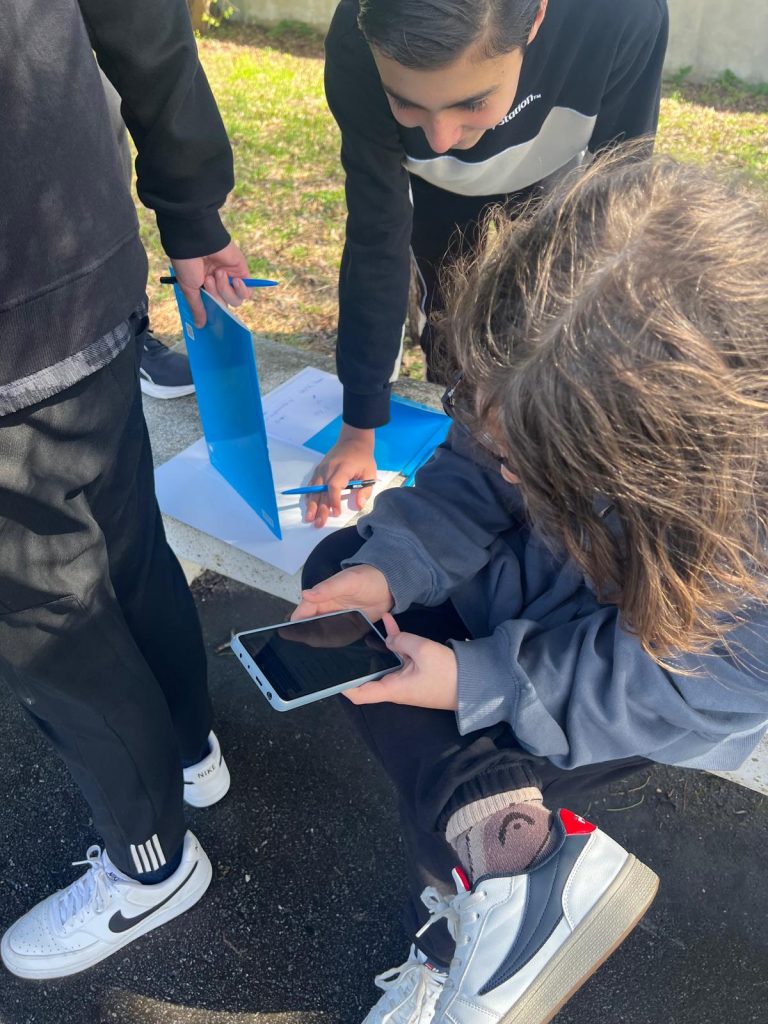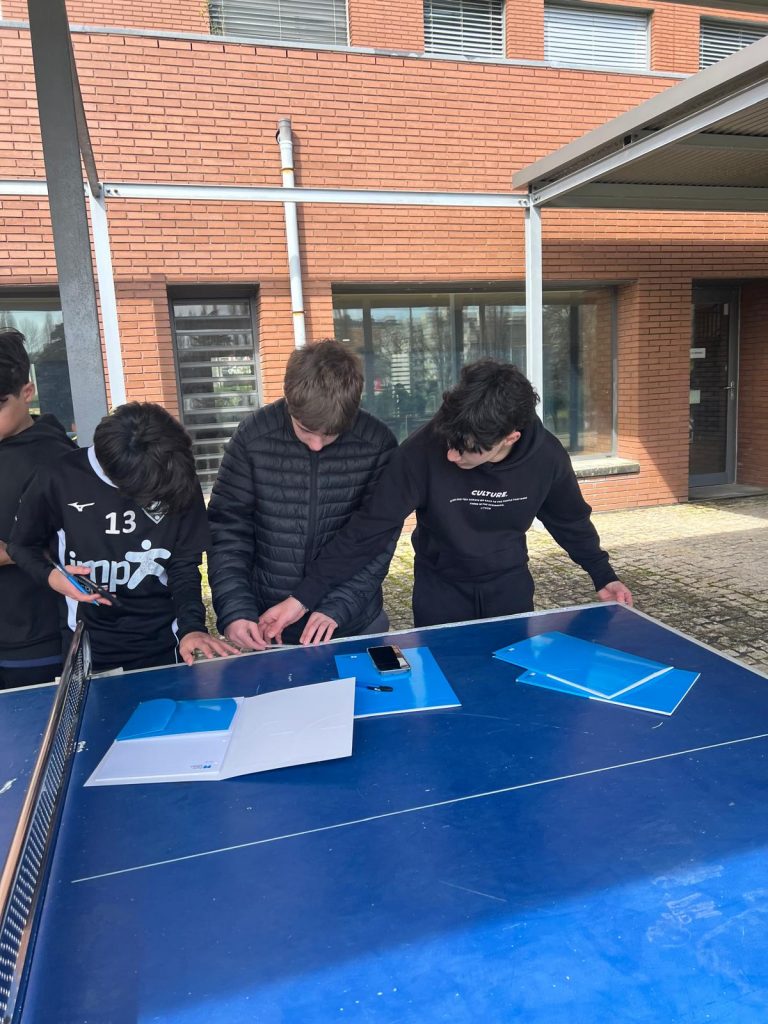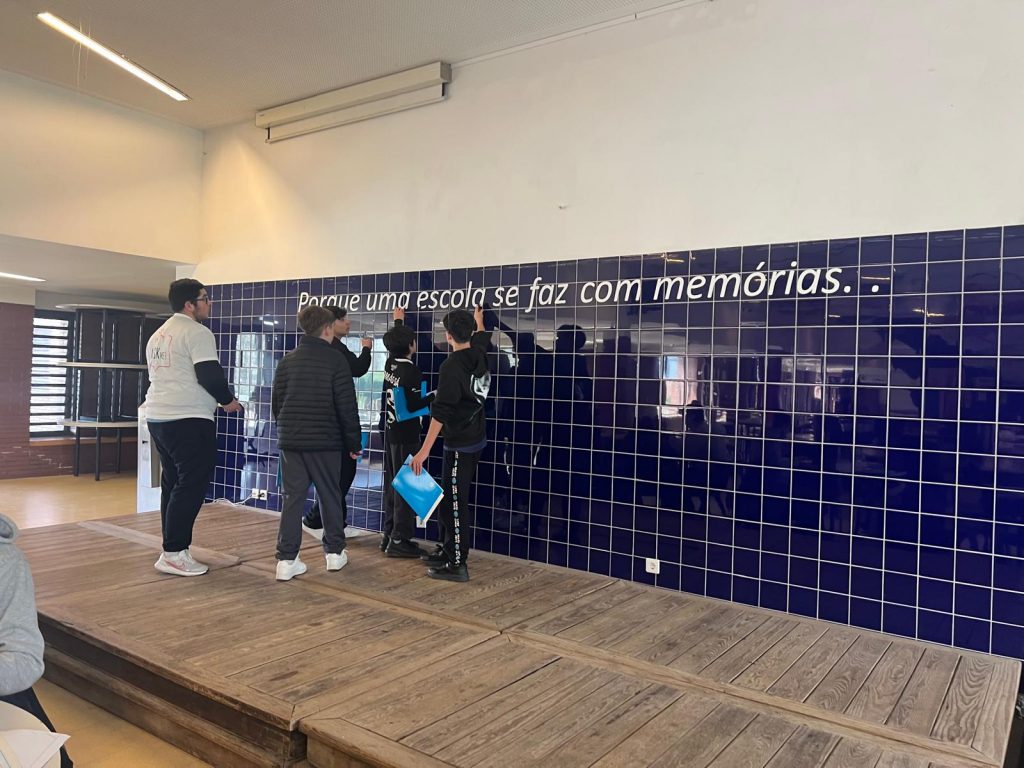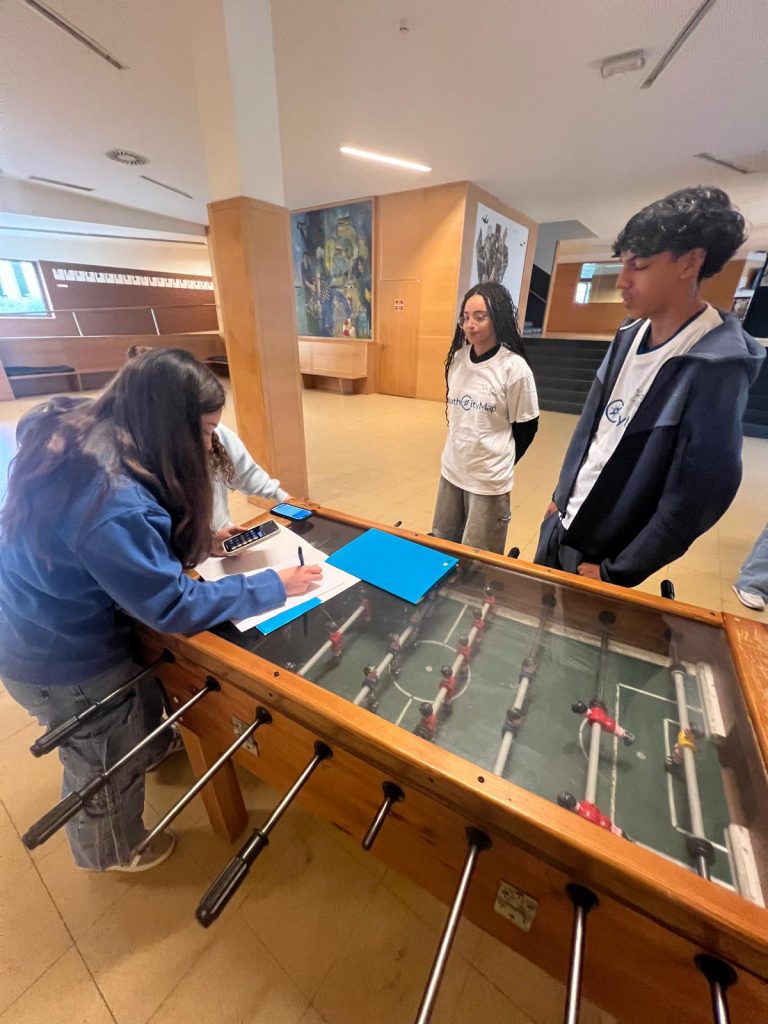
Dear MathCityMap Community,

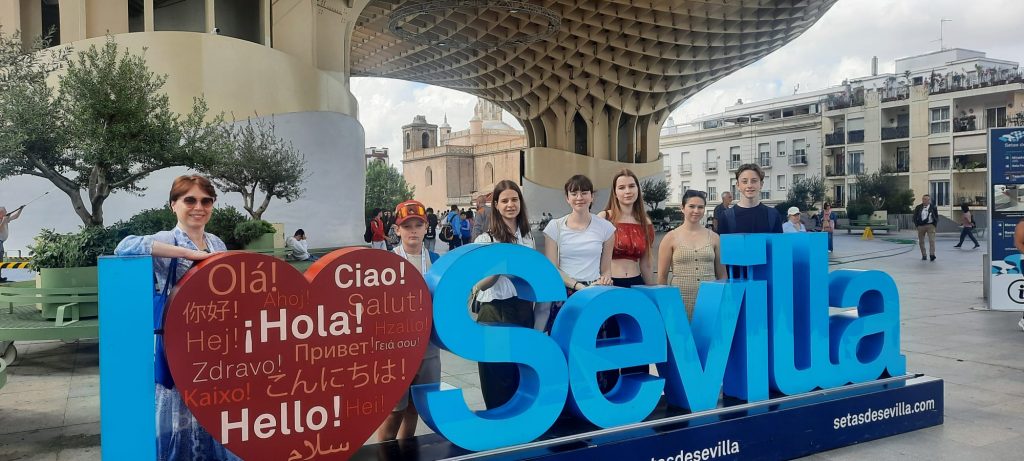
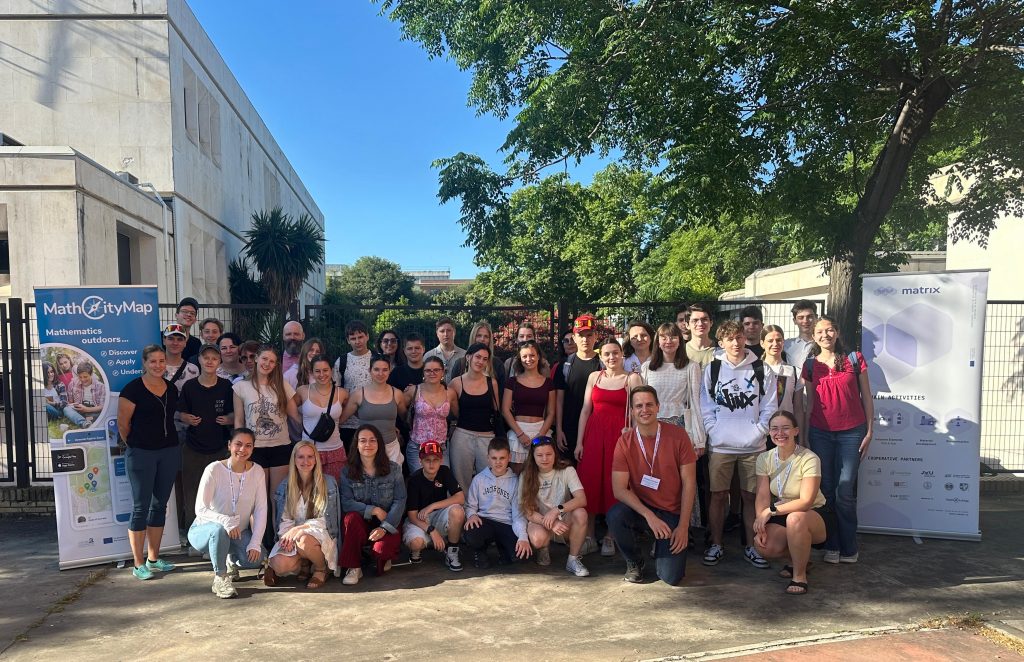
last week, our first international student and teacher meeting took place in Seville. We had a fantastic week full of exciting activities, international collaboration, and excellent weather for doing mathematics outdoors!

On Monday, the MCM team as well as all school groups and their teachers arrived. In the evening, we held a welcome session in which all teams introduced themselves and an overview of the week was presented.

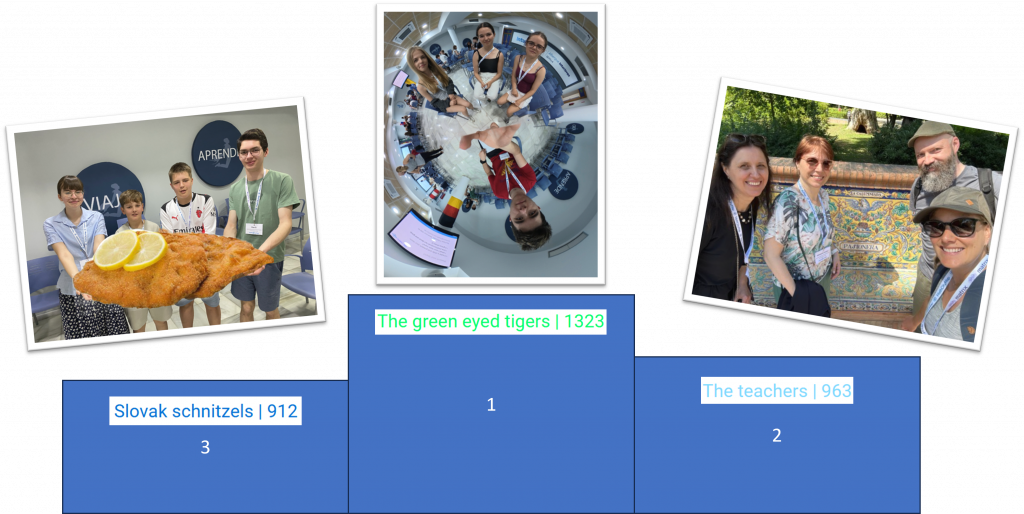
Tuesday was filled with joint activities in various small groups. We began with a more intensive get-to-know-each-other session, where everyone had the opportunity to talk with participants from all groups. Afterwards, the first mixed teams were formed. These groups were initially language-based but included students from different schools. In these teams, the participants took part in a Math Trail Challenge in the nearby María Luisa Park. All teams collected many points, and at the end there was, of course, a small award ceremony.

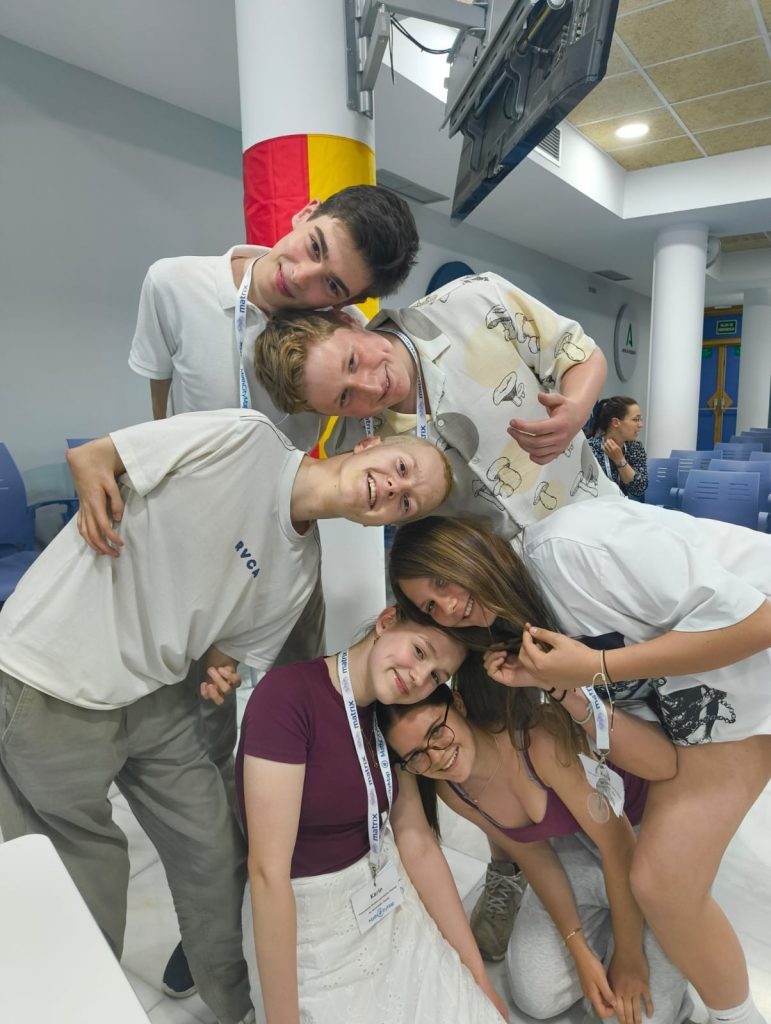
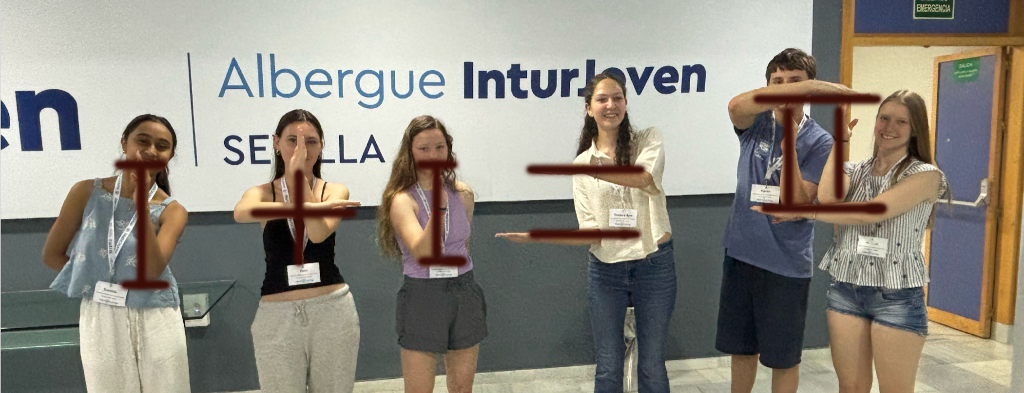
After a longer lunch break, there was an input session on what makes a good MathCityMap task and what aspects need to be considered when creating tasks. The newly learned knowledge was immediately tested in a Kahoot quiz. Afterwards, there was time for all kinds of MCM-related questions directed to the team. In the early evening, participants first took part in a selfie challenge in randomly assigned teams before the working groups for the week were formed. These teams immediately faced their first challenge: building the tallest tower possible using 20 sheets of paper.

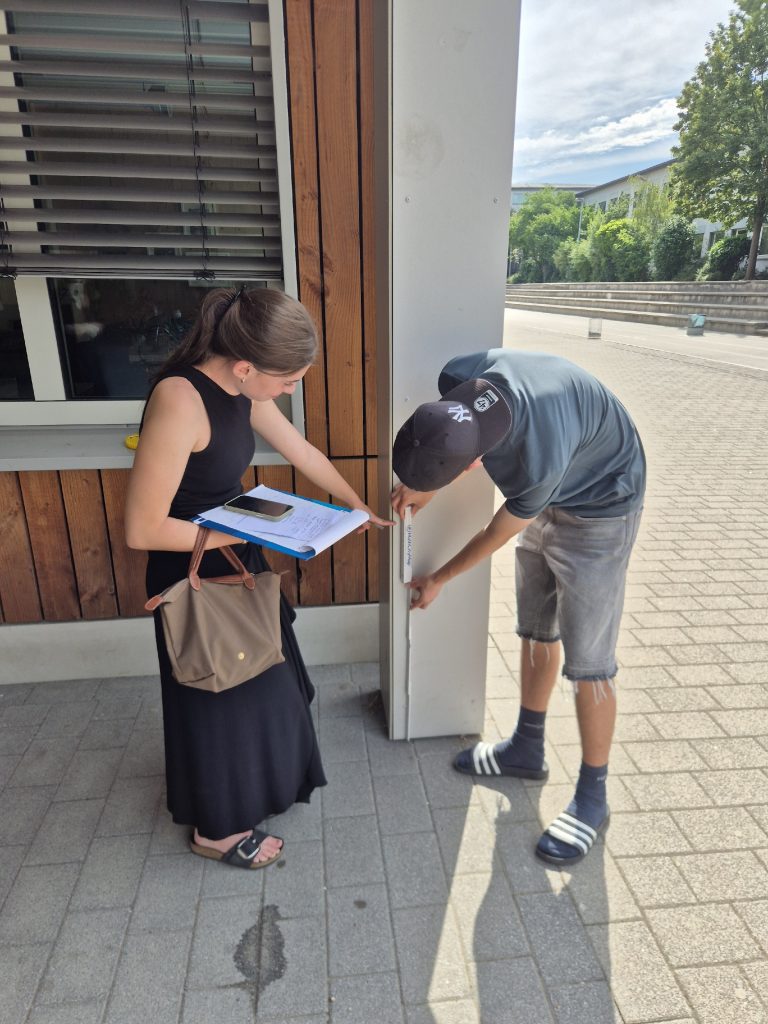
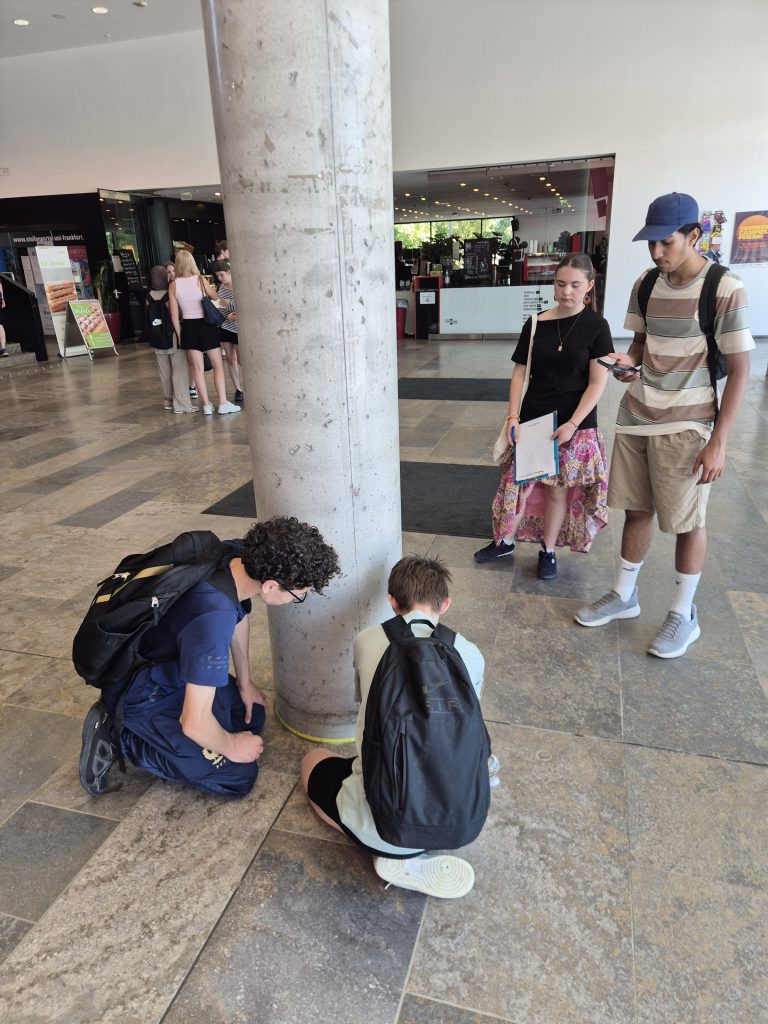
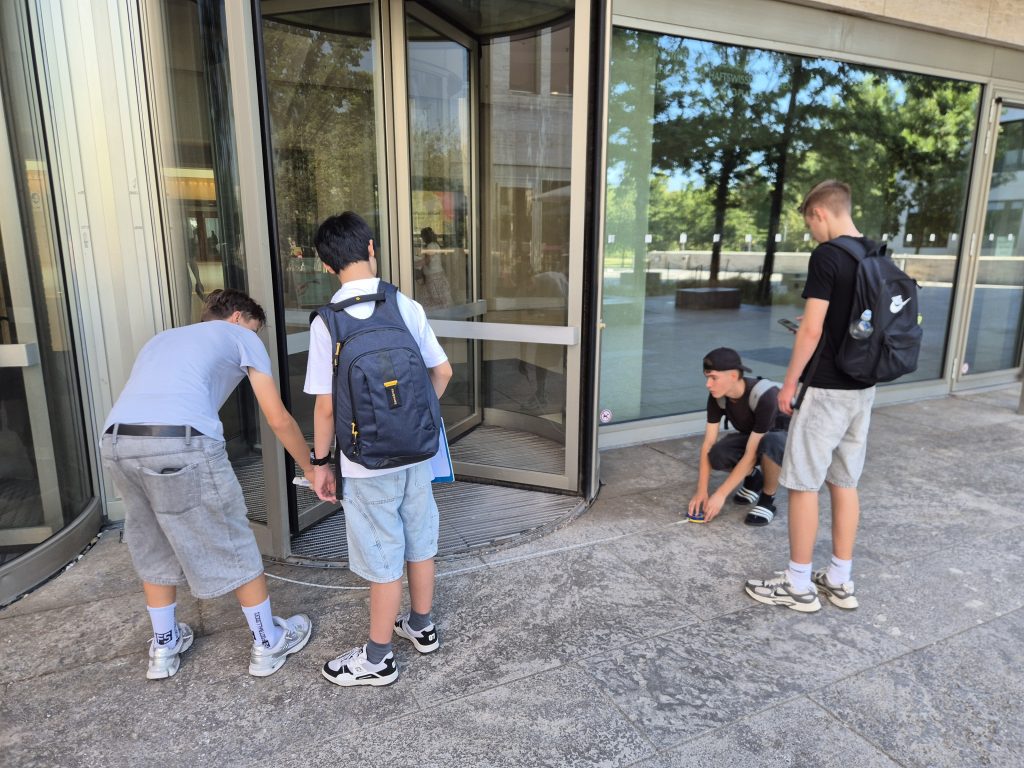
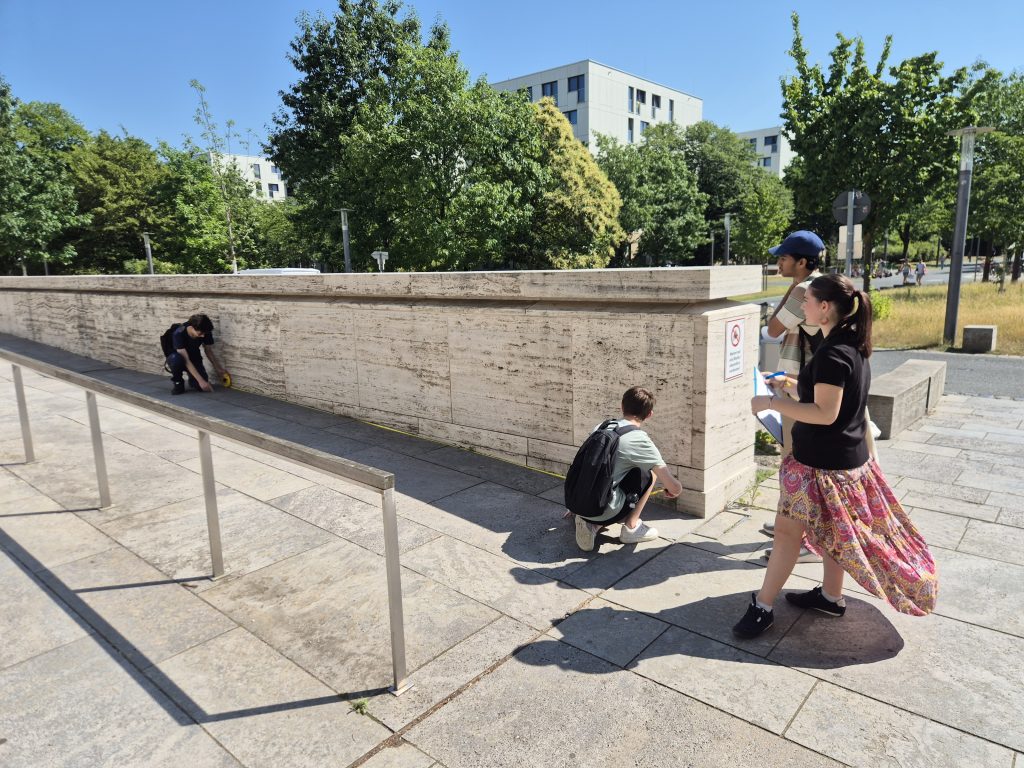
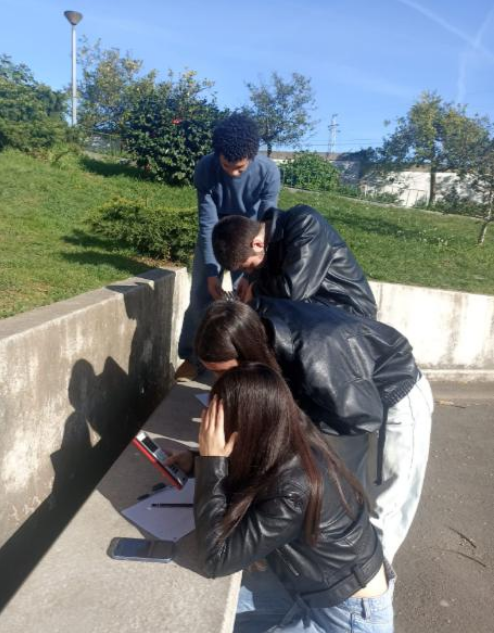
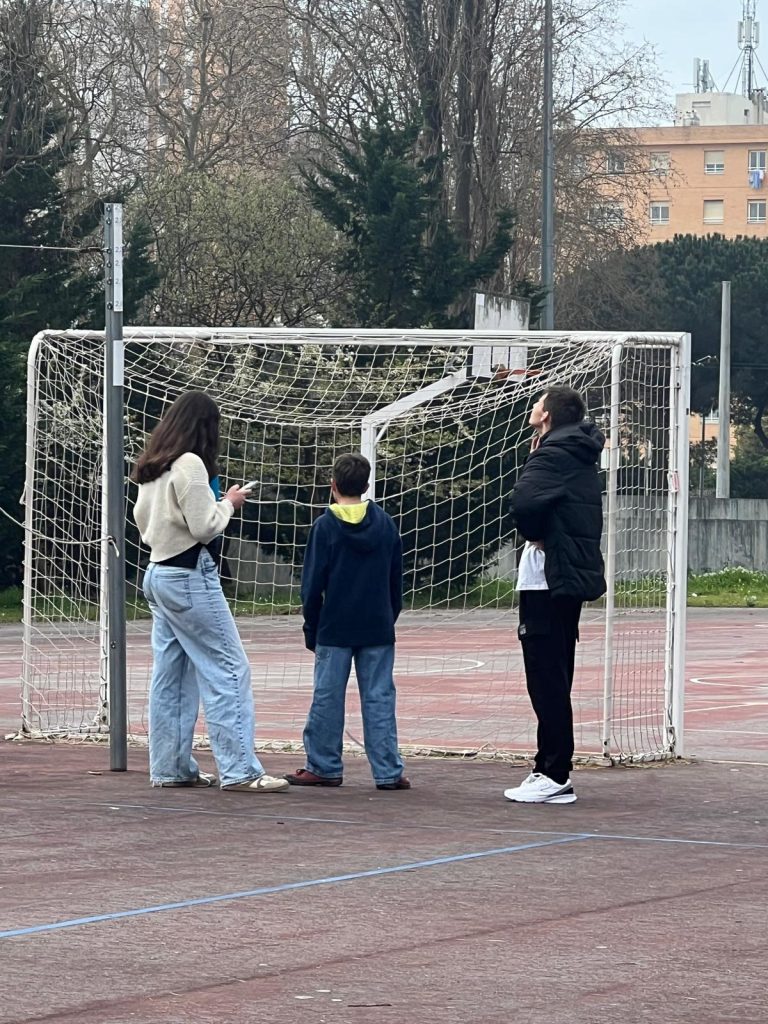
On Wednesday, the individual teams, accompanied by one or two teachers, headed into the city to create their own tasks. To do this, they explored different areas of Seville. In the afternoon, the tasks were transferred into the portal. During this process, the students supported each other and could ask the MCM experts questions at any time.

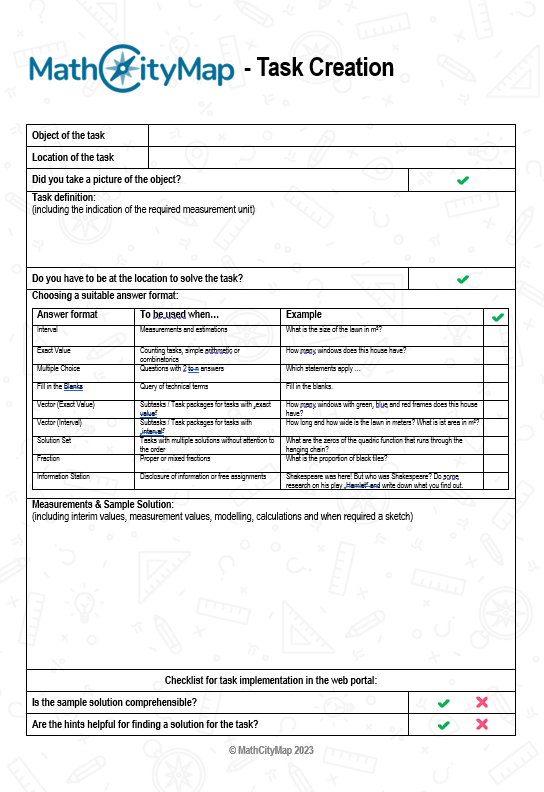
On Thursday, each team reviewed another team’s trail. Equipped with the task feedback form (available for download on our materials page), the groups tested another team’s tasks and checked whether they were solvable and whether the sample solutions and hints were helpful. Students from Seville also joined the activities. Afterwards, we had the opportunity to visit their school, where we received a tour and enjoyed a traditional Spanish lunch. In the afternoon, everyone had time to upload their feedback to the portal, revise their own tasks, and finalize their trails.

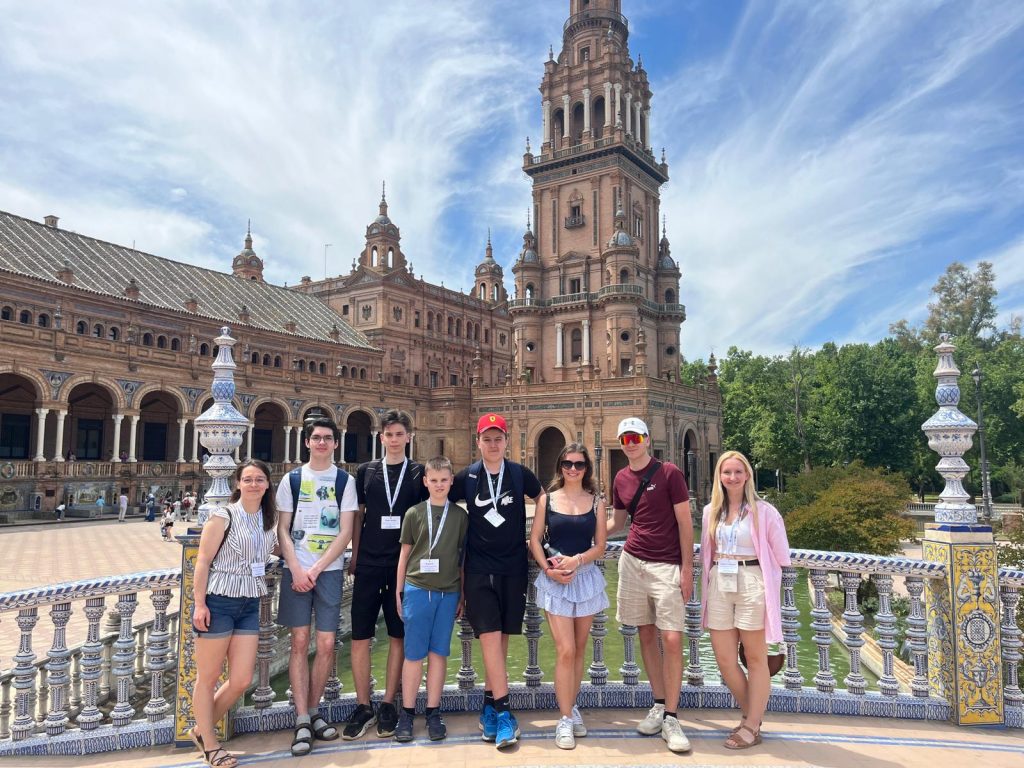
On Friday morning, we took part in a guided city tour, during which we learned even more about the history of Seville. We also revisited several places and objects that had appeared in the students’ tasks.

Afterwards, the closing session took place, during which we looked back at photos from the week together and presented awards for the trails and tasks. The highlight of the session was the videos the teams had created throughout the week. In these videos, they documented their working process and presented their trails in impressive and creative ways. In the afternoon, everyone had some free time before the big departure day on Saturday.

The videos will be uploaded to our Instagram account in the coming days. Until then, there are already a few impressions from the week available to see.

We are very happy that everything went so well and would like to sincerely thank all students and teachers for the wonderful collaboration. We very much hope that we will be able to organize a meeting like this again in the future.

Create tasks with the student accounts

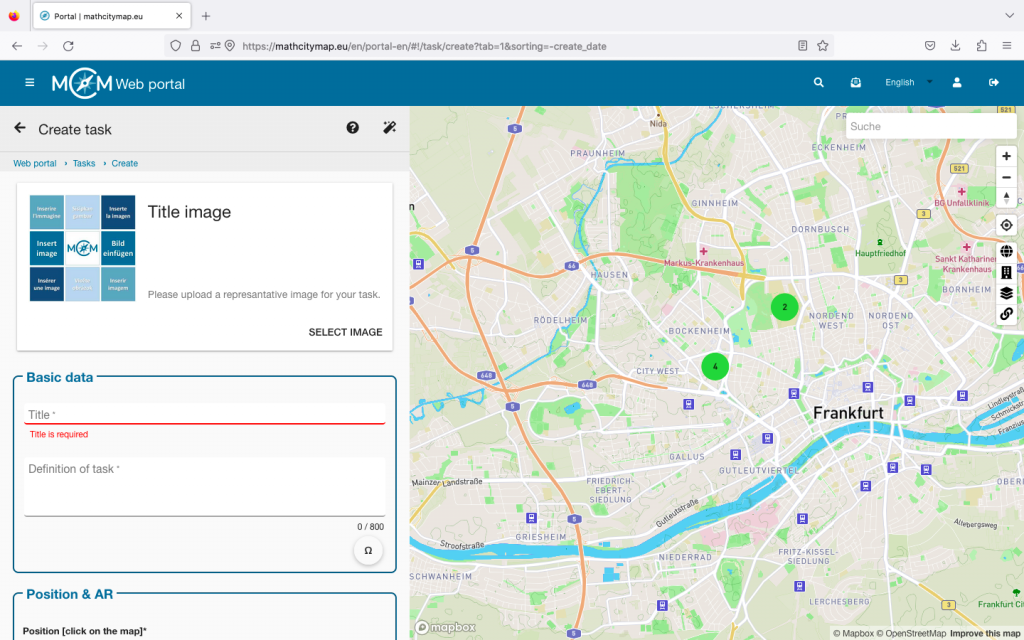
With MathCityMap student accounts, you can let your students create their own outdoor tasks. In addition to the classic math trail, this offers a unique opportunity to explore mathematical concepts. Here you’ll find step-by-step instructions describing how to find and create tasks on the portal.

Note: In the MATRIX project, we have created a self-study course for your students that guides them through some of the steps listed here. Your students will find this course as soon as they log into the portal with a student account. It includes instructions on creating assignments and using the web portal, and you can assign it as homework in advance if needed.

Step 1 – Search for task ideas

Once all the organizational details are sorted out, you can divide your class into teams of three and equip each team with measuring tools. Also, give them enough copies of the worksheet for completing the task (see materials page).

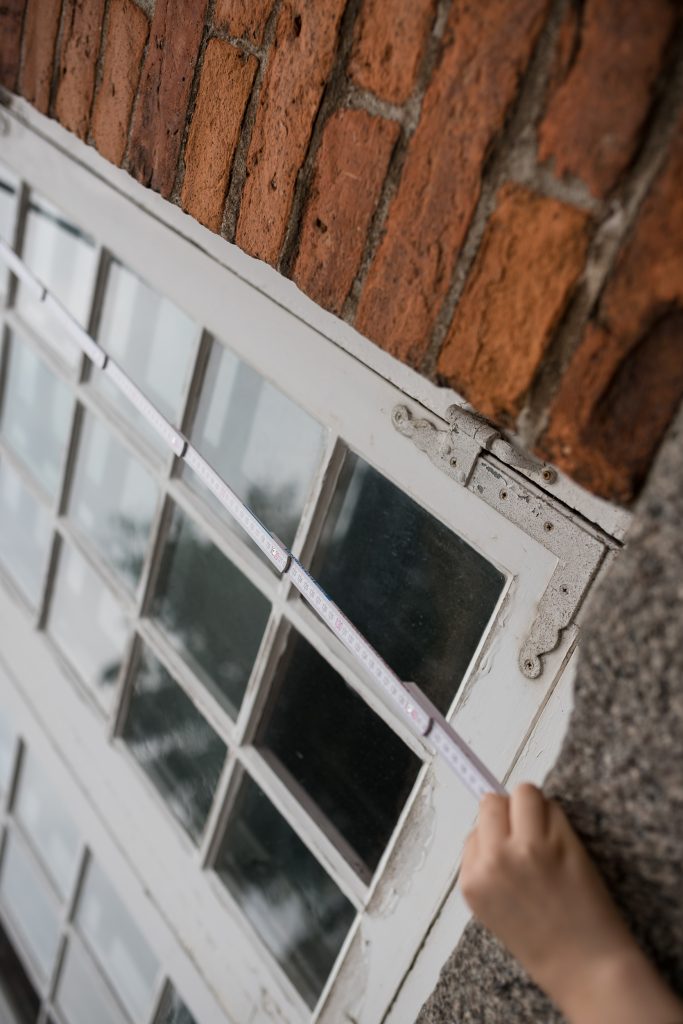
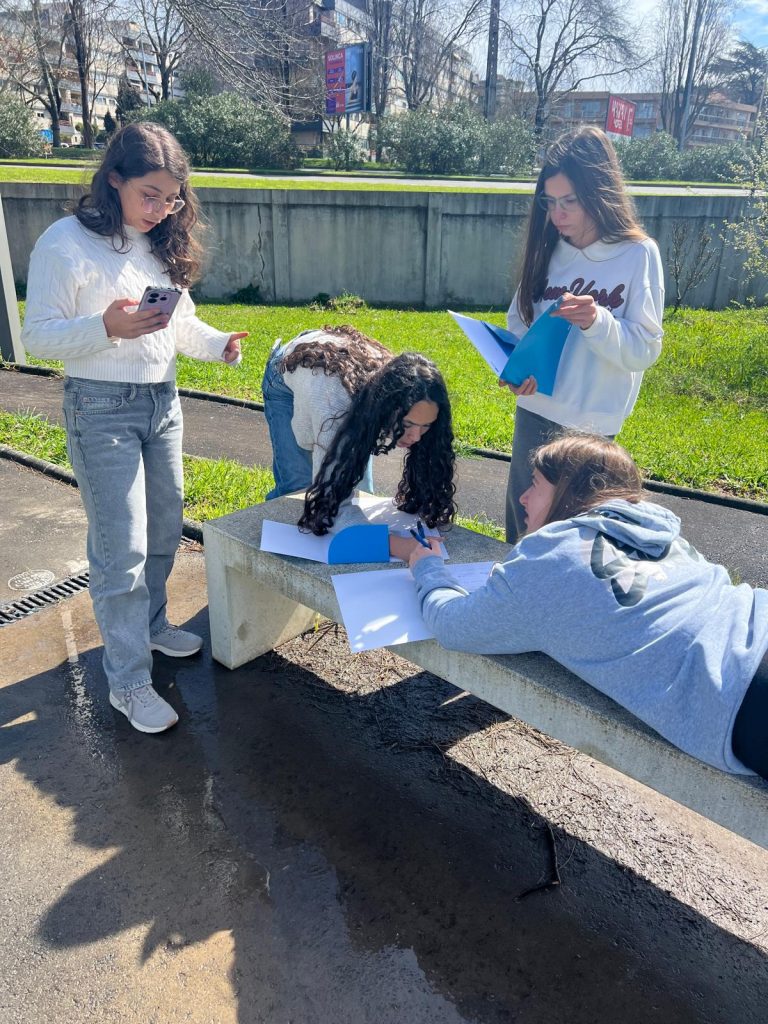
Take your class outside to the location where the tasks will be created. Give your students enough time to search for task ideas and document them using the worksheet.

Provide them with assistance if they don’t have their own ideas, and give feedback on their ideas.

Step 2 – Complete task ideas

Once each small group has gathered task ideas, you go back to the classroom.

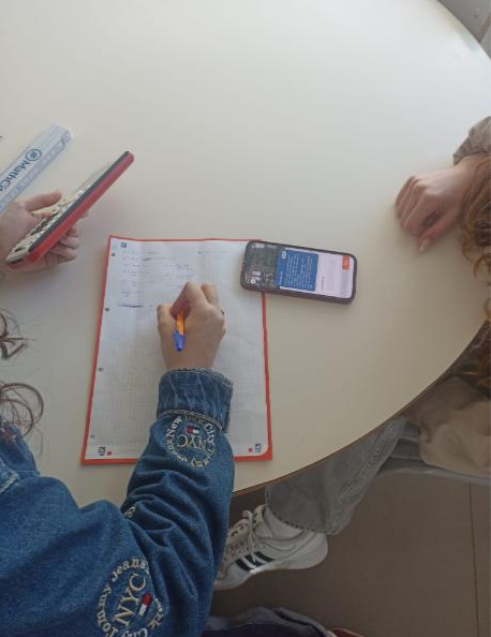
The students first fill out the worksheet for creating tasks inside (see material page), i.e. they complete their task ideas with hints and a sample solution.

Step 3 – Create tasks in the portal

Next, you give the students an introduction to using the web portal, specifically how to create an assignment with their student accounts. This works exactly the same way as with regular accounts.

In the next step, you give each student the login details for a student account you previously created. You can learn how to create these accounts in the tutorials “Creating Learning Groups” and “Managing Learning Groups”.

Now have your learners create the tasks in the web portal.

Further Instructions

Preparing lessons with student accounts

With MathCityMap’s student accounts, you can let your pupils create their own outdoor activities. As well as the traditional way of completing a Mathtrail, this offers a unique opportunity to look at things through a mathematical lens. Here you’ll find step-by-step instructions to help you prepare your pupils for this.

Step 1 – Discover a MathCityMap trail

Before the planned lesson on creating tasks, you should familiarize your students with the idea of ​​MathCityMap.

Have them walk a math trail and collect their impressions of the tasks.

Step 2 – Changing perspectives and organizational issues

Then change perspective with them: Discuss the idea of ​​creating individual tasks and a joint math trail as a class product.

Further clarify what your students’ objectives will be in the tasks: Should the tasks be modeling tasks, for example? Is the math trail intended for a specific target group, such as younger students? Or is it to be created for a special event, such as the upcoming school festival? How many tasks should be created?

It is advisable to clarify these questions beforehand in order to agree on the type of tasks, topics, and target group. You may also want to provide your learners with guidance on creating tasks.

Further Instructions

We are thrilled to announce our first partner school PLUS: Escola Básica e Secundária Pintor José de Brito in Portugal! The school has been using MathCityMap actively in their lessons and tested the student accounts multiple times. They have sent us a short report on their recent experiences:

“Working in pairs, the students of a 10th-grade class created tasks covering various topics. Initially, they experienced difficulties, not in using the application, but in creating the task statements. These difficulties were gradually overcome with the teacher’s help, although she allowed them to create the tasks freely.

Ten of the tasks created by the students were selected to form a trail, with code 0831714, which
was applied to two other classes at the school. The students who completed the trail were more enthusiastic than usual because the tasks had been created by their peers rather than by the teacher. The students who created the tasks were also curious to know their classmates’ opinions about their work.”

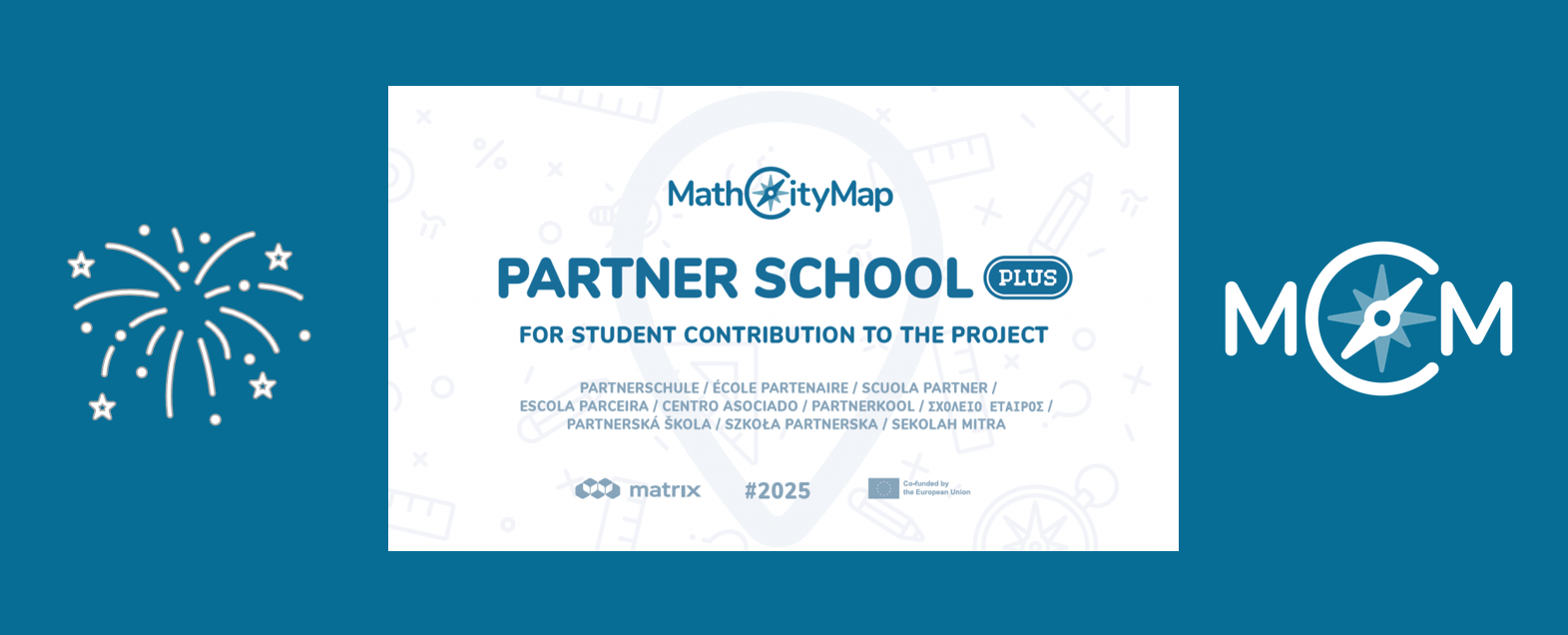
The PARTNER SCHOOL PLUS badge is a new distinction for partner schools that actively engage their students in creating real-world math tasks. It also comes with a new set of measureing tools. To find out how to become a partner school or partner school PLUS, visit the partner school network page

We thank Escola Básica e Secundária Pintor José de Brito for their continuous work with MCM and are looking forward to keep working together! The package with the partner school PLUS badge and the measuring tools is on the way to Portugal.

We are excited to announce our new MathCityMap partner school from Portugal: the Escola Secundária Augusto Gomes, located in Matosinhos! The mathematics teacher Dra Ana Louro has sent us a report on her experiences:

“Over the course of the current academic year (2025/2026), we have developed six geo-referenced maths trails covering the 7th, 8th and 9th year curricula (codes: 4831440, 2331439, 2331438, 3631437, 3631436 and 2631435), comprising 30 tasks created in collaboration with our 10th-year pupils from classes 10L and 10M2.

The trails were completed in time for our school’s Pi Day celebrations, running from 9th to 16th March, during which all 15 classes from Years 7, 8 and 9 took part in the trails. A particularly rewarding feature of the initiative has been the peer tutoring element: the 10th-year students who created the trails have been accompanying and guiding their younger peers throughout the exploration, bringing an enriching collaborative dimension to the whole experience.

This project opens doors to some very promising continuations: involving new classes in the
creation of further tasks, organising inter-school visits to solve each other’s trails, or
expanding the routes to other areas of the municipality. Mathematics no longer fits within
four walls.”

The package with the official partner school badge and the MCM measuring instruments are already on their way and we are looking forward to receiving more applications from all over the world.

All further information on the partner school programme and the requirements for application can be found both in the article on the first MCM partner school and on the homepage of our MaSCE³ project.

We are delighted to welcome Základná škola Handlová as a new partner school in the MathCityMap network.

At this lower-secondary school in Handlová, mathematics education is closely connected to real-world experiences. Teacher Adriana Solcaniova has been working with mathematical trails for several years, driven by the idea that mathematics should not be limited to the classroom, but discovered and experienced in everyday environments.

Her first experiences with mathematical trails showed that students were initially surprised by this unfamiliar approach. However, as they engaged with more trails, they became increasingly confident and open to exploring mathematics outdoors. Over time, students developed curiosity, began discussing mathematical ideas more naturally, and started recognizing mathematics in their surroundings.

Recently, the school re-engaged with mathematical trails through MathCityMap, once again confirming the strong impact of this approach on student learning and motivation. Inspired by a teacher training with Janka Medová, Adriana Solcaniova discovered the opportunity to join the MathCityMap Partner School initiative.

The school is already contributing to the MathCityMap community with several public trails:

We are excited to have Základná škola Handlová on board and look forward to their continued contributions to making mathematics visible and engaging beyond the classroom.

The package with the official partner school badge and the MCM measuring instruments has already been delivered and we are looking forward to receiving more applications from all over the world.

All further information on the partner school programme and the requirements for application can be found both in the article on the first MCM partner school and on the homepage of our MaSCE³ project.

We are happy to announce the VS Resthof Primary School as our new MathCityMap partner school! The teacher Brigitte Oser sent us a little report on her experiences with MCM: 

“Together with Director Kerstin Öllinger and our fantastic colleagues from all third and fourth grades, we took 70 kids on MathCityMap adventures. We chased multiplication missions, hands-on measurement tasks, and rectangle-and-square area quests—favorites were the “multiplication steps” and the foosball-table challenges. It was a super fun experience that made math feel real and playful. We’ll definitely keep using the app!”

Their first public trails can be found with the following trail codes:

  • VS Resthof 4. Klassen – 1231015
  • VS Resthof 3. Klassen – 4931014

Thank you for your engagement and welcome to the mathCityMap partner school network! We are looking forward to continuing working together.

The package with the official partner school badge and the MCM measuring instruments is on its way and we are looking forward to receiving more applications from all over the world.

All further information on the partner school programme and the requirements for application can be found both in the article on the first MCM partner school and on the homepage of our MaSCE³ project.

We would like to welcome the Escola Básica da Senhora da Oliveira as our new MathCityMap partner school! The teachers Carina Fernandes and Dorinda Sousa have sent us a report on their experiences:

“Regarding students’ experiences and reactions, the activity proved to be highly successful. Students showed great motivation and enthusiasm throughout the mathematical trails. The use of the MathCityMap application immediately captured their interest and acted as a strong learning facilitator. Positive attitudes such as collaboration, group discussion of strategies, and persistence in problem-solving were frequently observed.

Some difficulties were identified, mainly related to the correct interpretation of certain task statements and, in some cases, to decision-making within the groups. Nevertheless, the need to interact with the real environment to collect data—such as measuring distances or counting objects—was perceived as a very positive aspect, as it helped to apply mathematical concepts. Overall, students adapted quickly to the MathCityMap app and appreciated the immediate feedback provided after submitting each answer, which further supported their learning process.”

The teachers created two trails with a total of 17 tasks. The tasks focus on key mathematical contents from the primary education curriculum, such as area, perimeter, patterns, addition, mental calculation, data collection, diameter, geometric figures, and the construction of a simple budget. Particular emphasis was placed on establishing mathematical connections with real-world contexts, encouraging students to observe, measure, count, and interpret elements from their surroundings.

À Descoberta da Matemática (Code: 5930952)
Matemática à volta da escola (Code: 6730951)

Thank you for the great work and welcome to the partner school network!

The package with the official partner school badge and the MCM measuring instruments has already been delivered and we are looking forward to receiving more applications from all over the world.

All further information on the partner school programme and the requirements for application can be found both in the article on the first MCM partner school and on the homepage of our MaSCE³ project.

We are happy to announce ZŠ Nábrežná Kysucké Nové Mesto as our new MathCityMap Partner School! The Math and English teacher Valéria Kasajová told us about her and her colleagues’ experiences:

“We have been actively using MathCityMap in our mathematics lessons and project-based activities. Our students work with MathCityMap trails mainly during the special event – Saturday with Mathematics, where they solve real-life mathematical problems and explore their surroundings in a meaningful way. It has a long tradition, taking place in our school every last Saturday in November. 

So far, we have created and published several MathCityMap trails together with our students. These activities have helped us to increase students’ motivation, teamwork, and understanding of mathematics in real contexts.”

The published trails can be found via these codes:

•    4822265

•    3922662

•    4522663

Thank you for your enthusiasm and welcome to the MathCityMap partner school network!

The package with the official partner school badge and the MCM measuring instruments has already been delivered and we are looking forward to receiving more applications from all over the world.

All further information on the partner school programme and the requirements for application can be found both in the article on the first MCM partner school and on the homepage of our MaSCE³ project.

Dear MathCityMap community,

after selecting the winning schools for the International MathCityMap Meeting for students and teachers in Seville this summer, it is finally time to share these fantastic videos with everyone. Starting today, we will be publishing one winning video per week on our Instagram account.

Each of the selected videos shows in a creative way how students designed a Math Trail. Over the coming weeks, we would like to present and celebrate these great contributions one by one – so make sure to check back regularly!

Once again, we would like to sincerely thank all participating schools for their impressive submissions and we are very much looking forward to sharing the videos with you.

Your MathCityMap team