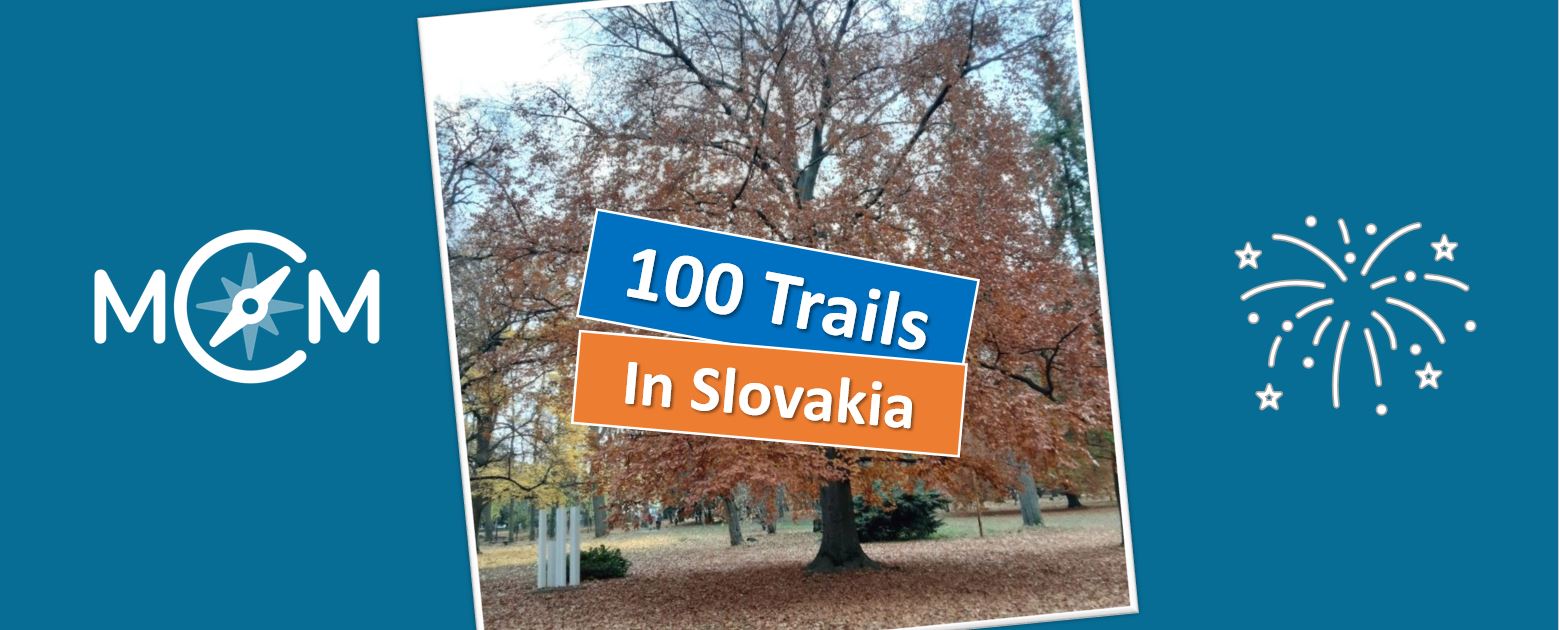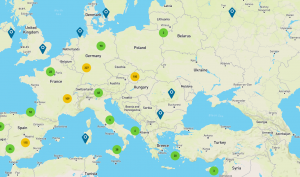
Great news from Slovakia! 100 math trails with MathCityMap have now been published there. The trails were created mainly by teachers of mathematics didactics, PhD students and student teachers at Constantine the Philosopher University in Nitra. In addition, MathCityMap has a strong community within primary teachers in Slovakia.

The 100th public trail in Slovakia was created in the small town of Želiezovce by Réka Veszprémiová. The trail entitled “Matematická prechádzka v Schubert parku v Želiezovciach” (Mathematical Trail in Schubert Park in Želiezovciach) consists of five tasks, is created for the 6th grade and covers a wide variety of topics, such as calculating the area of rectangles or finding the greatest common divisor.

Keep up the good work Slovakia!

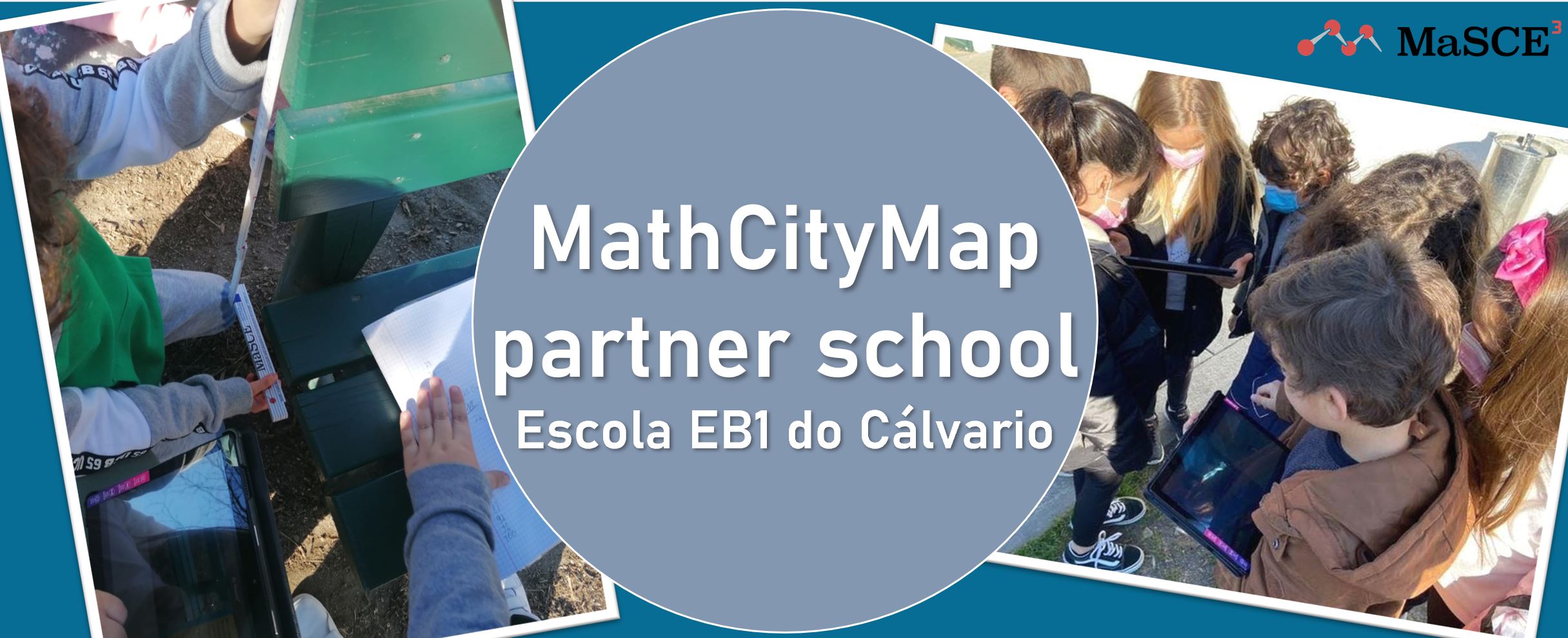
Only a few weeks after the presentation of our first MCM partner school in Portugal, we can already welcome another school in this great program! The “Escola EB1 do Cálvario” has successfully passed the application process and is now also an official MCM partner school.

The process was initiated at the Portuguese elementary school by three student teachers who came into contact with MathCityMap during their studies.

Again, the package with the measuring instruments and the official partner school badge is on its way to the school and we are looking forward to more applications from Portugal, but of course also from all other MCM countries.

You can read a brief report from one of the student teachers about the application process further down in this article, and all other information about the partner school program can be found in the article about the first MCM partner school.


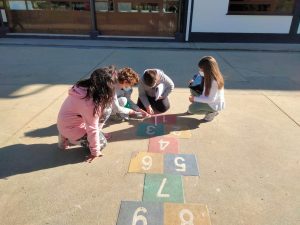
We are a group of pre-service teachers doing our internship at Escola EB1 do Calvário, in Viana do Castelo, Portugal. We developed an interest for MCM during our master’s course and decided to implement three trails with our students in the schoolyard. For the 1st graders we created two thematic trails related to the contents they were addressing in their lessons at the time, the number space to 10 and geometry, as for the 3rd graders we created a more diversified trail involving different mathematical topics.


Testing out the trails was a successful activity that was done with both groups of students during math class. They were able to apply what they were learning, were motivated to get out of the classroom and collaborate using technology (tablets). The students had no difficulty using the app and recognizing the location of the objects, with the exception of the first graders who needed the help of the supervising teacher to read the tasks. For us as pre-service teachers, it was a very rewarding experience to perceive the positive impact of the MCM activity with the students and to have the opportunity to design tasks in a real-world context, making them more meaningful to the students than in the traditional classroom setting where they previously spent too much time. We will certainly continue to use MCM!


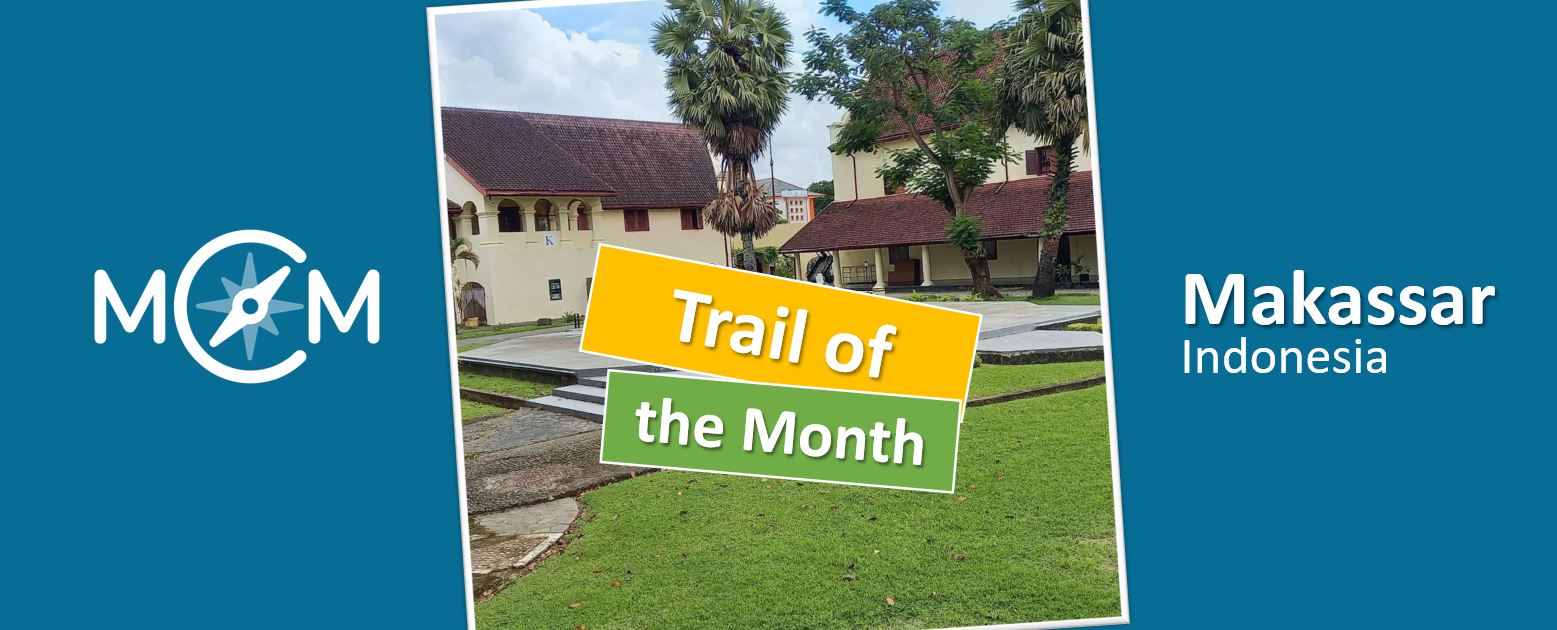
The Mathtrail of the month February comes from Indonesia, more precisely from the city of Makassar on the island of Sulawesi. Here, teacher Jamaluddin Tahuddin created the trail “Math Trail di Fort Rotterdam Makassar” a special math trail that leads through the historic fort of the city of Makassar with a total of six tasks. The trail can be accessed on the web portal and in the app under the code 157539.

You can find a short interview with the creator of the trail below. Have fun reading it!


How did you come across the MathCityMap project?

Every year, students go on a study tour in Fort Rotterdam. They work on a project assignment to make a report given by the Indonesian teacher. After attending training on how to strengthen numeracy skills through the MathCityMap application, I was interested in making a Math Trail in Fort Rotterdam. In addition to doing historical tours, students will also be able to do numeracy activities at Fort Rotterdam. Thus, this activity can involve many subjects, including Mathematics, Indonesian, English, History, and Science.


Please describe your Mathtrail.

Fort Rotterdam is one of the historical places in the city of Makassar. Everyone including students in Makassar know this place. So far, they have only seen Fort Rotterdam from a historical perspective. But now they will also be able to look at Fort Rotterdam from a numeracy point of view. Inside the fort, I’ve selected several objects that can serve as numeric contexts. So that people who visit Fort Rotterdam will not only do historical tours, but can also do numeracy tours.


How do you use MCM and why?

Students can use the MathCityMap application for activities to practice numeracy skills outside the classroom.
Students are organized into several groups and each group consists of 3-4 students. Each group only needs 1 smartphone so that all students can be involved even though not all have smartphones. The slow speed internet connection is also not a problem because every math trail that students will complete can be downloaded first so that it can be used offline. Teachers can also know how students solve each of the numeracy problems through a worksheet which can be downloaded through the MCM application.


Describe your favorite task of the trail. How can it be solved?

My favorite trail task is Gerbang Gereja on the Math Trail in Fort Rotterdam City of Makassar. In addition to its unique shape, at the Church Gate students can also learn from the context of numeracy. In this task, students will calculate the maximum height of a box car that will carry cultural heritage objects into the building, the car has a width of 167 cm. To solve this problem, students must know the relationship between the radius of the circle, the slope, and the distance of the circle from the center of the circle.
Where the width of the box car is the minimum segment length and the distance from the center of the circle is the maximum height of the box car. So, to solve it, students must measure the width of the gate which is the diameter of the semicircular gate first.

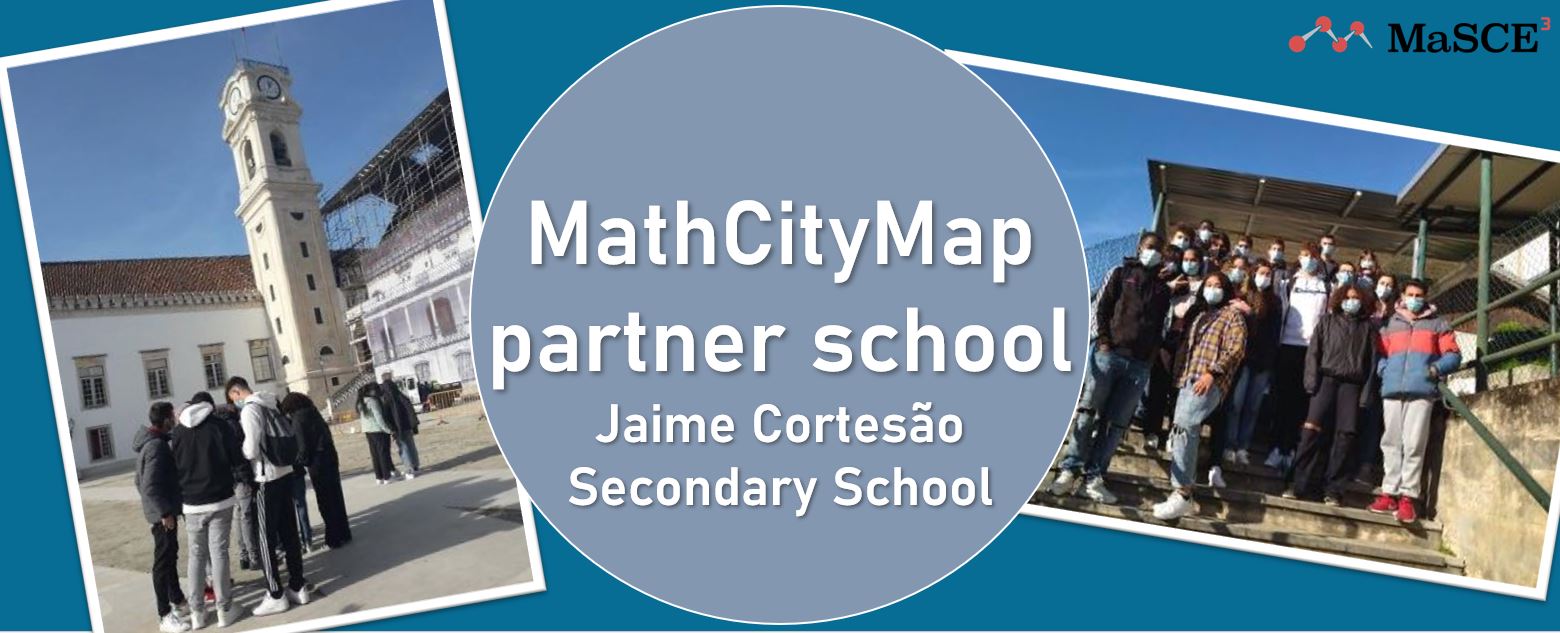
We are more than happy to welcome the next MCM partner school! The “Jaime Cortesão Secondary School” has successfully passed the application process and is now the first MCM partner school in Portugal.

The teachers of the school were inspired by the MCM MOOC last year and the trails were created by master students working at the school and tested with the students.

The package with the measurement tools and the official partner school badge is now on its way to the school and we are very much looking forward to receiving more applications from schools.

A short report from the school on the application process can be read further down in this article and all further information on the partner school program can be found in the article on the first MCM partner school.


Together with the supervising teacher, the interns developed the activity “MathTrails” for the students from Escola Secundária Jaime Cortesão. This activity was created using the platform MathCityMap, explored in one of the interns’ subjects from the Math Teaching Masters Degree Course from the University of Coimbra.

The created trails are called “Matematicando por Coimbra” (Code: 497843) and “ πsando as ruas de Coimbra” (Code: 697842). Our students transferred the app into their phones which gave them access to the trails and to the digital classroom that was used by the interns to control them and check their scores. The students were given a participation diploma after completing all their tasks. The winners of the activity were also rewarded with medals created by the interns.


In general, the students liked the activity, stating that the tasks had the right amount of complexity and that said tasks allowed them to recall some of the concepts learned in previous years. They also agreed that the activity was useful in order to cement their new acquired math knowledge.

The interns’ goal was to show the students that math is everywhere through a different and dynamic activity where they could explore the world that surrounds them. According to the students that goal was successfully achieved.


In 2014 MathCityMap was introduced to Indonesia with a pilot study conducted by Goethe University Frankfurt in collaboration with Universitas Negeri Semarang involving several schools in the city of Semarang. Just three years afterwards in 2017, the Mobile Math Trails Research Group was established to become a center for the study of math trails with digital technology in Indonesia. Since then MOOCs are offered and teacher trainings are organized in collaboration with teacher organizations and the Education Offices in several cities. At some universities, MathCityMap is part of the courses taught to prospective mathematics teachers and is a topic investigated in several theses.


At the end of 2021, the Ministry of Education, Culture, Research and Technology invited the Mobile Math Trail Research Group to collaborate in organizing a teacher training on strengthening literacy and numeracy skills using MathCityMap. The speaker in the training was Professor Matthias Ludwig as the founder of MathCityMap who explained the MathCityMap concept, and the technical details of the webportal and the app in collaboration with Dr Adi Nur Cahyono, the coordinator of MathCityMap in Indonesia, and his team.


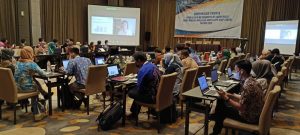
Participants in this training were 240 teachers from 34 provinces in Indonesia. Primary and secondary school teachers who were selected from 6500 applicants to the teacher training. The training was conducted in four stages and each stage was carried out in 4 days in Jakarta and Bandung. The training was realized with offline sessions which consisted of  an indoor theory lesson and an outdoor practice in the famous city parks in the two cities, namely the Bogor Botanical Gardens, Jakarta Old Town, Banteng Field, Kencana Park.


As a follow-up, the trainees returned to their respective areas and held multiplier trainings for their colleagues. They also created a mathtrail in their area with the local cultural context and implement it with students and the public. Communication with the teachers is maintained to discuss and share implementation experiences through the MathCityMap Indonesia Community forum.


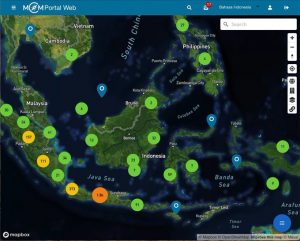
MathCityMap trails and users in Indonesia have increased significantly and continue to grow as a positive impact of dissemination through MOOCs, lectures at teacher education institutes, teacher trainings and communities. In 2022, the Directorate General of Higher Education of the Ministry of Education, Culture, Research and Technology of the Republic of Indonesia will provide training on numeracy and literacy skills using MathCityMap for 22,000 university students who will undertake internships in schools throughout Indonesia.

What better way to start the new year than with another milestone achieved for MathCityMap. We celebrate the year 2022 and the 30.000th task in the web portal! Our users were very active over the holidays and we can now be delighted with exactly 32.307 tasks in the portal.

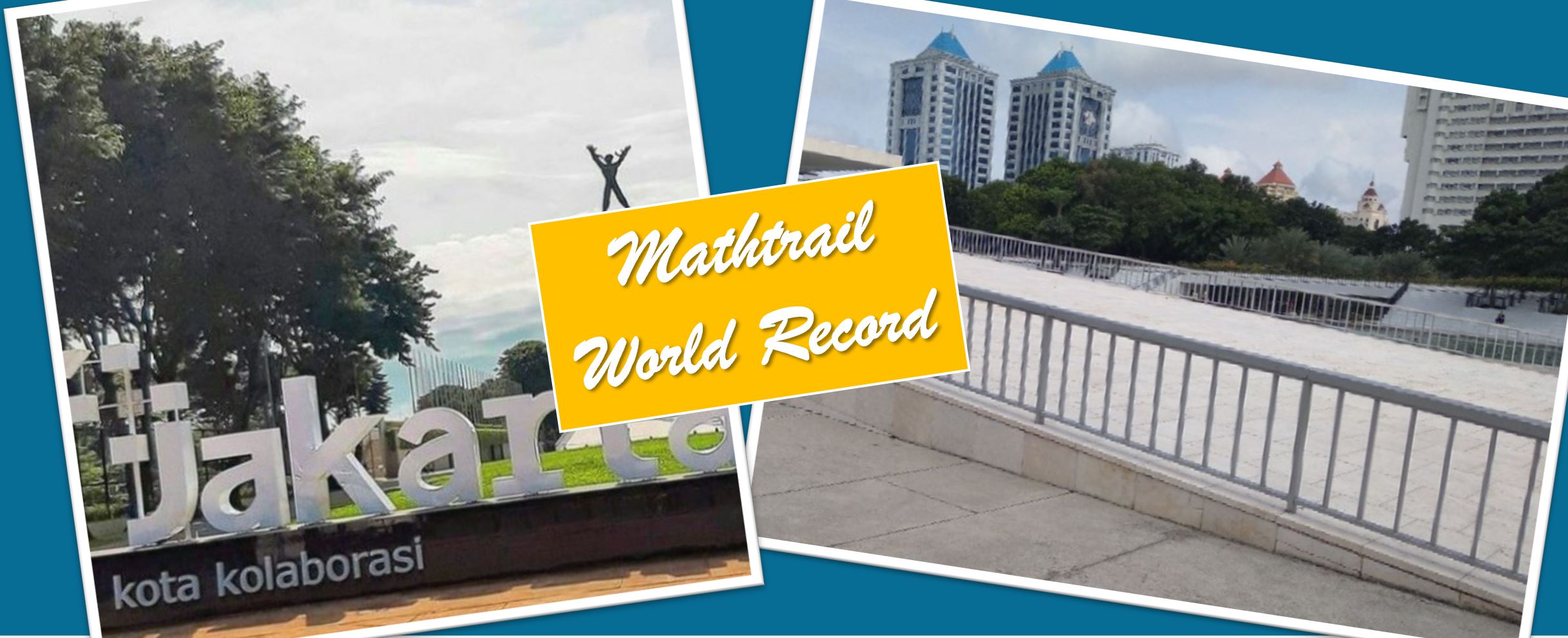
Our anniversary task, which cracked the 30.000 mark, was created by Muhamad Rif’an in Jakarta and asks for the area of a rectangular platform. Click here to go to the task.

We look forward to many more MathCityMap tasks and wish you all a happy, prosperous and healthy New Year 2022!

Dear MathCityMap users,

the year 2021 is now slowly coming to an end and although many things did not go as planned for many people, there were a lot of positive events and developments here at MathCityMap. With the turn of the year and the holidays in sight, now is the right time for a short look back:

  • Over 12,000 new tasks were created in the system this year, so we now count a total of almost 30,000 tasks in the MathCityMap portal, of which about 10,500 tasks have been published. The number of tasks created has almost doubled within the last year!
  • A total of 32,000 mathtrails were downloaded in 2021. In addition, 1,300 Digital Classrooms were conducted with a total of approximately 8,800 participants and nearly 3,500 badges were awarded to MCM authors.
  • We also saw a significant increase in the number of registered users: Approximately 3,800 new MathCityMap users have registered in the system, bringing the MCM community to 10,000 members.
  • But not only the MCM community grew strongly, also our team could report some new members. We are very happy to welcome Tim Läufer, Jos Fabiunke, Rebecca Stäter and Philipp Larmann. In addition, Ivan Gurjanow and Simone Jablonski successfully completed their doctorates.
  • Our Erasmus+ project MaSCE³ (Math Trails in School, Curriculum and Educational Environments of Europe) is also being continued successfully. Therefore, we would like to thank our European partners from Portugal, France, Estonia and Spain. In particular, we would like to mention the MOOC (Massive Open Online Course) that took place in the spring of this year. A very successful online training series in which more than 100 teachers from all over the world were trained to become real MathCityMap experts.
  • In general, there were again many international events with MCM this year. From mathtrail events in Santander (Spain) to presentations at international conferences such as PME or ICTMT to teacher trainings in Portugal, Spain and Indonesia, there were again a variety of activities that brought MathCityMap closer to researchers, teachers and students.
  • Also as part of the MaSCE³ project, we were able to award the official title of “MathCityMap Partner School” for the first time. Gymnasium Trudering successfully completed the application process and can now benefit from our international network in a unique way. In addition, the students received a package with measurement tools for working on math trails in class.
  • A lot has also happened in the field of virtual teaching and distance learning. The concept of MCM@Home has been continuously developed over the past year into a stand-alone system and we are very pleased that ASYMPTOTE will be available as early as spring 2022.

Especially despite the pandemic-related restrictions this year, we are even more excited about the fantastic and exciting developments of the MCM system and last but not least the community. Without your joy in discovering and creating new tasks and mathtrails, this project would never be where it is now and therefore we would also like to take this opportunity to say thank you to all of you. Thank you for filling this digital system for school practice with life again and again and carrying it further into your communities.

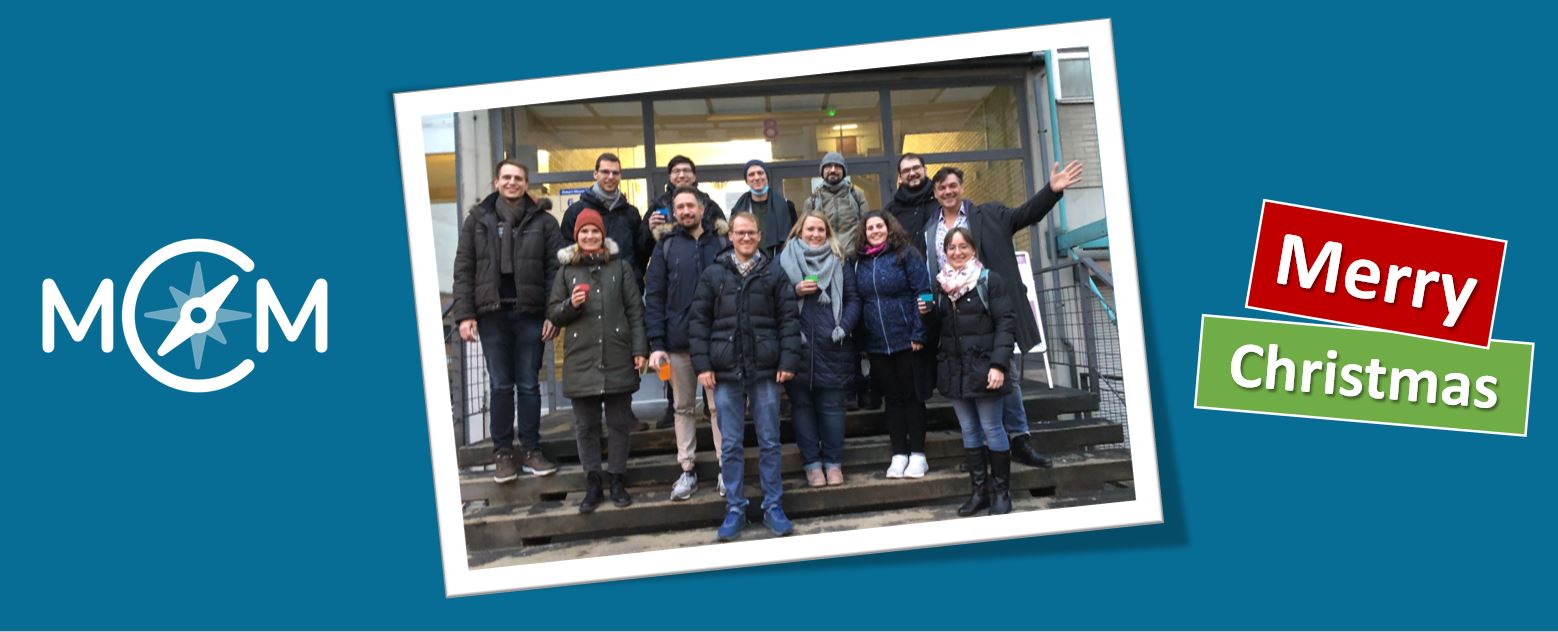
We wish you and your families a Merry Christmas and a Happy New Year 2022. We are already looking forward to welcoming many new members to the MCM community and discovering new, exciting tasks around the world. Stay healthy!

Your MathCityMap Team Frankfurt

Dear users of MathCityMap,

we are very happy to present you the first official MathCityMap partner school! The Gymnasium Trudering has successfully applied and is now allowed to use the title MCM partner school!

The possibility to become an MCM partner school was introduced within the MaSCE³ project and the path to this title for interested schools is as follows:

Step 1: Visit www.mathcitymap.eu and get familiar with the MathCityMap system. If you like it, ask your colleagues to join you in your plans to become an MCM partner school!

Step 2: Create 15 tasks and 2 trails for different grades close to your school. The tasks and trails should be published in our system, peer-reviewed by your colleagues and downloaded at least 5 times by your students.

Step 3: Send your application to info@mathcitymap.eu including the trail numbers and your experiences with the trails. If you have met all the requirements, your school will be named an MCM partner school!

The students of the Gymnasium Trudering now receive measuring tools and materials from us to successfully work on Mathtrails in class. In addition, the Gymnasium will receive an official MCM partner school plaque for their main entrance and will always be informed about the latest developments of MathCityMap. As soon as the network of partner schools grows, we will provide for an international exchange between the different partner schools within the framework of the partner school project, from which all participating schools will benefit.

The whole process is completely free of charge for all schools and is co-funded by Erasmus+. You can find all further information here.

We are already looking forward to welcoming more schools as MCM partner schools! Below you will find a report about the journey of Gymnasium Trudering to become the first MCM partner school.


Our teacher was excited about the idea of using math in real and authentic situations. So were we when we heard about it. Therefore, we, the P-Seminar MathCityMap 2020/22, had set ourselves the goal of creating an interactive MathTrail directly in the natural environment. This trail should not be too difficult, but still challenging. But this was a long way.

At first we studied the already created trails and tasks in Munich. Afterwards, we and one of our Q11 courses ran the trail “Discovery trip in Riemer Park” by Mrs. Haupenthal and made experiences with the digital classroom on the student side. Our P seminar course participated in the MathCityMap MOOC (Massive Open Online Course) as part of the Erasmus+ project MaSCE. It was a special experience for us to participate in a MOOC training with more than 500 international guests. We enjoyed the course very much. Through video clips we learned how to use the program to create trails and learned some background information about the project.

Once the use of the MathCityMap software had become clear, the course set out to create creative tasks in nature. Riemer Park was determined as the place where the tasks were to be located. Everyone then independently created two tasks in Riemer Park that could only be solved on site and associated with an activity (measuring, counting). An MCM task includes a representative photo of the object, a title, a task description, the exact position, the task type (e.g. interval, exact value, multiple choice, etc.), a sample solution, hints, indication of the class, tools (e.g. folding rule, measuring tape, measuring jar, watch, calculator, etc.) and tags. In the context of the P-Seminar MathCityMap we have made it our goal to make mathematics fun for everyone in a modern and playful way. Especially finding and creating tasks was an exciting change in the homeschooling time. It is amazing to see where you can find mathematics on the street, if you just walk around with your eyes open. So you can find tasks for almost all topics, which create an interesting connection between school and reality. Even a simple tree can become a tricky task. Lower grades in particular often find it difficult to understand what they are learning and for what purpose. This is where we wanted to start with our seminar: To get students excited about mathematics in an interesting way.

Teams were formed to develop the outdoor tasks. The tasks were posted on the web portal Mebis for everyone involved to review. There was a correction team and a team for viewing the curriculum. From the individual tasks, the route of the trail was again jointly determined, which in times of distance learning also ran via the MS Teams conference software. It was jointly considered which tasks could be grouped into so-called trails based on the subject matter and location. In total, two trails were created, each with at least six tasks in Riemer Park. After the two trails had been created, the course also decided to create a trail around the school, designed for the fifth grade of the Trudering Gymnasium.

At the end of the project on 27/10/2021, a digital classroom and a walkthrough of the trail around the school were organized with the fifth grade. We evaluated the experiences made with the 5th grade. With the “Gamification” and “Narrative Pirates” settings in the MCM web portal, in our opinion, especially younger students are motivated and a competitive character is conveyed, which facilitates the achievement of learning goals and incidentally leads to the acquisition of competencies. We were particularly pleased with the positive feedback from the students after the trail was carried out with a 5th grade class. One planned trail turned into five in the end, and with Ms. Haupenthal’s trail developed during the MOOC, we created a total of 6 trails. 


Collaboration as a means of professional growth for mathematics teachers


Recently in Slovakia Mathtrails with MathCityMap were used in a professional development event for mathematics teachers, especially as an impulse for collaboration in joint development of mathematics education within the national KEGA project “Collaboration as a means for professional development of mathematics teachers”. Janka Medová and Silvia Haringová from the Department of Mathematics at the University “Constantine the Philosopher” in Nitra and teachers from the United Catholic School in Nitra participated in the design of the mathematical trails.


During the first meeting, the teachers put themselves in the role of students. With the help of mobile devices, they tried to master the prepared mathtrail. After they had solved all the tasks, we explained to them how the MathCityMap portal works and how a mathtrail can be created. Furthermore, the teachers received a manual with detailed instructions on how to create a trail. The teachers’ task was now to come up with their own tasks and to upload them to the portal by the next meeting.


At our next meeting, the teachers discussed the tasks together and selected the best ones to create the final Mathtrail. This trail was tested out by high school students who spent two class periods walking the trail and solving tasks. Following the walk-through of the mathtrail, a joint teacher reflection took place, focusing on the importance of incorporating mathtrails into the teaching of mathematics.


In the summer semester of 2021, the first MCM seminar was held at the University of Koblenz-Landau, Koblenz Campus. Despite the difficult conditions caused by the pandemic, the students were able to work in small groups in compliance with the applicable rules, first learning the theoretical basics at home and then moving out into the field. In the first step, they put themselves in the role of students and explored Simone Jablonski’s Koblenz Trail in groups. After that, they went to work themselves. The focus of the seminar was on the primary level and accordingly many trails suitable for primary schools were created throughout Rhineland-Palatinate.

Unfortunately, the flood disaster of July also left its mark on the MCM Seminar. The floods of Ahrweiler completely destroyed a mathtrail in the Ahrweiler valley. Thankfully, the student who created it remained unharmed.

The seminar was very well attended with two times 45 students and the students visibly enjoyed the unusual way of doing mathematics. The seminar is part of the dissemination of the EU funded MoMaTrE project.

In the course of the seminar, various video contributions were made by the students. In each of the videos, they present an MCM task from the trail they designed, and they also go into more detail about the didactic background of their task. We would like to share one of these videos with you. Have fun watching it!