Task of the Week: Brick in the Wall

As a part of a teacher training at the Johanneum Gymnasium Herborn, a modeling task was created, which we would like to present to you today as the “Task of the Week”. Task: Brick in the Wall (task number: 2040) The wall in the schoolyard should be sprayed. It is planned to save color for […]

As a part of a teacher training at the Johanneum Gymnasium Herborn, a modeling task was created, which we would like to present to you today as the “Task of the Week”.


Task: Brick in the Wall (task number: 2040)

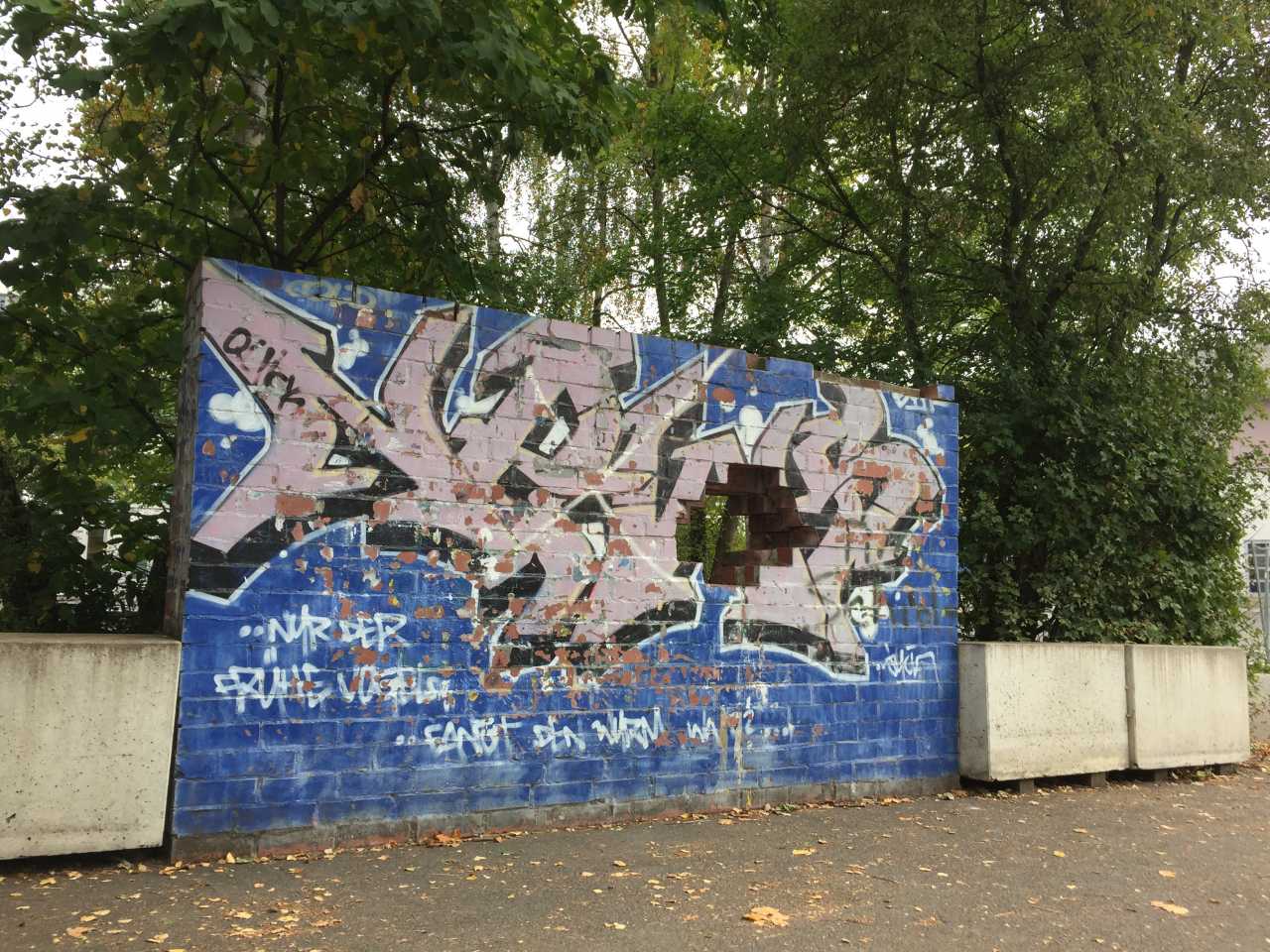
The wall in the schoolyard should be sprayed. It is planned to save color for the hole in the wall. Calculate the area to be sprayed in m². Enter the result with two digits.

The challenge in this task is to approach the existing hole in the rectangular wall as precisely as possible. Different models can be chosen for this purpose. On the one hand, one could assume the hole as a circle and determine an average diameter. More precisely, however, the result is obtained by approaching the hole as an ellipse and measuring the axes.

The task requires a certain amount of creativity and shows that the clear mathematics in the environment outside the classroom reaches its limits. The pupils acquire modeling competences, especially in the skillful choice of a mathematical model. The various solutions and results of the pupils thus form an ideal basis for discussing appropriate models. The problem can be applied with the treatment of circle and ellipse from class 9 onwards.
Task of the Week: Jacobean Pilgrim

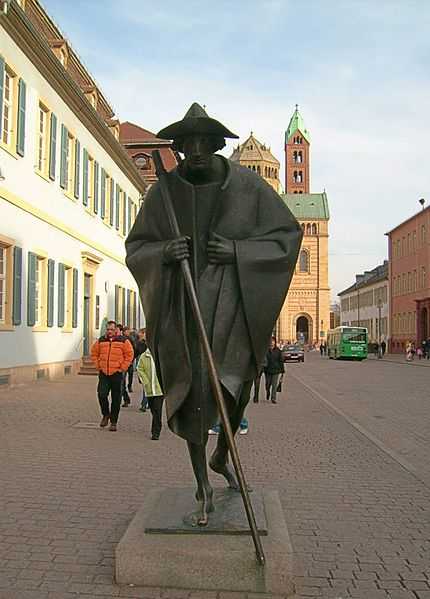
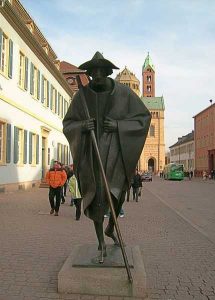
Today, we would like to introduce you a task from Speyer, which was created there by Katalin Retterath. It is about the famous Way of St. James, which leads through the city to Santiago de Compostela. Task: Jacobean Pilgrim (task number: 1614) Measure/estimate the step of the Jacobean Pilgrim. How many steps would he have […]

Today, we would like to introduce you a task from Speyer, which was created there by Katalin Retterath. It is about the famous Way of St. James, which leads through the city to Santiago de Compostela.


Task: Jacobean Pilgrim (task number: 1614)

Measure/estimate the step of the Jacobean Pilgrim. How many steps would he have to take if he were to travel the 2,500 kilometers to Santiago de Compostela?


How did you get the idea to create MathCityMap?

I am a consultant for teaching development in mathematics at the Pedagogical State Institute in Rhineland-Palatinate. For a number of years, we have been developing mathematical rallies, which are well received by both our pupils and the training events. First we experimented with LearningApps, then with Actionbound – both were OK, but not really satisfactory. We have become acquainted with MathCityMap and we would like to introduce the MathCityMap project here.

What are the mathematical competences and contents associated with the task?

Students must estimate and/or measure, work with large numbers. The task is solved by a group – thus, communicating plays a great role and if the students explain their their solution to one another (which would be desirable), then also argue.

Has the task already been tested by students or did you receive feedback in other forms?

The task itself has been tested by students (many different classes), but still with Actionbound. The students were able to solve the problem without major (content) difficulties – with the units and number of zeros, however, it was not so good. I have only entered two-three tasks at MathCityMap to test the software. A test of the tool will be considered in spring.  

The MCM team thanks for the interview and is looking forward to further tasks in Speyer!

Task of the Week: Lamp

With two trails in Salzburg, we can now welcome Austria as the 9th country with a MCM Trail. The current task of the week presents a task in the field of the surface of a cylinder. It is located in the trail at the natural sciences faculty of the Paris-Lodron University in Salzburg. Task: Lamp […]

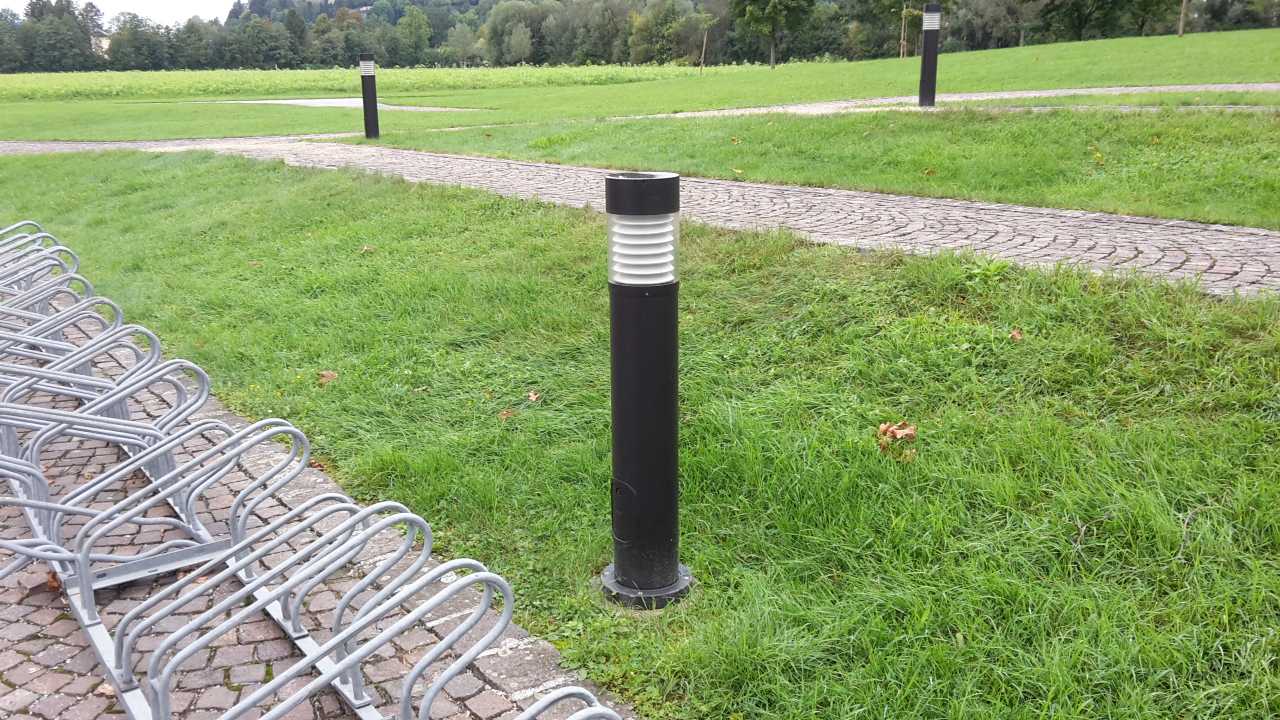
With two trails in Salzburg, we can now welcome Austria as the 9th country with a MCM Trail. The current task of the week presents a task in the field of the surface of a cylinder. It is located in the trail at the natural sciences faculty of the Paris-Lodron University in Salzburg.


Task: Lamp (task number: 1908)

How large is the black painted surface of a lamp without the base plate? Give the result in m². Round to two decimal places.


The pupils first recognize the lamp as cylindrical and then determine the black surfaces. For this, it is necessary to divide the lamp into two cylinders. For the upper small cylinder, the shell surface as well as the cover are calculated, for the lower cylinder only the shell surface. Height and radius need to be measured. Subsequently, the individual surfaces are added and the total painted surface area is obtained.

The task can be assigned to the subject area of ​​geometry and, in particular, geometrical bodies (cylinders) and can be used from class 9 onwards.
Task of the Week: Water in the Fountain

A popular MathCityMap task is concerned with the volume of fountains and how many liters of water are contained. The question can be used for a wide range of geometric themes, depending on the shape of the selected fountain (rectangular, circular, …). The Task of the Week is a particular challenge because the fountain has […]

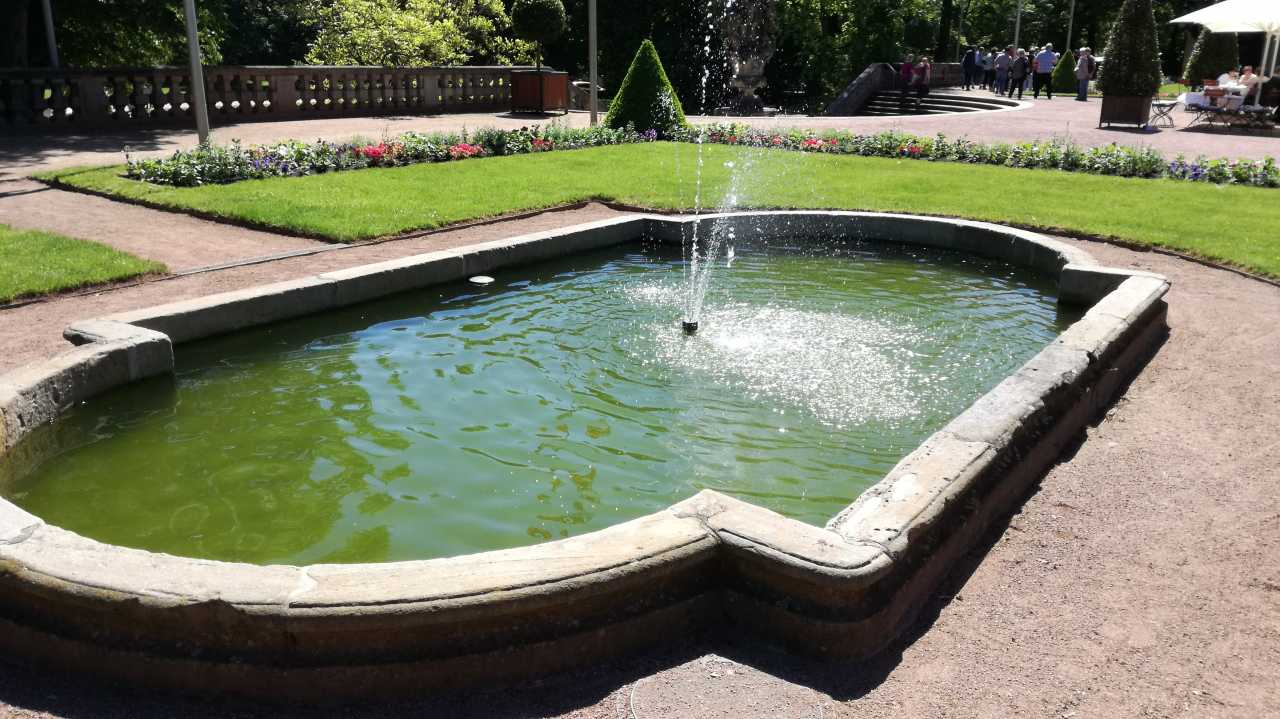
A popular MathCityMap task is concerned with the volume of fountains and how many liters of water are contained. The question can be used for a wide range of geometric themes, depending on the shape of the selected fountain (rectangular, circular, …). The Task of the Week is a particular challenge because the fountain has to be modeled with help of different geometric bodies.


Task: Water in the Fountain (task number: 1420)

How many liters of water are in the illustrated fountain?


The illustrated fountain can be modeled using a cuboid and a cylinder (divided into two parts). If this has been recognized, the necessary quantities must be collected and the individual volumes calculated. Finally, the conversion in liters is required. The task with cylinders can be used from class 9 onwards; simpler fountain shapes are already possible from class 6 onwards.

Depending on the structure of the well, the collection of the data can be a challenge and the students have to become creative. For example, the circumference of a circle can be helpful for the determination of the diameter. Not at least through such considerations, a flexible handling of mathematical formulas and correlations is promoted.

Task of the Week: Bench

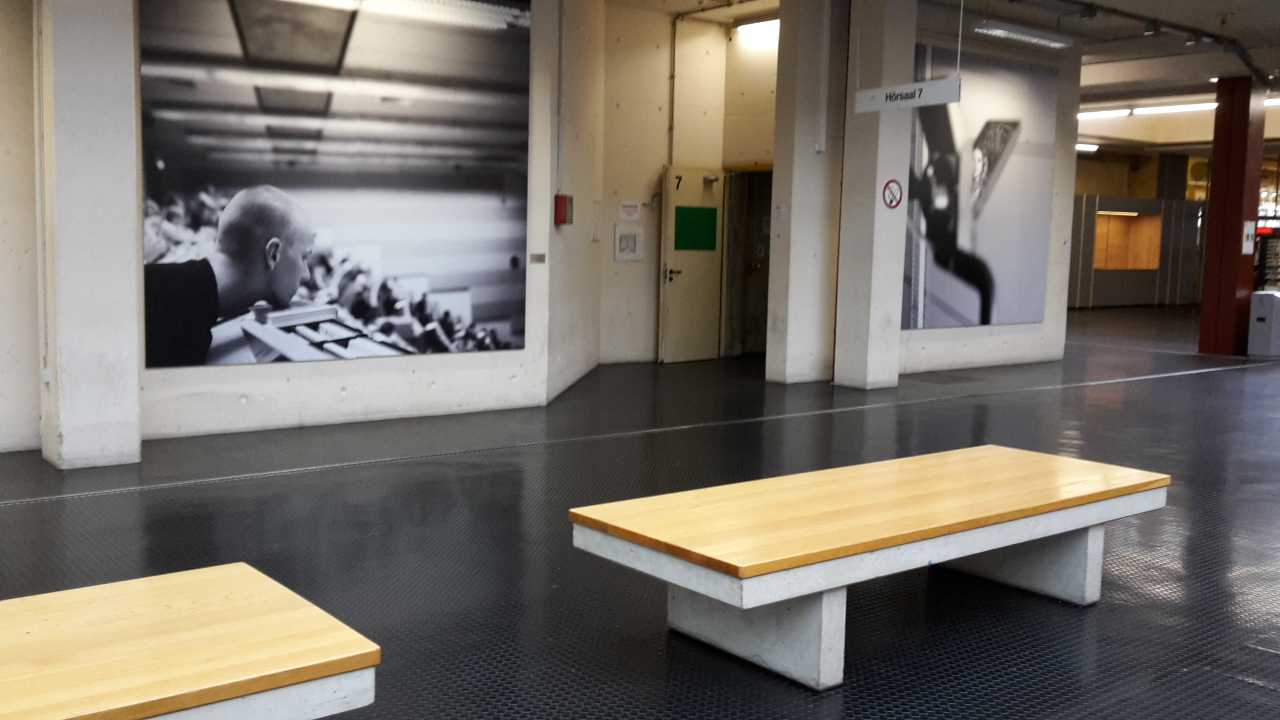
The determination of the weight of an object has often been part of a Task of the Week. However, today’s task is a particular challenge because the object consists of different materials with different densities. Task: Bench (task number: 1803) There are benches in front of the H7. How much does a bench seat weigh […]

The determination of the weight of an object has often been part of a Task of the Week. However, today’s task is a particular challenge because the object consists of different materials with different densities.


Task: Bench (task number: 1803)

There are benches in front of the H7. How much does a bench seat weigh when the wood weighs 690 kg per m³ and the concrete weighs 2400 kg per m³? Give the result in kg.


The best way to solve this problem is by dividing the bench into three parts: the two concrete feet, the concrete seat and the wooden seat. A cuboid can be used as a model for all parts. Then the students take the necessary measurements and calculate the weight of concrete and wood first separately. The total weight of the bench is then calculated by addition.

The task requires knowledge about the cuboid as well as its volume. In addition, the concept of density should be known to the pupils. Within solving this task, this can be sharpened. The task is recommended from class 7.

Task of the Week: Spider Web

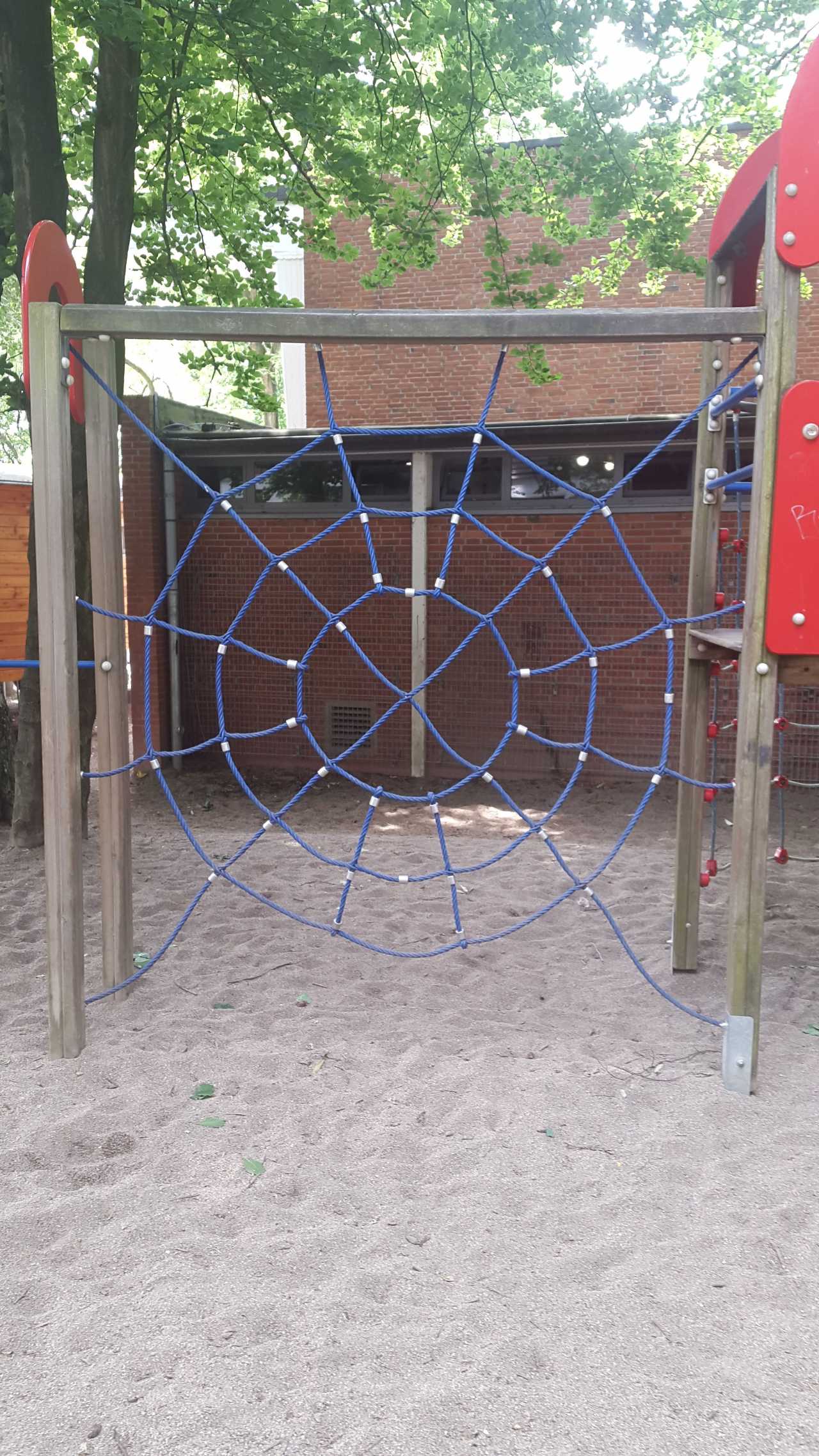
While searching for suitable MathCityMap tasks, creativity and a focus for mathematics in the environment are required. This is also shown by the current Task of the Week, created by Stefan Rieger, in which a climbing frame is converted into a math task. Task: Spider web (task number: 1662) How many meters of rope does […]

Task of the Week

While searching for suitable MathCityMap tasks, creativity and a focus for mathematics in the environment are required. This is also shown by the current Task of the Week, created by Stefan Rieger, in which a climbing frame is converted into a math task.


Task: Spider web (task number: 1662)

How many meters of rope does this spider web consist of?


Thankfully Mr. Rieger was available for a short interview, so he could give an insight into the idea behind the task.

How did you get the idea to create this task for MathCityMap?

Three of us were walking around the schoolyard, looking for interesting tasks. This task offered itself directly, because it is challenging and can be solved by younger students.

What competencies and topics play a role in the problem solving?

Here, it will be important that the group works together when it tries to solve the task. There are several people needed for measuring and recording. Accurate measurement and safe handling of the measuring tape will be necessary to solve the problem. Since it is intended as a task for the grades 5/6, the measuring (here non-straight lines) will be relevant. Of course, older students can use knowledge from the circle calculation.

Have you tested the task with students or received other feedback on the task?

No. The task will be tested in the next school year with grade 5 as well as in the course of a further teacher training with colleagues. However, he climbing children had a lot of fun to help me as a climber for checking the measurements.  

We are pleased that MathCityMap finds more and more task authors from different regions and the task portal is expanded by a variety of tasks!

Task of the Week: Europe Tower

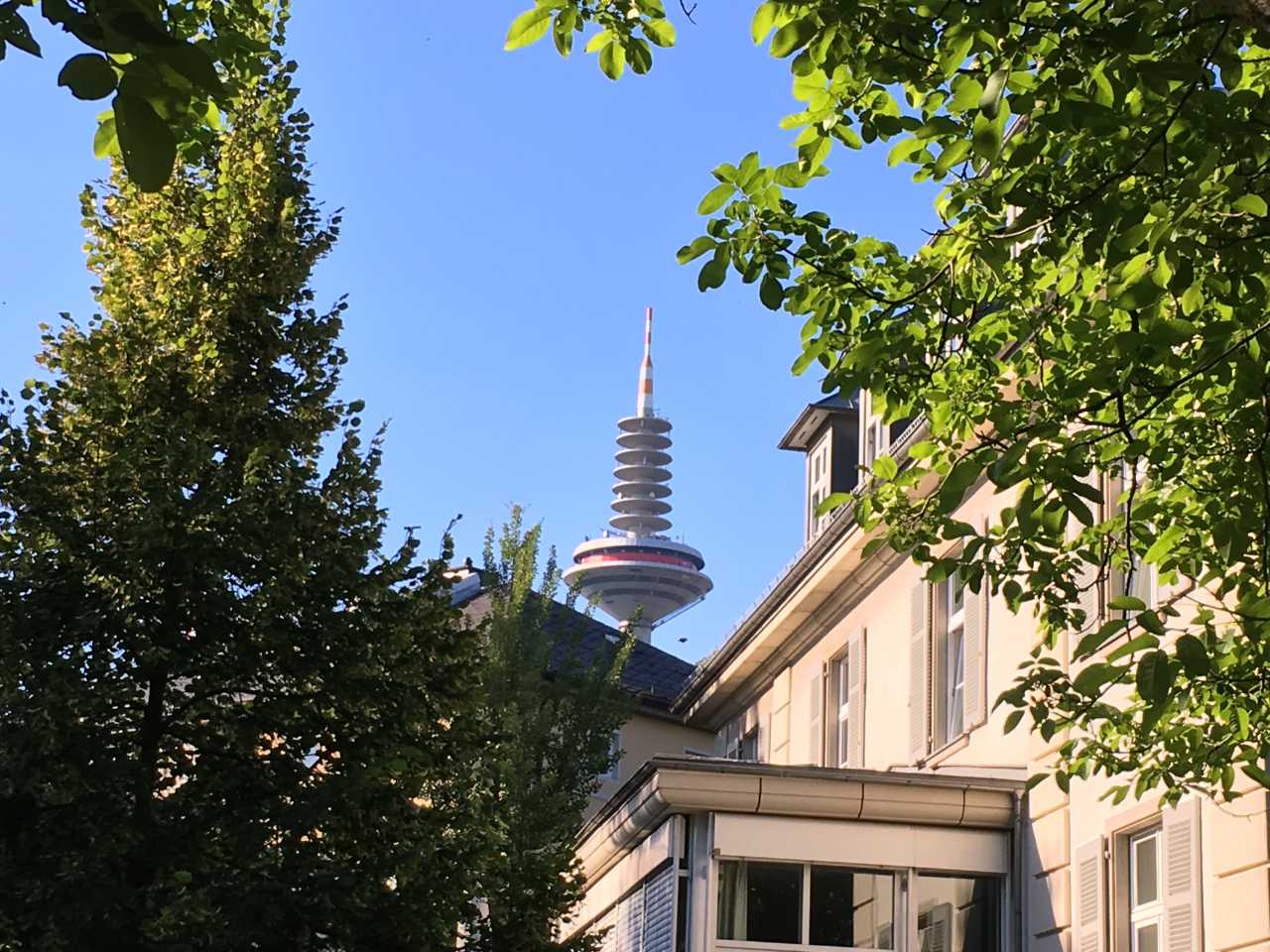
The current Task of the Week deals with one of the many landmarks of Frankfurt: the Europe tower, also known as “asparagus”. The related task is to estimate the own distance to the tower using the intercept theorems. Task: Europe Tower (task number: 1595) Determine the distance from your location to the Europe Tower. Give […]

The current Task of the Week deals with one of the many landmarks of Frankfurt: the Europe tower, also known as “asparagus”. The related task is to estimate the own distance to the tower using the intercept theorems.


Task: Europe Tower (task number: 1595)

Determine the distance from your location to the Europe Tower. Give the result in meters. Info: the pulpit has a diameter of 59 m.


The first challenge is to find a suitable solution. With the aid of the intercept theorems, the task can be solved with the use of one’s own body. The arm and thumbs are streched so that the pulpit of the tower is covered with one eye opened. Afterwards the distance to the tower can be calculated with help of the thumb width and the arm length or distance from thumb to eye.

The task is a successful example of “outdoor mathematics” by using the theoretical formulas (here: intercept theorems) in an authentic application in the environment. To solve the problem, the students need knowledge about the intercept theorems. The task can thus be assigned to geometry and can be solved from class 9 onwards.

Task of the Week: Shaft Cover

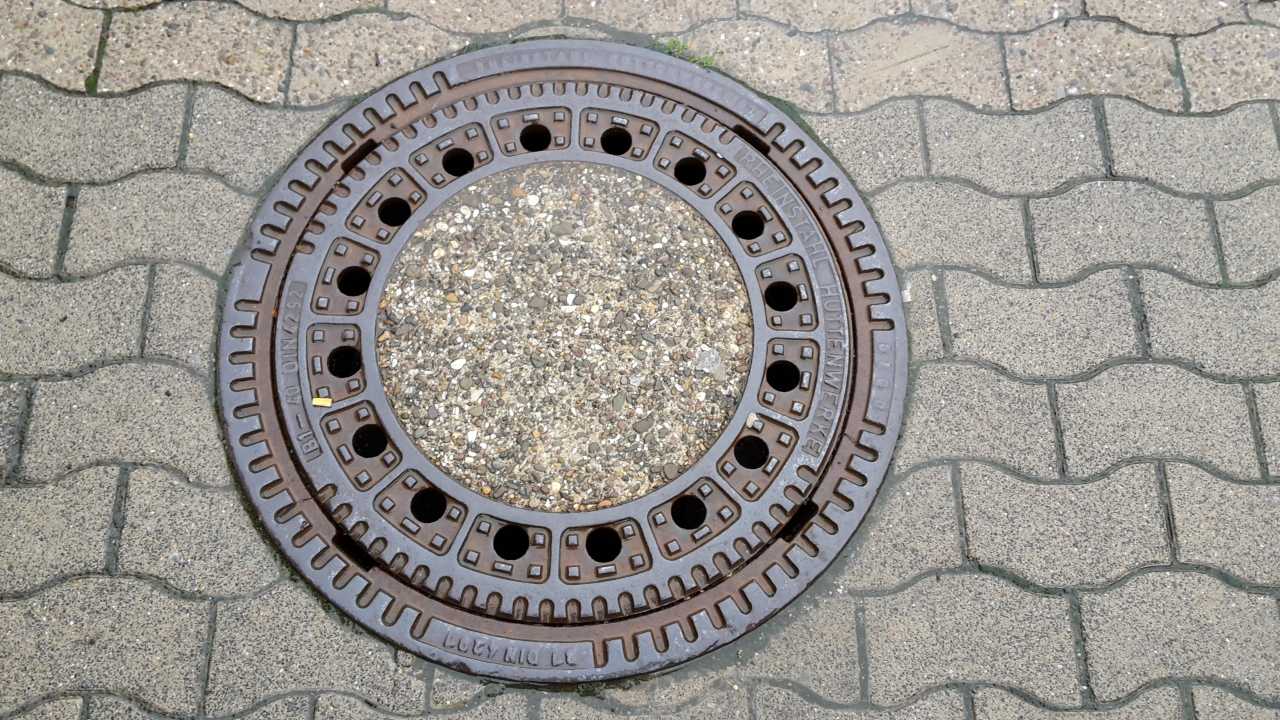
The current Task of the Week is about an everyday object, which is suitable for various tasks around the circle and can be used due to its frequent occurrence in almost every trail. More specifically, it is about the shaft cover of a canal and its dimensions and weight. Task: Shaft Cover (task number: 1804) […]

The current Task of the Week is about an everyday object, which is suitable for various tasks around the circle and can be used due to its frequent occurrence in almost every trail. More specifically, it is about the shaft cover of a canal and its dimensions and weight.


Task: Shaft Cover (task number: 1804)

In the center of the shaft cover, concrete is given. 12 liters of concrete are used per lid. What is the height of the concrete cylinder? Give the result rounded to one decimal place in cm.


To solve the problem, it is first necessary to recognize that the volume of the center of the shaft cover is given. In addition, the shaft cover has to be recognized as a cylinder apart from minor inaccuracies. Using the formula for the volume of a cylinder and the measured radius, the students can identify the required height. In general, the modeling competence and handling of mathematical objects in reality is trained. In addition, the flexible handling of formulas and the choice of suitable units play an important role in order to solve the problem. The problem can be grouped into the complex circle and cylinder and thus plays a role in geometric questions. The task can be used from class 9 onwards.

Task of the Week: Block of concrete at Camps Bay

The current “Task of the Week” is about determining the mass of a concrete sculpture in Camps Bay near Cape Town, the capital of South Africa. The special feature of this sculpture is that it is a composite geometric figure whose components are modeled and calculated individually. Task: Block of concrete at Camps Bay (task […]

The current “Task of the Week” is about determining the mass of a concrete sculpture in Camps Bay near Cape Town, the capital of South Africa. The special feature of this sculpture is that it is a composite geometric figure whose components are modeled and calculated individually.


Task: Block of concrete at Camps Bay (task number: 1811)

Calculate the mass of this concrete sculpture. 1cm³ weighs about 2.8g. Enter the result in tons!


In order to solve the problem, it is necessary to divide the sculpture into three basic parts: a cuboid and two cylinders. Then, the necessary lengths are measured and the volumes of the bodies are calculated and added. In the last step, the total volume of the sculpture is multiplied with the density of concrete, which leads to the total weight of the sculpture.

This kind of task can easily be transferred to similar objects, whereby the degree of difficulty can be varied according to the composition of the figure. This type of task teaches the geometric view and understanding of composite bodies.

Task of the Week: Archway

In today’s Task of the Week, we would like to present a task from a MathTrail, which was developed within a project for talented students by the University of Paderborn in cooperation with the Paderborner Pelizaeus-Gymnasium. You can find more information here. We would like to present the selected task in a short interview with […]

Task of the Week

In today’s Task of the Week, we would like to present a task from a MathTrail, which was developed within a project for talented students by the University of Paderborn in cooperation with the Paderborner Pelizaeus-Gymnasium. You can find more information here. We would like to present the selected task in a short interview with Max Hoffmann, member of the project. At this point, we would like to thank for the cooperation and the interview.


Task: Archway (task number: 1303)

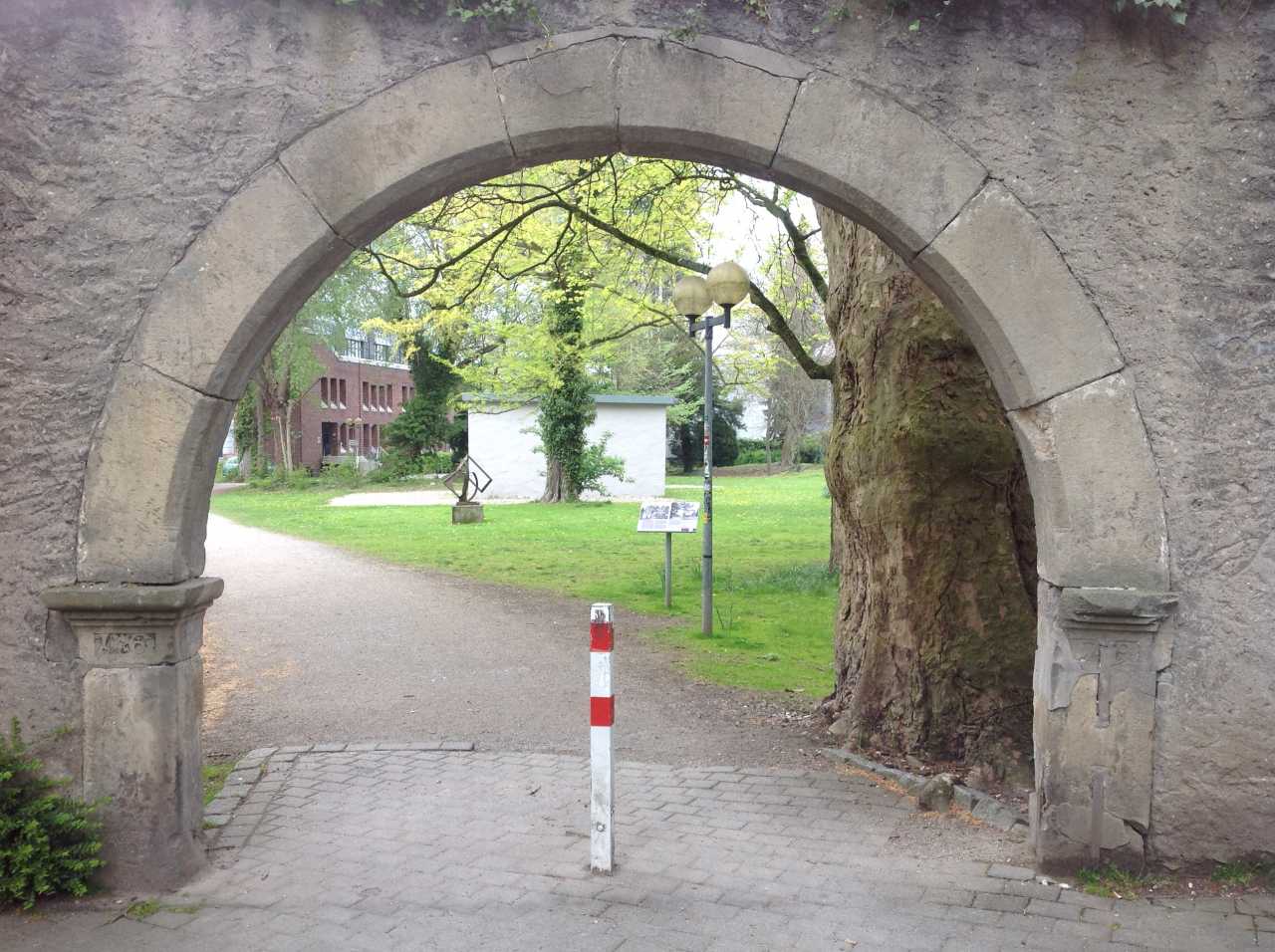
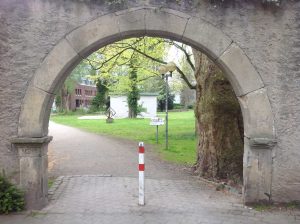
Calculate the volume of the stones that create the archway! Give the solution in cubic meters. (Only the round part of the arc is meant).


How did you get the idea of ​​using this object in a task?

While searching for tasks for a mathematical walking tour through the beautiful Paderborn inner city, the students independently selected this archway near the Paderquelle. The first idea was to calculate the area of ​​the stones around the archway. I had the feeling that this kind of questioning was a typical task the students knew from their math books. After some thought, the suggestion came to modify the task so that the volume of the stones from which the archway is formed should be calculated.

What kind of mathematical activities and competences do you want to promote?

The task addresses modeling competencies (representation of the situation through two semicircles) and requires the selection and determination of appropriate measured variables. In terms of content, the known formulas for the circle are necessary for solving the problem.

Have you already processed the task with pupils or received feedback in other forms?

The task was developed by a small group and the other students of the project also solved the problem and liked it. The results of the first group were confirmed. In addition, the group presented the task at the final project event at the University of Paderborn and received positive feedback.