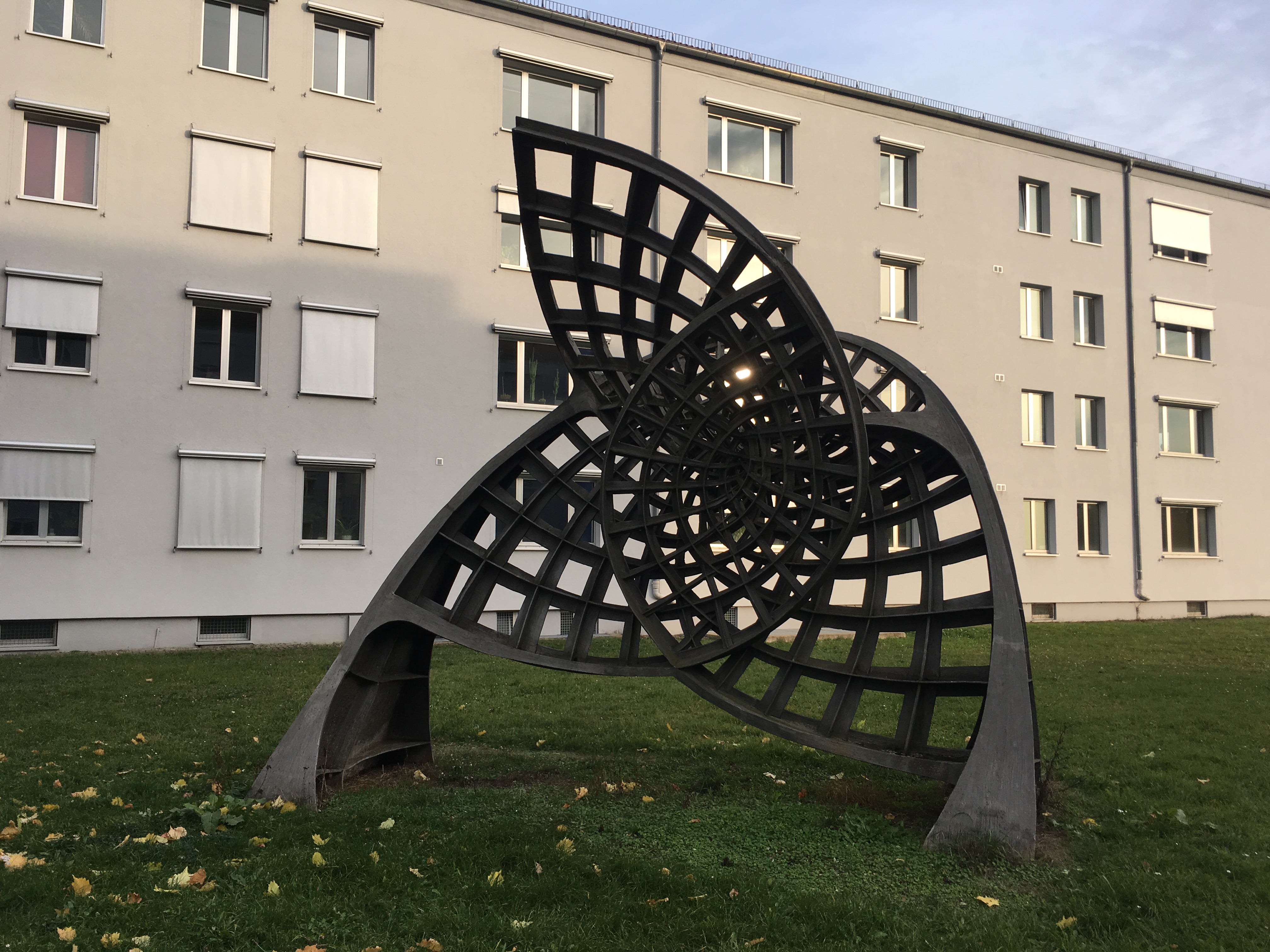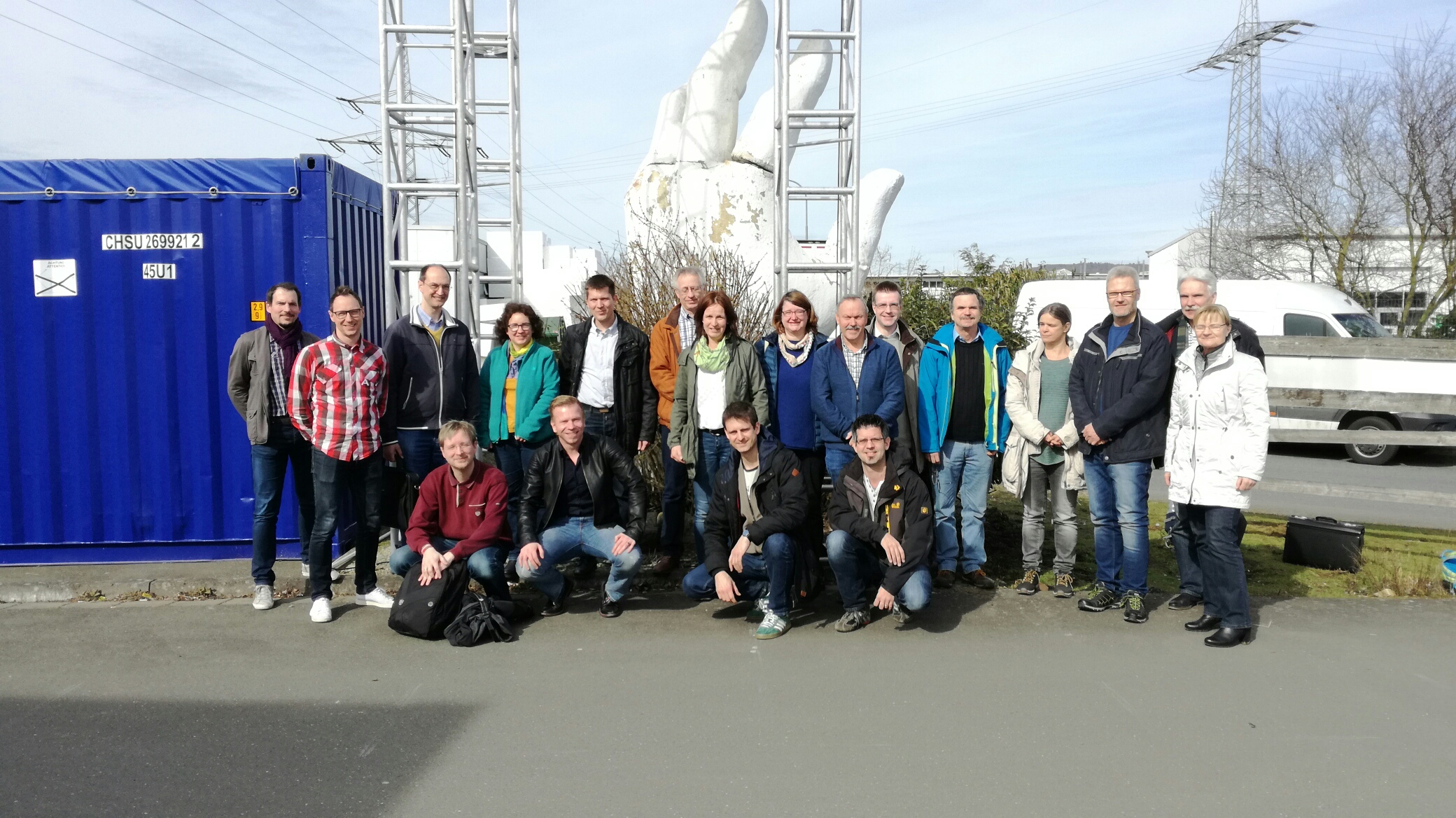
It is a sunny Saturday morning in an industrial area near Wetzlar. The Mathematics Center Wetzlar invited students of the Q2 to a mathematics competition. The teachers had the opportunity to participate in the “MathCityMap – Mathematics on the Road” workshop and to get to know our project. After a short theoretical introduction to the subject of outdoor mathematics and mathtrails, the participants (with a measuring stick, measuring tape and smartphone) went to solve mathematical questions in the industrial area of ​​Dillfeld. For example, they had to find out the capacity of a tank or determine the slope of a metal ramp. After this, they had the possibility to formulate own tasks for objects in the environment and to create them in the MCM web portal. The result was a new mathtrail consisting of the newly created tasks of the teachers.

We hope that the participants had a lot of fun and some ideas for their own lessons. We are already looking forward to tasks and trails that will follow from this event. At this point, we would like to thank for the invitation to this event!  

Are you interested in workshops on outdoor mathematics with MathCityMap? Take a look at our event page.
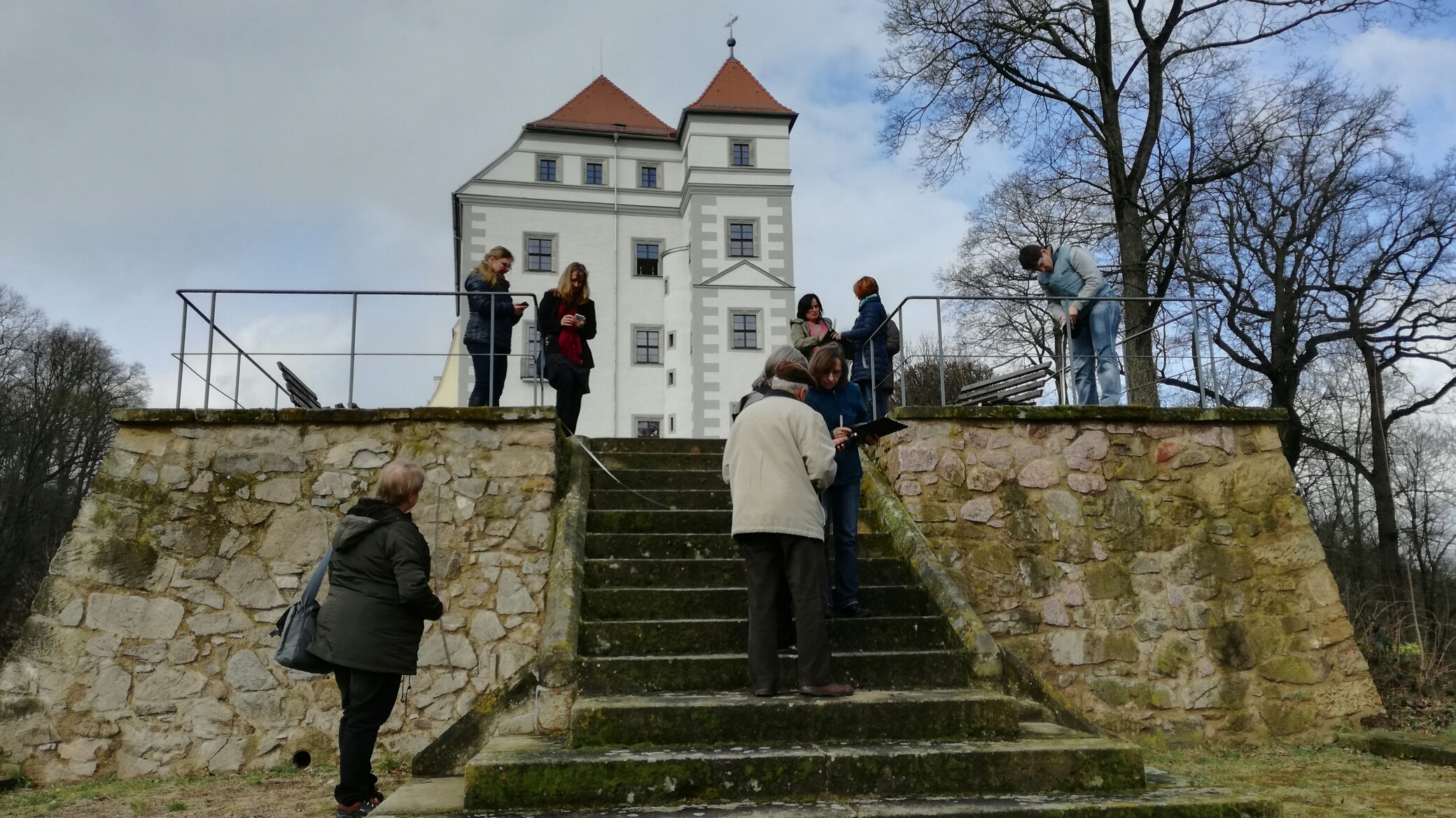
Being part of the “Day of Mathematics and Natural Sciences” in Saxony, the MathCityMap team held a course on outdoor mathematics with MCM. The “Sächsische Bildungsinstitut” (SBI) invited to this event on 9th March 2017 in Meißen at Schloss Siebeneichen. 24 participants took part in the workshop and were able to solve mathematical problems and questions around the castle. For example, one had to find out how high the tower of the castle is or how many liters of water fit into the pool. In the second part of the course, the teachers were able to search for own mathematical tasks in the environment and to create them in the portal.

We hope that the participants had a lot of fun and got some ideas for their own lessons. We are already looking forward to tasks and trails that will follow from this event.  

Are you interested in workshops on outdoor mathematics with MathCityMap? Take a look at our event page.
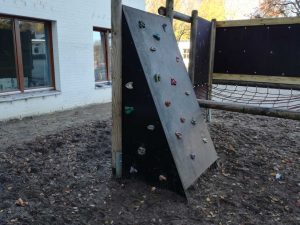
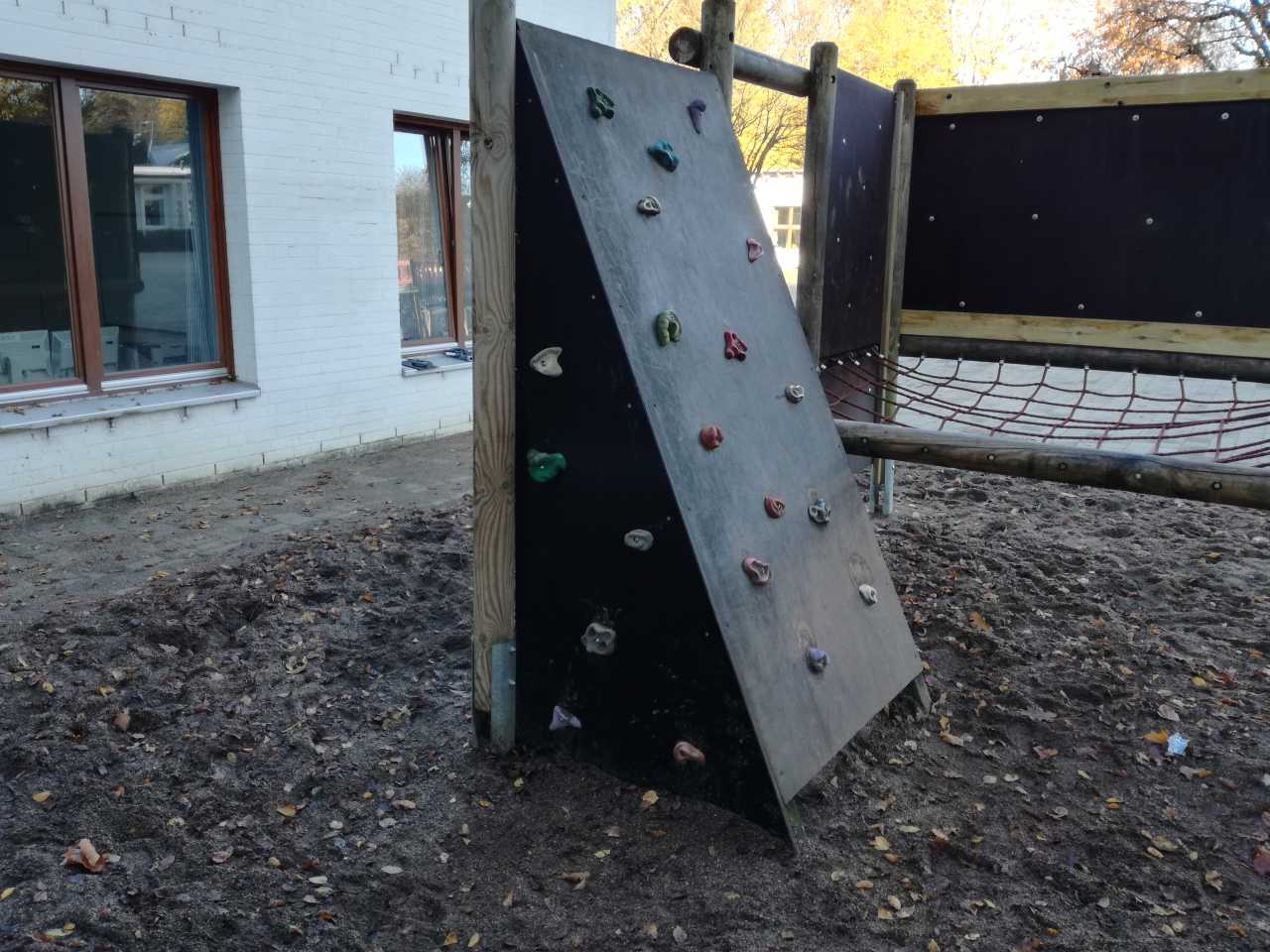
Today’s “Task of the Week” leads to Hamburg, more precisely to the school Am Heidpark. Here, one can find the trail “Am Heidpark” which is a good example to show that already a schoolyard can be made for a MathCityMap trail. The selected “Task of the Week” is called “Climbing Wall” with task number 668.


Task: Climbing Wall

Determine the slope of the climbing wall in percent.


The task enables a suitable embedding of the topic slope of linear functions. The slope of the climbing wall can be determined by recourse of the gradient triangle. In the coordinate system, the slope of a linear function can be calculated with help of two points on it. It is necessary to determine the difference of the y-coordinates (dy) and the difference of the x-coordinates (dx) and divide them afterwards. Corresponding in the real context, it is necessary to measure the height difference (dy) as well as the difference in length (vertical; dx). Afterwards, the slope can be calculated with help of a division and the conversion into percent. The task can be used from grade 8 and supports a basic understanding of the slope of a linear function and its determination with help of a gradient triangle. The task is especially suitable in the beginning of the topic as it already “predefines” a right-angled gradient triangle. Further tasks could for example involve the slope of a stair handrail. The task is a connection of algebra and geometry and can be related to the branches measuring and functional correlation.


At the 3rd of March, the MCM-App became one year old. At first, all the best to it! We would take this opportunity to draw an interim conclusion.

Development

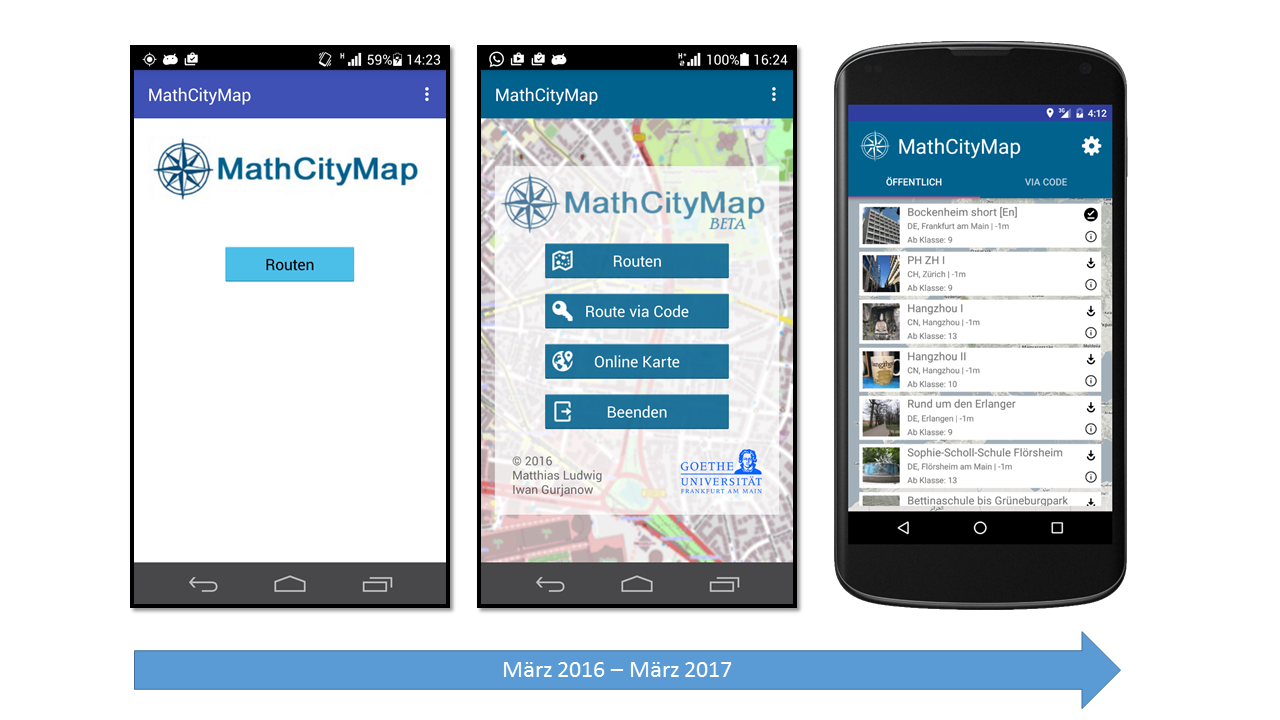
The app did not always look the way as it does today (see cover picture). It was a long development process until the app satisfied the demands. To do so, we presented and used the app in numerous events and let the feedback enter the further development. Through this, functions such as the guided tour (start from a selected task), the orange interval and first gamification elements were included. Meanwhile, the app arrived in its 14th version under the designation “1.82”. Nevertheless, we still have further ideas, which we want to implement in the future.

Prospects

We are pleased with the iOS-version of MCM, which will probably appear in the beginning of April. Further, in nearby future, it should be possible to create GPS-based tasks (e.g. to position oneself in a right angle from two points). More, task templates for objects which can be found often in the environment (e.g. advertisement pillars) should facilitate the creation of tasks extremely. The supplemental project “MCM-Control” should allow teachers to follow the learners’ progress and intervene if necessary.

Numbers

The MCM-App for Android has been downloaded and installed over 500 times and has an actual evaluation of 3,8/5 stars (we look forward to further evaluations!). Now, the MCM web portal includes over 1000 tasks, which are created and revised by about 200 registered users. The tasks can be located in different areas, e.g. Hamburg, Potsdam, Rhein-Main area, Erlangen, Wetzlar, Münster, Saarbrücken, Würzburg, Mannheim, Lyon (France), Semarang (Indonesia) and many more. In the past year, we offered ten events for teachers to get to know outdoor mathematics with MathCityMap.

It will be interesting to see what can be expected for 2017.

In this week, the focus of the “Task of the Week” is on a stochastic problem. The task is called “Permutation at the Bicycle Stand” and is included in the trail “Hubland Nord” located in Würzburg. The task number is 680.


Task: Permutation at the Bicycle Stand

Four bicycles should be locked at the bicycle stands. The bicycles can be locked on the left or on the right side of each stand. How many possibilities exist to lock four bicycles at the stands? You do not have to distinguish whether the bikes are locked “forwards” or “backwards”. You can assume that all stands are free.


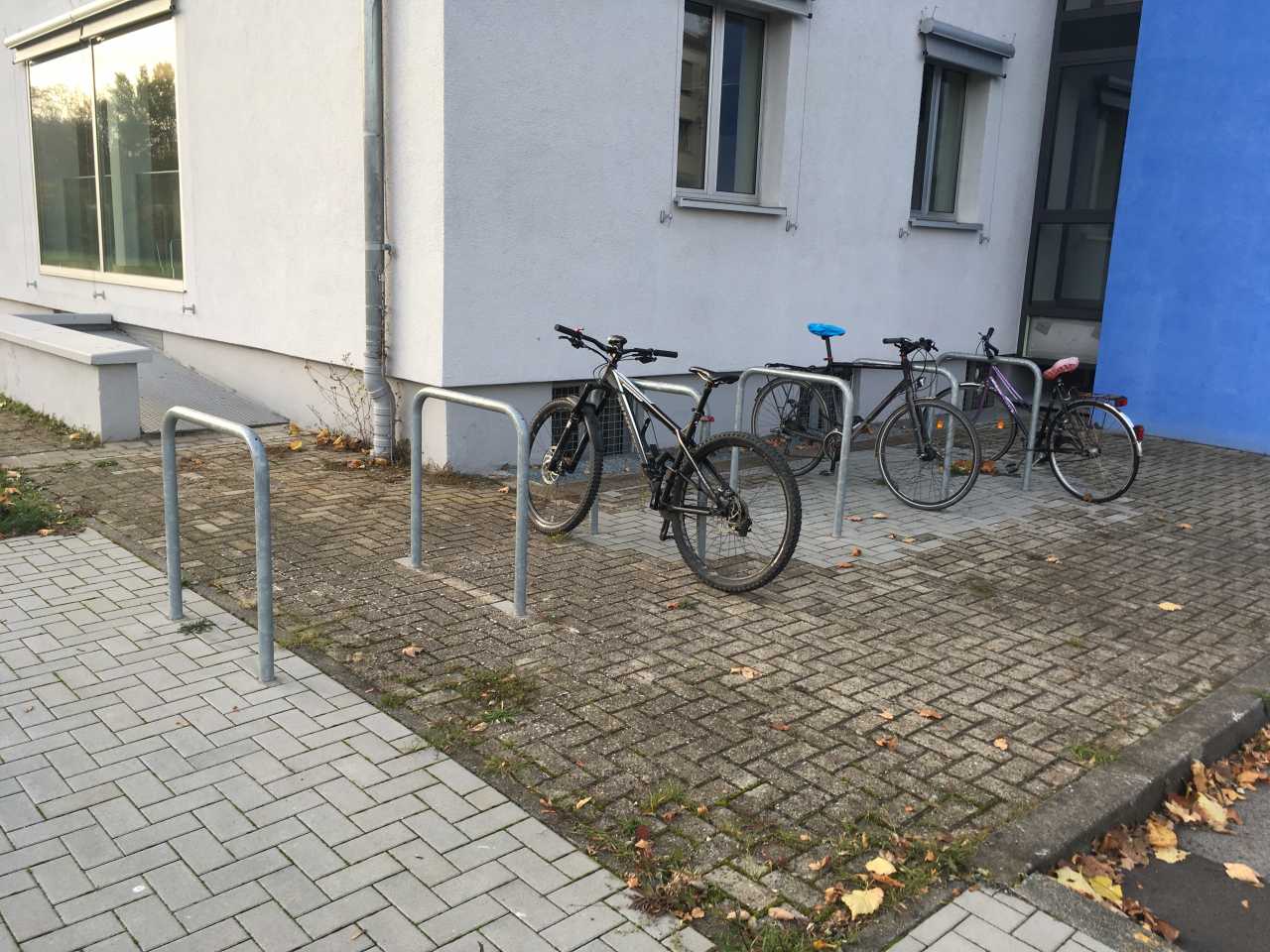
In this task, it is necessary to determine the number of possibilities to lock four bicycles at the bicycle stands. Altogether, there are eight stands and therefore 16 possible spaces. On the picture, not all spaces can be seen in order to guarantee the criterion of the students presence (the task can only be solved at this location). For the first bike, there exist 16 possibilities to lock it. As this space is full afterwards, the number of possibilities to lock the second bike is 15. Analogous, the possibilities for bikes three and four amount 14 and 13. This combinatorial problem is a situation where repetition is not allowed and order matters. With help of the possibilities’ product, one can calculate the total number of possibilities.

This task enables a suitable embedding of a combinatorial problem into the reality. It belongs to probability calculus and can be used from grade 8 with first combinatorial considerations. Further, it can be especially used in stochastics in grade 12/13 as a repetition of basic combinatorial considerations. Moreover, the task can be transferred easily to similar situations (e.g. parking spaces).

At the 27th February 2017, the 51st annual conference of the “Gesellschaft für Didaktik der Mathematik” in Potsdam starts. The project MathCityMap participates with three activities and presents the development and reserach on the MCM-project.

First of all, Adi Nur Cahyono presents the findings of his dissertation on Monday, 27.02.17, (16.15-16.50, S13): “MathCityMap: Motivating students to engage in mathematics through a mobile app-supported math trail program”.

On Tuesday, 28.02.2017, (12.45, S17), a teacher training with M. Ludwig, J. Zender and I. Gurjanow takes place: “MathCityMap – Explore and create math trails in city and country with mobile devices”.

On Friday, 03.03.2017, (11.00-11.35, S22), Iwan Gurjanow presents his research findings on “Influence of gamification of the instrinsic motivation by the example of the MathCityMap-App”.

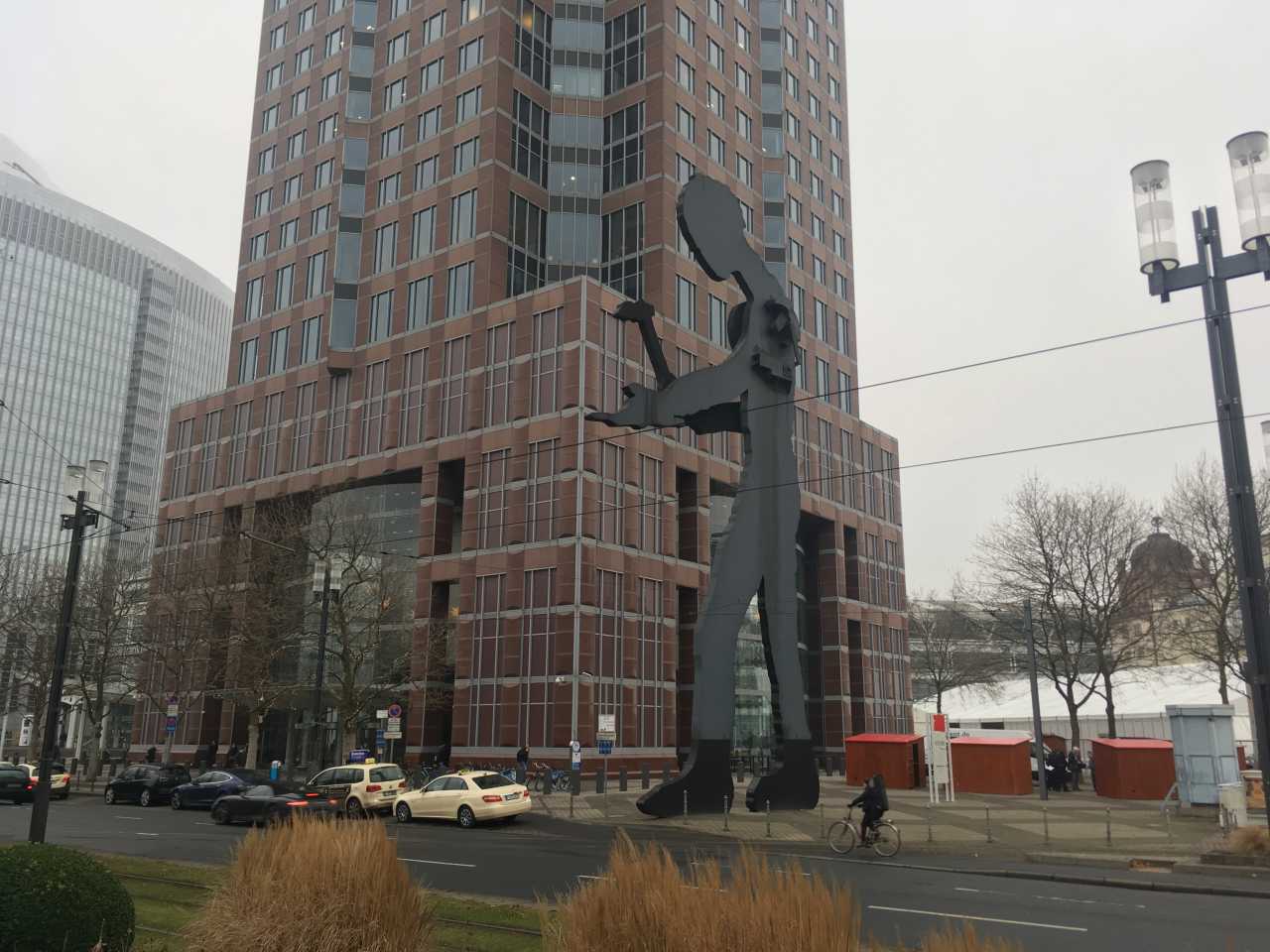
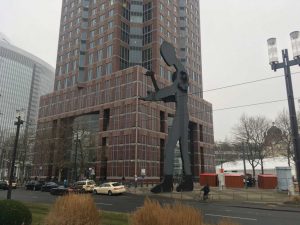
Today’s “Task of the Week”  focuses on the “Hammering Man”, a symbol of Frankfurt’s fair. The “Hammering Man” comes to one’s attention through his continuous hammering motion. The task is part of the “Weihnachtstrail” with task number 784.

__

Task: Hammering Man

The “Hammering Man” hammers continuously. How many hammer blows does the “Hammering Man” carry out in the month December?

__

To solve this problem, it is necessary to observe the motion of the “Hammering Man” and measure the duration of a blow (in seconds). This can be done through measuring the time for 10 cycles. Afterwards, the number of seconds for one day and for the month December should be determined. With help of a division, the number of hammer blows can be calculated for the month December.

In this task, the main part is to determine the frequence of a periodic motion through measuring. Therefore, the task can be seen as an examplary task which can be adapted to further locations where things move periodically. The focus is especially on the time units second, day and month, as well as their conversion. Further, the arithmetic operations multiplication and division are included. Therefore, the task is in connection with school mathematics and can be used from grade 4.

The task is very suitable, because it requires the presence and activity (measuring of the duration of a blow) of the pupils. Further, it is a realistic problem, which can be solved without special aid. The task offers the possibility to differentiate as the pupils can ask for help if needed. The sample answers can be found with the task in the portal.

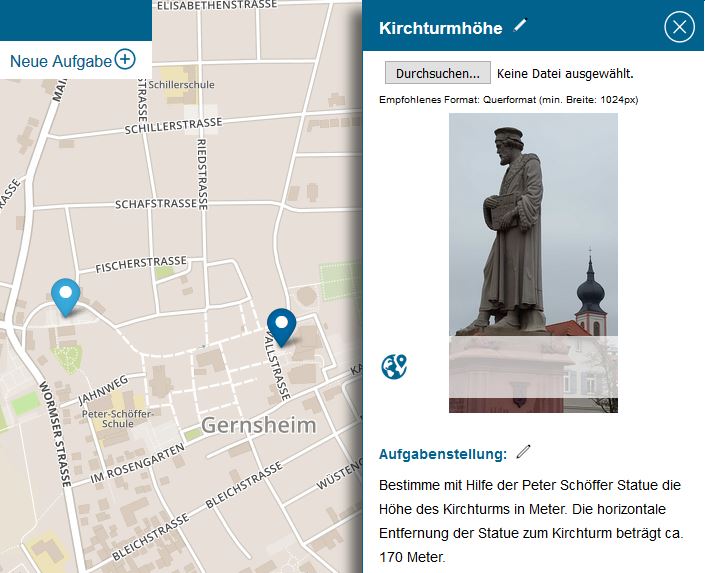
In February 2017, the 1000th task will be uploaded in the MathCityMap system. The author, Johannes Moos, asks for the height of the church tower in Gernsheim, which can be determined with help of the statue of Peter Schöffer and the given distance between the church and the statue. The task can be solved with help of the intercept theorems. It can be found in and transferred to other situations easily. Such tasks are called generic tasks.

Johannes Moss can be pleased with a MathCityMap folding rule which will be delivered soon.


From now on, a selected task from the MathCityMap portal will be presented weekly. These tasks will be collected under the category “Task of the Week” and illustrate the diverse mathematic and realistic usages of the MathCityMap project.

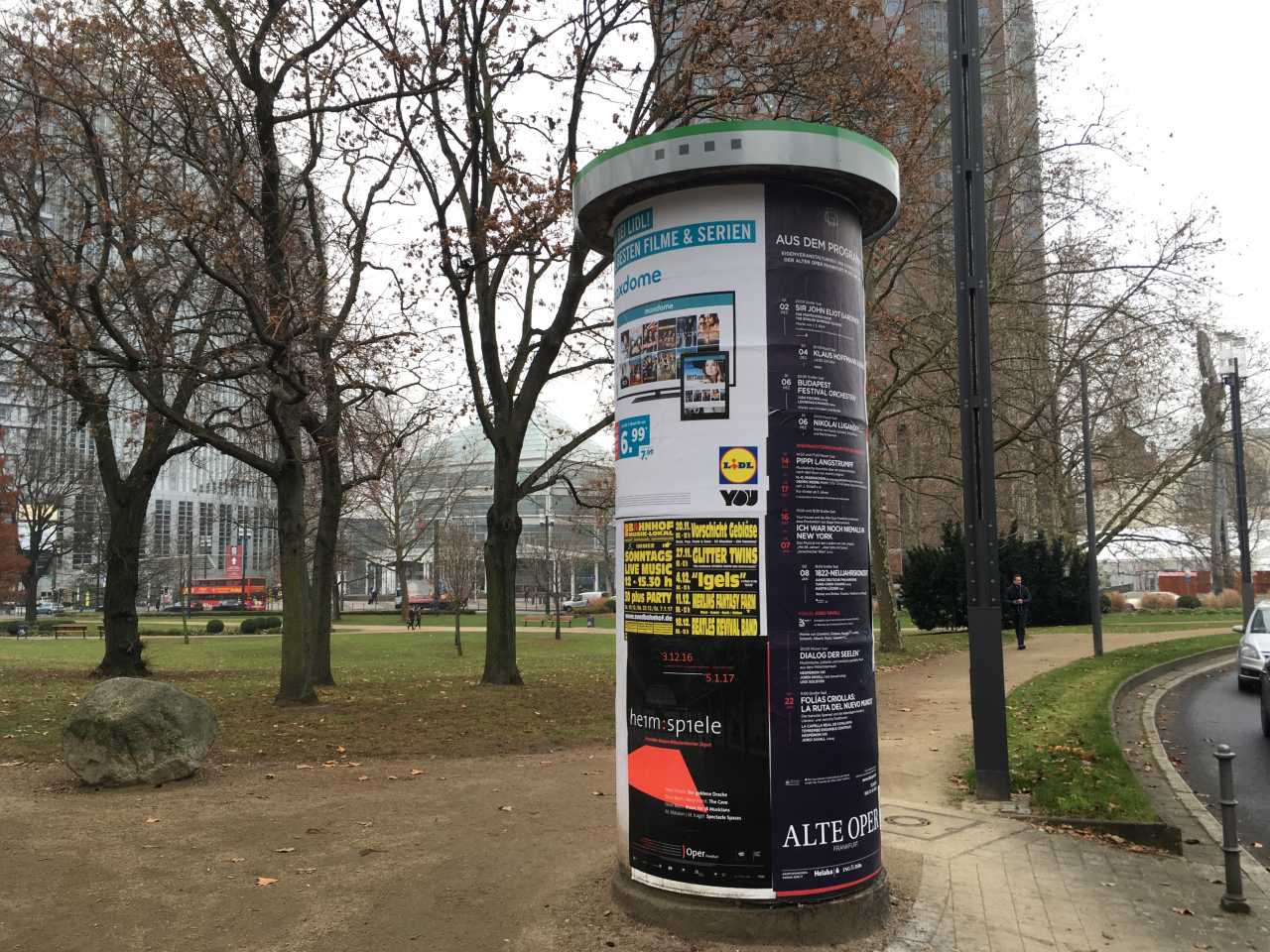
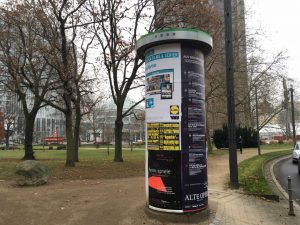
In this week, the focus is on the mathematic use of the advertisement pillar, exemplary included in the “Weihnachtstrail” in Frankfurt with task number 783.


Task: Advertisement Pillar

How many DIN A0  posters (84,1 cm x 116,9 cm) can be placed in portrait orientation and without overlapping?


To solve this task, it is necessary to measure the number of posters which can be placed in height and length. To do so, the perimeter and the height of the advertisement pillar have to be measured. Afterwards, the task can be solved with a multiplication. The task belongs to geometry, especially to the branches “space and shape” and “measuring” and can be used from grade 5. As it is asked for the number of posters, the solution must be a natural number.

This task is particularly suitable in terms of the MathCityMap concept as advertisement pillars exist in every city. Therefore, the task can be adapted easily and quickly to other surroundings which is underlined through the fact that similar tasks can be found in other trails as well. This task is an effective activity to do outdoor mathematics.