Task of the week: Mainbank

The mathematics teacher Henrike Homann, recently created the task “Mainbank” in Gemünden, a town located east of Frankfurt directly on the Main River, which we would like to present to you as the task of the week. The aim of the task is to determine the ratio in which the position of the town of […]

The mathematics teacher Henrike Homann, recently created the task “Mainbank” in Gemünden, a town located east of Frankfurt directly on the Main River, which we would like to present to you as the task of the week. The aim of the task is to determine the ratio in which the position of the town of Gemünden divides the total length of the Main and thus of the bank reproducing the course of the Main. In the following interview Henkrike Hohmann talks about her experiences with MathCityMap so far and about the idea for her task.


How did you come across the MathCityMap project? How do you use MCM?

Many years ago, I attended a training course at the University of Würzburg in which Prof. Ludwig presented some of his projects in mathematics teaching. I liked the ideas so much that I kept looking for new projects by Prof. Ludwig. Thereby I came across the MathCityMap application. In an advanced training course, I was able to get to know the app from a student’s point of view and create the first tasks myself. Right from the start, I liked the fact that with the help of the app, the students experience the relationship of “dry” mathematics to reality and discover mathematical objects everywhere in their environment. In the process, they encounter completely new problems that don’t arise in the usual textbook tasks: How do I measure correctly? What quantities do I actually need to solve the problem? What accuracy is appropriate? Last but not least, the handling of the cell phone and the new learning location outside is motivating for the students.

Based on MCM, I created trails for the city of Gemünden together with the students of a project seminar. These have already been used with pleasure by students of our school on project days or on other special occasions. But also tourists can borrow the necessary materials at the tourist information and go on a mathematical scavenger hunt. A few trails have already been created on the school grounds as well. I have noticed that the effect is even greater for the students when they create tasks for their classmates themselves.


What can learners take away from working on the task?

The rather easy task Mainbank is part of a trail revised for the Tourist Info, which leads families coming to Gemünden to various mostly also historical buildings in the city and links information about the city with small mathematical tasks. At the task “Mainbank”, which should be solved without a calculator, you can not only repeat mathematical content such as distance ratios, common divisors, shortening and estimating, but you also have to bring some geographical knowledge about the location of the cities on the Main.
Task of the week: New paint for the dove of peace

Angela Karl, a math teacher at the Lichtenberg School in the south of Darmstadt, recently created the task “New paint for the peace dove“, which we would like to present to you today as the task of the week. The goal of the task is to determine the amount of paint in liters that would […]

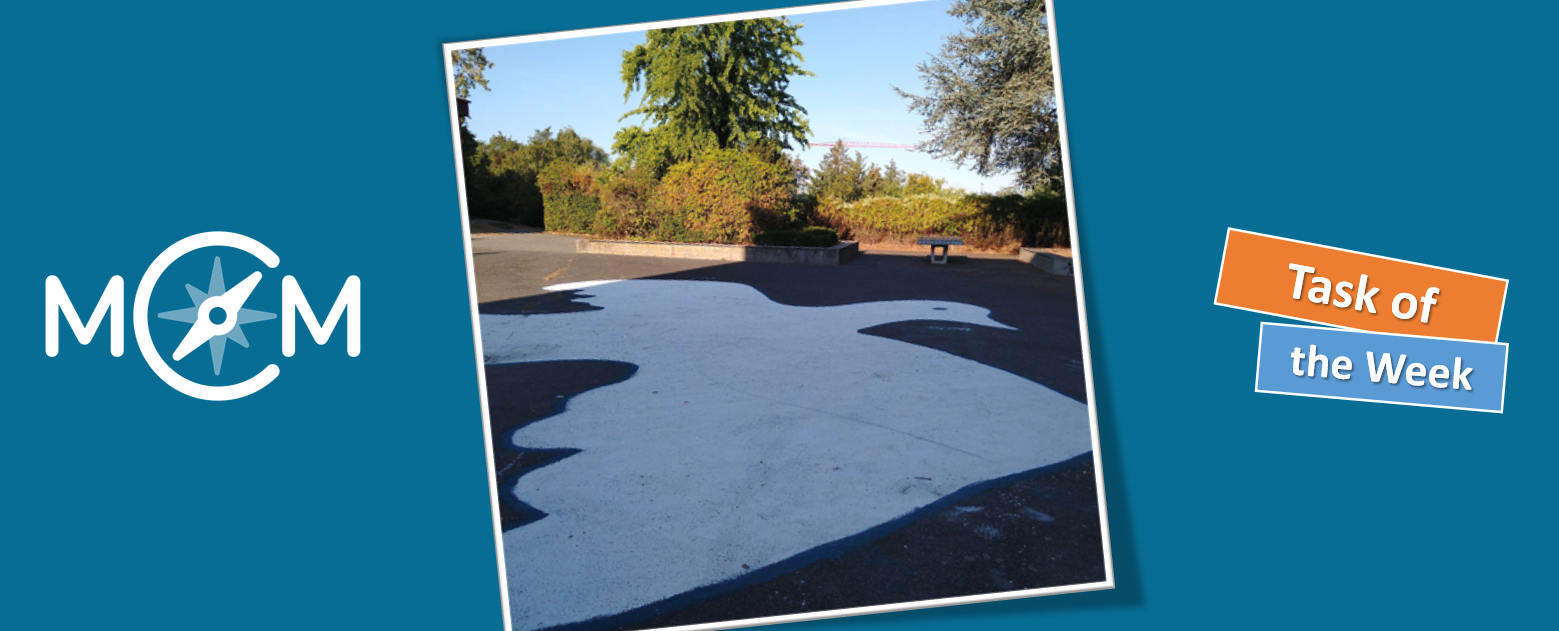
Angela Karl, a math teacher at the Lichtenberg School in the south of Darmstadt, recently created the task “New paint for the peace dove“, which we would like to present to you today as the task of the week. The goal of the task is to determine the amount of paint in liters that would be needed to give the dove of peace in the schoolyard a new coat of paint.  Angela Karl reports on her task and her experience with MathCityMap so far in the following.


How did you come across the MathCityMap project? How do you use MCM?

I got to know MathCityMap at the ErLe Day at the Goethe University Frankfurt. Together with a colleague, I attended a workshop on MathCityMap. In the workshop, we were able to gather theoretical basics about “outdoor mathematics” as well as our own first experiences with the app. The workshop made me very enthusiastic about MathCityMap, because it is a low-threshold way to encourage students to see the world through math glasses.

Then, as I walked around my school grounds, I immediately noticed a few places where you can create exciting tasks. So far, I have only used MCM once in the E-Phase, in order to awaken the memory of various topics of the middle school in an interesting way. My students were very enthusiastic about it. I plan to continue using MCM in different grades in the future.


What can learners take away from completing the task?

Since the dove of peace is not a simple geometric shape, students must first develop a plan to approximate the surface as closely as possible. It is a good idea to break down the figure into several geometric shapes. There are a variety of ways to do this, and the results will vary in accuracy depending on how you do it.

The students have to manage their time well, since they lose a lot of time measuring if they divide the dove into too many small sections. Since it is not the area of the dove that is required, but the amount of paint needed, they still have to convert their result correctly at the end.

Task of the week: Rainbow garland

Today we would like to present you the task “Rainbow Garland” as the task of the week, which was developed and published in Berlin by math teacher Felix Schlosser.  The goal of the task is to determine the length of a garland to be fitted into an arch over the entrance of a church.  Felix […]

Task of the Week

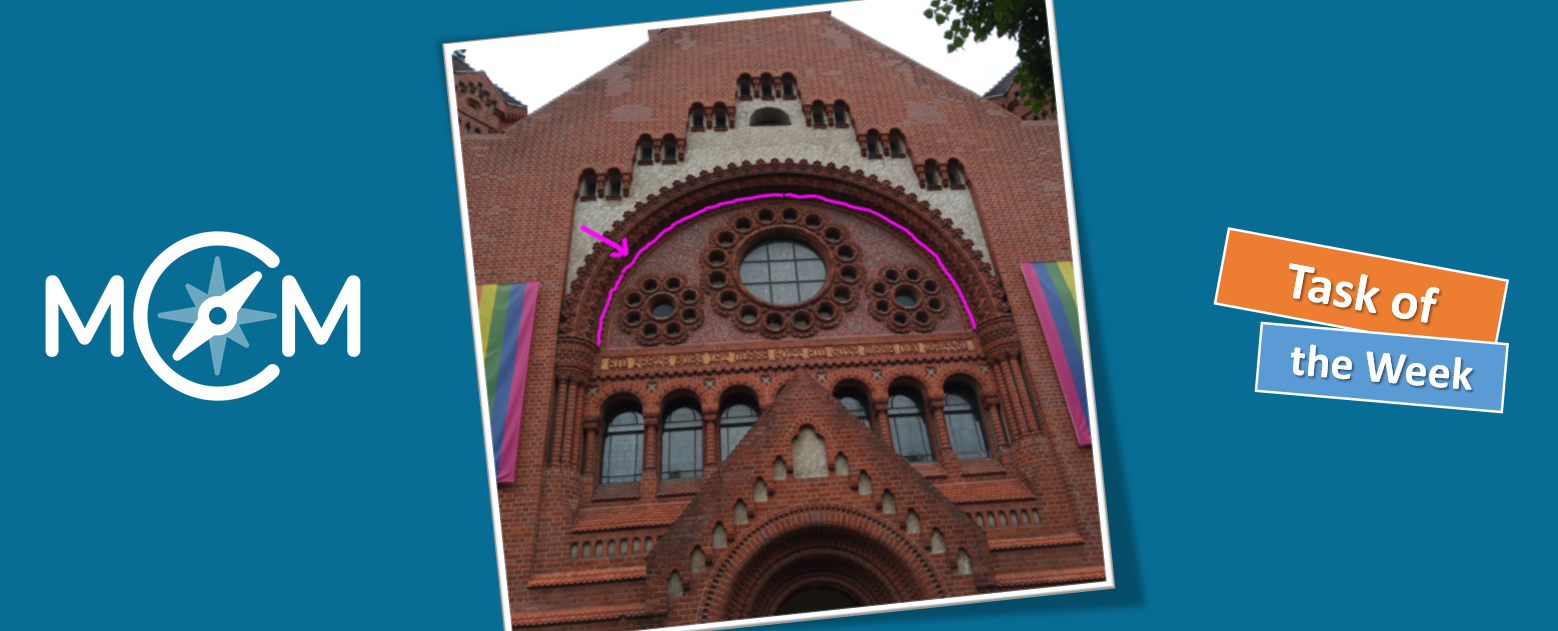
Today we would like to present you the task “Rainbow Garland” as the task of the week, which was developed and published in Berlin by math teacher Felix Schlosser.  The goal of the task is to determine the length of a garland to be fitted into an arch over the entrance of a church.  Felix Schlosser reports on his task and the use of MathCityMap in the classroom below.


How did you come across the MathCityMap project? How do you use MCM?

I came across MathCityMap via a teacher training course. Ms. Reit from Frankfurt also presented many other interesting ideas there. Out of curiosity, I then deepened my knowledge in an independent MCM training. However, since it took me more than a year to start using it in the classroom, I attended another three-part training course from MathCityMap, which was structured and went into detail about everything that was important for smooth operation.

I presented Math-City-Map in a regional group for the Berlin project “Mathematikunterricht-konkret” and in order to put ourselves in the students’ shoes, we tried out a trail at the Gendarmenmarkt. This inspired me to create tasks myself for the three-part advanced training, for reuse near my school, of course. This way I can also present them at the professional conference and let them try them out.


What can learners take away from working on the task?

The rainbow flag on the church gave me the idea for the task. The theme is very appealing as a symbol of diversity. What is special about the task is that in addition to finding the necessary formula for the circle calculations, the students are also challenged to find the necessary measurements. What values can we get even though we can’t measure directly? Thus the task is graded, one has to think on different levels – literally. The measures can only be determined indirectly and only approximately. This increases the puzzling character and consequently the motivation to solve the task.

Generic Tasks: Velocity

The new article on Generic Tasks is dedicated to a task from the ” Velocity ” category. With the help of the task wizard, this task can be created in the shortest possible time, as always, and the corresponding object can be found everywhere in your environment, especially in urban areas. You can read the […]

Generic Tasks

The new article on Generic Tasks is dedicated to a task from the ” Velocity ” category. With the help of the task wizard, this task can be created in the shortest possible time, as always, and the corresponding object can be found everywhere in your environment, especially in urban areas. You can read the first article on Generic Tasks, which also tells you how to get to the task wizard and what Generic Tasks are, here.

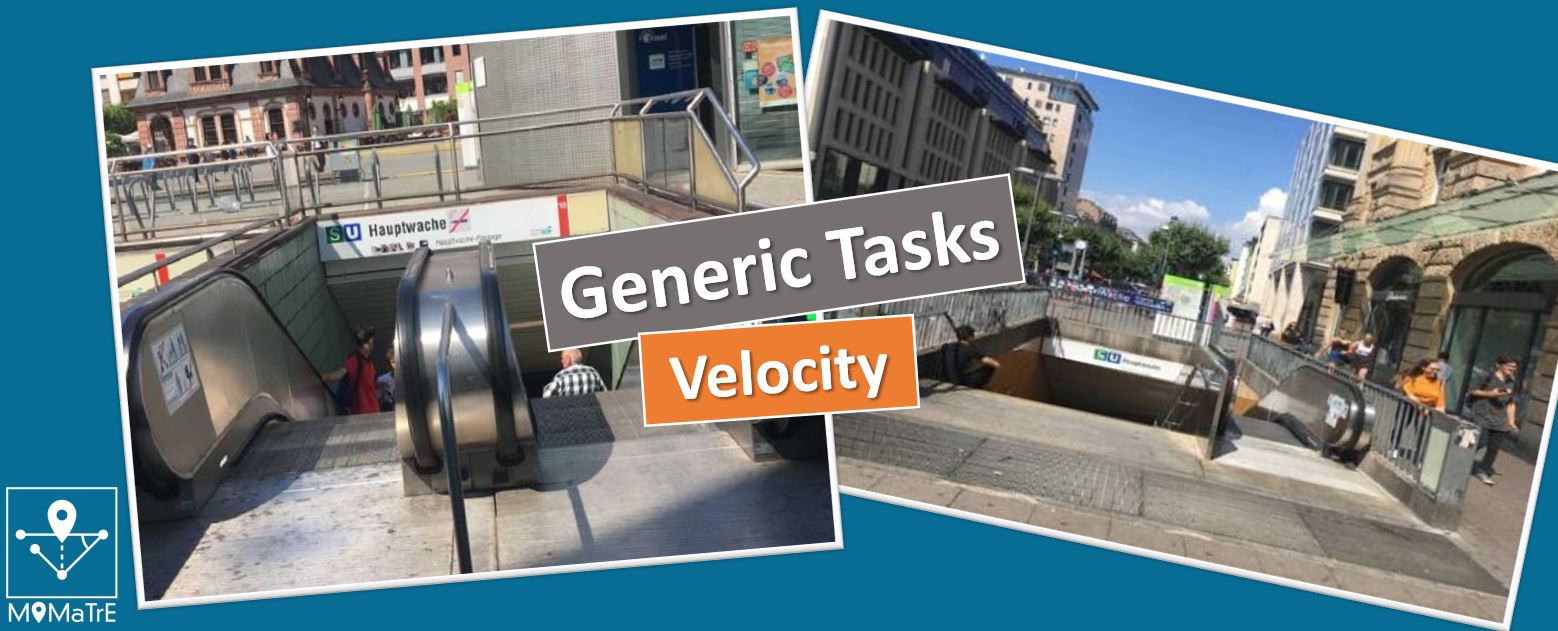
The object we are going to look at in this article is escalators. They are often found in public buildings or at the entrances to subway stations or train stations. The task that is available for escalators in the task wizard is:

“Determine the speed of the escalator. Give the result in meter per second. Give the result with two decimal places.”

Required for creating the task are the time duration, which the escalator needs to travel a well-defined distance. In addition, you can select whether the speed should be specified in m/s or in km/h. Based on the entered data, the wizard fills in the rest of the task form and only a picture needs to be added to complete the task.


In the next article we will deal with the probably most special category of Generic Tasks, the so-called GPS tasks. Until then, have fun and save time when creating MCM tasks with the Task Wizard!


Generic Tasks: Velocity

The new article on Generic Tasks is dedicated to a task from the ” Velocity ” category. With the help of the task wizard, this task can be created in the shortest possible time, as always, and the corresponding object can be found everywhere in your environment, especially in urban areas. You can read the […]

Generic Tasks

The new article on Generic Tasks is dedicated to a task from the ” Velocity ” category. With the help of the task wizard, this task can be created in the shortest possible time, as always, and the corresponding object can be found everywhere in your environment, especially in urban areas. You can read the first article on Generic Tasks, which also tells you how to get to the task wizard and what Generic Tasks are, here.

The object we are going to look at in this article is escalators. They are often found in public buildings or at the entrances to subway stations or train stations. The task that is available for escalators in the task wizard is:

“Determine the speed of the escalator. Give the result in meter per second. Give the result with two decimal places.”

Required for creating the task are the time duration, which the escalator needs to travel a well-defined distance. In addition, you can select whether the speed should be specified in m/s or in km/h. Based on the entered data, the wizard fills in the rest of the task form and only a picture needs to be added to complete the task.


In the next article we will deal with the probably most special category of Generic Tasks, the so-called GPS tasks. Until then, have fun and save time when creating MCM tasks with the Task Wizard!


40.000 MathCityMap-Tasks

Not even half a year has passed since we cracked the mark of 30,000 tasks in the MathCityMap system. Today, we are more than happy to announce the achievement of the next milestone. We are celebrating over 40,000 tasks in the web portal! Our users were also very active in the first half of 2022, […]

Not even half a year has passed since we cracked the mark of 30,000 tasks in the MathCityMap system. Today, we are more than happy to announce the achievement of the next milestone. We are celebrating over 40,000 tasks in the web portal! Our users were also very active in the first half of 2022, and today we have exactly 41,356 tasks in the portal.

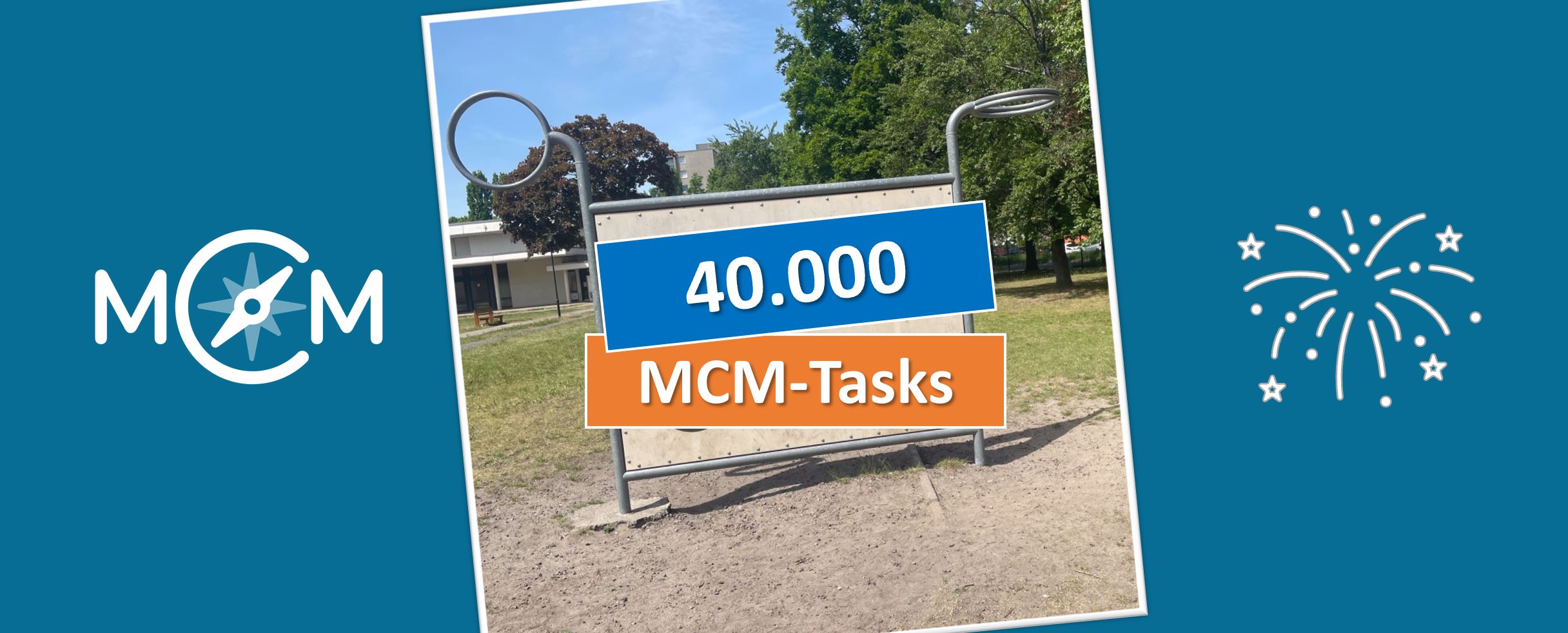
Our anniversary task, which cracked the 40,000 mark, was created by Tobi Walter-Born in Berlin and asks for the area of the front of a goal wall. Click here to go to the task.

We look forward to many more MathCityMap tasks and we are excited to see when we will reach the next mark of 50,000 tasks!

Task of the Week: Height of the Powder Tower in Merano

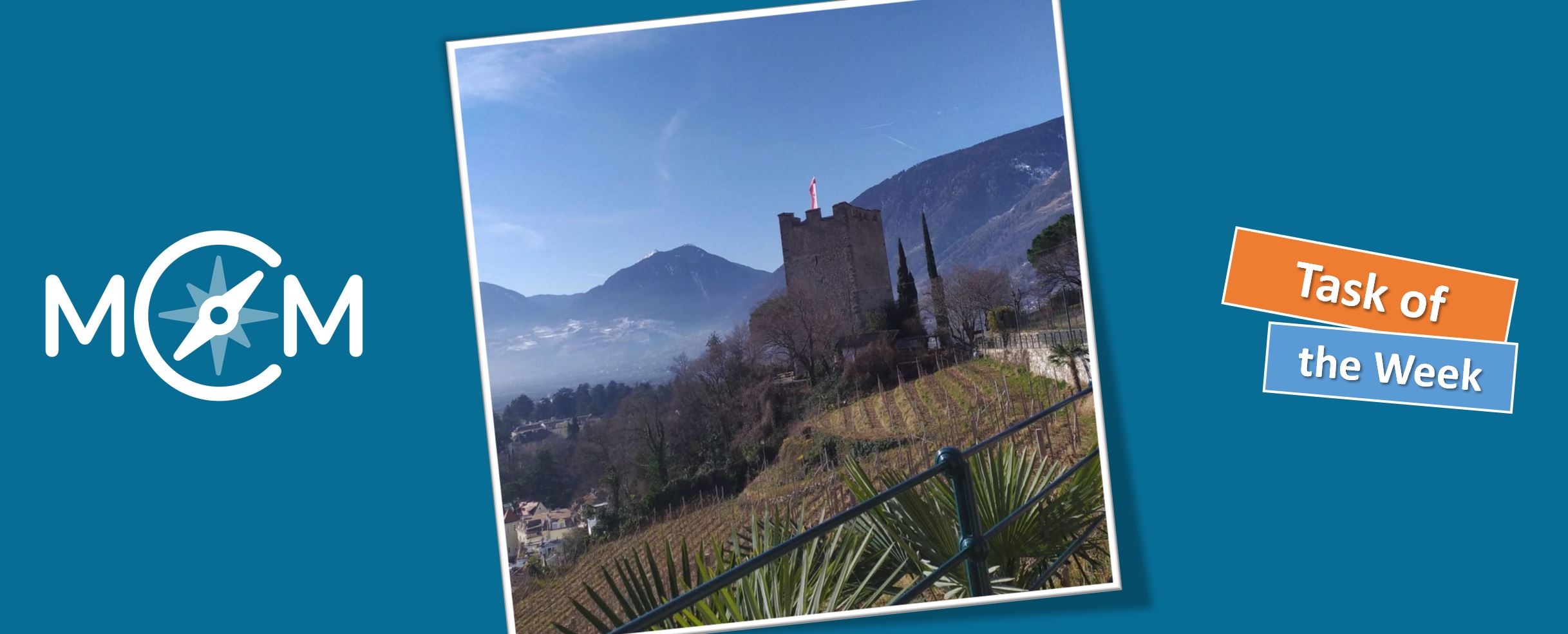
In the beautiful South Tyrolean city of Merano, teacher Michael Perkmann recently created the task “Height of the Powder Tower in Merano”, which we would like to present to you today as the task of the week. The goal of the task is to determine the height of the old powder tower.  Michael Perkmann reports […]

GeneralTask of the Week

In the beautiful South Tyrolean city of Merano, teacher Michael Perkmann recently created the task “Height of the Powder Tower in Merano”, which we would like to present to you today as the task of the week. The goal of the task is to determine the height of the old powder tower.  Michael Perkmann reports about his task and the use of MathCityMap in the classroom in the following.


How did you come across the MathCityMap project? How do you use MCM?

I first heard about MathCityMap about 3 to 4 years ago at a teacher training course in South Tyrol. At that time we did the first Mathtrails in groups and tried to create our own tasks.

Since there are hardly any tasks and trails in South Tyrol and especially in Merano at the moment, I have always planned to create my own math parkour with my students one day.

I created this task for the Powder Tower together with my students from the Business School in Merano as part of an interdisciplinary project to get to know the MathCityMap platform better.
The goal is that the students themselves will soon create several tasks in the vicinity of Merano.

Together we will try to enter the tasks into the portal and then create a trail.


What can the learners gain by working on the tasks?

I think that working on tasks requires many competences of the students, especially modeling, creating text tasks, applying mathematical representations, creativity in solving mathematical problems.

This is often neglected in frontal teaching. MathCityMap is therefore a great addition to the lessons and the work outside the class motivates and makes fun for the students.

Generic Tasks: Number

In this article on Generic Tasks, we would like to introduce you to two tasks from the “Number” category. As always, you can find the corresponding objects everywhere and the tasks can be created in no time using the task wizard. The first article on Generic Tasks, which also tells you how to get to […]

In this article on Generic Tasks, we would like to introduce you to two tasks from the “Number” category. As always, you can find the corresponding objects everywhere and the tasks can be created in no time using the task wizard. The first article on Generic Tasks, which also tells you how to get to the Task Wizard and what Generic Tasks are, can be found here.

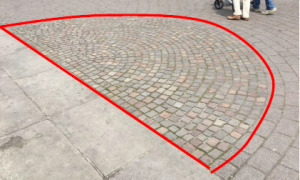
The first object category we want to talk about here are paved areas or walls. Especially in city centers or public places you can often find areas that are paved with stones. In the picture below you can see an example of a semicircular area, which was laid out with paving stones. The task, which is provided for this in the task wizard, reads:

“With how many paving stones was the area shown laid out?”.

The values needed to create the task with the wizard are only the size of the total area and the average number of stones on a square meter. Starting from this data, the wizard fills in the complete task form and only a picture needs to be added to complete the task. Similarly, there is a task in the wizard that asks for the number of bricks that make up a wall.


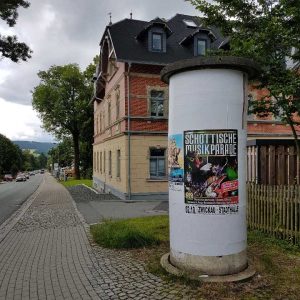
Another object for which a Generic Task can be created in the Wizard is the typical advertising pillar. After manually entering the circumference and height of the area that can be placarded, the task here is:

“How many DIN A0 posters can be placed on the advertisement pillar without overlapping? DIN A0: length = 84cm; height = 119cm.”.

An interesting aspect of this problem is that it can only be solved correctly if the condition of not overlapping, which is necessary in reality, is taken into account. If you divide the surface of the cylindrical column by the surface of a poster, you get a result which is mathematically reasonable, but which turns out to be wrong in the validation on the real situation.

In the next article about Generic Taks we will have a look at the tasks in the wizard, which are available for the topic “Volume and Weight”. Until then, we hope you have fun and save time when creating MCM tasks with the task wizard!


Generic Tasks: Slope

In the last article on Generic Tasks, which you can read here, we already showed you how you can use Generic Tasks to save time when creating tasks in your surroundings. In this context we showed you the Generic Tasks implemented in the system for the topic Combinatorics. Another theme that the task wizard can […]

In the last article on Generic Tasks, which you can read here, we already showed you how you can use Generic Tasks to save time when creating tasks in your surroundings. In this context we showed you the Generic Tasks implemented in the system for the topic Combinatorics. Another theme that the task wizard can help with is slopes.

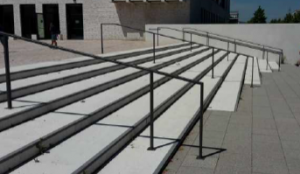
The objects for which Generic Tasks were created and which can also be found almost everywhere are ramps and handrails of staircases. Since, for example, ramps are not allowed to have a slope greater than six percent for use by wheelchairs, it makes sense to design an MCM task that asks exactly what the slope is.

To create the task, you only have to insert the data measured at the ramp into the task wizard and specify whether the result of the task is to be determined in percent or in degrees. The resulting task text is quite simple: “Determine the slope of the ramp in percent (degrees).


The creation of tasks with the wizard for handrails works in the same way. The sample solution and the hints are again created in a suitable way and only the task image has to be inserted.

In the next article on Generic Tasks we will deal with the creation of tasks on the topic “Number”. Until then, we wish you again a lot of fun and success in creating new tasks with MathCityMap!


Generic Tasks: Combinatorics

The so-called Generic Tasks offer a significant simplification when creating MathCityMap tasks. Generic tasks are tasks for objects that can be found, in a slightly modified form, in any place in the world. They are therefore tasks that can be implemented almost anywhere. Within the MoMaTrE project, several Generic Tasks, covering different topics, have been […]

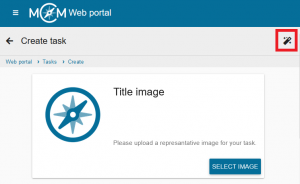
The so-called Generic Tasks offer a significant simplification when creating MathCityMap tasks. Generic tasks are tasks for objects that can be found, in a slightly modified form, in any place in the world. They are therefore tasks that can be implemented almost anywhere. Within the MoMaTrE project, several Generic Tasks, covering different topics, have been developed and implemented in the MCM web portal. You create a Generic Task by activating the so-called Task Wizard via the magic wand icon in the “Create task” section. Here you select the desired topic and object and enter only the data collected from your own object. The wizard then automatically creates a completely filled out task form with a ready-made sample solution, a suitable task text and appropriate hints. After inserting a task image, the task is thus ready for publication and can be used within a very short time.


In this and the following articles, we would like to introduce the various topics and objects for which Generic Tasks are currently available in the Task Wizard. First, we will take a look at the topic of combinatorics.

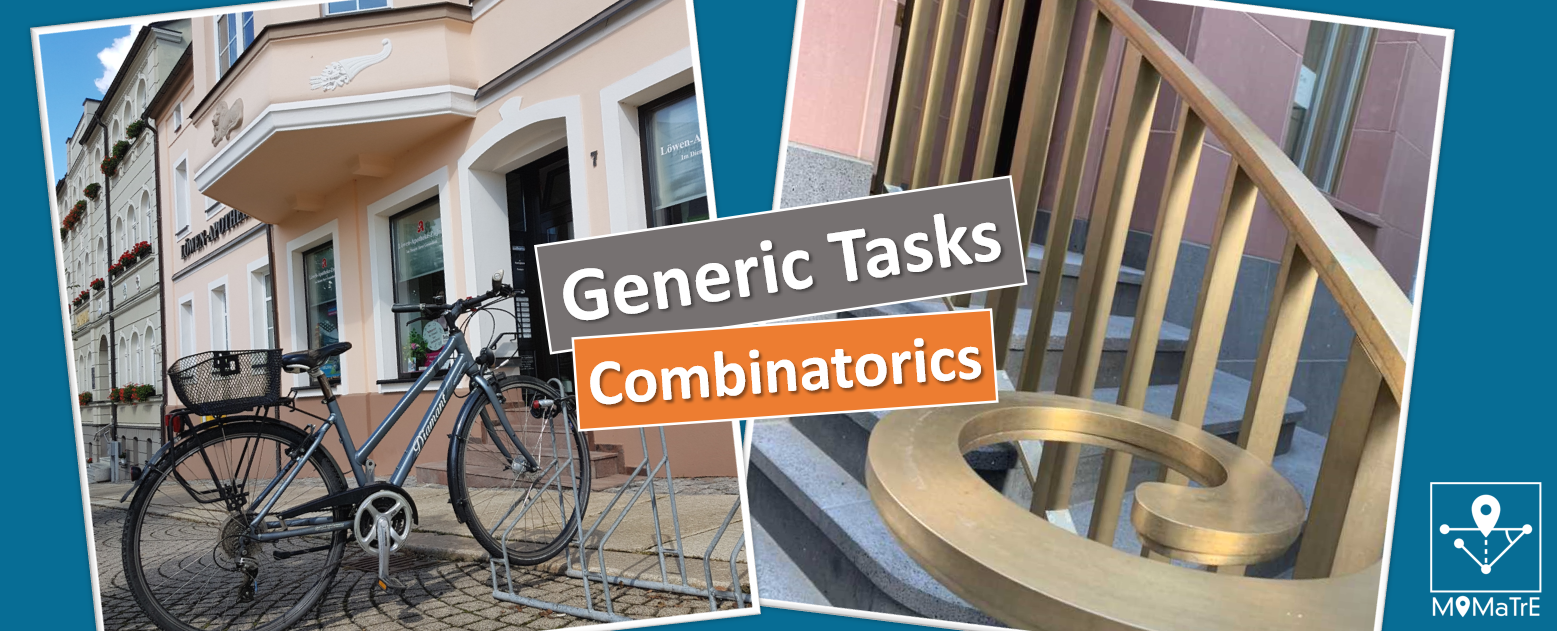
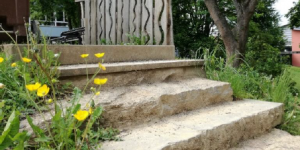
An object that can be found almost everywhere are stairs. Of course, a staircase can be used to design a wide variety of tasks. However, one combinatorial task that can be applied to any staircase is the following generic task:

“How many possibilities exist to go upstairs if one can take one or two steps within each move? The step sequences can be combined.”

There are several approaches to solving this task:
One approach is to write down the possibilities systematically.

Another approach to solving the problem is to use the Fibonacci series:

(1) 1 2 3 5 8 13 21 34 55 89 etc.

When creating the task, you only have to specify how many steps the staircase consists of on which you want to create this task. Everything else will be filled in automatically by the task wizard.


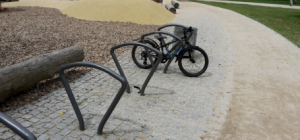
Another object for which a Generic Task from the combinatorics section was created and which can be found quickly is a bicycle stand. Here, the following task is generated by entering the number of existing bicycle racks and a quantity x of bicycles that you specify.

“x bikes should be locked at the stand. Each bike can be locked at the left or right. How many possibilities exist to lock the x bikes at the stand? It does not matter whether the bikes are locked “forwards” or “backwards”. You can assume that the stand is completely empty.”

Again, suitable sample solutions and hints are created by the wizard without any action on your part.

In the next article on Generic Tasks we will show you which possibilities for tasks regarding the topic “Slope” are already available in the task wizard of MathCityMap. Until then, we wish you a lot of fun and saved time when creating your own tasks!