MathCityMap in winter? Of course!

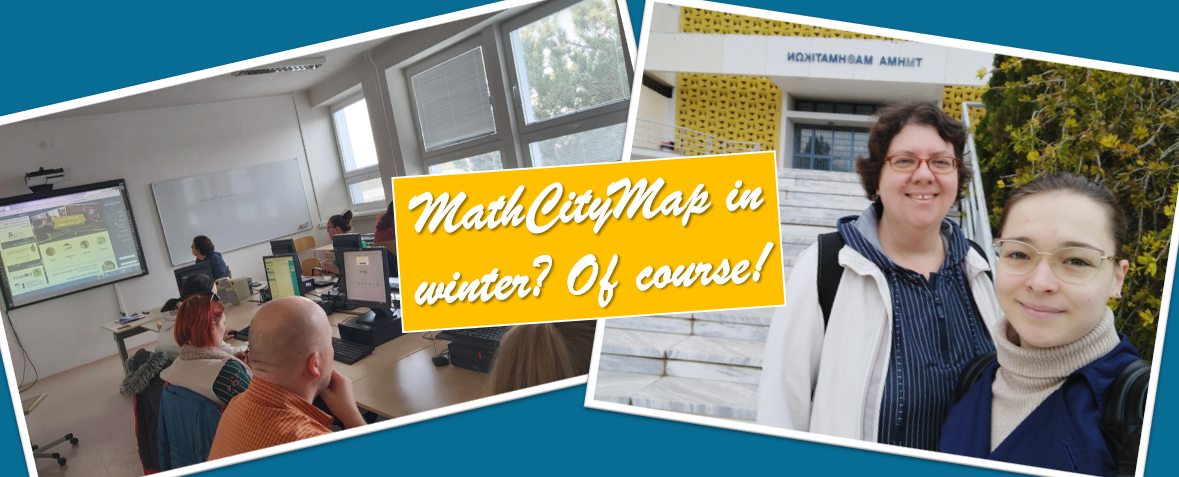
Our MathCityMap team in Slovakia, led by Janka Medová and Silvia Haringová from the University of Nitra, once again impressively proved that outdoor mathematics not only works in winter, but can also be used just as well as in the rest of the year. Silvia travelled to Krakow for a one-week scholarship at the local […]

Our MathCityMap team in Slovakia, led by Janka Medová and Silvia Haringová from the University of Nitra, once again impressively proved that outdoor mathematics not only works in winter, but can also be used just as well as in the rest of the year.

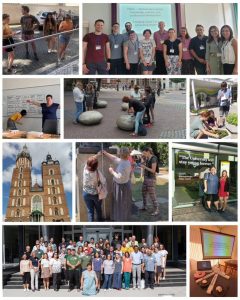
Silvia travelled to Krakow for a one-week scholarship at the local Pedagogical University, where she developed tasks and trails on the topic of functions together with PhD students from Košice.

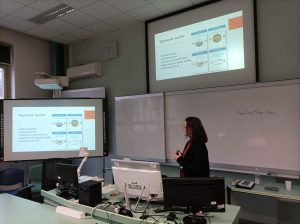
Janka and Silvia attended the conference Dva dny s didaktikou matematiky (Two Days of Mathematics Education) in Prague together shortly afterwards, where they gave a presentation on Mathtrails in teacher education. In particular, they spoke there about their collaboration with primary and secondary teachers in designing and implementing the teaching trails.

Lysá nad Labem was Janka and Silvia’s next stop. A group of local maths and reading enthusiasts, in cooperation with Antonín Jančařík from the Department of Mathematics and Didactics of Mathematics at the Faculty of Education of Charles University, was preparing an outdoor maths experience for visitors to three Czech towns: Benátky nad Jizerou, Milovice and Lysá nad Labem. Each of these towns had its own tasks and a Mathtrail, where visitors had to solve mathematical and literary tasks in addition to exploring the beauty and history of the towns. Janka and Silvia helped to create some sample tasks here and familiarised group members with the MathCityMap application.


Also in Athens, the capital of Greece, Janka and Silvia were able to present their research on classroom research online with the support of MathCityMap at the National and Kapodastrian University.

In the course Development of Specific Mathematical Thinking for students of the Pre-school and Primary Education programme at the University of Nitra, Mathtrails were thematised and tried out as a central part of the content. The students then developed their own tasks with a focus on combinatorics and probability, which they uploaded to the MathCityMap system.

PhD student Katka Laššová created a mathtrail focusing on the spatial skills of vocational students with a technical focus. The trail was carried out with students from the technical secondary school for mechanical engineering in Bánovce nad Bebravou. She also visited the primary school Duklianska 1 in Bánovce nad Bebravou. The school management had the idea to organise a mathtrail with future first graders during the open day. Katka helped the teachers develop the trail and the tasks.

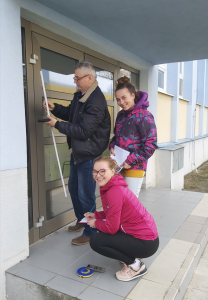
Under the leadership of Janka Medova, Veronika Bočková and Kitti Páleníková, a workshop on mathtrails was held for pre-service teachers. They solved tasks in the atrium of the Nitra University campus and were then introduced to the creation of mathtrails and finally designed a task themselves on the campus in the MathCityMap system. Many of the teachers went on to develop mathtrails at their schools and use them in the classroom.

A trail breaks all records!

It has been one and a half years since a trail took the title of the mathtrail with the most downloads in the MathCityMap app worldwide. With 569 downloads, Yunas Chandra’s trail Banteng Berhitung in Jakarta slipped to the top of our download charts. Now, however, Corinne Stephan from Buchy in France has succeeded in […]

It has been one and a half years since a trail took the title of the mathtrail with the most downloads in the MathCityMap app worldwide. With 569 downloads, Yunas Chandra’s trail Banteng Berhitung in Jakarta slipped to the top of our download charts.

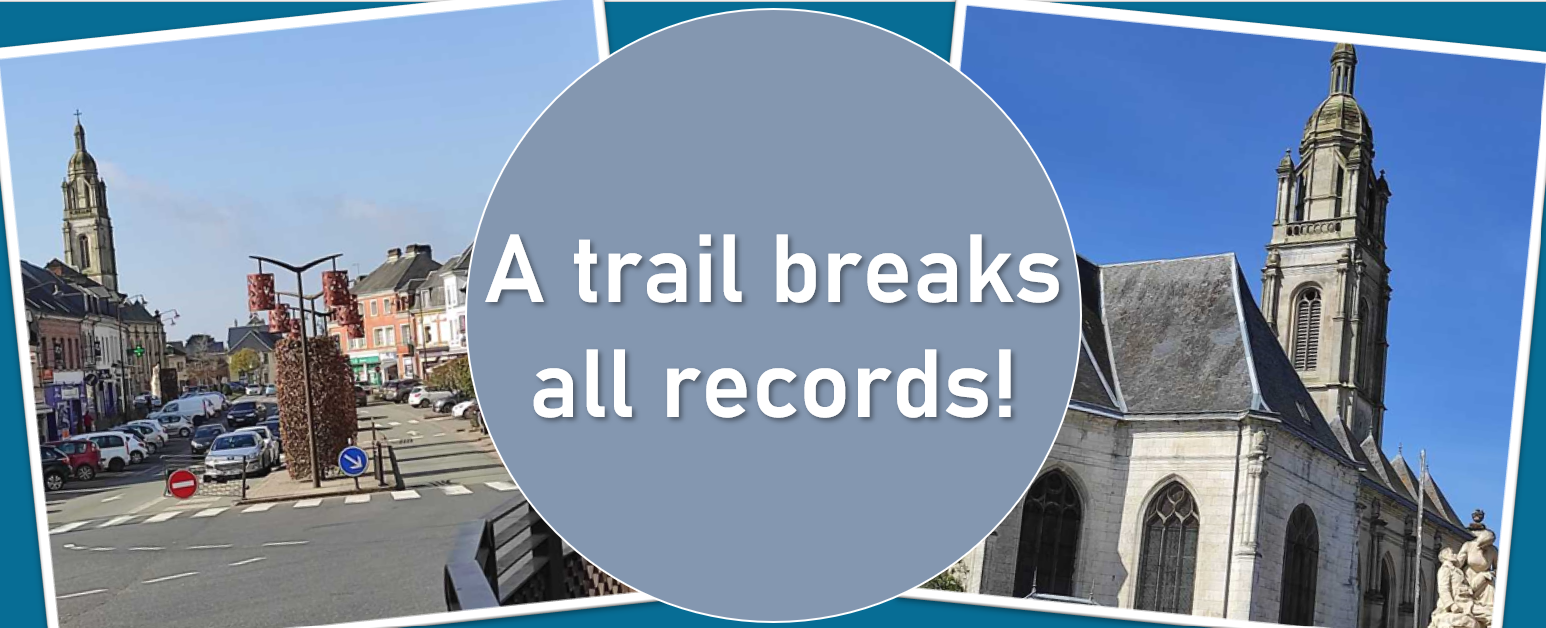
Now, however, Corinne Stephan from Buchy in France has succeeded in generating 1163 downloads within a few weeks with her Trail Rallye dans Buchy.

Corinne Stephan got to know MathCityMap through the French textbook series Sésamath and she has been using the application for several years, as she tells us in a short interview.

“I developed the “Rally through Buchy” trail for my Year 6 students (age 11) to help them realise that mathematics surrounds us and that we can use it on a daily basis. Maths is not just in books. You just have to lift your eyes to see that we use it every day without even realising it.”

Congratulations to the new record holder on your great trail and we are excited to see when we will set this new record!


Trail of the month: A LECLIC trail

With the Trail of the Month for January, we would like to introduce you to a special mathtrail created as part of the ERASMUS+ project LECLIC “Living in the Era of Climate Change”, which uses innovative trends in the STEAM curriculum and cloud computing to raise awareness about environmental issues and climate change. The students […]

With the Trail of the Month for January, we would like to introduce you to a special mathtrail created as part of the ERASMUS+ project LECLIC “Living in the Era of Climate Change”, which uses innovative trends in the STEAM curriculum and cloud computing to raise awareness about environmental issues and climate change.

The students and teachers participating in the project will be encouraged to reflect on the need for behavioural change in their families’ lifestyles to mitigate climate change by analysing the bi-directional relationship between lifestyle and climate change, analysing the current lifestyle and quality of life in their European region and suggesting how they can change their habits on a large scale.

The project is organised in the form of four LECLIC conferences on climate change, where students from Portugal, Spain, Italy and Greece analyse the similarities and differences of climate change in each region. It is very important to get to know the different localities, which is why the use of MathCityMap has become an important tool in the project.

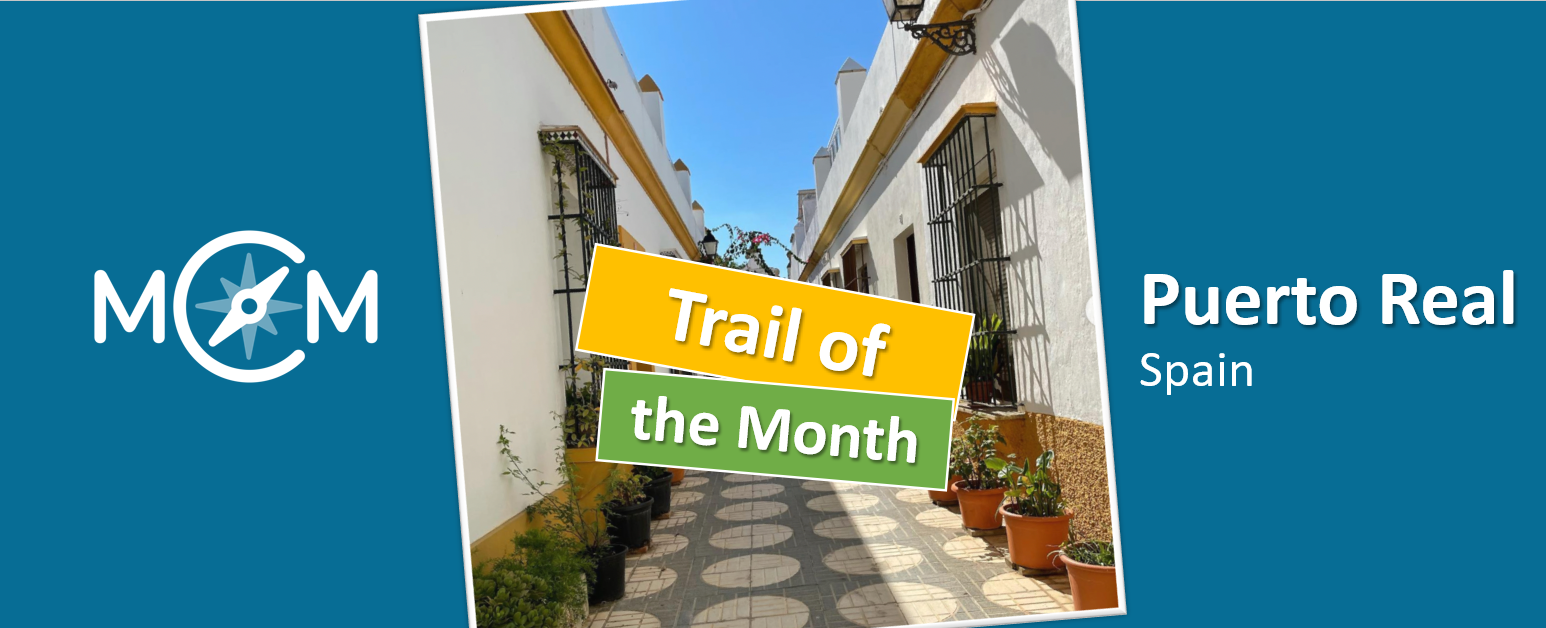
This month’s mathtrail “A LECLIL trail” is located in the Spanish city of Puerto Real and is available in the MCM app under the code 3812670 and on the MathCityMap web portal here.

The trail is made up of five tasks, all of which relate to the city and the impacts Puerto Real could be affected by if climate change continues to progress.

Ana Serradó Bayés, the creator of the trail, gives us a short interview below about her work with MathCityMap and her trail. Enjoy reading!


How did you come across the MathCityMap project?

In May 2020, when Spanish inhabitants were confined at home due to COVID19 pandemia I participated in the elearning training “Education School of Miguel of Guzman”. During the school, Claudia Lazaro of the Spanish Federation of Maths Teachers’ Association (FESPM) and one of the MathCityMap partners presented us with this ERASMUS+ project. One of the activities was to construct a trail. At that moment, it was difficult to construct a trail because we were only able to walk 1km far from home. But, from the terrace of my home I was able to admire the “Porvenir gardens”. I walked through them taking photos, making measurements,  while I was willing to return to normality and prepare a trail for my students, who would be able to learn mathematics outside their homes. The name of that trail is “Cuidemos los Jardines del Porvenir” (Take care of the Porvenir Gardens, 012984). 


Please describe your trail?

A LECLIC Trail is a STEAM tour to analyze how climate change affects Puerto Real city in South Spain. It consists of five tasks with a total length of 1.5 km and a duration of 1 hour and 20 minutes. Junior secondary students are asked to solve five STEAM problems and infer on the consequences climate change can have in five iconic locations of the city. Students participating in it investigate, analyze, calculate accessible and inaccessible lengths and develop stochastical thinking. And, infer about how Puerto Real could be affected by the climate change concerning to the drinkable water, the flooding of its beach, the destruction due to high waves of the 19th century fortified quay, the experience of a “wind drought” and the change in the sea level height.


How do you use MCM and why?

At our school, the students of Colegio La Salle-Buen Consejo use tablets at school and mobiles outside the school. In particular, the MCM is useful for them to understand the integration of two independent technologies: online maps and quizzes. As a member of the STEM department, I am involved in the development of activities that help students to understand the transdisciplinary approach of STEAM. In particular we are involved in many ERASMUS+ projects that use innovative technologies that help the integration of the other subjects. 

I consider that these kinds of trials help students to develop the four global competences of communication, collaboration, critical thinking and creativity. Communication and collaboration because students are asked to solve it in a team, due to the fact that most of the measurements to be done on site need more than one person to do it. Secondly, because some of them have a high complexity that needs a discussion on the creation of strategies on how to solve the problem, to value its accuracy, developing their critical thinking, and finally decide which is the solution. The fact that MCM puts math tasks outside the classroom in a real context can extend the problem solving process to a geometrical or algebraic modelling process. 

The possibility of introducing hints in the MCT tasks is very useful because then it is open to attend the diversity of our schools and provide students with the theoretical principles that they can use to solve the situation. When returning at school the analysis of the math trail is also an opportunity to deepen their learning and formalize the modelling process developed.


Describe your favourite task on the trail. How can it be solved?

I think that all five tasks of the trail are interesting because the students need to infer about how climate change could affect their city and this kind of reflection is of pressing topical interest. But, if I have to choose one, my favorite task is “The wind rose in Sant Telmo Square”. San Telmo is a new square in the old city that most of the students of Puerto Real did not know about their existence. Even more about the wind rose oriented in the center of the square. Admiring the tiles of the wind rose and their symmetry is an artistic and mathematical activity by itself. Nevertheless, the fact that the students need to analyse the direction and speed of the wind transforms it into a scientific and engineering design activity. The comprensension of the stochastic nature of the wind speed is essential to answer the task. But, also this process of thought helps students to understand the difference between using a deterministic model for the speed and the stochastic and chaotic nature of the wind.


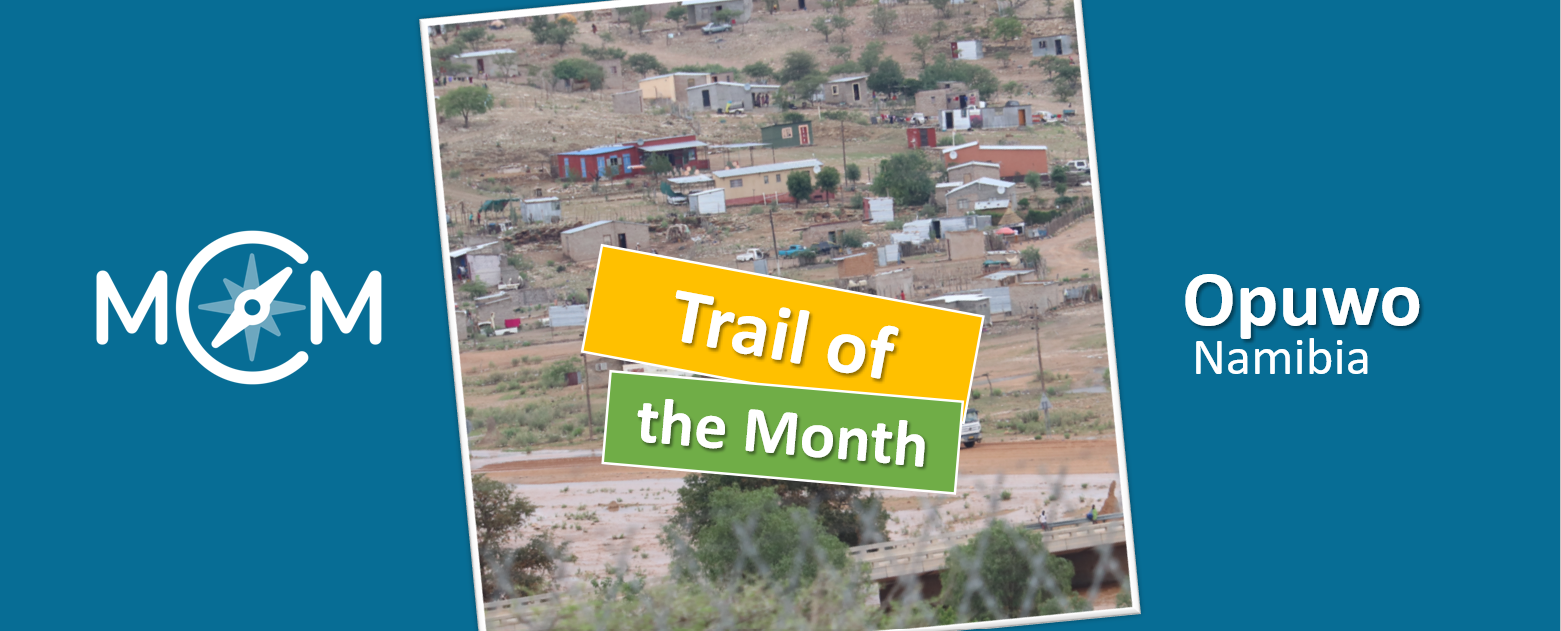
Trail of the month: Exploring the other side of Opuwo

This month we would like to present you a trail from a country that has hardly been visible in the MathCityMap community so far. The Mathtrail of the month December “Exploring the other side of Opuwo” comes from the city of Opuwo in Namibia, where there is a growing enthusiasm for MathCityMap as well. The […]

This month we would like to present you a trail from a country that has hardly been visible in the MathCityMap community so far. The Mathtrail of the month December “Exploring the other side of Opuwo” comes from the city of Opuwo in Namibia, where there is a growing enthusiasm for MathCityMap as well. The trail can be accessed in the MCM app under the code 5612172 and can also be found in the web portal.

The trail consists of a total of 5 tasks, which are thematically located primarily in the topics of areas and volume calculation and are suitable in their complexity especially for the 9th and 10th grade level. Often the tasks also have a relation to crafts, which makes the relevance for the everyday world particularly clear.

Highschool teacher Given Kahale Matengu , to whom we owe our new Trail of the Month, already created several other math trails with MathCityMap in the past years. In a short interview he tells us about his experiences with MCM so far. Have fun reading!


How did you come across the MathCityMap project?

I was introduced to the MathCityMap project in 2017 during my M. Ed studies at Rhodes University, South Africa. In one of the contact sessions my supervisor Professor Marc Schäfer invited Professor Matthias Ludwig to Namibia (my home country where we sometimes use to attend contact sessions). It was this time that I learned the operations of the MCM project by creating my tasks through the help and guidance of Professor Matthias Ludwig.


Where is your trail located? What is special about your trail?

“Exploring the other side of Opuwo” math trail is one of the many trails that I have created with my teacher participants around the town of Opuwo. The trail is located at the southwest side of the town and contains five tasks based on the topics of length, area, volume and proportion. This trail is best walked when it is not the rainy season as most of the spots where the tasks are located are prone to flooding.


How do you use MCM and why?

I use the MCM app as a mobile tool to analyse how teachers can use authentic tasks to conceptually teach the topics of length, area, volume, ratio and proportion to grade 9 learners. With a group of nine secondary school teachers, we create tasks within school environments, the town centre as well as the nearby surroundings of the town of Opuwo, and then teachers use these tasks to teach outdoors. The aim is to popularise mathematics within the community and at the same time campaign against policies that prohibit the use of smartphones in teaching and learning contexts in the region and the country at large.


Describe your favorite task on the trail. How can it be solved?

My favourite task in this trail is the “painting wall Task” which asks learners to calculate the quantity of paint in millilitres that is needed to cover the exterior frontside of a building in a situation where a litre of paint covers a surface area of 6 square meters. This task can be solved by first calculating the area of the wall and then subtracting the area of the two rectangular windows. The next step is then to use a ratio of 1 liter : 6 square meters to determine the needed paint.

First, in this task learners get to understand that even in reality, when working outside you need mathematical concepts and modelling skills to calculate the surface that needs to be painted. Secondly, the solving of this task involves measurements, so when solving the task learners can learn how to use a tape measure, how to convert between units as well as learning how to round off to the nearest whole number. Thirdly, this task teaches learners that for one to paint the wall, it would be necessary to have an idea of how much paint to use, hence an informed decision of how much paint to buy. Buying too much paint is a waste of money and buying too little paint can become a total headache, so whoever needs to paint the wall would want to ensure that the estimate is accurate.


Portugal’s 6th partner school

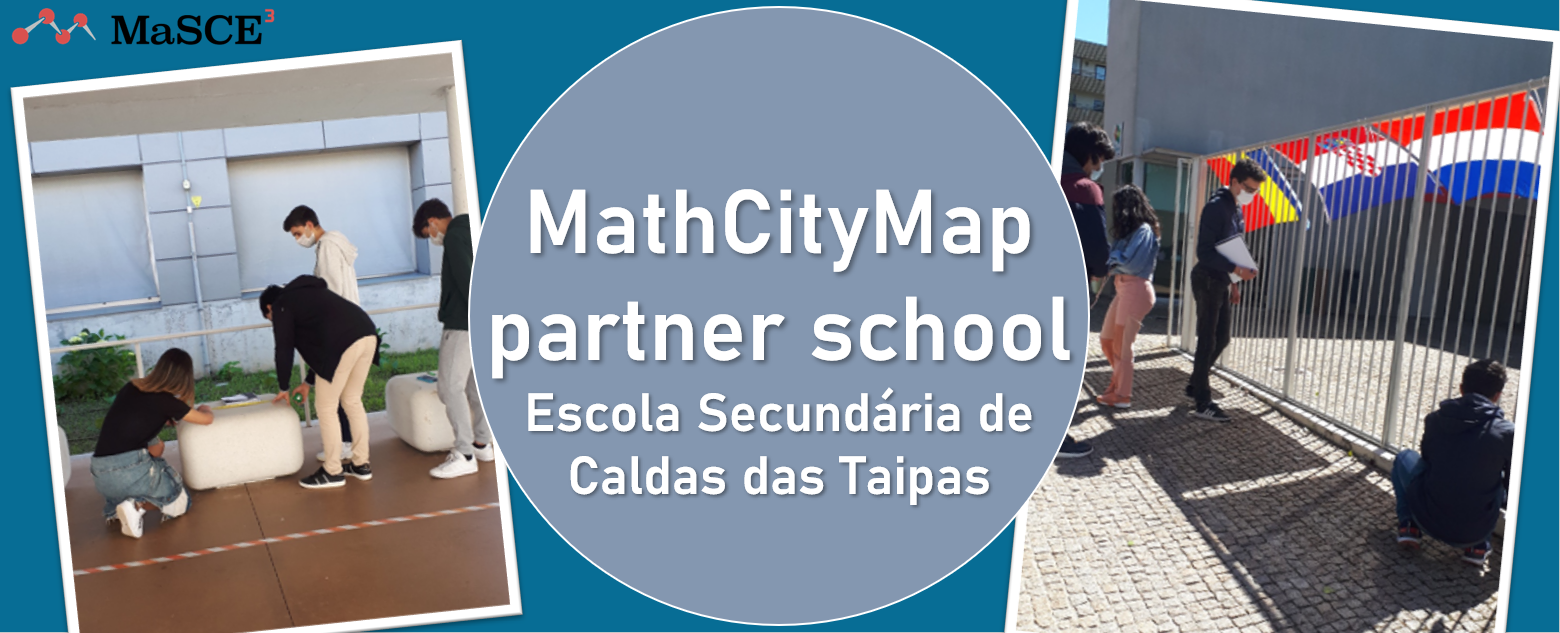
We are very pleased to welcome the sixth Portuguese partner school, Escola Secundária de Caldas das Taipas, to our partner school network. A report about the work with MathCityMap so far and the further plans and application possibilities of Mathtrails was written by the math teacher Arminda Machado, who initiated the application process: “At ESCT […]

We are very pleased to welcome the sixth Portuguese partner school, Escola Secundária de Caldas das Taipas, to our partner school network. A report about the work with MathCityMap so far and the further plans and application possibilities of Mathtrails was written by the math teacher Arminda Machado, who initiated the application process:

“At ESCT (Secondary School of Caldas das Taipas), the MathCityMap application was used to create Mathtrails, an activity that contributed to the valorization of information and communication technologies and to the development of specific skills in mathematics among the students, namely logical thinking and problem solving.

This school year, the students at our school integrated the Erasmus+ project Maths&Art with the International Mathematics Day, which is celebrated on March 14. As part of this, a great challenge was launched for all ESCT math students, which consisted of forming teams of three members representing each class to participate in a Mathtrail with MathCityMap, put together by themselves and implemented on the school campus. The students accepted this invitation with enthusiasm and the initiative, in which the entire educational community participated, was a success.

The courses were conducted outside the classroom and in a real-world context, focusing on hands-on and experimental work, which increased the students’ motivation to learn. Students walked in small groups and in constant collaboration along trails guided by the MathCityMap application previously installed on their mobile devices, solving a series of mathematical problems related to objects or constructions present in the outdoor areas of the school. In this way, they mobilized the fundamental knowledge acquired in class. In certain situations, students used measuring tools such as the tape measure and protractor to address the practical side of the subject and the importance of its application in everyday life. The fact that students have the opportunity to develop various skills such as independence, critical thinking, creativity, collaboration, and communication while completing these tasks makes the use of this tool even more important. After completing the Mathtrails, students could analyze and discuss the solutions and results of each task in class with the math teacher. This type of activity adds a new dynamic to the classroom that is very attractive to students and promotes educational success.

For the next school year, a math trail is planned in the city of Guimarães, connected with mathematical problems related to monuments of the historical center, to be carried out by students of partner schools from Spain, Finland, Italy and Turkey during the student exchange planned in ESCT in the framework of the Erasmus+ project Maths&Art. In addition to broadening knowledge in the field of mathematics and information and communication technologies, this trail aims to develop intercultural and language skills.”

The package with the official partner school plaque and the MCM measuring tools is already on its way to Portugal and we are very much looking forward to receiving further applications from all over the world.

All further information about the partner school program and the requirements for the application can be found in the article about the first MCM partner school as well as on the homepage of our project MaSCE³.

A new Spanish partner school

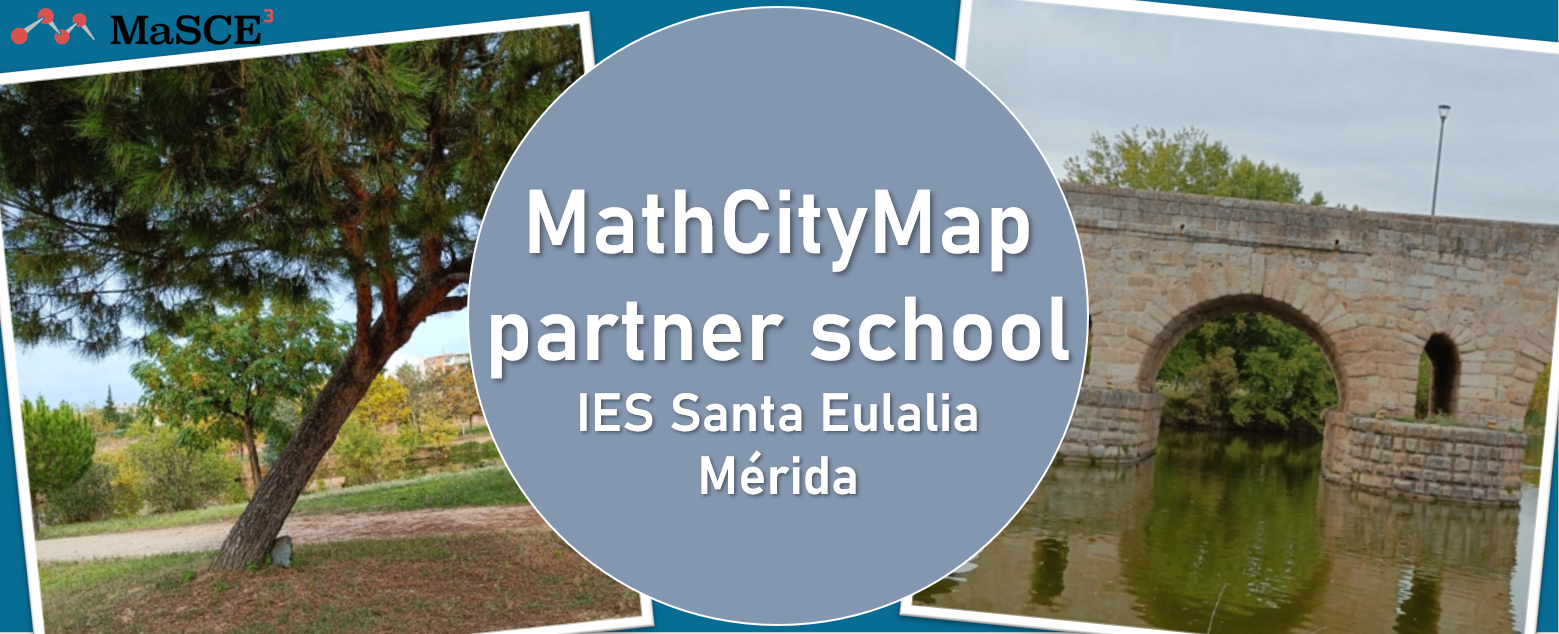
In Spain, too, there are more and more official MathCityMap partner schools. The fourth Spanish school that has successfully applied to the partner school program is IES Santa Eulalia, in the city of Mérida. As part of the application, which was initiated by math teacher María Bravo Conde, a total of three math trails were […]

In Spain, too, there are more and more official MathCityMap partner schools. The fourth Spanish school that has successfully applied to the partner school program is IES Santa Eulalia, in the city of Mérida. As part of the application, which was initiated by math teacher María Bravo Conde, a total of three math trails were created and tested with students from the school.

Regarding the motivation to integrate MathCityMap into the teaching, the school’s team wrote as follows:

“Using MathCityMap allows us to bring math closer to a real and everyday environment, and our students have to work together in groups, make independent and critical decisions, take initiative, and evaluate different options to find solutions.”


The first trail is located directly at the school, the second trail is located on an island in the Guadiana River, which flows through Mérida, and the third trail is located in a park that the students of the school can easily reach by bus.

The trails are available under the following names and codes in the MathCityMap system:

  1. Ruta matemática por el IES Santa Eulalia (079113)
  2. La isla de Mérida (256425)
  3. El parque de las Siete Sillas (786348)

The package with the official partner school plaque and the MCM measuring instruments is already on its way to Spain and we are very much looking forward to receiving further applications from all over the world.

All further information about the partner school program and the requirements for the application can be found in the article about the first MCM partner school as well as on the homepage of our project MaSCE³.


The MathCityMap Summer in Slovakia

In the summer of 2022, several events, such as conferences and so-called summer schools for young scientists, took place all over Europe on the topics of development of mathematics education and research in the field of mathematics education. Several of them were attended by the staff of the Department of Mathematics of the Faculty of […]

In the summer of 2022, several events, such as conferences and so-called summer schools for young scientists, took place all over Europe on the topics of development of mathematics education and research in the field of mathematics education. Several of them were attended by the staff of the Department of Mathematics of the Faculty of Mathematics of the University of Constantine the Philosopher in Nitra, as well as by teachers and students of various disciplines of the University of Constantine the Philosopher in Nitra. The aim of the visit was, among other things, to make MathCityMap better known in Europe and to present the latest findings on the use of MathCityMap in the classroom.

In the following report, Janka Medová, Veronika Bočková, Soňa Čeretková and Silvia Haringová present the activities of the Slovak MathCityMap Summer:

The first of the summer schools, Socio-scientific Issues in Mathematics and Science Initial Teachers Education: Join a unique intercultural experience preparing you for the future classroom! was held on 15-24 June 2022 at the Faculty of Education, Charles University in Prague, Czech Republic. Soňa Čeretková prepared and facilitated a workshop including MathCityMap trails named Preparation of teaching with the use of innovative teaching methods and outdoor teaching with the support of digital technologies. The summer school was organised within the Erasmus+ ENSITE project (https://icse.eu/ensite/), as was the summer school Dealing with environmental issues in science education – Deepening future science and maths teachers’ learning by teaching. A two-day workshop on MCM trails as a tool for developing awareness of environmental issues was prepared in Varna by Janka Medová and Veronika Bočková. The summer school took place in Varna, Bulgaria, 31 July-11 August 2022 and was organised by the Institute of Mathematics and Computer Science of the Bulgarian Academy of Sciences.
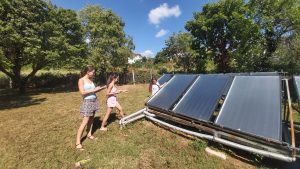
 

At the summer school for graduate students and early career researchers Intensive training school in qualitative research design and research methods in mathematics education supported by European Society for Research in Mathematics Education (ERME), held in Nitra on 29 June – 1 July Silvia Haringová referred about her work with teacher in co-designing and teaching the MCM trails.

During the two-day Summer School of Didactics of Mathematics, which took place on 6-7 July 2022 at the Pavol Jozef Šafárik University in Košice, Slovakia, primary and secondary school teachers solved a mathematical trail using the MathCityMap application in the city centre. The seminar led by Silvia Haringova continued after solving all the tasks in the premises of the university. During the seminar, participants learned how to create a trail on the portal and received manuals for creating math trails in MathCityMap.

A workshop on MCM trails was conducted by Janka Medová and Veronika Bočková in the centre of Utrecht, the Netherlands, as part of Utrecht Summer School: Mathematics Education held on 15-25 August 2022. The implementation of the summer school was also supported by the ICSE Academy project, in which researchers from several departments of Constantine the Philosopher University in Nitra collaborate with the Freudenthal Institute of the University of Utrecht to design and implement professional development programmes for teachers of mathematics, science and engineering (STEM) with a European dimension.


Janka Medová went also to Usti nad Labem in the Czech Republic, where she attended an event called the Summer School of Didactics of Science STEM Subjects, consisting of several accredited programmes for teachers of mathematics and science. As a lecturer, she collaborated in the implementation of the programme Didactic Principles in STEM subjects with colleagues from the J.E. Purkyně University, Ústí nad Labem and Charles University in Prague. The proposed professional development programme included MCM trails and is based on a joint book of 16 authors, didacticians of various subjects, entitled Didactic principles in science education: methodological guide for teachers of biology, chemistry, physics, geography, informatics, mathematics and lecturers of environmental education. The book was officially invited on Thursday, 18 August 2022, with the participation of the Dean of the Faculty of Science of UJEP and the Faculty of Education of Charles University.

From 22 to 26 August 2022, the prestigious summer school for doctoral students and young researchers called YESS (YERME Summer School) organized with the support of ERME at Johannes Kepler University in Linz, Austria, was attended by a doctoral student of the Department of Mathematics, a student of the study programme Theory of Mathematics Education, Mgr. Silvia Haringová. In TWG 1: Mathematics teacher expertise, practice, and professional development, led by Alf Coles from the University of Bristol (UK), she presented partial results and proposed methodology of her PhD thesis on Collaboration as a means of professional growth of mathematics teachers where she collaborates with mathematics teachers in development of MCM trails.
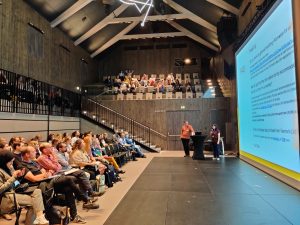


In the last days before the start of the lecture period, 7-9 September 2022, the Faculty of Natural Sciences and Informatics of the Constantine the Philosopher University in Nitra, Slovakia hosted the thirteenth ERME Topic Conference 13 (ETC13) entitled MEDA 3 Mathematics Education in the Digital Age. The MEDA3 conference follows the MEDA conferences organized at the Department of Mathematical Sciences, University of Copenhagen, Denmark in 2018 and Linz School of Education, Johannes Kepler University, Austria in 2020. During the conference Silvia Haringova presented a contribution Identification of domains of mathematics teachers’ knowledge addressed in reflection on technology-supported mathematical trails, co-authored with Janka Medova. The presented model of PD for mathematics teachers and the MCM trails evoked rich discussion.

A week later, on 13-16 September 2022, Janka Medova presented another contribution of the team Haringova-Medova, titled Factors affecting collaboration in designing and enacting MathCityMap trails by in-service teachers at the conference TiMER Trends in Mathematics Education Research held in Krakow, Poland. Event was supported by European Society for Research in Mathematics Education (ERME) within the call Initiatives for Supporting Emerging Communities for Mathematics Education Research in Eastern Europe.

And, since the school year in Slovakia has already started, we are again visiting the schools where we develop and enact the new MCM trails in collaboration with mathematics teachers.


Math on Campus!

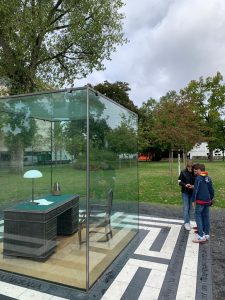
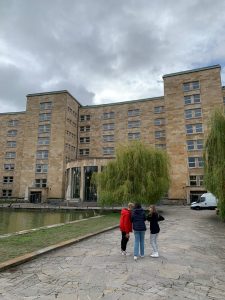
Even in autumn, there are still plenty of opportunities to experience mathematics outdoors! Following this motto, an exchange school program of the Heinrich-Heine-Schule in Dreiech visited the MathCityMap team Frankfurt on the campus of the Goethe University. The group consisting of 18 Spanish students and 13 German students as well as two Spanish and two […]

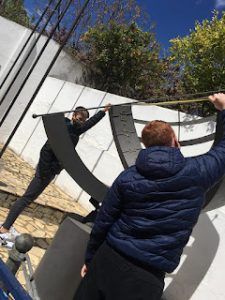
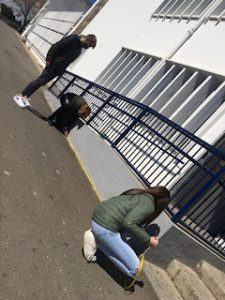
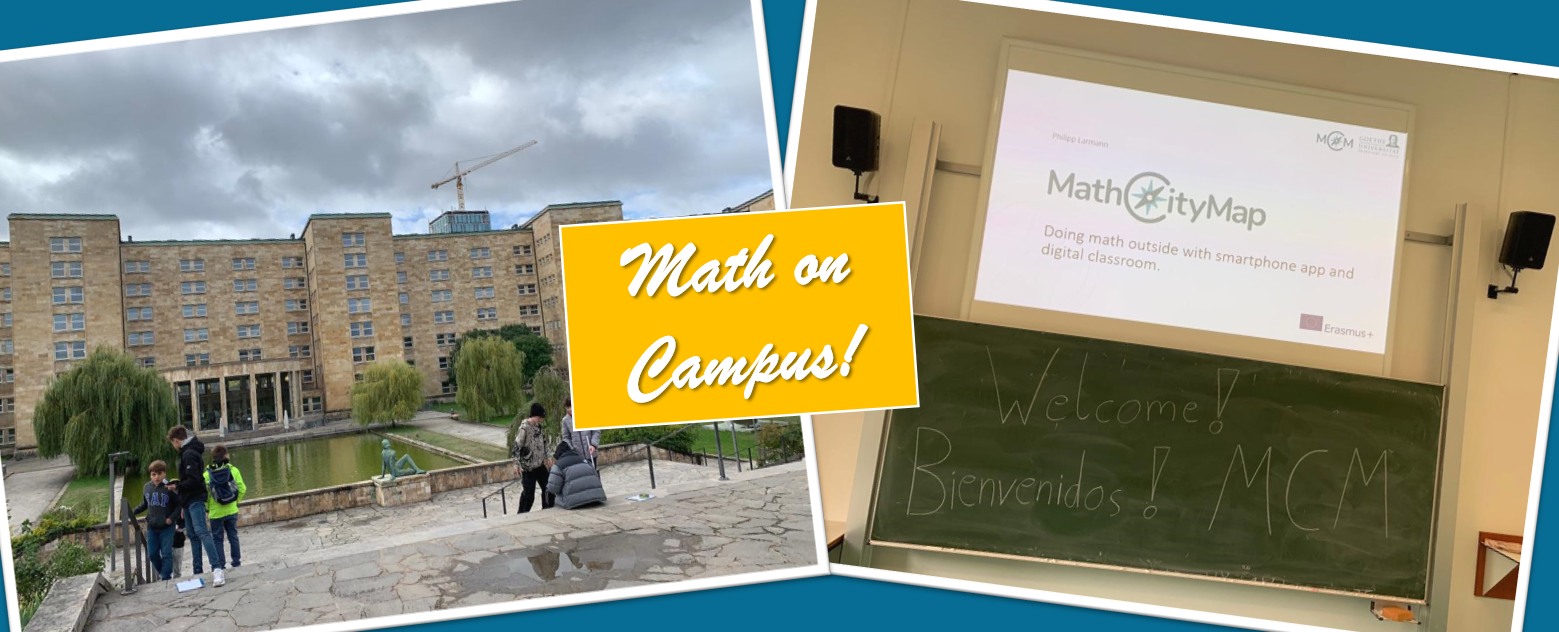
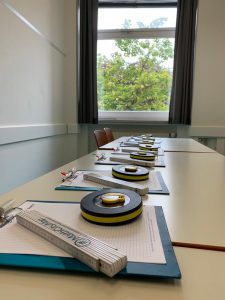
Even in autumn, there are still plenty of opportunities to experience mathematics outdoors! Following this motto, an exchange school program of the Heinrich-Heine-Schule in Dreiech visited the MathCityMap team Frankfurt on the campus of the Goethe University. The group consisting of 18 Spanish students and 13 German students as well as two Spanish and two German teachers had the opportunity to get to know the idea and the functionality of MathCityMap in a short presentation and afterwards to try out a math trail directly on the campus.


The special feature of the trail was that it consisted of tasks in German, English and Spanish, which made cooperation between the students of the partner schools indispensable.

The MathCityMap team in Frankfurt was very happy about this visit on campus and is always available for inquiries for small trips into the world of mathtrails with MathCityMap at our address info@mathcitymap.eu!

The MathCityMap network keeps growing!

We are very pleased that the Nábrežná 95 elementary school in the Slovakian city of Nové Zámky has successfully applied to become a MathCityMap partner school, making it the 37th partner school in total and the fourth partner school in Slovakia. The MathCityMap community in Slovakia is also growing steadily, which can be seen in […]

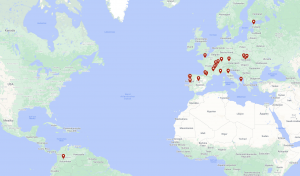
We are very pleased that the Nábrežná 95 elementary school in the Slovakian city of Nové Zámky has successfully applied to become a MathCityMap partner school, making it the 37th partner school in total and the fourth partner school in Slovakia. The MathCityMap community in Slovakia is also growing steadily, which can be seen in the graphic that shows all current partner schools worldwide.


Aneta Vadkerti, a math teacher at Nábrežná 95 Elementary School who initiated the successful application process, has already been able to implement six Mathtrails in the school’s surroundings and reports on her first experience with MathCityMap as follows:

“I have been using the MCM portal and also the mobile application for over 2 years. I have completed 2 online trainings – Mobile Math Trails in Europe (MoMaTre) and also task design for Math Trails. My students love these math walks and I am very happy when I see their satisfaction and smiles while completing the trails. I am currently planning a project day called –Math is Everywhere– to be held at our school on September 28. All 9th grade students will participate, and my main goal is to increase motivation for math as a subject.”

The package with the official partner school plaque and MCM measuring instruments is already on its way to Nové Zámky and we are very much looking forward to receiving more applications from all over the world.

All further information about the partner school program and the requirements for the application can be found in the article about the first MCM partner school as well as on the homepage of our project MaSCE³.


Trail of the month: Learn something new!

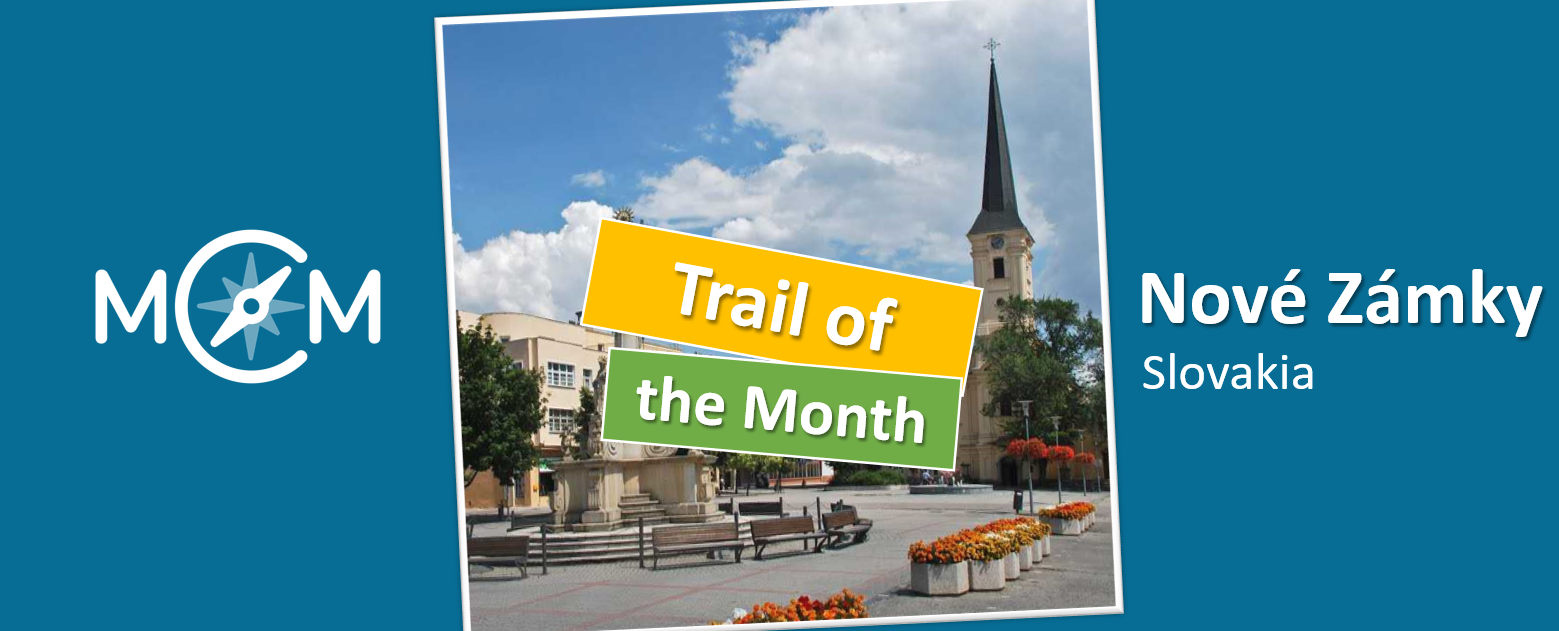
October’s Mathtrail of the Month is located in the Slovakian town of Nové Zámky and lives up to its name “Learn Something New”. It was created by math teacher Aneta Vadkerti as part of the application process for Nábrežná 95 Elementary School to become a MathCityMap partner school. The trail is available in the MCM […]

October’s Mathtrail of the Month is located in the Slovakian town of Nové Zámky and lives up to its name “Learn Something New”. It was created by math teacher Aneta Vadkerti as part of the application process for Nábrežná 95 Elementary School to become a MathCityMap partner school. The trail is available in the MCM app under the code 342253 and on the MathCityMap web portal here.

The trail consists of a total of seven tasks, which are designed in such a way that interesting objects in the cityscape are viewed and discovered from a new, mathematical perspective. The mathematical content is wide-ranging and extends from geometric modeling to Roman numerals.

Aneta Vadkerti gives us a short interview below about the creation of the trail and her work with MathCityMap. Enjoy reading!


How did you come across the MathCityMap project?

I came across MathCityMap by accident, actually by a stroke of luck. A sister of my colleague works at the Department of Mathematics at the University of Constantine the Philosopher in Nitra. She told me that they were looking for enthusiastic math teachers who were willing to try and learn something new, able to communicate in English, create some math tasks and try them outdoors, and apply for a teacher training in Granada. The in-service training was only held online due to the pandemic, however, I was able to learn how to work with the MathCityMap portal there. I then attended two more online teacher training courses – Mobile Math Trails in Europe (MoMaTre) and Task Design for Mathtrails – and started using MathCityMap and teaching with MCM.


Where is your trail located? What is special about your trail?

The trail is located in the center of the city and is therefore accessible to anyone who likes math and solving problems. It was designed especially for ninth graders, to review what they have learned so far.


How do you use MCM and why?

I use MathCityMap to increase motivation for learning math and to relieve the boredom that classroom instruction sometimes struggles with.

My main goal is to connect mathematics with real life situations. I want to show my students that mathematics is really everywhere and that it is really useful and almost necessary to learn it. I want to take away the fear of mathematics. I have always wanted to show my students the beauty of mathematics.

The best thing is to see that the students really have fun while learning. They work in groups, help each other, communicate, compete, sometimes argue, but most of all they have a good feeling when they have solved a task correctly. Every time I do a trail outside with my students, there is a lot of laughter and they are happy. Seeing them happy makes me happy too, so I love MCM and conducting lessons with MathCityMap.


Describe your favorite task on the trail. How can it be solved?

My favorite task is “Famous landmarks”. It is a simple but very interesting task that teaches us a lot about the history of Nové Zámky.