The current Trails of the Month [there are both a Portuguese and an English version], were created in Porto, Portugal. Our MoMaTrE-Partner Ana Moura gave us an interview about the trails, MathCityMap and the ErasmusDay.

Please describe your trail. What differenciate your trail from others? 

This route is located in the Romantic Gardens of Palácio de Cristal, one of the most beautiful gardens in the city of Porto. It was laid out in the 19th century and has an area of ​​approximately 8 hectares, where we also can admire the magnificent panoramic views of the Douro river and the city. It is an almost circular route, which allow us to visit various charms of these gardens. The mathematical challenges involved run through several school levels, which intend to be inclusive to all elements of a family.

Please describe how your team presented MoMaTrE and MathCityMap on ErasmusDay. How many people tested MathCityMap?

The ErasmusDay event was publicized by some internet channels, namely those of one of the partners in the MoMaTrE project, the Polytechnic of Porto – School of Engineering, as well as in some social networks. MoMaTrE and MathCityMap were presented as, respectively, a project and an app that promote and assist in creating and conducting mathematical walks in this digital age [click here for more information]. We estimate that around 50 people participated in the city of Porto. They tested the app in groups, either in pairs of friends or father/mother and child, or in groups of students or families.

Why did you use the pirate narrative for this trail?

The option to use the narrative was to create more engagement in the younger ones, and to show the app’s versatility in the older ones.

Do you have any other commentary on MathCityMap?

MathCityMap brings together and cooks in a natural way three ingredients of our century: the digital age, the concern with the fight against sedentary lifestyle and the promotion of outdoor life, and the use of innovative teaching methods, particularly, in Mathematics.
“How old is this tree?” is the question of our current Task of the Week, which is located in Karlsruhe, Germany. Matthias Ludwig, the head of the MathCityMap team at Goethe University Frankfurt, gave us an interview about this task type.

Please describe this task type. How the age of the tree could be ascertained?

The task type “Age of the Tree” connects the learning of mathematics with non-mathematical knowledge or more specifically with information about trees: What does an oak, a beech or a lime tree looks like? How fast the tree species grows? Lots of further botanic questions could be examined subsequent to this task.

The classic solution process is to measure the circumference of the tree trunk at first, followed by the calculation of its diameter. However, students can also solve this task, if they don´t know the formula for the circumference yet. They can ascertain the diameter of the tree by measuring the distance between two parallel lines, which are both tangent to the trunk. If the students determined the diameter on one way or the other, they can approximate the age of the tree for example by using the rule of three.

The task “Age of the Tree” became a part of our task wizard a few weeks ago. The wizard provides all users prepared MathCityMap tasks, which can be created only by adding the measured data and a photo of the object – the sample solution and the hints emerge as if by magic.

Which didactic aims do you want to encourage through this task type?

In my opinion teachers and students should discover tasks, which exalt their mathematical imagination. For the reason that outdoor learning is highly useful, MathCityMap is one of many interesting ideas for the further development of modern math class.

As part of our Erasmus+ Project Mobile Math Trails in Europe (MoMaTrE) you can discover MathCityMap and Outdoor Mathematics with an international group of teachers in the beautiful historic city of Granada!

Do you want to…

  • experience MathCityMap and Outdoor Mathematics in an intensive teacher training programme,
  • work with other teachers and exchange your MathCityMap experiences,
  • visit Granada and do mathematics in a cultural and historical environment?

From 16th to 19th April 2020, a three-day international teacher training will take place in Granada, Spain. During this Multiplier Event, the participants will get to know additional features of the system MathCityMap from different perspectives, create their own tasks and trails and exchange experiences made with the system. We invite all interested teachers to apply for this teacher training.

The event is organized by the Erasmus+ Project MoMaTrE and co-funded by Erasmus+ Programme of the European Union. Through this, the MoMaTrE project can cover the participants’ costs for the conference, accomodation and meals.

Please find all relevant information for the application, on the schedule and the location on the MoMaTrE website!

Our new Task of the Week is located in the United States. On the campus of the University of California Santa Cruz the PhD student for mathematics education Julianne Foxworthy created the task “So many stairs!”. She gave us an interview about this task and her usage of MathCityMap.

How did you get in contact with MathCityMap? How do you use MCM?

I discovered the app when I met Iwan Gurjanow [MCM team of the Goethe University Frankfurt] at PME in Sweden last year. I used to teach math to 10-13 year-olds, and I used math trails with them (low-tech version!) and they loved them.

I created the “MBAMP Math Trail“ that this task is a part of for a professional development program for teachers of young students (6-9 year-olds). The teachers were all very interested in using math trails with their students. In the future, I’m planning on creating a series of math trails for various ages at our town’s famous beach boardwalk, so look out for that one!

Please describe your task. How could it be solved?

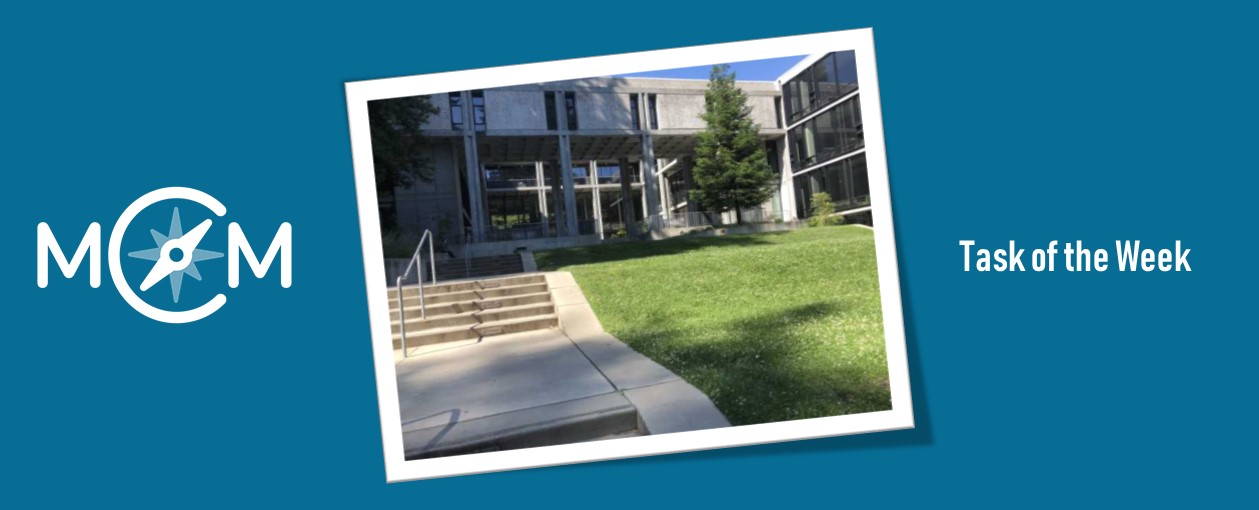
“So many stairs!” is a very simple task aimed at very young children. The question is, how many steps will you climb altogether, if you and two friends decide to race up the stairs all the way to the door of the library.

The problem solver needs to count all the stairs leading to the library and then, and this will be the tricky part for the youngsters, determine how many stairs will be walked by themselves and their friends.

The teachers who tried the task gave me very helpful feedback about being very clear with my language. The word “step” could be a stair (that’s what I intended) or it could mean a step taken by a person. The second meaning could result in a different answer (e.g., what if a person took the stairs two at a time?).

Todays´ task of the week is located in Portugal, where our MoMaTrE partner Amélia Caldeira created the task “Rampa de Acesso” (engl. Acess Ramp). She answered us some questions about her task and the MathCityMap project.

How do you use MathCityMap?

I use MathCityMap to motivate students to learn mathematics. I want students to be happy to learn and apply mathematics. Through the usage of MathCityMap they can model shapes in the environment. At the same time, I reveal to their teachers a successful recipe for teaching math: technology and outdoor.

Please describe your task and the procedure of solution. What is the underlying problem of your task?

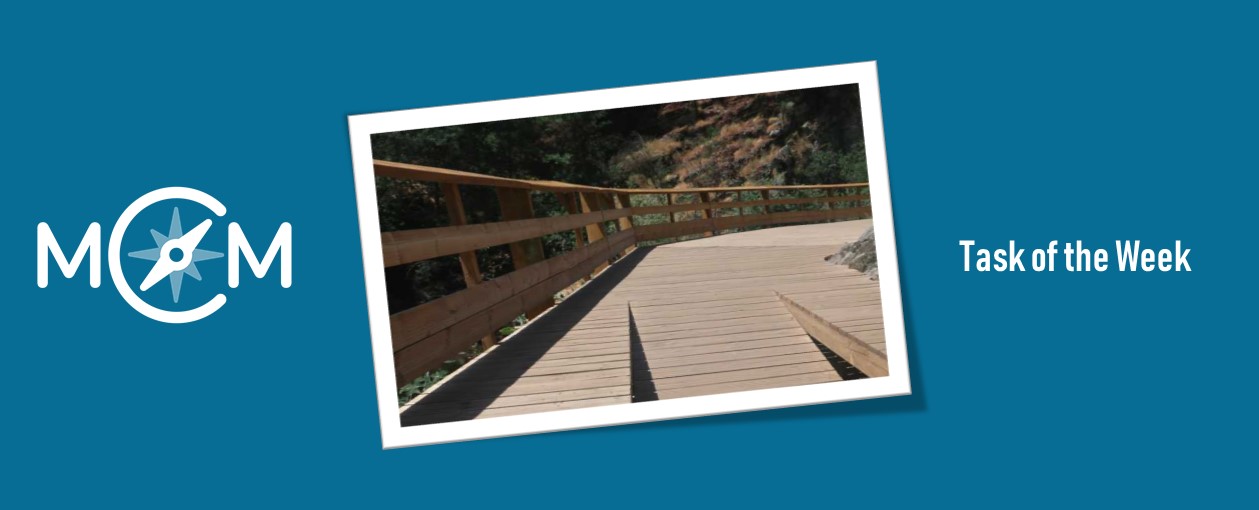
The question of my task “Rampa de Acesso” is, whether the ramp can be comfortably used by a wheelchair person or not. A ramp is rated as wheelchair-assessable, if its slope don`t exceed 6%. The aim of the task is to determine an approximate value for the ramp slope in percentage.

Therefore, the students have to model the ramp (gradient triangle). The slope of the ramp can be calculated as as a ratio between the length and the height of the ramp.

Good to know: MathCityMap provides a wizard task for calculation the slope of a ramp in percent or degree. Wizard tasks are prepared tasks, which can be created only by adding the measured data and a photo of the object.

Task of the Week: Cobblestones

This week our Task of the Week is located in Estonia. In the city of Tartu the German mathematics teacher Sascha Abraham created the task “Cobblestones”. In the following he describes his task and the Erasmus project “Making Technology Meaningful Through Digital Pedagogy”, for which he developed this interesting task.

How you get to know the MathCityMap project?

In march I participated in a workshop of MathCityMap. Unfortunately, I didn´t have enough time last school year to work with MCM in math class, but I am going to use the app in this school year. I want to use the tool in two ways. Firstly, I create trails to repeat the educational content before an exam or to illustrate the mathematical content. Secondly, I want that older students create MathCityMap tasks for younger students.

Please describe your task. Why did you create it? How could it be solved?

I created a mathtail and this task within the frame of the Erasmus project “Making Technology Meaningful Through Digital Pedagogy” in order to present MathCityMap to other teachers. The Erasmus project works on the question, how “new technologies” (e.g. electronical devices like tables or smartphones and available software) could benefit mathematical education. In my opinion, MathCityMap enables students to experience mathematical problems in the “real world outside the class room”.

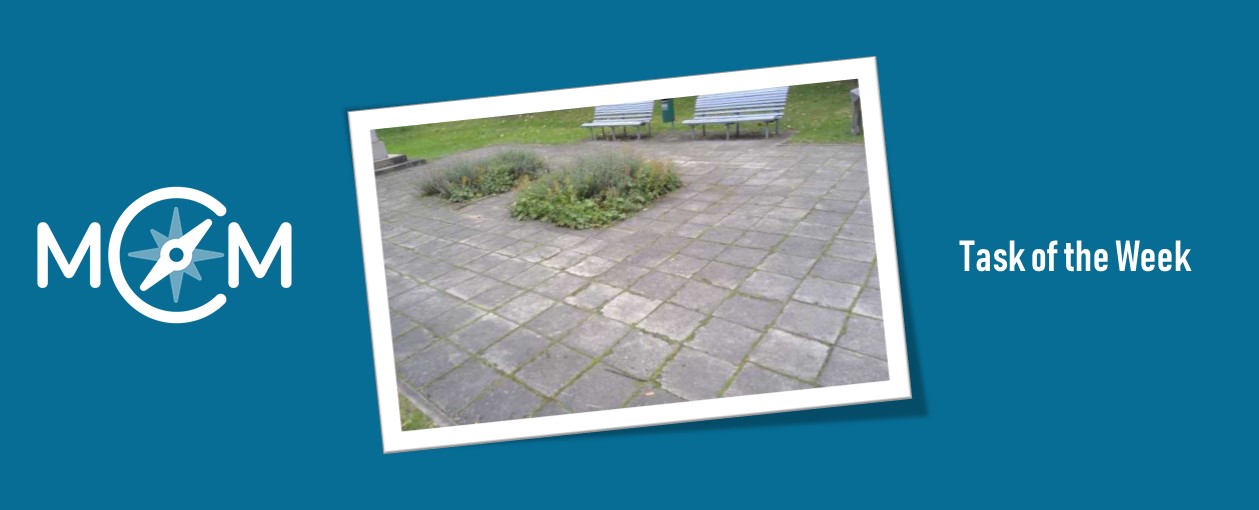
The task cobblestone is an example for a counting task (How many cobblestones are placed in this area?). The task can be solved by calculating how many squared cobblestones at the rectangular area. However, there are two planted areas, wherefore students have to subtract the missing cobblestones. Lastly the students have to add the number of cobblestones, which are placed around the benches. The aim of the task is that students learn to observe their environment carefully in order to solve mathematical problems.

Why do you use wizard tasks?

Wizard tasks are mathematical standard problems, which can be identified nearly anywhere. Through the usage of the MathCityMap wizard users can created a small set of tasks very rapidly. In addition, wizard tasks demonstrate new users different possibilities for interesting mathematical problems.


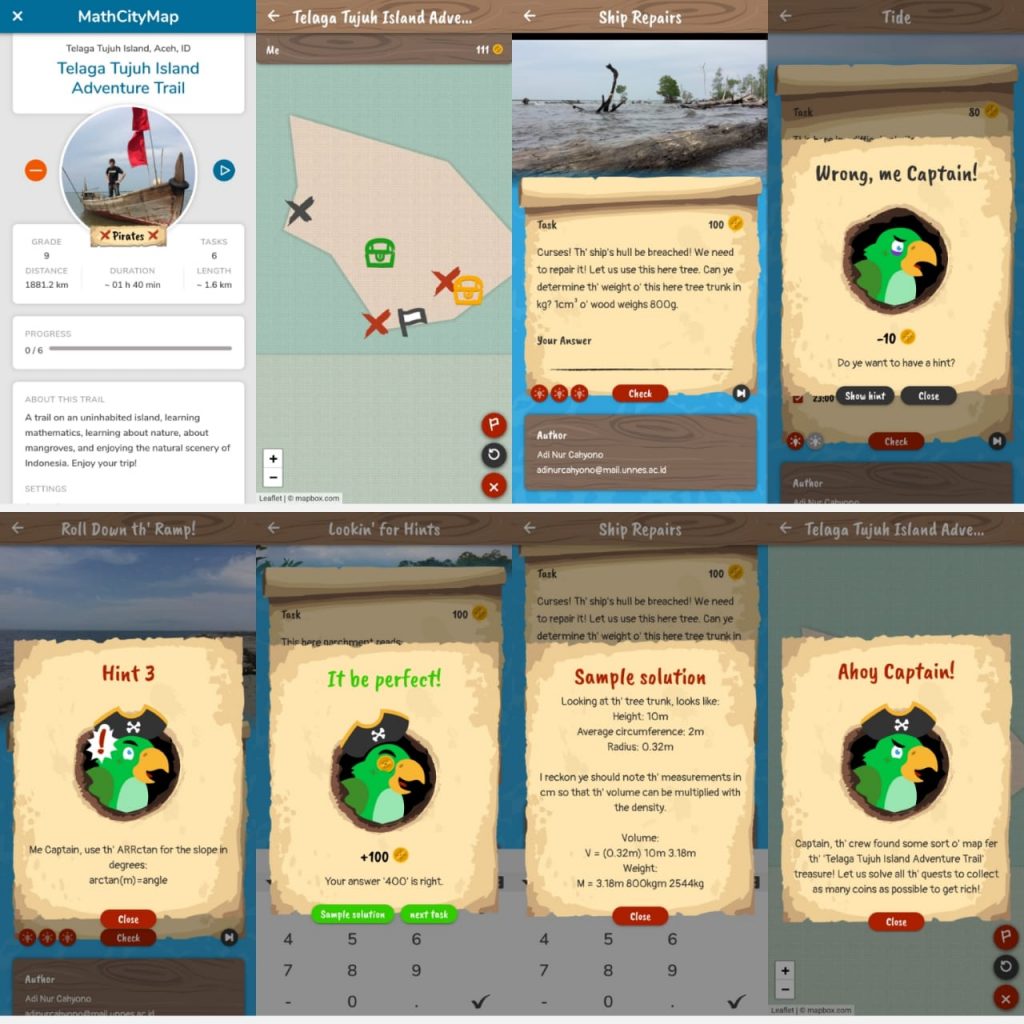
This month we present a mathtrail from Indonesia. After hearing of the new MathCityMap pirate narrative, our MathCityMap educator Adi Nur Cahyono created the “Telaga Tujuh Island Adventure Trail” to discover this new feature. He gave us an interview about the new pirate narrative feature of MCM.

Why do you use the pirate narrative?

I got the information that there is an app update by adding a pirate narrative in the MathCityMap app, so I immediately searched for a route that matched this narrative. One of which is a route on the Telaga Tujuh Island. The pirate narrative makes my route look very interesting. This narrative fits perfectly with the situation, location and tasks on this route. Adventure at sea, with problems on an island that can only be reached by sailing. It’s like a real pirate, isn’t it?

How could students benefit from the usage of such a narrative?

Students know the pirate character and his adventure stories are looking for treasure. This is the same as math trails ideas. Combining the two makes students interested in exploring the trail by acting like their imaginary character and at the same time they also learn mathematics and its application.

What is the special attribute of your trail? What differentiate your trail from others?

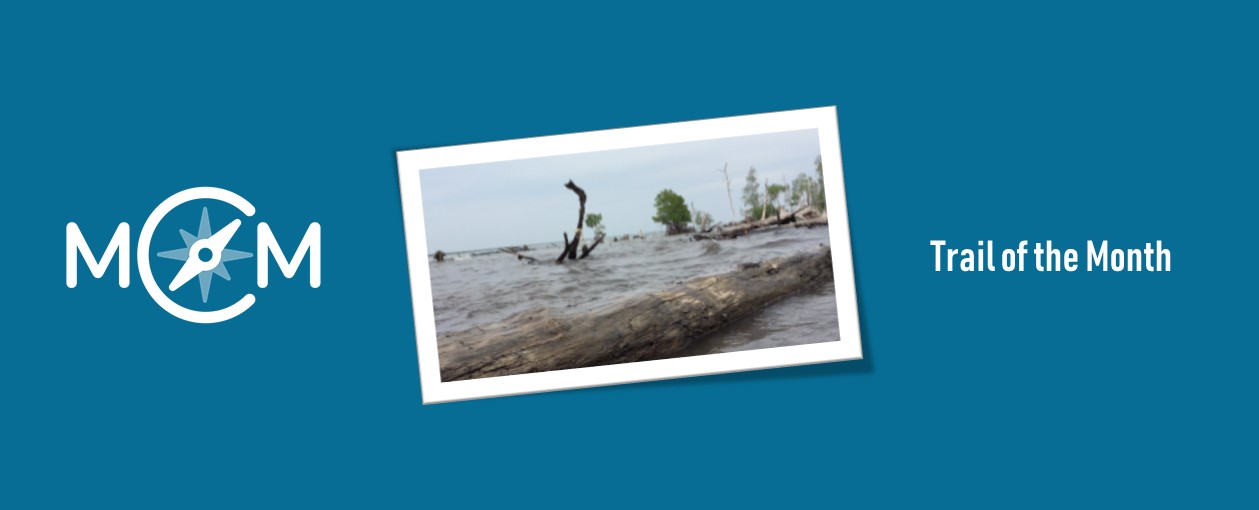
The “Telaga Tujuh Adventure Trail” is a route located on an uninhabited remote island in the Aceh Province of Indonesia. The route is explored by sailing to find some locations and real problems relating to mathematics with pirate narrative, for example, the Ship Repairs task: “Curses! Th’ ship’s hull be breached! We need to repair it! Let us use this here tree. Can ye determine th’ weight o’ this here tree trunk in kg? 1cm³ o’ wood weighs 800g.”

While working on this trail explores discover both mathematics and nature. They learn mathematics while adventurous into the world of imagination in reality and enjoy the beautiful nature of Indonesia. Discover MathCityMap, visit Indonesia!

Good to know: Adi Nur Cahyono created the “Telaga Tujuh Island Adventure Trail” in order to discover our new pirate narrative. Therefore, the used a lot wizard tasks of this trail, because the MCM provides for each of these tasks a short story fitting to the pirate narrative.

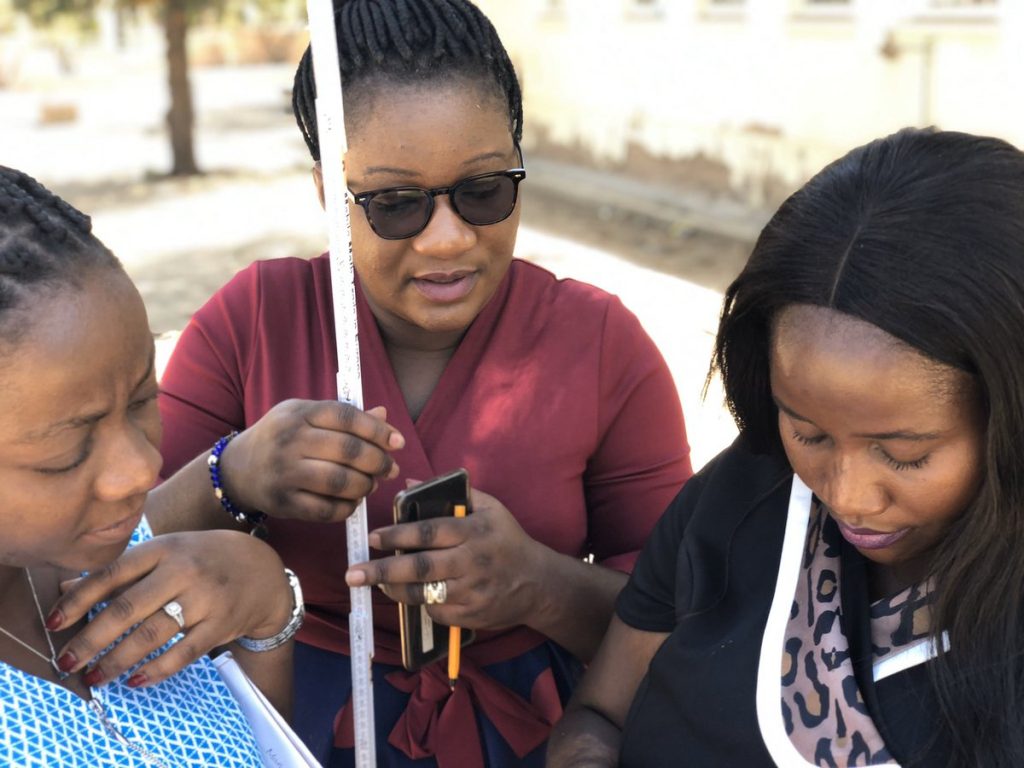
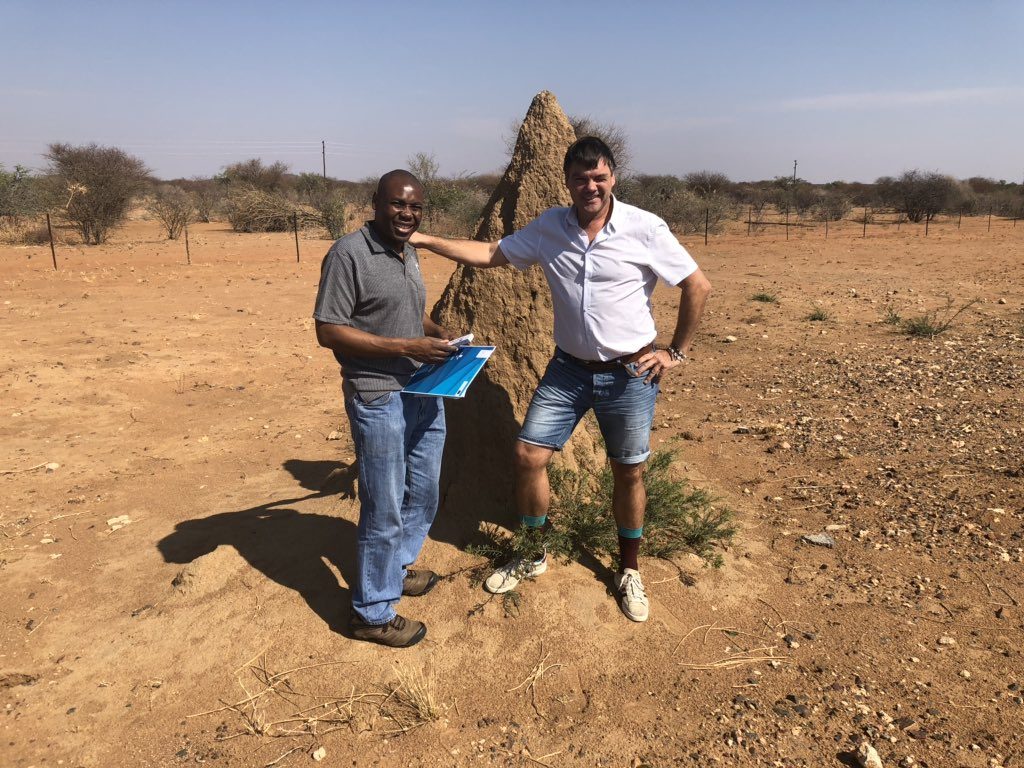
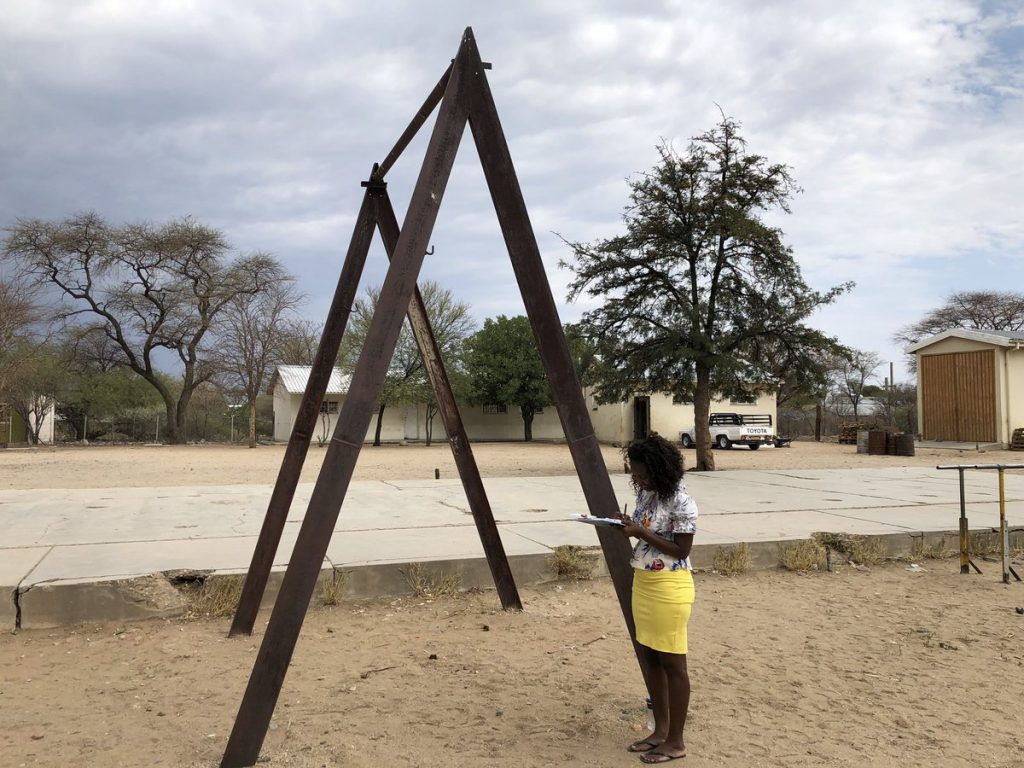
Matthias Ludwig presents the MathCityMap project in Namibia!

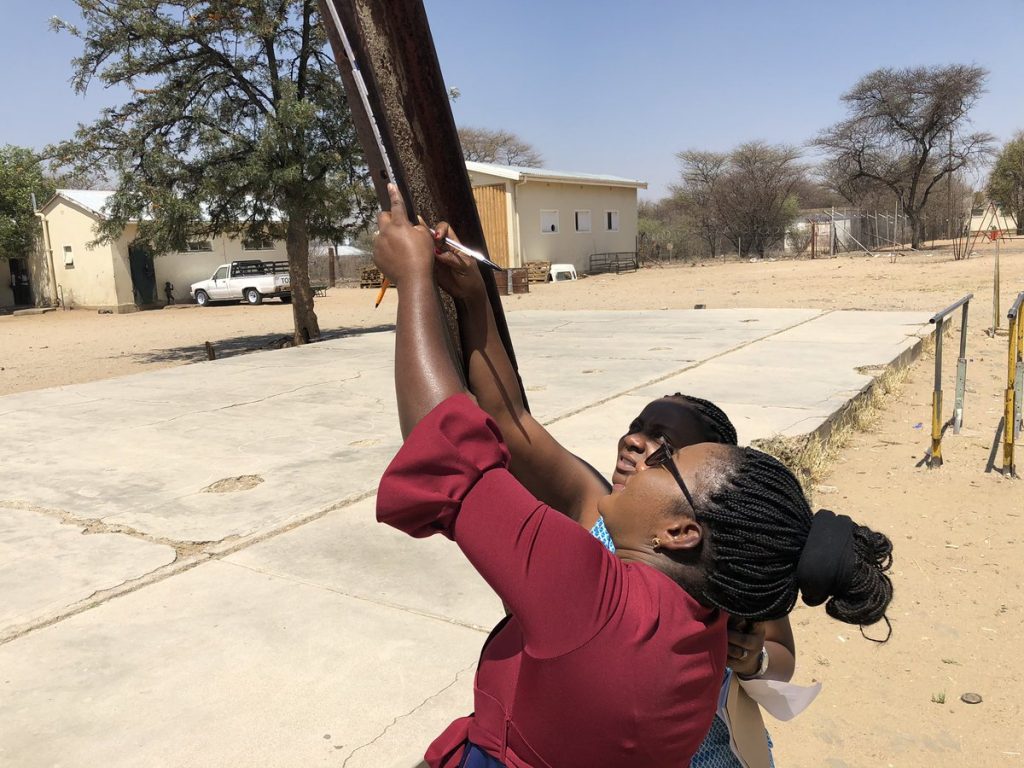
At J.G. Van der Wath Secondary School Matthias Ludwig created some MathCityMap tasks with Namibian teachers during a teacher education program. One of these new tasks is “The tire”, for which students have to calculate the circumference of a semi-visible car tire.

The participants of the education program were highly interested in the MathCityMap idea – so we are looking forward to a lot of interesting task which hopefully will be created soon!

You can find photos and further information on our MCM Twitter site.

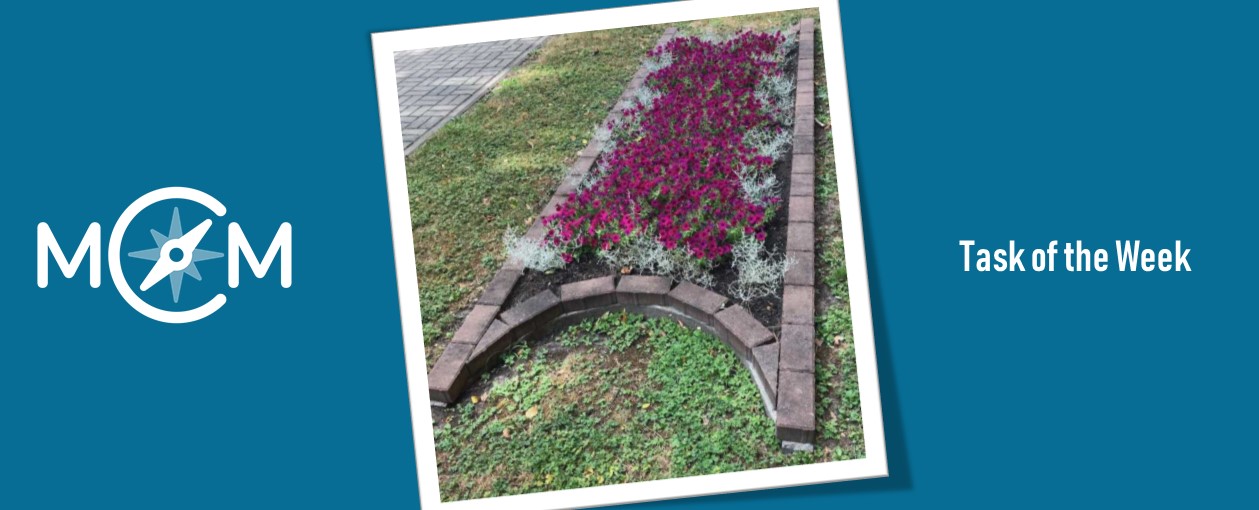
Todays´ task of the week was created in Druskininkai, Lithuania, by our MoMaTrE project partner Sona Ceretkova. The aim of the task is to explore a flower frame and to calculate the missing percentage of the frame. Sona Ceretkova gave us an interview about this interesting task.

What´s the topic of the task?

The frame for the task is situated in Lithuania, spa town Druskininkai, which is flowers paradise itself. It is quite common gardening practice to frame a piece of lawn by stones or bricks and plant some nice composition of flowers inside the area of the frame. The flower frame chosen for the task is an interesting geometrical shape. rectangle with shorten sides cut.

Several mathematics calculations can be presented of the flower frame:

  1. Calculate the inner area of the complete frame (without cuts).
  2. Calculate the area of cut parts.
  3. Calculate the difference between the area of the whole frame and cut parts.
  4. Calculate the ratio of whole frame and cut parts.
  5. Calculate the ratio of the cut frame and cut parts.
  6. Calculate the missing percentage of the whole frame.
    This is the given task in Druskininkai.

How could you solve this problem?

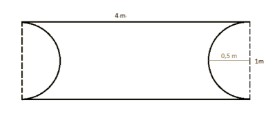
The original frame has “mathematically friendly” measures with a length of 4 metres and a width of 1 meter. The cut parts are two identical semi-discs, which create one whole disc (in calculation). This information is given by a hint. The geometrical situation of the task is quite simple (see figure).

Another hint declares that the area of the whole rectangle is 100%. This hint is an important note for correct calculation of the percentages. Since the exact percentage calculation gives 19,625%, rounding of this number was other mathematical skill required by solvers.

The multiple choice is the most suitable alternative as the answer. It´s an interesting game to ask solvers about their estimation of the tasks` solution. The 20% (one fifth) is a quite large number, quite large part, which is cut of the whole area of the flower frame. It is not so obvious when observing and measuring the real object.

What´s the didactic aim of the task?

We want to stimulate the following didactics aims through the task.

  1. Measure precisely.
  2. Imagine, draw or describe an ideal geometrical situation: rectangle, semi-circle (semi-disc).
  3. Calculate areas of two basic geometric shapes: rectangle and circle (disc).
  4. Use units in correct way; square meters are recommended.
  5. Calculate number of percentages when knowing the base and the percentage part.
  6. Interdisciplinary approach: ecology & botany