Task of the Week: The Climbing Blocks of the Mennea Park

In Turin, Italy, we find our new task of the week. Here the teacher Michela Viale created the task “I blocchi da arrampicata del Parco Mennea” (engl.: “The climbing blocks of the Mennea Park”), in which the visible surface of stapled dodecahedrons should be calculated. Michela, how did you discover the MathCityMap project? I got […]

Task of the Week

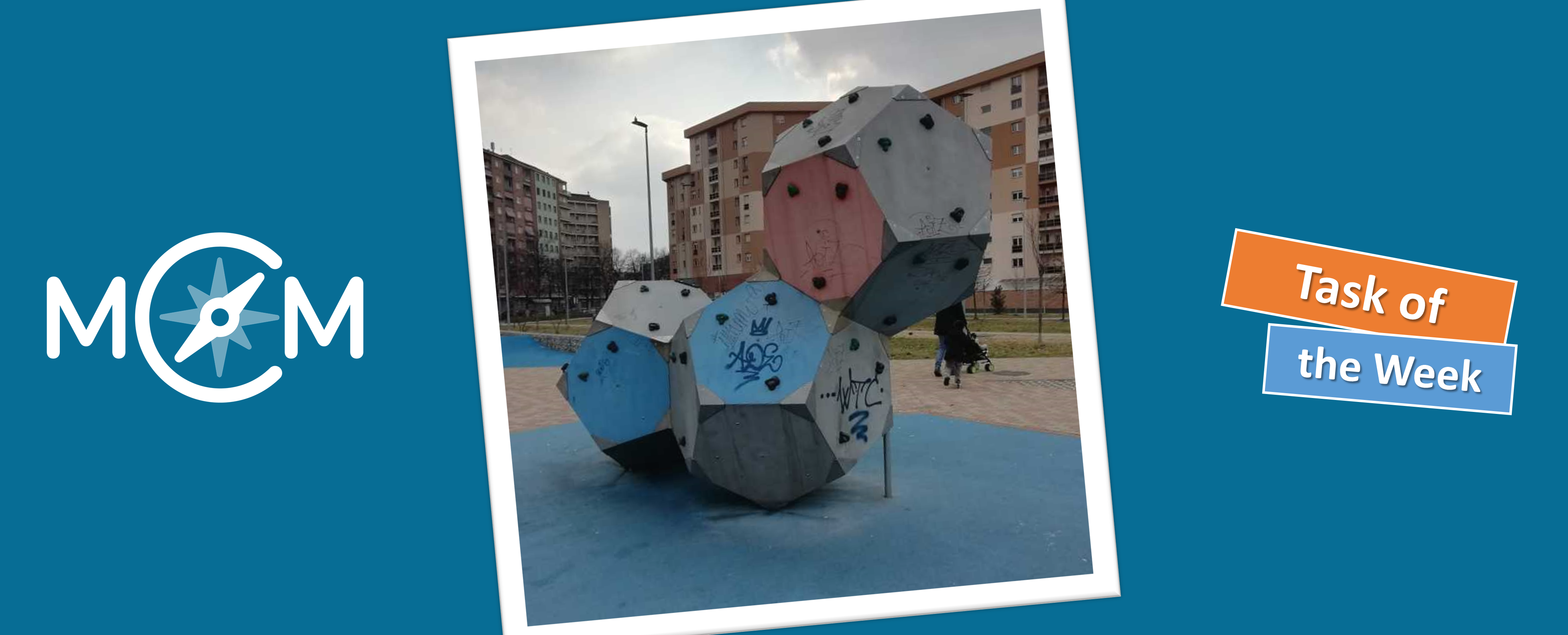
In Turin, Italy, we find our new task of the week. Here the teacher Michela Viale created the task “I blocchi da arrampicata del Parco Mennea” (engl.: “The climbing blocks of the Mennea Park”), in which the visible surface of stapled dodecahedrons should be calculated.

Michela, how did you discover the MathCityMap project?

I got in contact with MCM four years ago, when I was attending a math online course at the university of Torino, Math Department, where I had to create my first MathCityMap task. By participating another MOOC in the spring of 2020, I created my own math trail on MCM.

I am a teacher at middle school (from 11 to 14 years old) and I love to create “real problems” for my students. By using MCM I can organize outdoor mathematical problem solving for my students.

Describe your task. How can it be solved?

My task is placed in a park in Turin (Parco P. P. Mennea). It is a climbing block for children made up of three dodecahedra. Since the blocks are stapled on top of each other, they have some common sides, which are therefore not visible. I ask to children to calculate the area of the visible sides (the surface they could paint). They have to recognize the dodecahedron, count the number of the sides they could paint, calculate the area of one side (which is a regular pentagon). 

What didactic goals do you pursue with the task?

I want to stimulate different didactic aims: recognize solids and plane figures around us, measure them, calculate their surface. In general, I think MCM is very useful to improve Math competences. I’ll create a new math trail during my holidays in Sardinia in August. 
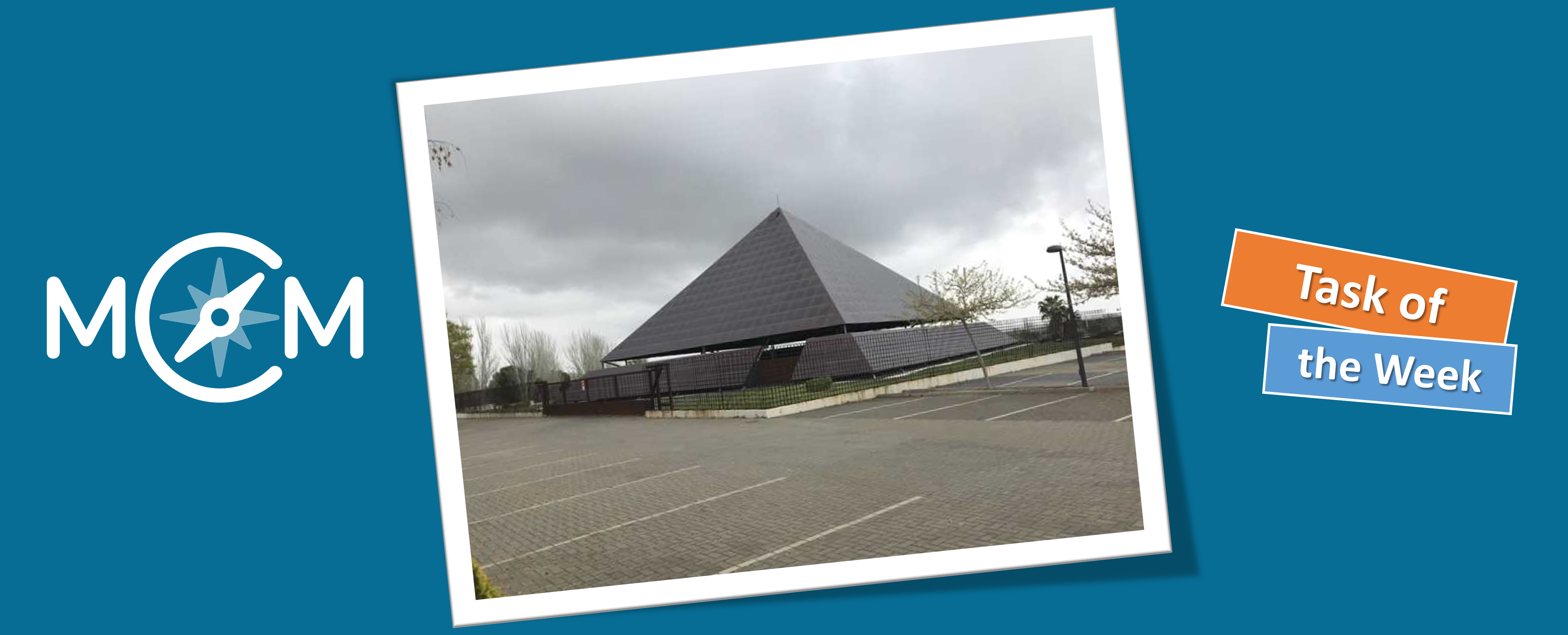
Task of the Week: The Solar Pyramid

Our new Task of the Week is located in Spanish capital Madrid. There, Juan Martinez created the task “Puerta N.O. Parque Juan Carlos I (Pirámide Solar)” [engl.: Entrance to the park Juan Carlos I (Solar Pyramid)]. The task author Juan Martinez is a member of the Spanish maths education association FESPM, which is one of […]

Task of the Week

Our new Task of the Week is located in Spanish capital Madrid. There, Juan Martinez created the task “Puerta N.O. Parque Juan Carlos I (Pirámide Solar)” [engl.: Entrance to the park Juan Carlos I (Solar Pyramid)].

The task author Juan Martinez is a member of the Spanish maths education association FESPM, which is one of our project partners in out Erasmus+ projects MoMaTrE and MaSCE³. Both aim to the further development of the MathCityMap system in order to show students the “hidden” mathematics in their own environment.

The task formulation is as follows: Entering the Juan Carlos I Park, through this door we observe on the left a Solar Pyramid. What is the total area of the roof, using one square solar panel as a unit? The pyramid has four triangular sides of equal size. We count 25 whole solar panels on the base side and 15 vertically stacked panels. Taking the cut panels into account, we can calculate that the sides of the pyramid are composed of approximately 830 solar cells.

This task is to approximate the lateral area of a pyramid using a non-standard surface unit. Since the object is quite large, the students should use the triangular area formula to calculate the number of solar collectors und recognize this procedure as an effective counting method.

Task of the Week: Roof Dome of the Diana Temple

Our current Task of the Week was created during the MNU meeting in Munich. The city offers great architectural possibilities to use MathCityMap, for example the Diana Temple in the Hofgarten. Task: Roof Dome of the Diana Temple (Task Number: 4513) Determine the size of the roof dome of the Diana Temple. Give the result […]

Task of the Week

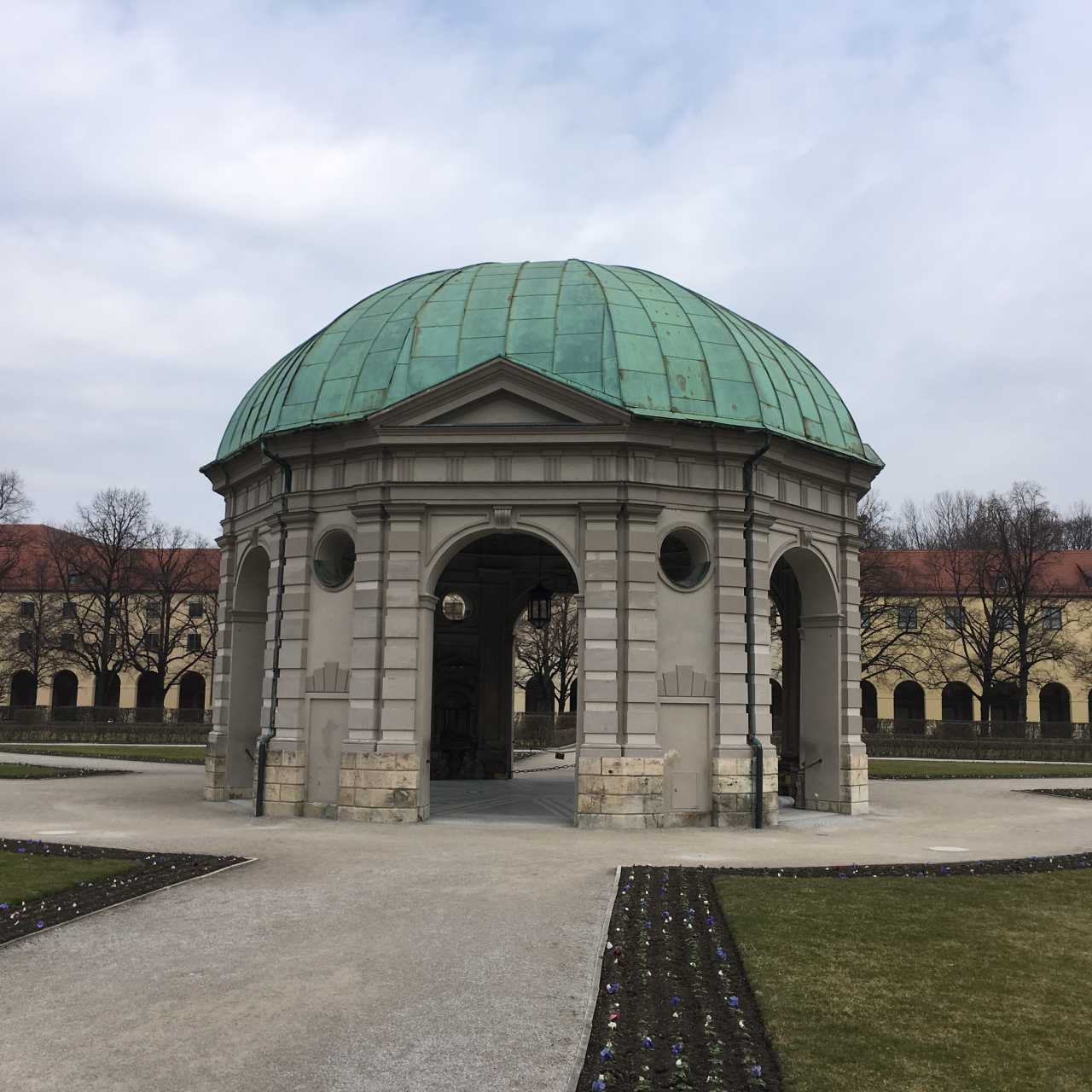
Our current Task of the Week was created during the MNU meeting in Munich. The city offers great architectural possibilities to use MathCityMap, for example the Diana Temple in the Hofgarten.


Task: Roof Dome of the Diana Temple (Task Number: 4513)

Determine the size of the roof dome of the Diana Temple. Give the result in m².


You can model the roof dome as a semi sphere and approximate the asked size by means of its surface. First, the radius of the semi sphere is determined using the diameter at the bottom. Using the formula for the surface of a sphere or divided by two of a semi sphere results the surface. Nevertheless, to approximate the result exactly, the stone triangles should be substracted. In total, there are four trinagles wholes surface area should be estimate due to the height and subtracted.

Task of the Week: Columns in the Parc

This week, Carmen Monzo, teacher in Spain gives us an inside into her task “Colums in the Parc”. It is created in a parc in Albacete, which ” is full of mathematical elements,  though people are not aware of them until they are in math-vision mode.” Task: Columns in the Parc (Task Number: 3981) Calculate […]

Task of the Week

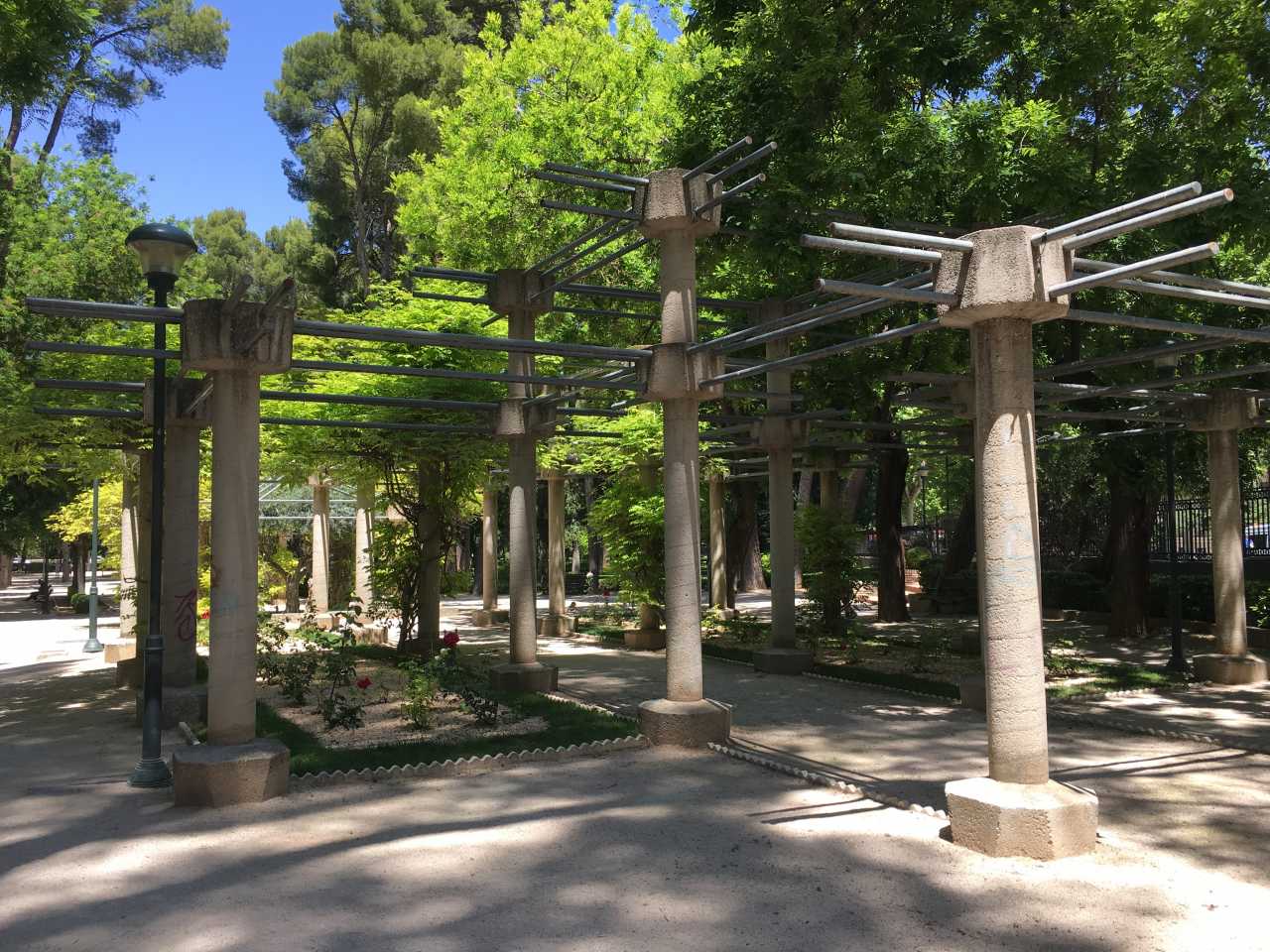
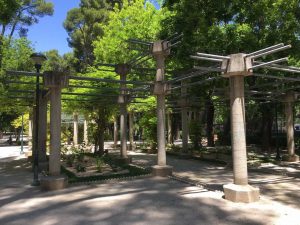
This week, Carmen Monzo, teacher in Spain gives us an inside into her task “Colums in the Parc”. It is created in a parc in Albacete, which ” is full of mathematical elements,  though people are not aware of them until they are in math-vision mode.”


Task: Columns in the Parc (Task Number: 3981)

Calculate the lateral surface (in m²) of one of the columns of this structure.


“I especially love this structure.  Parallel and perpendicular lines can be easily identified, as well as a set of columns (cylinders) whose lateral surface can be easily calculated by using a folding ruler or a measuring tape, and a calculator to introduce the data and the formula. The height of the cylinder is easy to get, but to calculate the radius of the base as accurate as posible, students first have to measure the circumference and then divide by 2*pi.

As this structure has a dozen columns, the activity can be done by around 20 students, comparing their results and thinking about the importance of the accuracy when measuring. To solve this task, students should have previously studied 2D and 3D shapes, the concept of the lateral surface and some formula to calculate it.

As a secondary mathematics teacher, I think that our students need to handle things, measure, count, touch, feel, use their senses… MathCityMap provides the motivation students and teachers need to do those things with the help of the mobilephone technology.”

Task of the Week: Arched Greenhouse

As a task creator for MathCityMap, it is important to look at the environment through “mathematical glasses”. Thus, buildings become cuboids, lawns become polygons or – as in the current task of the week – greenhouses become half cylinders. Task: Arched greenhouse (task number: 1950) Calculate the material requirement for plastic for the greenhouse. Give […]

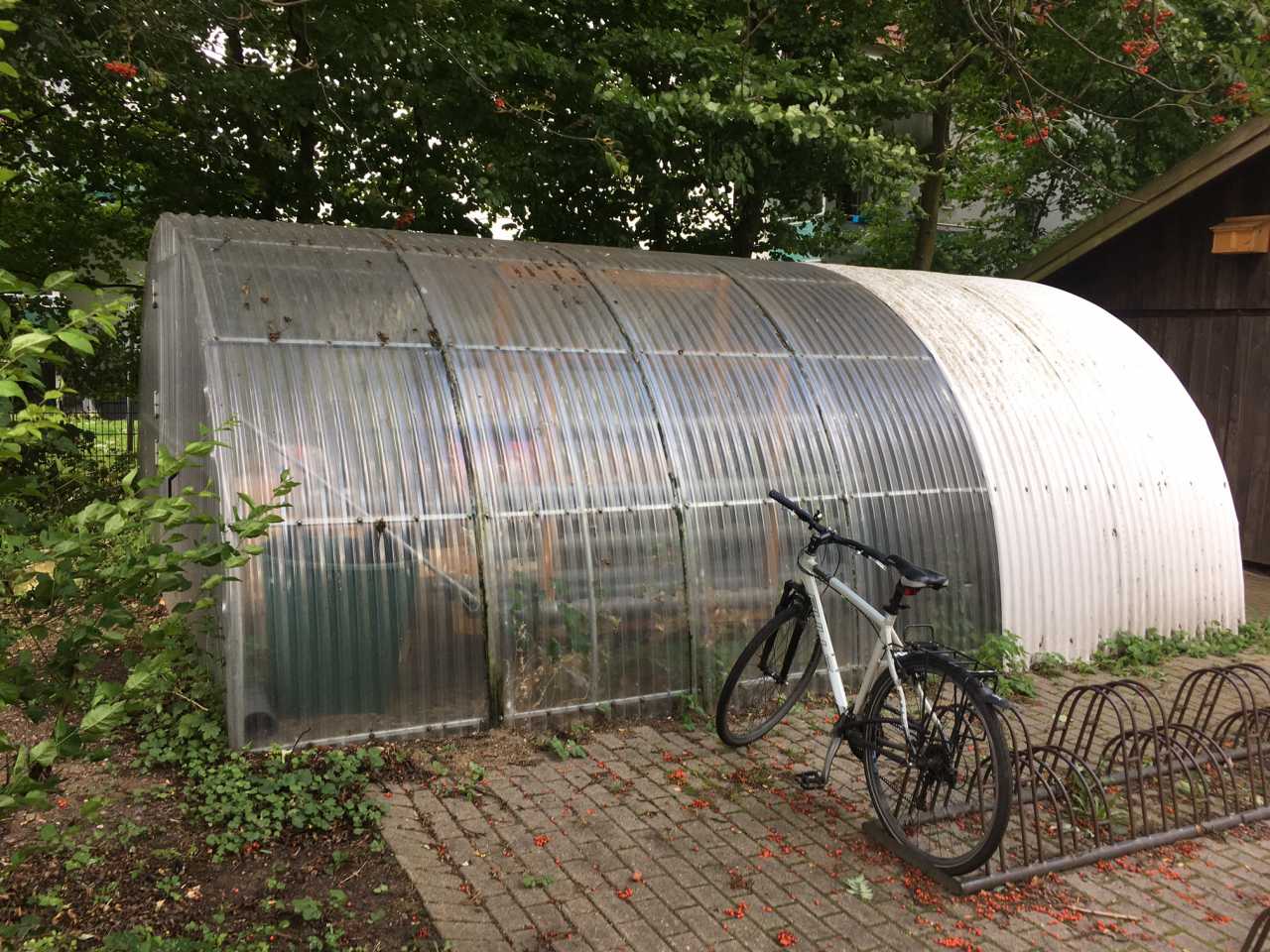
As a task creator for MathCityMap, it is important to look at the environment through “mathematical glasses”. Thus, buildings become cuboids, lawns become polygons or – as in the current task of the week – greenhouses become half cylinders.


Task: Arched greenhouse (task number: 1950)

Calculate the material requirement for plastic for the greenhouse. Give the result in m².


When solving the task, students’ mathematical view is also taught. This involves the recognition of the object as a lying half cylinder. Once this has been achieved, radius, the circumference of the semicircle and height must be measured, so that the material consumption can be calculated. This corresponds to the surface of the half cylinder, which can be determined by means of formulas for the area of ​​a circle and the surface of a cylinder.

Task of the Week: Lamp

With two trails in Salzburg, we can now welcome Austria as the 9th country with a MCM Trail. The current task of the week presents a task in the field of the surface of a cylinder. It is located in the trail at the natural sciences faculty of the Paris-Lodron University in Salzburg. Task: Lamp […]

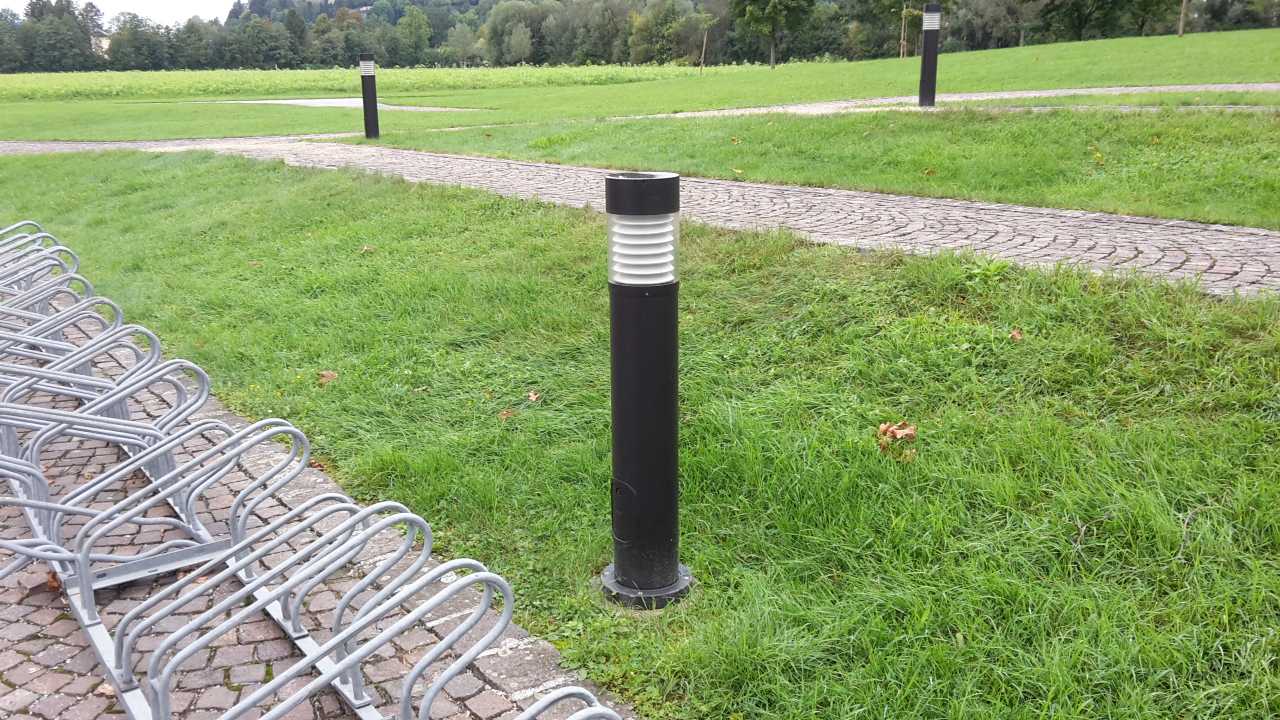
With two trails in Salzburg, we can now welcome Austria as the 9th country with a MCM Trail. The current task of the week presents a task in the field of the surface of a cylinder. It is located in the trail at the natural sciences faculty of the Paris-Lodron University in Salzburg.


Task: Lamp (task number: 1908)

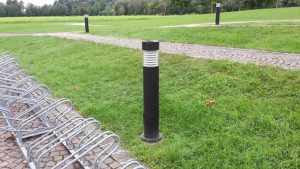
How large is the black painted surface of a lamp without the base plate? Give the result in m². Round to two decimal places.


The pupils first recognize the lamp as cylindrical and then determine the black surfaces. For this, it is necessary to divide the lamp into two cylinders. For the upper small cylinder, the shell surface as well as the cover are calculated, for the lower cylinder only the shell surface. Height and radius need to be measured. Subsequently, the individual surfaces are added and the total painted surface area is obtained.

The task can be assigned to the subject area of ​​geometry and, in particular, geometrical bodies (cylinders) and can be used from class 9 onwards.

Task of the Week: Mushroom

Today’s Task of the Week focuses a geometric question at the Aasee in Münster. More specifically, the surface content of a hemisphere is calculated by the students. Task: Mushroom (task number: 1400) Determine the area of ​​the mushroom. Give the result in dm². Round to one decimal. In order to solve the problem, the students have to […]

Task of the Week

Today’s Task of the Week focuses a geometric question at the Aasee in Münster. More specifically, the surface content of a hemisphere is calculated by the students.


Task: Mushroom (task number: 1400)

Determine the area of ​​the mushroom. Give the result in dm². Round to one decimal.


In order to solve the problem, the students have to approach and recognize the shape as a hemisphere. They then need the formula for the calculation of the spherical surface or here the hemispherical surface. For the determination, only the radius of the hemispheres is required. Since it can not be measured directly, this can be determined with help of the circumference.

The task requires knowledge of the circle and of the sphere and can therefore be applied from class 9 onwards.

Task of the Week: Pavilion

The present task of the week is about a geometric question. It involves the area calculation of the roof surface of the illustrated pavilion. Task: Pavilion (task number: 665) Determine the roof surface of the pavilion! Give the result in m². For this purpose, the pupils should recognize that the roof surface consists of several isosceles […]

Task of the Week

The present task of the week is about a geometric question. It involves the area calculation of the roof surface of the illustrated pavilion.


Task: Pavilion (task number: 665)

Determine the roof surface of the pavilion! Give the result in m².


For this purpose, the pupils should recognize that the roof surface consists of several isosceles triangles. It is therefore sufficient to measure the height and base of one triangle and to calculate the surface content using the formula for the area content of triangles. The total area can then be determined by multiplication by the number of triangles.

In order to solve the problem, the pupils must therefore be familiar with the area calculation for triangles. In the task, the “geometrical view” is trained by the triangular shape being recognized in a composite figure. Here, an essential aspect of outdoor mathematics is found, namely the recognition of mathematical concepts and objects in reality, as well as the use of mathematical knowledge to solve everyday questions. Solving the task is possible from class 6 onwards with the topic triangles.