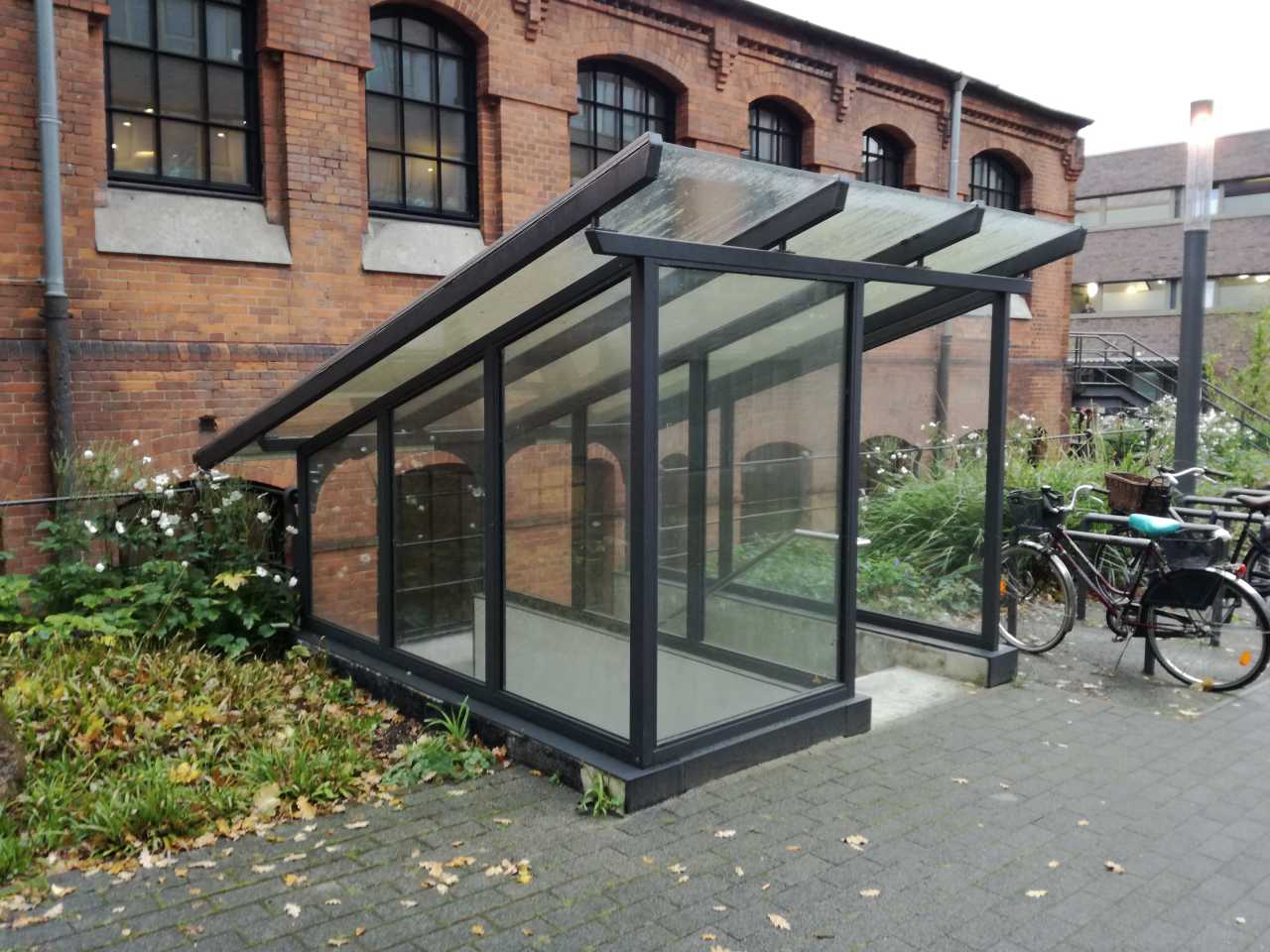
Today’s object – found in Hamburg – requires the recognition of different quadrilateral shapes as well as a fitting division into several subareas.


Task: Glass roofing (task number: 2148)

How many square meters of glass were used for the entire roof?
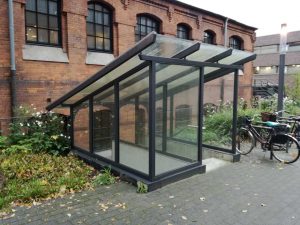

The glass roofing consists of a rectangular roof surface (can be divided into three small rectangles), a rectangular area next to the entrance and three trapezoids on each side. To solve the task, all measurements for the rectangles and trapezoids must be made. Afterwards, the students calculate the individual areas and by adding the entire content of the glass. Due to the individual bars, the decomposition of the surfaces is almost predetermined. Nevertheless, the task requires the recognition of geometric shapes as well as a suitable mathematization of the tasks by formula knowledge of rectangle and trapezoid. This geometric question can be assigned to compound surfaces and can be solved from class 8 onwards.
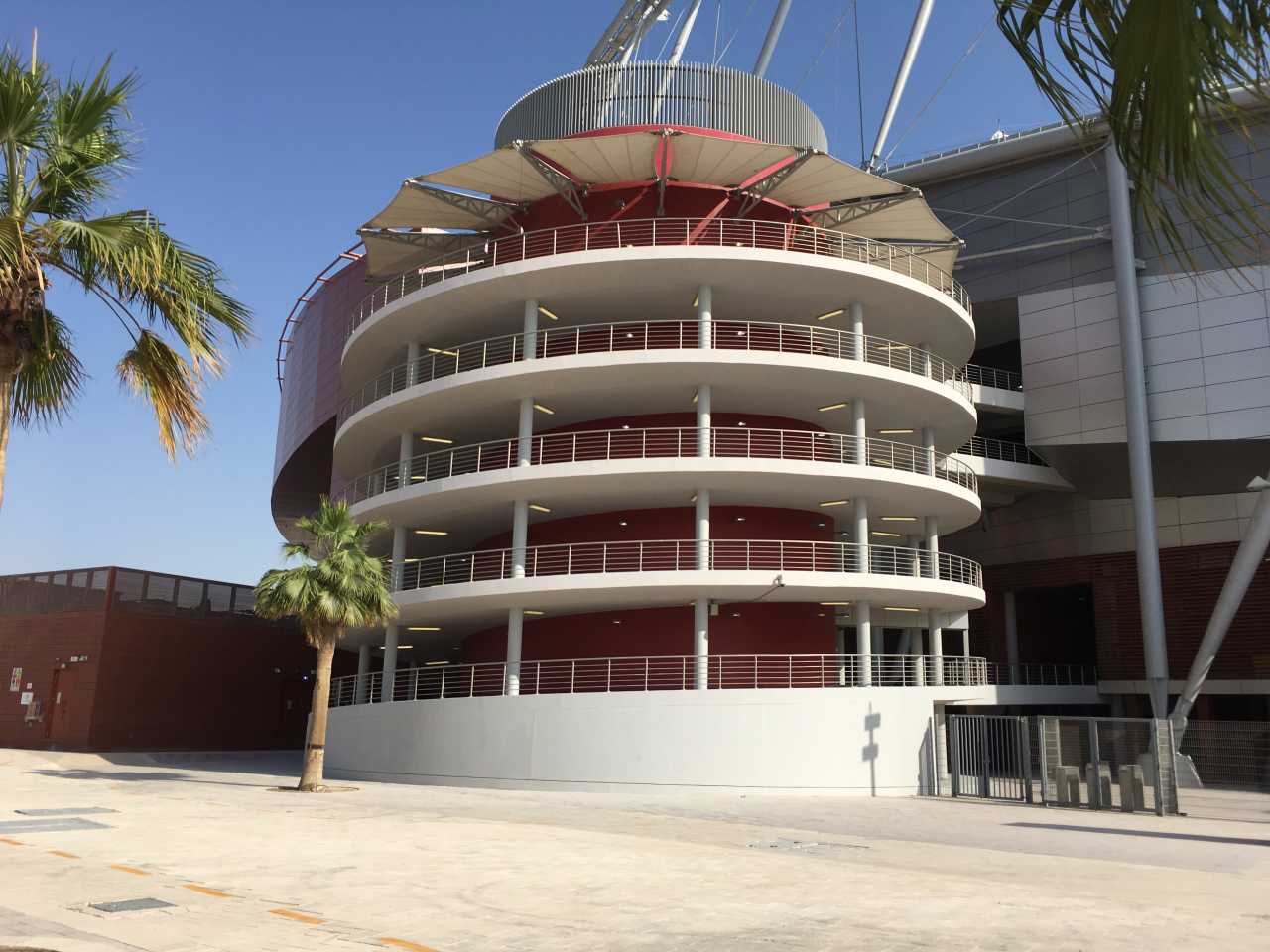
In the new year, we would like to continue introducing interesting tasks and topics from the MathCityMap task portal. It starts with a task from Qatar, which was created as part of a presentation of MathCityMap.

Task: Slope of the Helix (Task number: 2243)

Calcaulate the slope of the hailrail of this circular ramp. Give the result in percentage!


Despite the architectural peculiarity of the building, the task can be solved in a familiar way. One can use the definition of the slope as a quotient of vertical and horizontal change. In particular, with the help of the balusters, distance and horizontal change can be easily detected.
Thus, the task fits thematically in the area of ​​”slope” – a topic that occurs again and again in almost every location at MathCityMap, whether at railings, ramps or stairs. The task can be solved from grade 7 and serves as a basis for the recognition of functional relationships.

With a task from the Christmas Trail, we would like to present the last “Task of the Week” this year and draw attention to the possibility of addressing probabilities in the context of MCM.


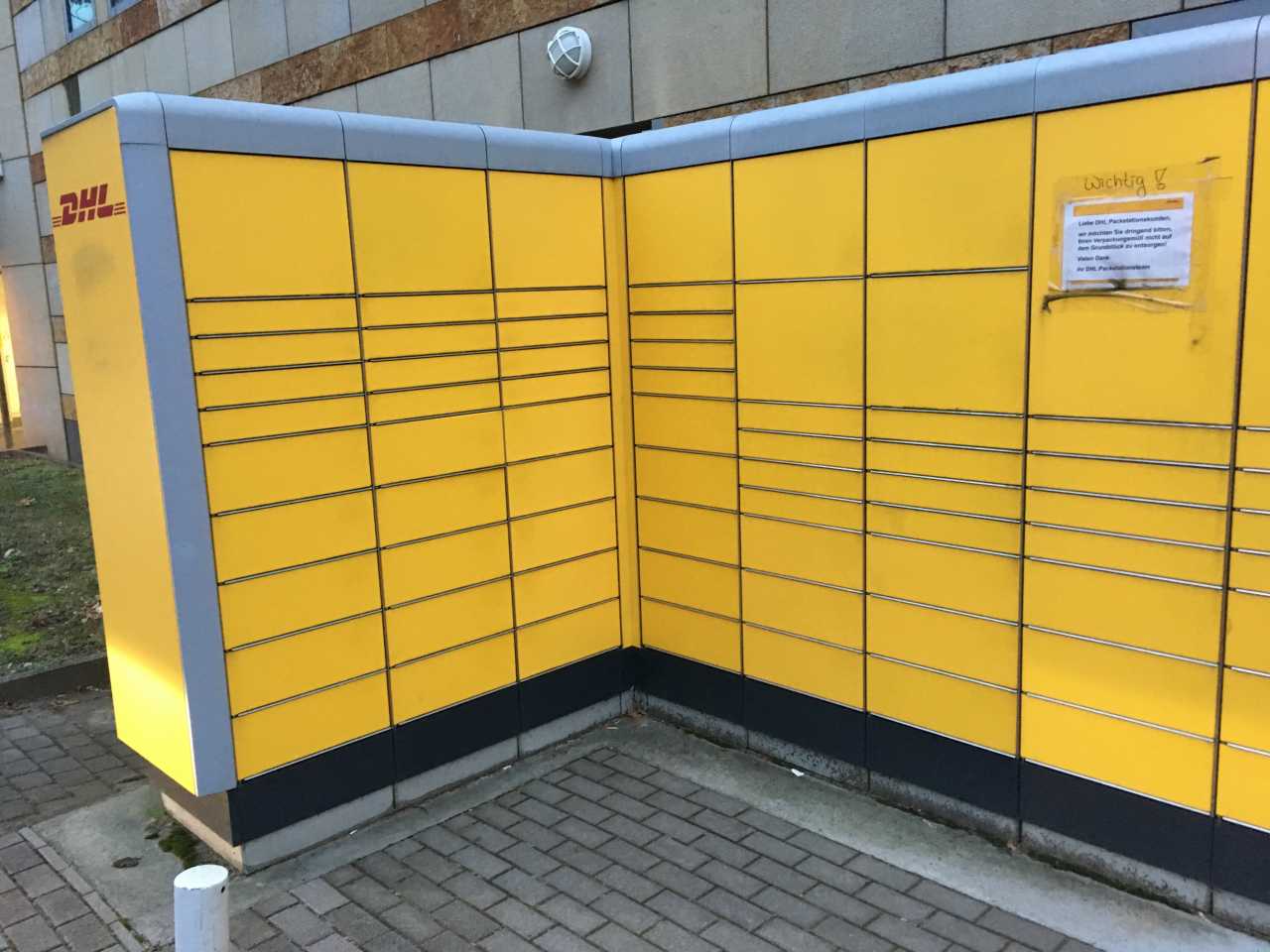
Task: Packing Station in the Westend (task number: 779)

You should pick up two packages for the boss. You do not know their size. You guess behind which of the yellow boxes they could be (in each box can only be one package). What is the likelihood that the packages will really be behind the ones you picked?


First of all, it has to be clarified how many boxes there are. Then one can calculate the probability of picking the first box and the second box correctly. In this case, combinatorial considerations are necessary as to whether the order plays a role. As answer format, multiple choice was chosen for this task, whereby the correct solution can be expressed in terms of two possible answers: once as a fraction and once as an estimate with percent, which underlines the equivalence of both forms. The task is recommended from grade 9 onwards.

With this task, the MCM team says goodbye to the Christmas break and wishes all users a Merry Christmas and a Happy New Year. We are curious to see how we can further develop the MCM project in the new year and look forward to an exciting time!

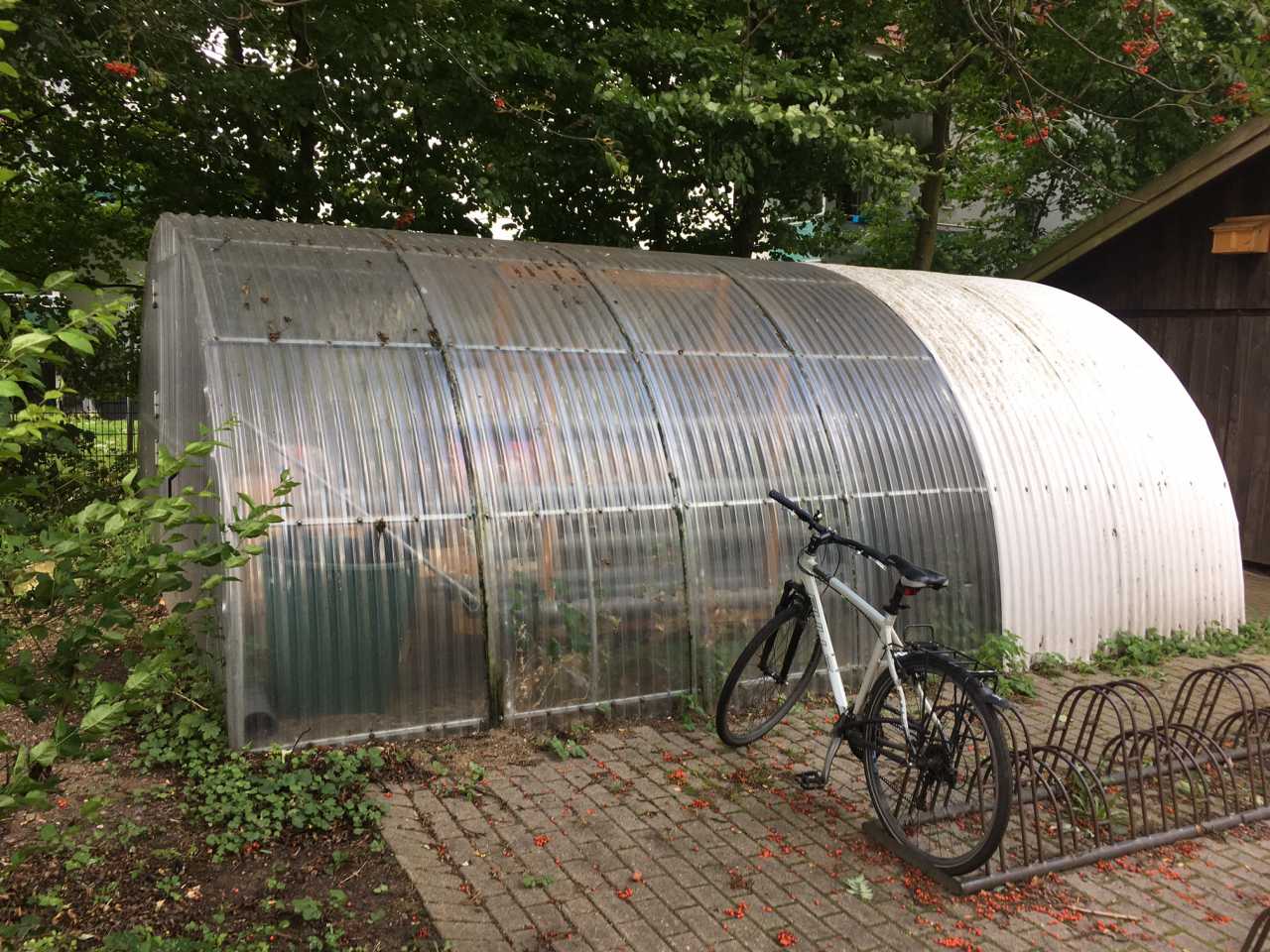
As a task creator for MathCityMap, it is important to look at the environment through “mathematical glasses”. Thus, buildings become cuboids, lawns become polygons or – as in the current task of the week – greenhouses become half cylinders.


Task: Arched greenhouse (task number: 1950)

Calculate the material requirement for plastic for the greenhouse. Give the result in m².


When solving the task, students’ mathematical view is also taught. This involves the recognition of the object as a lying half cylinder. Once this has been achieved, radius, the circumference of the semicircle and height must be measured, so that the material consumption can be calculated. This corresponds to the surface of the half cylinder, which can be determined by means of formulas for the area of ​​a circle and the surface of a cylinder.

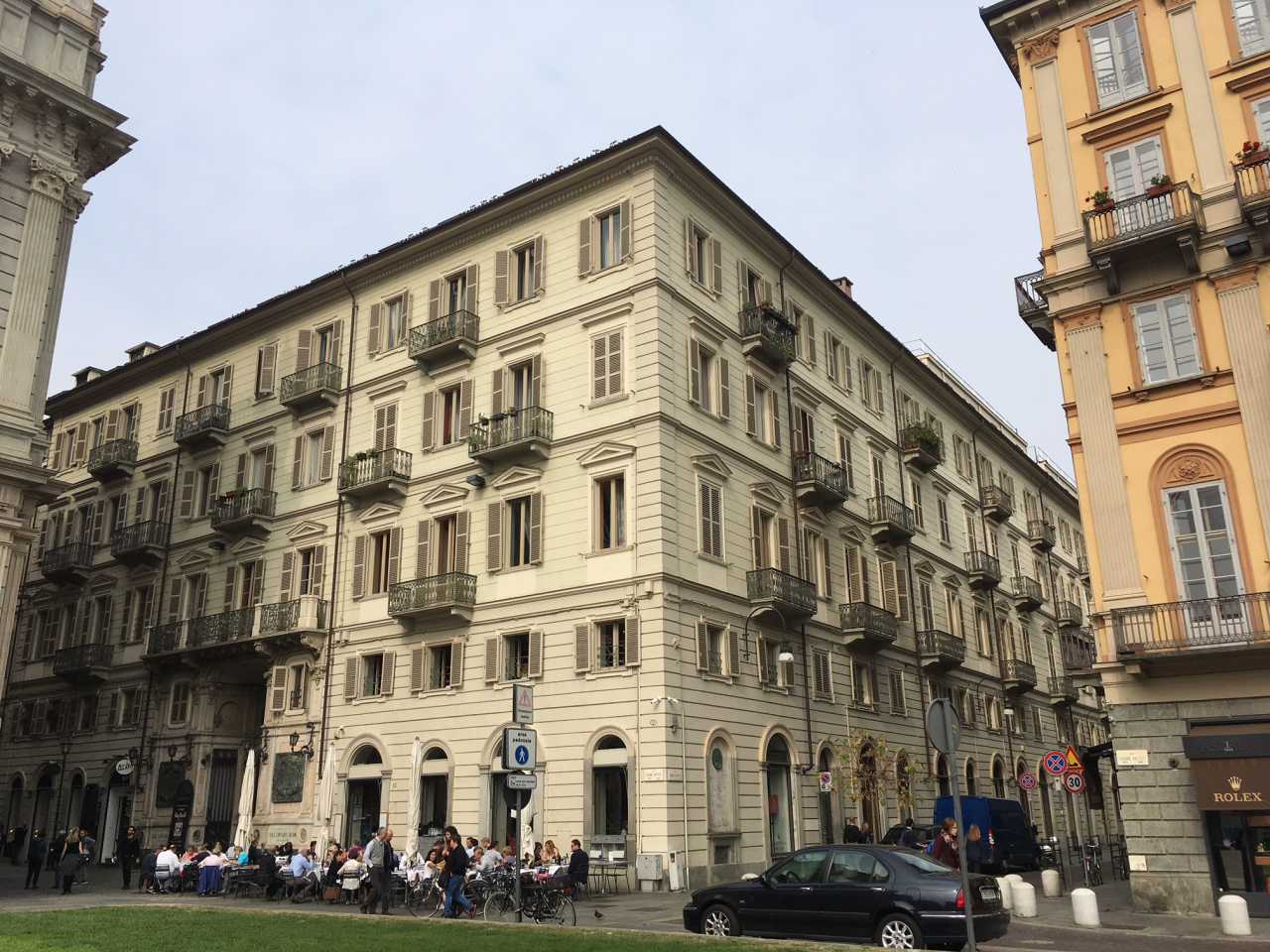
Through cooperation with the MOOC Working Group of the University of Turin, we are looking forward to the first MCM tasks in Italy, which is part of today’s Task of the Week.


Task: Height of the Building (task number: 2045)

Determine the height of the building. Give the result in meters.


The height can be approximated in various ways, e.g. by estimation or the intercept theorems. The task can be solved elegantly by looking for structures and patterns in the building facade. In this building, the horizontal strips, which can be found up to the roof, are noticed directly. For the total height, it is therefore only necessary to determine the height of a horizontal strip, as well as to count the number of strips. Minor deviations from the pattern can be approximated using estimates.

With this method, the task can already be solved by class 6 students. In the case of older pupils, the different solutions can be discussed and assessed with regard to simplicity and accuracy.

In this year’s autumn, numerous tasks were created in Wilhelmsburg, district of Hamburg. The tasks are very convincing – especially in the context of the MCM concept – through their interdisciplinary and thematic diversity, which we would like to illustrate exemplary in our current Task of the Week.


Task: Red area (task number: 1964)

Determine the red area on which the ping-pong table stands. Give the result in m².


It quickly becomes clear that the entire area can not be approximated by a single geometrical object, or that this is only possible with significant losses in accuracy. It is therefore appropriate to divide the area searched into disjoint subspaces, which can be calculated using formulas. This is best done using a drawing. A particular challenge are the curved edges, where estimations and approximations are necessary. According to measurements and calculations, the total area is obtained by adding the area contents of all partial surfaces.

The area can be described using rectangles and triangles. In addition, the principle of the decomposition and additivity of surface content is necessary for solving the problem. The task can be used from class 7 onwards.

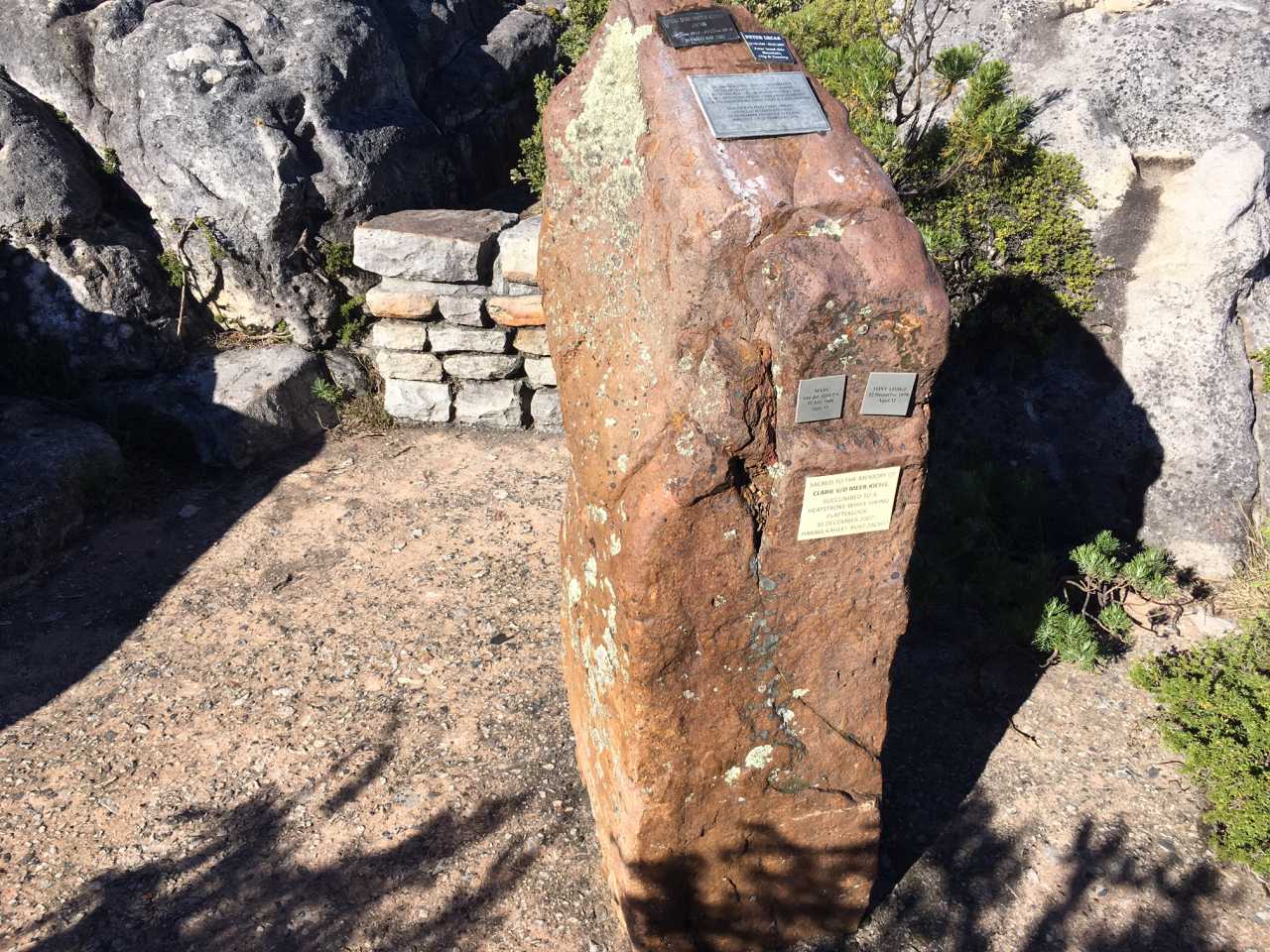
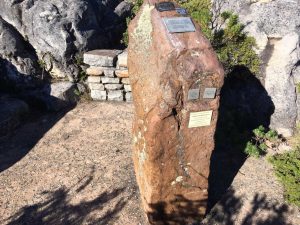
As a few weeks ago, the Task of the Week leads us to the African continent, more precisely to the approximately 1000-meter-high Tafelberg in Cape Town. There you can find a monument of stone, which is also an ideal object for a MCM task.


Task: Tafelberg’s Monument (task number: 1791)

Calculate the mass of the stone monument. Give the result in kg. 1 cm³ of granite weighs 2,6 g.


First, the shape of the stone has to be considered more closely. When choosing a suitable model, a prism with a trapezoidal base can be used. For this, it is necessary to ignore minor deviations from the ideal body as well as to operate with the stone mentally. The required data are then determined and the required weight of the stone is obtained by means of the area content formula of a trapezoid, the volume formula of a prism and the given density.

The task shows that over the last few years, MCM has developed into an international platform for authentic “outdoor” mathematic tasks and has already been set up in many prominent places. We are looking forward to further tasks and are looking forward to the countries and regions in which new MCM tasks will emerge.

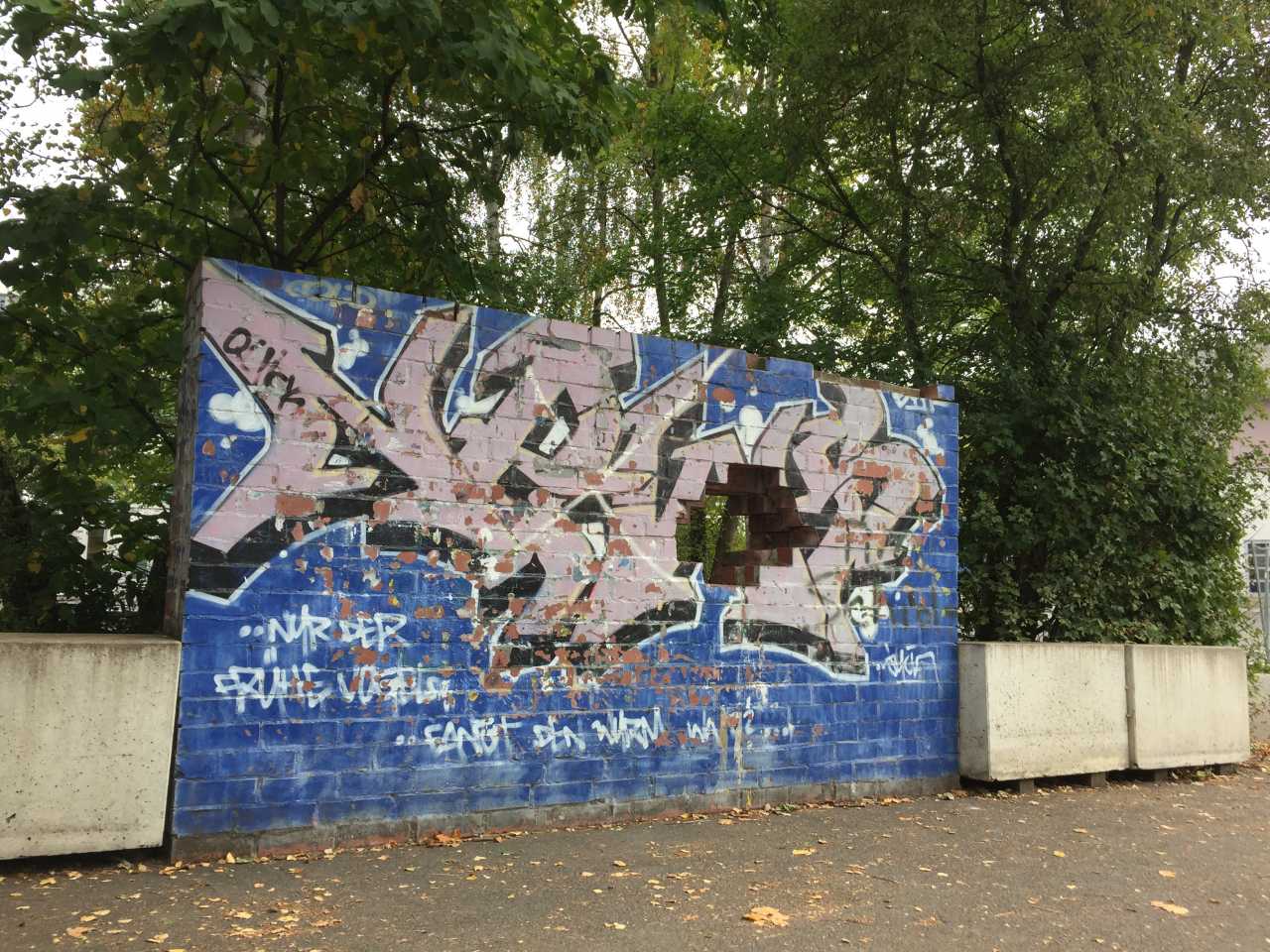
As a part of a teacher training at the Johanneum Gymnasium Herborn, a modeling task was created, which we would like to present to you today as the “Task of the Week”.


Task: Brick in the Wall (task number: 2040)

The wall in the schoolyard should be sprayed. It is planned to save color for the hole in the wall. Calculate the area to be sprayed in m². Enter the result with two digits.


The challenge in this task is to approach the existing hole in the rectangular wall as precisely as possible. Different models can be chosen for this purpose. On the one hand, one could assume the hole as a circle and determine an average diameter. More precisely, however, the result is obtained by approaching the hole as an ellipse and measuring the axes.

The task requires a certain amount of creativity and shows that the clear mathematics in the environment outside the classroom reaches its limits. The pupils acquire modeling competences, especially in the skillful choice of a mathematical model. The various solutions and results of the pupils thus form an ideal basis for discussing appropriate models. The problem can be applied with the treatment of circle and ellipse from class 9 onwards.

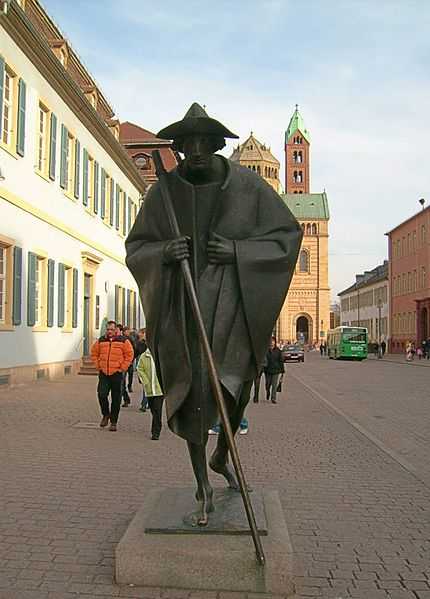
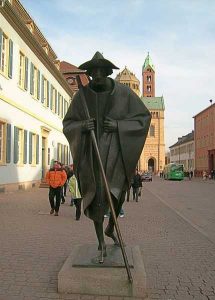
Today, we would like to introduce you a task from Speyer, which was created there by Katalin Retterath. It is about the famous Way of St. James, which leads through the city to Santiago de Compostela.


Task: Jacobean Pilgrim (task number: 1614)

Measure/estimate the step of the Jacobean Pilgrim. How many steps would he have to take if he were to travel the 2,500 kilometers to Santiago de Compostela?


How did you get the idea to create MathCityMap?

I am a consultant for teaching development in mathematics at the Pedagogical State Institute in Rhineland-Palatinate. For a number of years, we have been developing mathematical rallies, which are well received by both our pupils and the training events. First we experimented with LearningApps, then with Actionbound – both were OK, but not really satisfactory. We have become acquainted with MathCityMap and we would like to introduce the MathCityMap project here.

What are the mathematical competences and contents associated with the task?

Students must estimate and/or measure, work with large numbers. The task is solved by a group – thus, communicating plays a great role and if the students explain their their solution to one another (which would be desirable), then also argue.

Has the task already been tested by students or did you receive feedback in other forms?

The task itself has been tested by students (many different classes), but still with Actionbound. The students were able to solve the problem without major (content) difficulties – with the units and number of zeros, however, it was not so good. I have only entered two-three tasks at MathCityMap to test the software. A test of the tool will be considered in spring.  

The MCM team thanks for the interview and is looking forward to further tasks in Speyer!

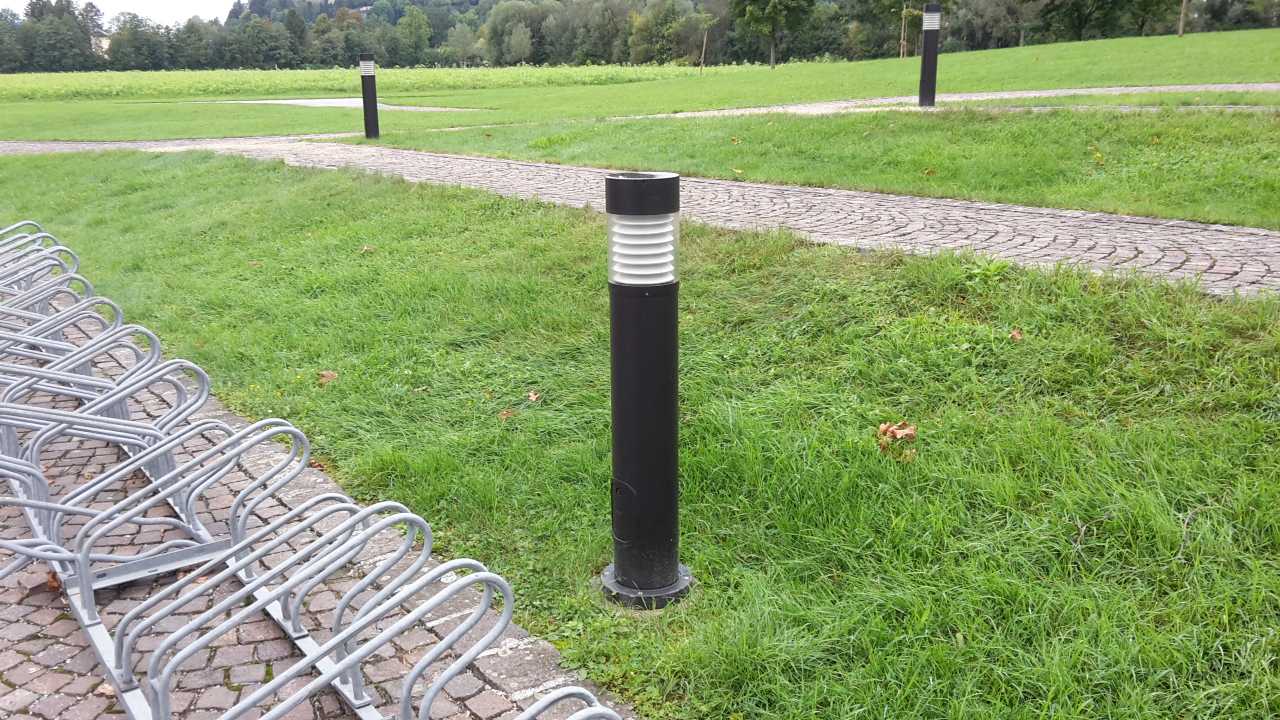
With two trails in Salzburg, we can now welcome Austria as the 9th country with a MCM Trail. The current task of the week presents a task in the field of the surface of a cylinder. It is located in the trail at the natural sciences faculty of the Paris-Lodron University in Salzburg.


Task: Lamp (task number: 1908)

How large is the black painted surface of a lamp without the base plate? Give the result in m². Round to two decimal places.


The pupils first recognize the lamp as cylindrical and then determine the black surfaces. For this, it is necessary to divide the lamp into two cylinders. For the upper small cylinder, the shell surface as well as the cover are calculated, for the lower cylinder only the shell surface. Height and radius need to be measured. Subsequently, the individual surfaces are added and the total painted surface area is obtained.

The task can be assigned to the subject area of ​​geometry and, in particular, geometrical bodies (cylinders) and can be used from class 9 onwards.