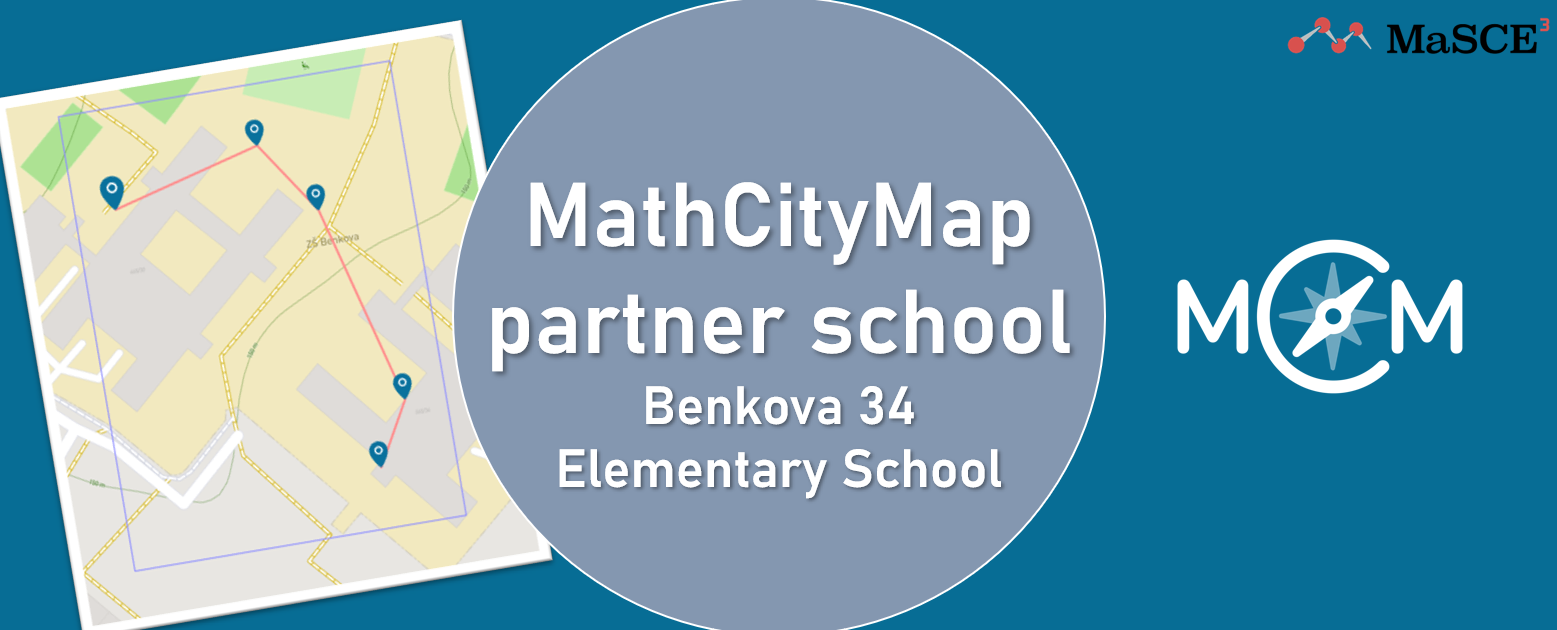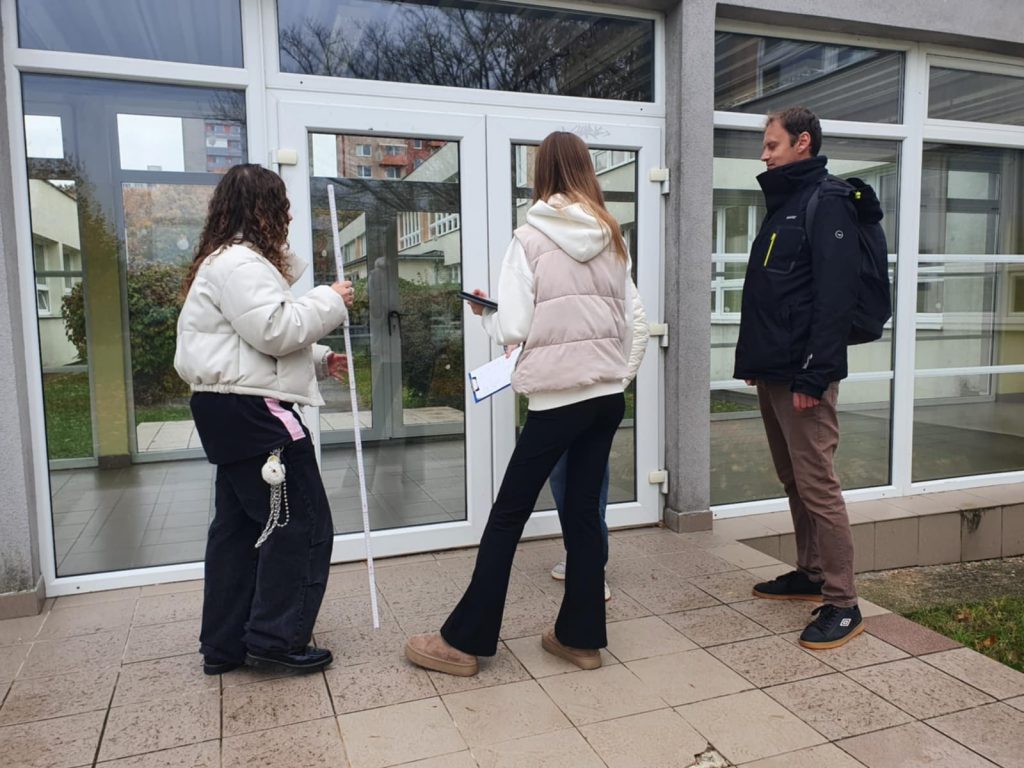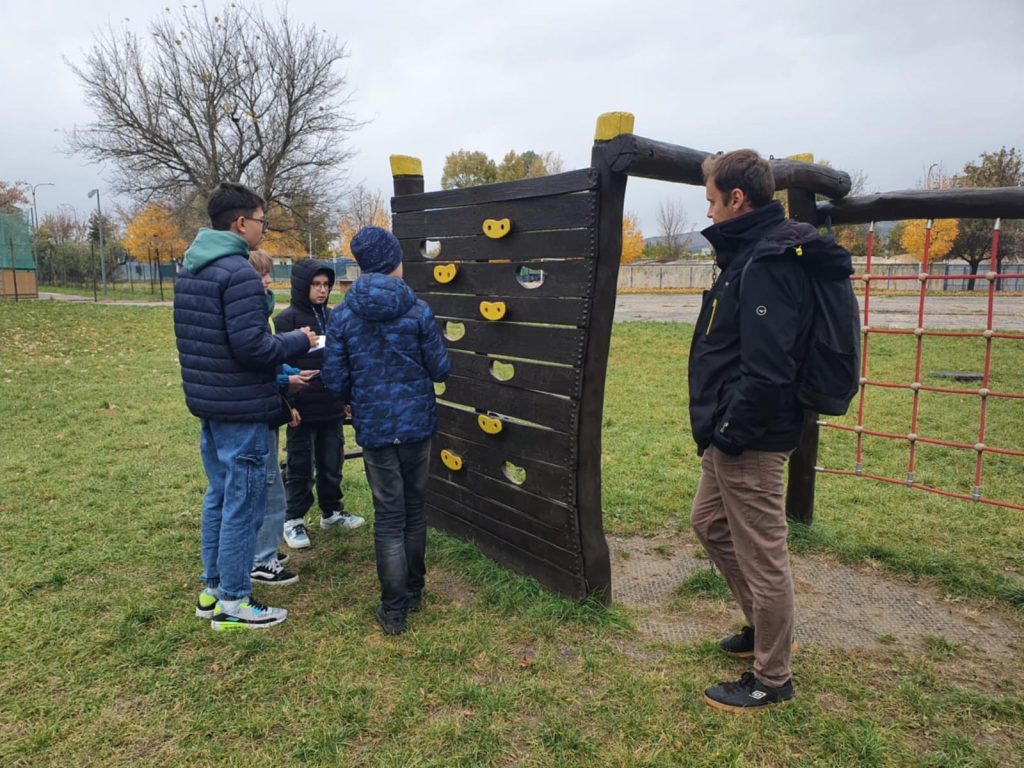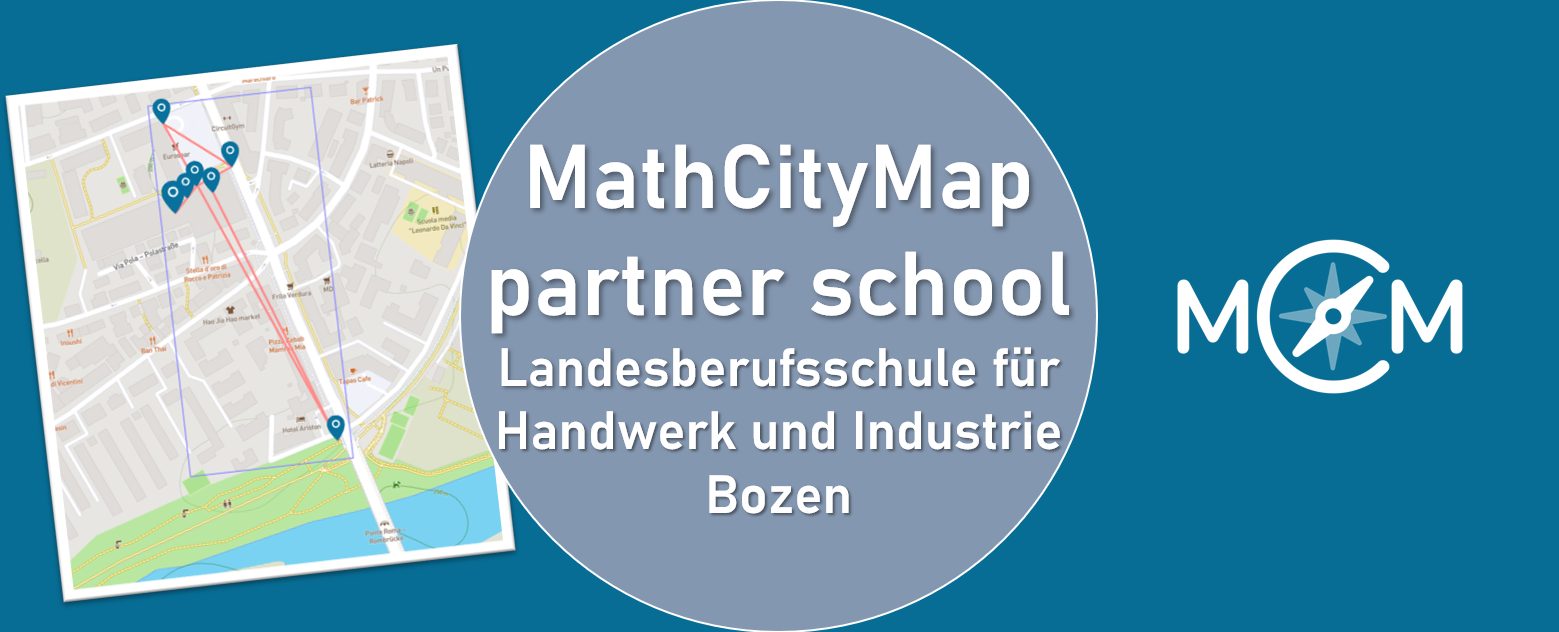
We are very pleased to welcome the Landesberufsschule für Handwerk und Industrie Bozen as a new MathCityMap partner school. After the school’s teachers participated in a MathCityMap training in 2024, the school has now officially published its first two trails:

The feedback from the students has been very positive. Designed as small outdoor learning activities, the trails offer a welcome change from regular classroom lessons. The spacious area in front of the school and the nearby river provide a pleasant outdoor learning environment.

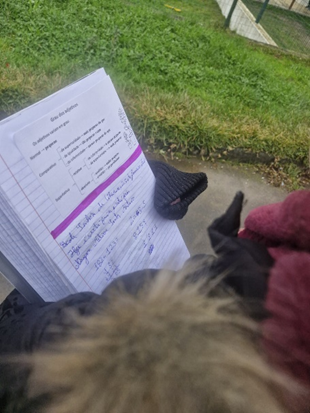
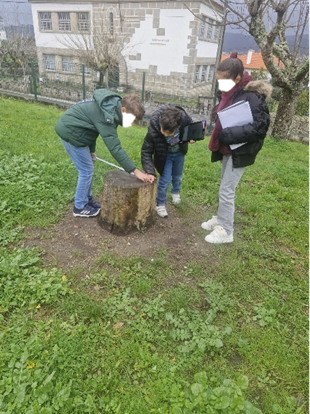
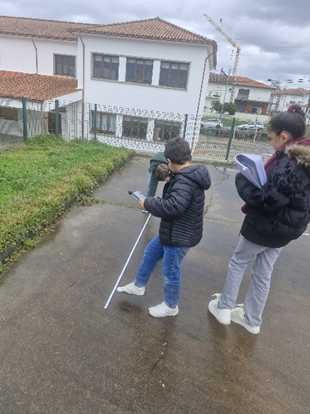
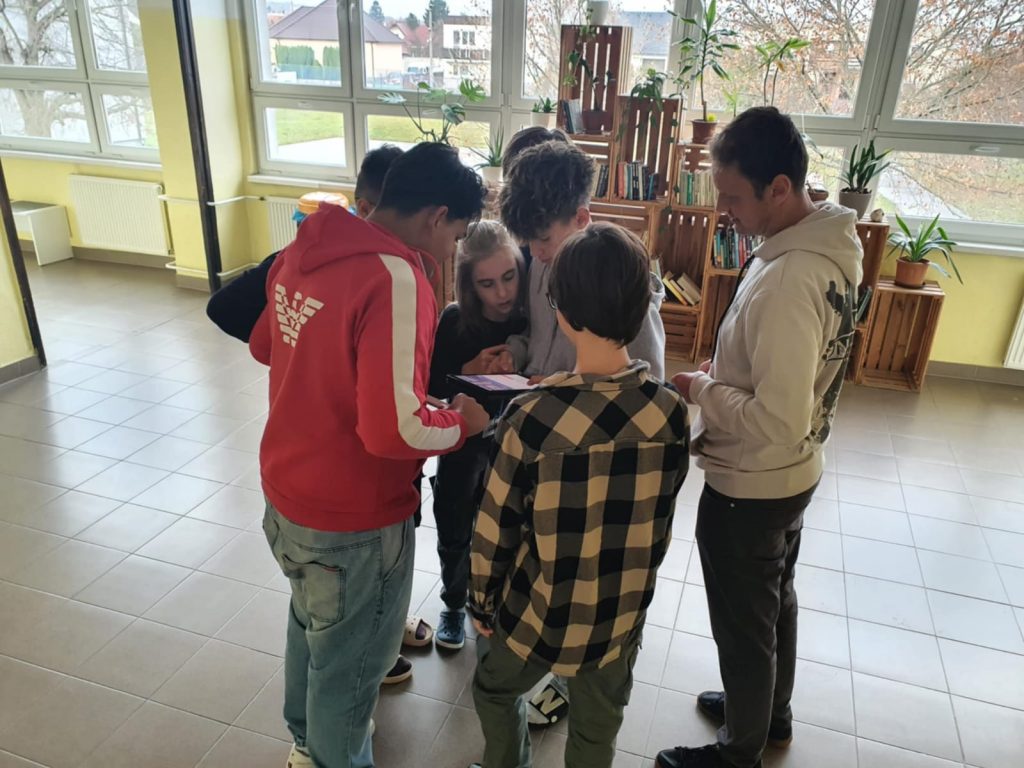
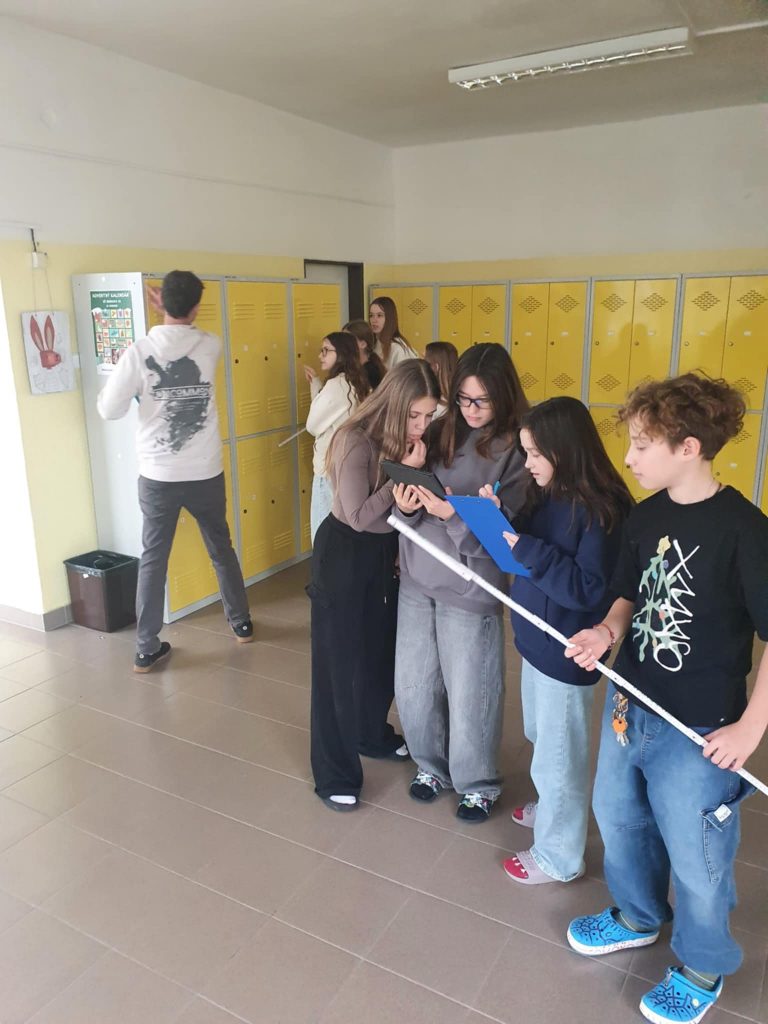
The trails were carried out with two fourth-year classes from the technical school for computer science as well as a basic vocational class. Equipped with the necessary tools, the groups were able to work independently, with occasional input from the teachers when needed. One important takeaway: a short briefing in the classroom makes the on-site activities run much more smoothly.

Thanks to the frequent double lessons, the trails with their seven tasks can easily be completed within one teaching unit – including travel time there and back.

We thank the Landesberufsschule für Handwerk und Industrie Bozen for their commitment and warmly welcome them to the MathCityMap community!

The package with the official partner school badge and the MCM measuring instruments is on its way and we are looking forward to receiving more applications from all over the world.

All further information on the partner school programme and the requirements for application can be found both in the article on the first MCM partner school and on the homepage of our MaSCE³ project.

On Thursday, December 4th, our third MathCityMap Partner School Meeting took place – once again a very enriching exchange on the use of MathCityMap in the classroom.

This time, the focus was on our new feature, the student accounts. With them, students can independently create their own MCM tasks and thus further develop their problem-solving and problem-posing skills. After an overview of other recent MCM updates and a short introduction, there was a hands-on phase during which participants could try out the new feature directly.

The meeting was attended by part of the MCM team, several project partners, and numerous teachers from Slovakia, Portugal, Spain, Germany, and Italy. Participants took the opportunity to ask many questions. We were particularly pleased with the positive feedback and the valuable suggestions for improvement, which will now be incorporated into the further development of the system.

At the end of the online meeting, we took a group photo to capture this successful event.

We would like to thank all participants and are already looking forward to the next meeting!

On the weekend of September 19–21, there was a festive atmosphere on Frankfurt’s Opernplatz: the Polytechnic Society Foundation celebrated its 20th anniversary—and MathCityMap was there!

It was a special honor for us to be part of these celebrations. The foundation recognized the potential of MathCityMap early on and provided us with active support, especially in the early days. We were therefore all the more delighted to be there with our team.

At our booth, we were able to introduce MathCityMap to numerous visitors – from people who happened to be passing by to math enthusiasts to representatives of other projects. Many were interested and enthusiastic about the idea of learning math outdoors.

Away from our booth, the anniversary celebration also offered a diverse and exciting program: numerous initiatives and projects presented themselves and ensured a varied weekend full of exchange, discoveries, and inspiration.

We would like to thank the Polytechnic Society Foundation for the invitation and support. It was a pleasure to be part of this special celebration!

On Friday, June 13, 2025, Frankfurt’s Riedberg Campus once again became a hotspot for science: the Night of Science opened its doors from 5 p.m. until late into the night – and our MathCityMap team was right in the middle of it all with an interactive stand.

Our outdoor location offered the best conditions for our special hands-on offer: the “Night of Science 25” trail. Equipped with measuring materials, a clipboard and the MathCityMap app, many curious guests embarked on a mathematical discovery tour of the campus. The aim was to solve up to 12 tasks – and to look at everyday places such as stairs, benches or building facades through a mathematical lens.

We were delighted with the consistently positive feedback we received – both from those interested in mathematics and from guests who would not describe themselves as fans of maths.

We would like to thank all visitors for the exciting conversations, the interest and the great interaction. Special thanks also go to the Night of Science organization team for making this unique event possible.

See you next year – we are already looking forward to the Night of Science 2026!

Estimados profesores,


¿Le interesa la modelización matemática? ¿O en utilizar herramientas digitales en las clases de matemáticas? Seguramente, ¡porque usted utiliza MathCityMap!

Con esta encuesta nos gustaría obtener una visión más amplia de su experiencia y uso de las tareas de modelización en las clases de matemáticas. El objetivo de la misma es registrar sus necesidades y expectativas en el ámbito de la modelización para un futuro proyecto. Sus comentarios pueden contribuir a un desarrollo más provechoso de las tareas e investigaciones sobre el tema de la modelización en las clases de matemáticas. El tiempo necesario para la encuesta es de unos 10-15 minutos.

¡Gracias por su colaboración!

Encontrará la encuesta (distribuida mediante Google forms) en los siguientes idiomas:

Esperamos su participación hasta el 23 de febrero de 2024 inclusive.

El equipo de MathCityMap ha desarrollado recientemente varios formatos nuevos de tareas que se corresponden con distintos tipos de respuesta. Ahora, MathCityMap ofrece nueve formatos de tareas, según el tipo de respuesta, más la posibilidad de crear subtareas. Todos los formatos de respuesta de tareas se presentan brevemente a continuación. Además, ponemos a su disposición una ruta matemática de ejemplo que incluye tareas con todos los formatos de respuestas. Esta ruta se puede ver en el navegador web aquí o con el código 065522 en la app MathCityMap.


El intervalo es el formato de respuesta «clásico» de las tareas de MathCityMap. Se debe utilizar siempre que sea necesario realizar mediciones, por ejemplo, para determinar una longitud, un área o un volumen.

Intervalo

El formato de respuesta Valor exacto puede utilizarse para tareas de recuento o para problemas combinatorios: ¿Cuántas ventanas ves en la pared de la casa? ¿Cuántas posibilidades tengo de colocar mi bicicleta en este aparcamiento?

Valor exacto

Para plantear más de una pregunta sobre una actividad de medición, se puede utilizar el formato de respuesta Vector (Intervalo). Ejemplo: Determinar la longitud, la anchura y la altura del cubo ilustrado. También se puede aplicar este formato de respuesta para tareas con preguntas relativas a la geometría espacial.

Vector (intervalo)

¡NUEVO FORMATO DE TAREA!

Análogamente, ofrecemos el formato de respuesta Vector (Valor exacto) que puede utilizarse para plantear tareas con varias preguntas a la vez de recuento o de problemas de combinatoria

Vector (Valor exacto)

¡NUEVO FORMATO DE TAREA!

Si la respuesta esperada en una tarea son varios números, pero el orden en el que deben introducirse los números no es importante, se puede utilizar el formato de tarea Conjunto. En la aplicación, sólo se introducen los números en los campos de entrada. Un ejemplo de tarea con respuesta Conjunto se puede encontrar en la ruta matemática de ejemplo mencionada anteriormente.

Conjunto

¡NUEVO FORMATO DE TAREA!

La sección de información es un apartado de las tareas sin campo de entrada en la app. Se implementa para ofrecer datos importantes sobre las tareas, por ejemplo, sobre edificios históricos, personas o hechos de relevancia durante la ruta matemática.

Sección de información

¡NUEVO FORMATO DE TAREA!

Otro nuevo formato de respuesta es Rellenar los espacios en blanco: Dentro de este formato, las respuestas de los huecos se pueden trabajar fácilmente desde las matemáticas al aire libre, por ejemplo, mediante el análisis de objetos en el exterior utilizando un lenguaje técnico, el tratamiento de los datos de los paneles informativos o el planteamiento de preguntas sobre los datos relativos a hechos históricos.
Nota: Utiliza el modo «estricto» si hay que rellenar un número en el hueco.

Rellenar los espacios en blanco

¡NUEVO FORMATO DE TAREA!

Además, los datos requeridos pueden ser respondidos con el formato de opción múltiple. Por tanto, deben darse al menos dos opciones de respuesta, de las cuales al menos una es correcta.

Opción múltiple

El formato de respuesta GPS permite a los usuarios crear tareas en las que los estudiantes tienen que encontrar una posición predefinida (por ejemplo, el centro de los puntos dados) o ubicarse en una figura predefinida (por ejemplo, en un triángulo equilátero).
Nota: Este tipo de tarea funciona mejor en zonas más rurales, ya que la señal GPS suele ser demasiado débil en las ciudades.

Tarea GPS

Por último, ofrecemos la posibilidad de plantear tareas más complejas dividiéndolas en subtareas opcionales u obligatorias. Un ejemplo de uso de subtareas es el que aparece en la ruta matemática de ejemplo anteriormente mencionada.

Subtarea

¡NUEVO FORMATO DE TAREA!

La app MathCityMap permite a los estudiantes de todas las edades desarrollar sus habilidades matemáticas mientras analizan distintos objetos que pueden encontrarse en el patio escolar, en el parque de la ciudad o en cualquier otro lugar. Gracias a MathCityMap, los estudiantes pueden aplicar sus conocimientos matemáticos fuera del aula y pueden descubrir su propio entorno desde una perspectiva matemática. 

La app MathCityMap es gratuita y está disponible tanto para Android como para iOS. En este vídeo se explicará cómo funciona la MathCityMap.

¡Deseamos que lo disfrutéis!

Haga clic aquí para ver el video en YouTube