Task of the Week: Number of Windows

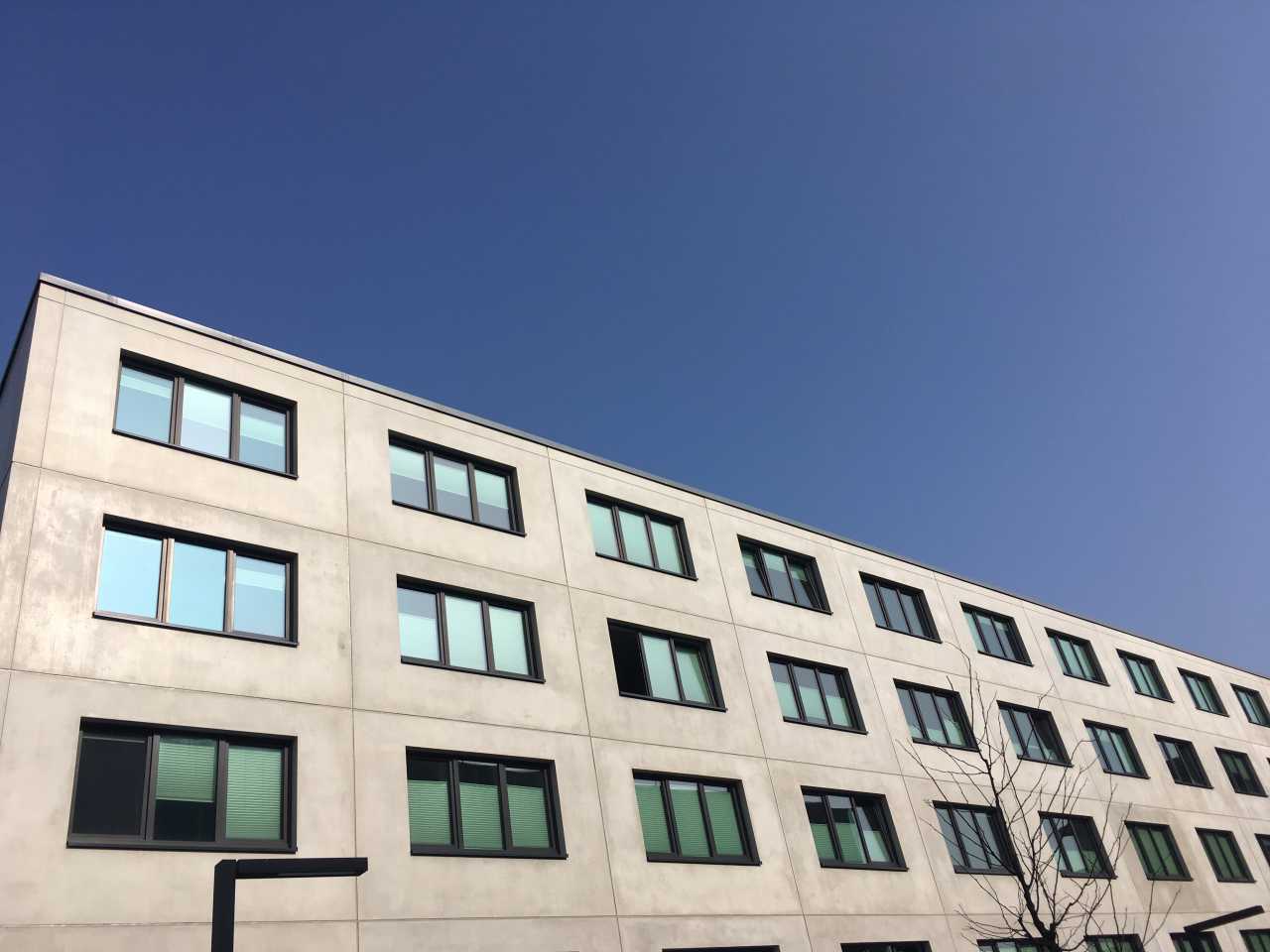
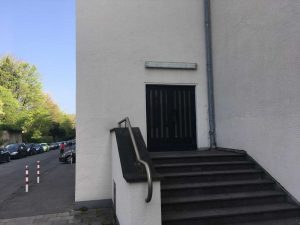
While during the past few weeks we often presented tasks which can be solved from secondary level, the present Task of the Week shows that the MathCityMap project can already be used from primary school. Task: Number of Windows (task number: 1191) How many window panes can be seen on this front of the house? To solve the […]

Task of the Week

While during the past few weeks we often presented tasks which can be solved from secondary level, the present Task of the Week shows that the MathCityMap project can already be used from primary school.


Task: Number of Windows (task number: 1191)

How many window panes can be seen on this front of the house?


To solve the problem, it is possible to count the window panes. However, this takes a long time so that the students at best have the idea to count only the panes in a row as well as the number of rows and solve the task by means of a multiplication. The basic representation of the multiplication is addressed as a repeated addition. Further, the students must be aware that the number of window panes and not the windows is asked. For a window, therefore, three panes must be submitted if the students firstly count the number of windows.

The task can be classified in the areas of multiplication and number and can be solved from class 4.

Task of the Week: Pavilion

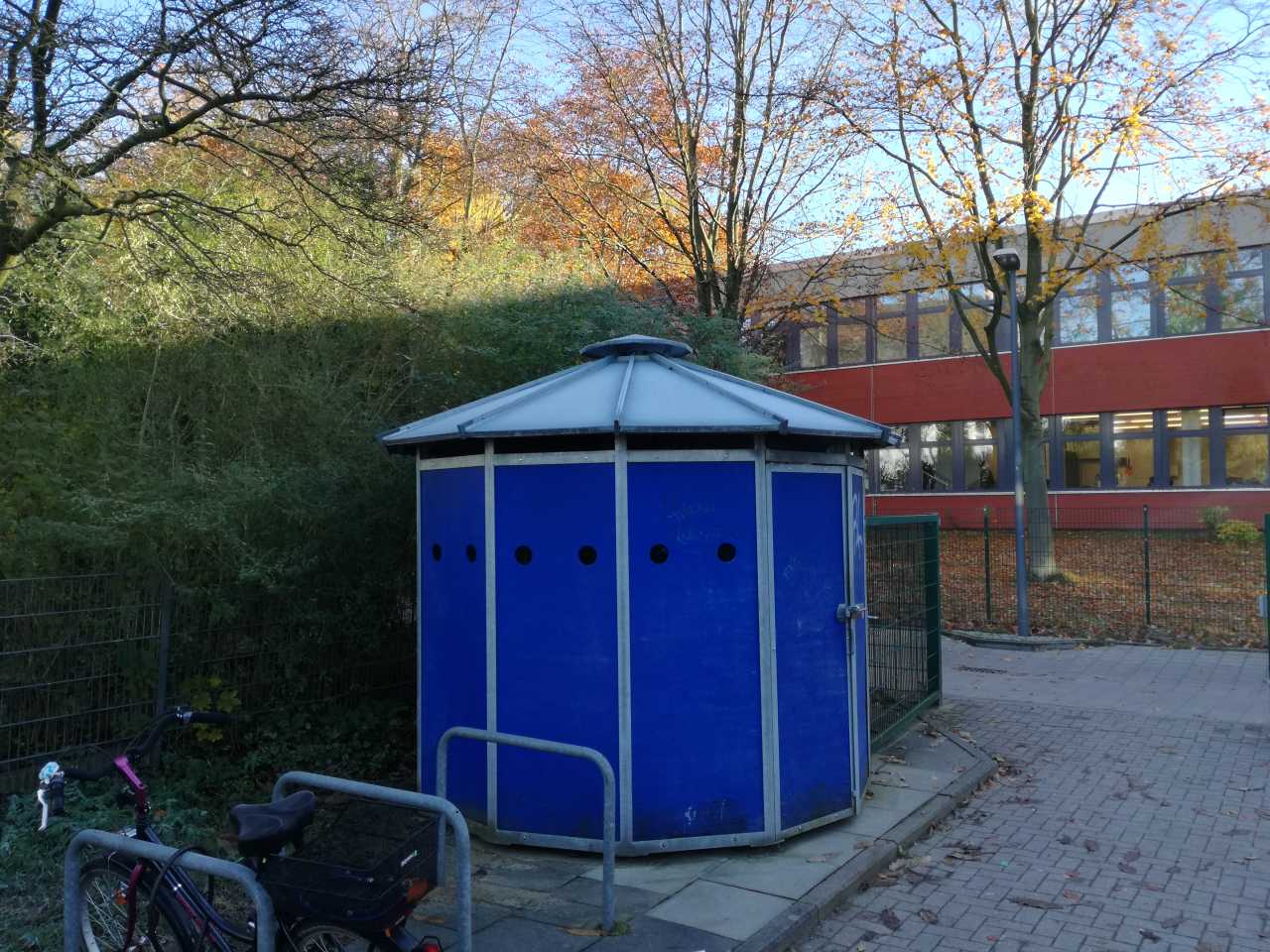
The present task of the week is about a geometric question. It involves the area calculation of the roof surface of the illustrated pavilion. Task: Pavilion (task number: 665) Determine the roof surface of the pavilion! Give the result in m². For this purpose, the pupils should recognize that the roof surface consists of several isosceles […]

Task of the Week

The present task of the week is about a geometric question. It involves the area calculation of the roof surface of the illustrated pavilion.


Task: Pavilion (task number: 665)

Determine the roof surface of the pavilion! Give the result in m².


For this purpose, the pupils should recognize that the roof surface consists of several isosceles triangles. It is therefore sufficient to measure the height and base of one triangle and to calculate the surface content using the formula for the area content of triangles. The total area can then be determined by multiplication by the number of triangles.

In order to solve the problem, the pupils must therefore be familiar with the area calculation for triangles. In the task, the “geometrical view” is trained by the triangular shape being recognized in a composite figure. Here, an essential aspect of outdoor mathematics is found, namely the recognition of mathematical concepts and objects in reality, as well as the use of mathematical knowledge to solve everyday questions. Solving the task is possible from class 6 onwards with the topic triangles.

Task of the Week: Combinatorical Stair

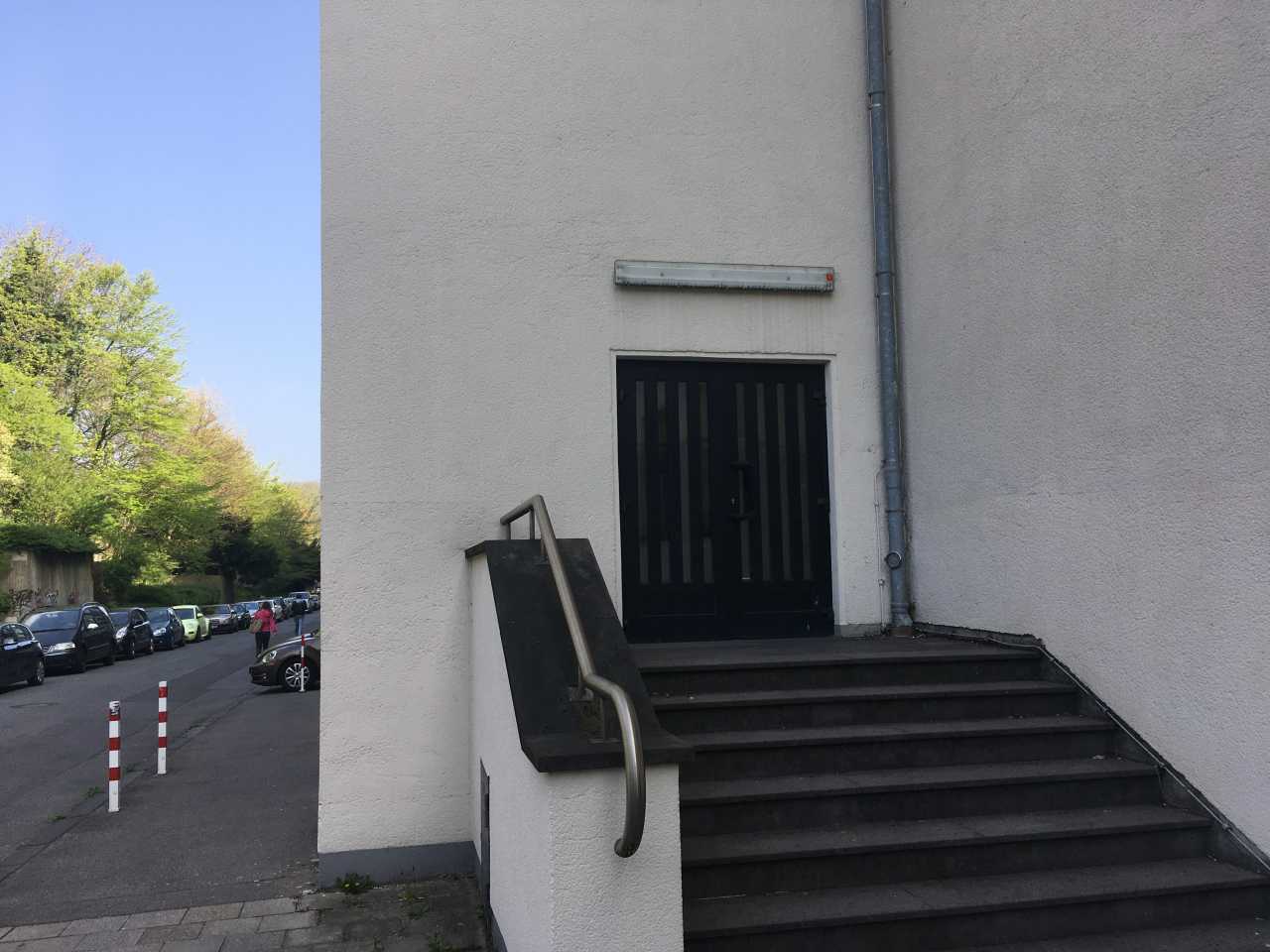
The focus of today’s Task of the Week is a combinatorial question. In addition to the typical combinatorical question for the number of possibilities, an application of the Fibonacci numbers, which can be discovered by the students, is included as well. Task: Combine Staircase (task number: 1199) How many options are available to climb the stairs […]

Task of the Week

The focus of today’s Task of the Week is a combinatorial question. In addition to the typical combinatorical question for the number of possibilities, an application of the Fibonacci numbers, which can be discovered by the students, is included as well.


Task: Combine Staircase (task number: 1199)

How many options are available to climb the stairs by climbing one or two steps per step? The steps can also be combined.


There are various possibilities for solving the problem. On the one hand, it is possible to systematically record different combinations of 1 and 2 steps. In doing so, the students can use the stairs directly and conclude which combinations are possible. In another consideration, the fact that the last step comprises either one step or two steps is used. Leaving this last step, the number of possibilities for a staircase with n steps can be determined using the possibilities for n-1 and n-2 steps. This reasoning leads to the Fibonacci numbers, a recursive sequence in which a number results from the addition of its two predecessors.

The task is therefore a successful example of “hidden” mathematics in simple everyday objects. It offers the possibility to go deeper into the topic Fibonacci numbers or to let the students discover them. At the same time, the problem can also be solved by systematic testing, so that it can be used from class 6. Its topic belongs to combinatorics.

Task of the Week: Cylinder on the Rhine

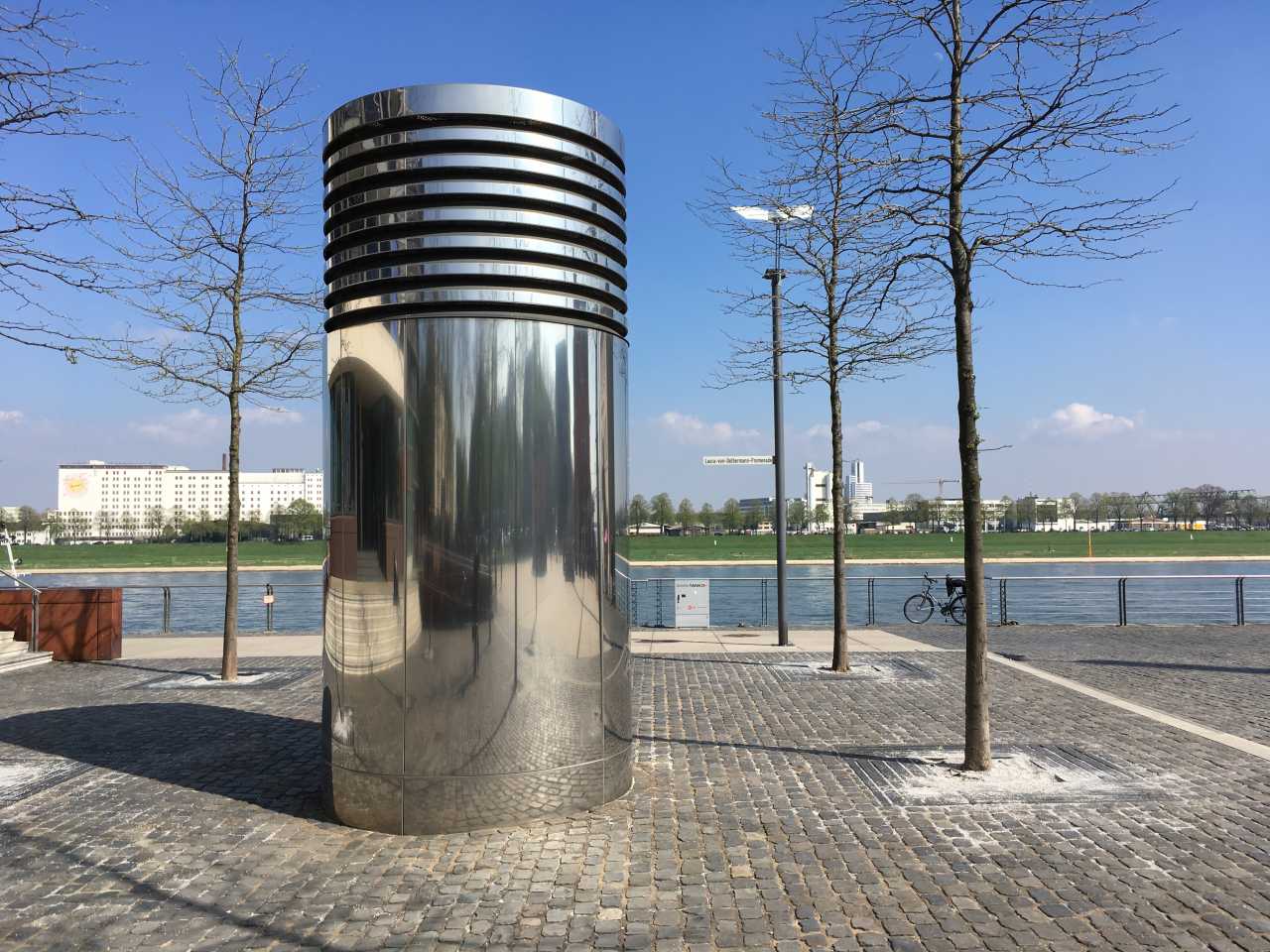
The present task of the week is about geometric figures. In the task “Cylinder on the Rhine”, located in Cologne, the aim is to determine the radius of a cylinder by means of measurements or the relationship between radius and circumference of a circle. Task: Cylinder on the Rhine (task number: 1183) Determine the radius of […]

Task of the Week

The present task of the week is about geometric figures. In the task “Cylinder on the Rhine”, located in Cologne, the aim is to determine the radius of a cylinder by means of measurements or the relationship between radius and circumference of a circle.


Task: Cylinder on the Rhine (task number: 1183)

Determine the radius of the cylinder. Give the result in m.


The task can be solved in different ways. One possibility is to use the relationship between the circumference of the circle and the diameter or radius. The result is then obtained by measuring the circumference. Alternatively, the radius can be determined by means of the inch post and suitable application (here the right angle plays a role). The task can therefore be classified into the topic circle, in particular the formula for the calculation of the circumference. The task shows that mathematical tasks can often be solved in various ways without calculation. Although the task does not require any profound knowledge of the cylinder (apart from the fact that the base is circular), it can be precisely in this aspect, and a connection of planar and spatial geometry can be made clear.

It can be used starting from class 9.

Task of the Week: The Hand

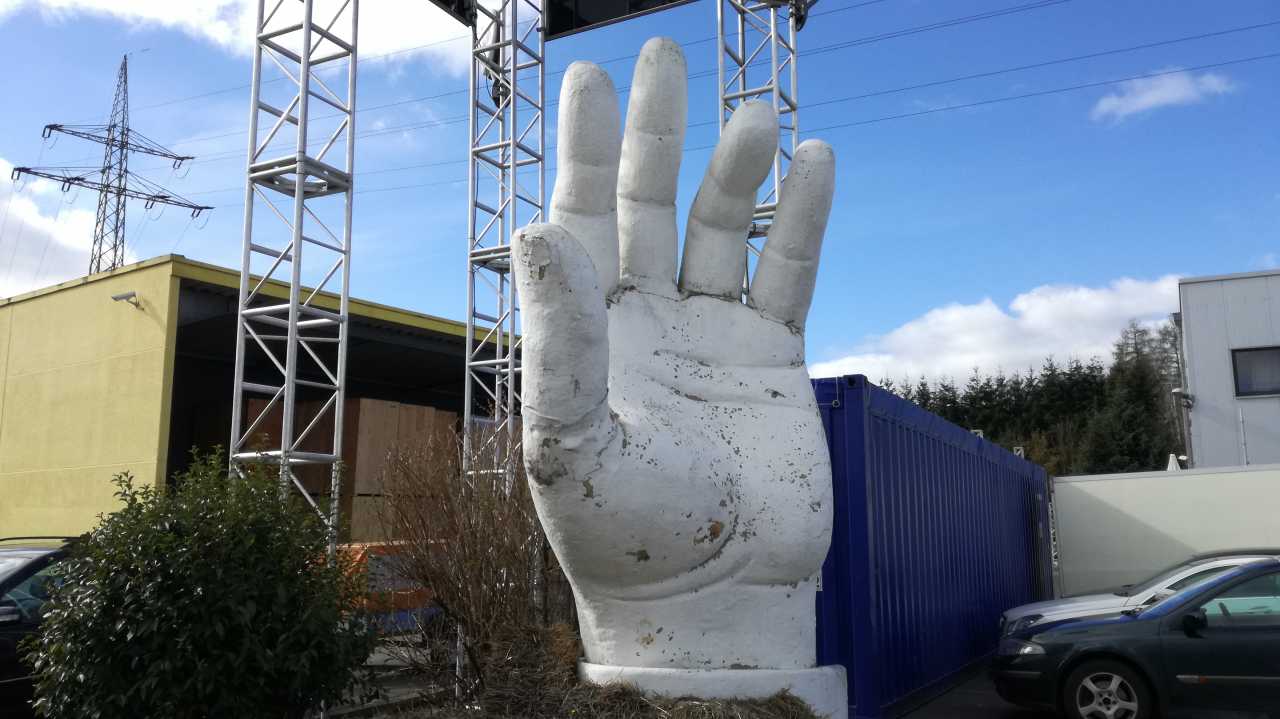
The present task of the week is about a sculpture in form of a hand. In this form, it can be found in the Dillfeld Trail in Wetzlar. The aim of the task is to determine the body size of the person to whom this hand would fit.  Task: The Hand (task number: 1092) How big […]

Task of the Week

The present task of the week is about a sculpture in form of a hand. In this form, it can be found in the Dillfeld Trail in Wetzlar. The aim of the task is to determine the body size of the person to whom this hand would fit.


 Task: The Hand (task number: 1092)

How big would a man be in meters with a hand of this size?


The pupils should measure a finger that is easily accessible to them. Especially the thumb offers itself for it. How can the thumb size be related to the body size? For conversion, the own body can play a role by correlating the thumb size and the body size. Then the body size of the human with the shown hand can be determined. The students use the idea of ​​measuring their own body and the hand sculpture. In particular, relations and sizes play a role. The task can be used from class 6 on with the development of relations.

Task of the Week: Hydrant sought

The current “Task of the Week” is about the hydrant sign, which might have been noticed frequently in everyday life. By means of them, hydrants can be quickly and precisely located, e.g. for fire-fighting operations. But how exactly is such a sign read? With this question, the students are confronted in the task “Hydrant sought” from the trail “Campus Griebnitzsee” […]

Task of the Week

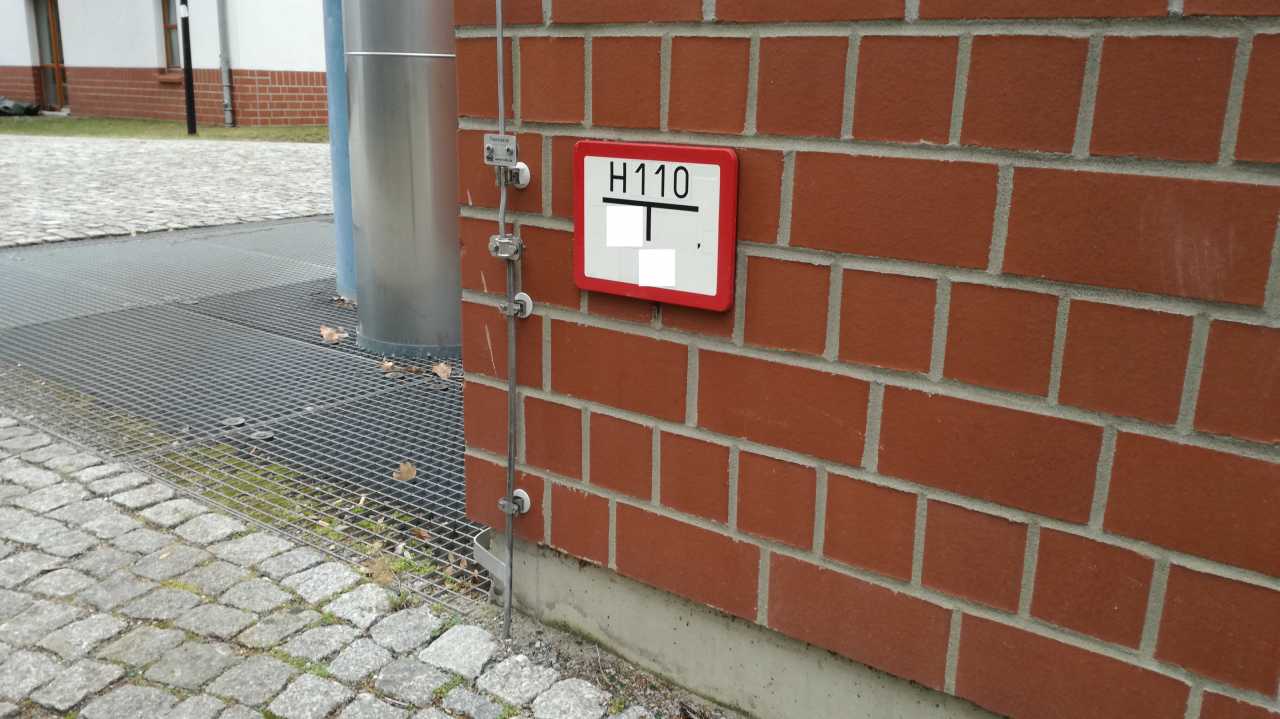
The current “Task of the Week” is about the hydrant sign, which might have been noticed frequently in everyday life. By means of them, hydrants can be quickly and precisely located, e.g. for fire-fighting operations. But how exactly is such a sign read? With this question, the students are confronted in the task “Hydrant sought” from the trail “Campus Griebnitzsee” in Potsdam.


Task: Hydrant sought (task number: 1047)

On the house is a reference to the next hydrant attached (red-white sign). How far is the hydrant from the sign in meters? Determine the result to the second decimal place. 


In order to solve the problem, the sign must at first be interpreted correctly. If the students do not know it, the hints help them. The indication on the sign is to be read so that one runs a certain length in meters in one direction (left/right) and then turns at right angles and again runs the length of the second number in meters. The situation can thus be described and solved using a right-angled triangle. The two indications on the hydrant sign (in the picture, they are made unrecognizable in order to ensure the presence of the pupils) are the cathets, while the direct distance corresponds with the hypotenuse. This can be determined by means of the Theorem of Pythagoras. Further, the solution can be determined and valued through measuring the distance to the hydrant. The problem is therefore to be assigned to geometry and can be used as a practical application for this from class 9 onwards with the development of the Theorem of Pythagoras. Since hydrant signs can be found in many places, the task can easily be transferred to other sites and allows mathematical operations in the environment in an easy way.

Task of the Week: On large Feet

This week we would like to present the task “On a big Foot”. It is located close to the main railway station in Hamburg and is part of the trail “In and around St. Georg”. Task: On large feet (task number: 647) These figures are created by the contemporary German sculptor Stephan Balkenhol. I would […]

Task of the Week

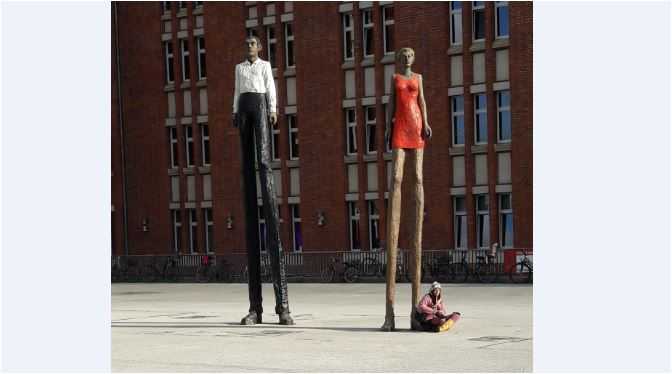
This week we would like to present the task “On a big Foot”. It is located close to the main railway station in Hamburg and is part of the trail “In and around St. Georg”.


Task: On large feet (task number: 647)

These figures are created by the contemporary German sculptor Stephan Balkenhol. I would like to know from you: What shoe size does the man have? For shoe sizes, there are four common systems worldwide. In Germany, European shoe sizes are the usual measure. They are based on the so-called “Parisian Stitch”. The stitch is a length measure with which a shoemaker specifies the length of a stitch and thus also the shoe size of the complete shoe. A French stitch or Parisian stitch is ⅔ centimeters long. The shoe last is a piece of wood, plastic or metal which is modeled on the shape of a foot and used to build a shoe. Since the feet should have some space, the length of the shoe last corresponds approximately to the foot length + 15 mm.


For the task, the pupils first measure the length of the man’s shoe and calculate the length in “stitches” so that the European shoe size can be specified. A major component of the task is the measurement and conversion of quantities. In doing so, the unity of the stitch, which should be unknown to most students, is used. It can be used from class 6 onwards. In addition, the first proportional basic ideas can be formulated for the conversion and could be a suitable transition to the proportionality and the rule of three.

The task was created by Dunja Rohenroth. She has already been able to test this task with her students and sees in this task the special advantage that the result cannot be solved by means of an internet search. The aspects of the presence and activity of the pupils are thus particularly emphasized.

Task of the Week: Serpent Surface

Today’s “Task of the Week” leads to Lyon, France, included in the trail “IFE”. It deals with an area calculation of a particular kind and shows in an exciting way which varied mathematical ideas are in everyday objects.  Task: Serpent Surface (task number: 1129) The metal railing of the fire stairs is in the form of a […]

Task of the Week

Today’s “Task of the Week” leads to Lyon, France, included in the trail “IFE”. It deals with an area calculation of a particular kind and shows in an exciting way which varied mathematical ideas are in everyday objects.


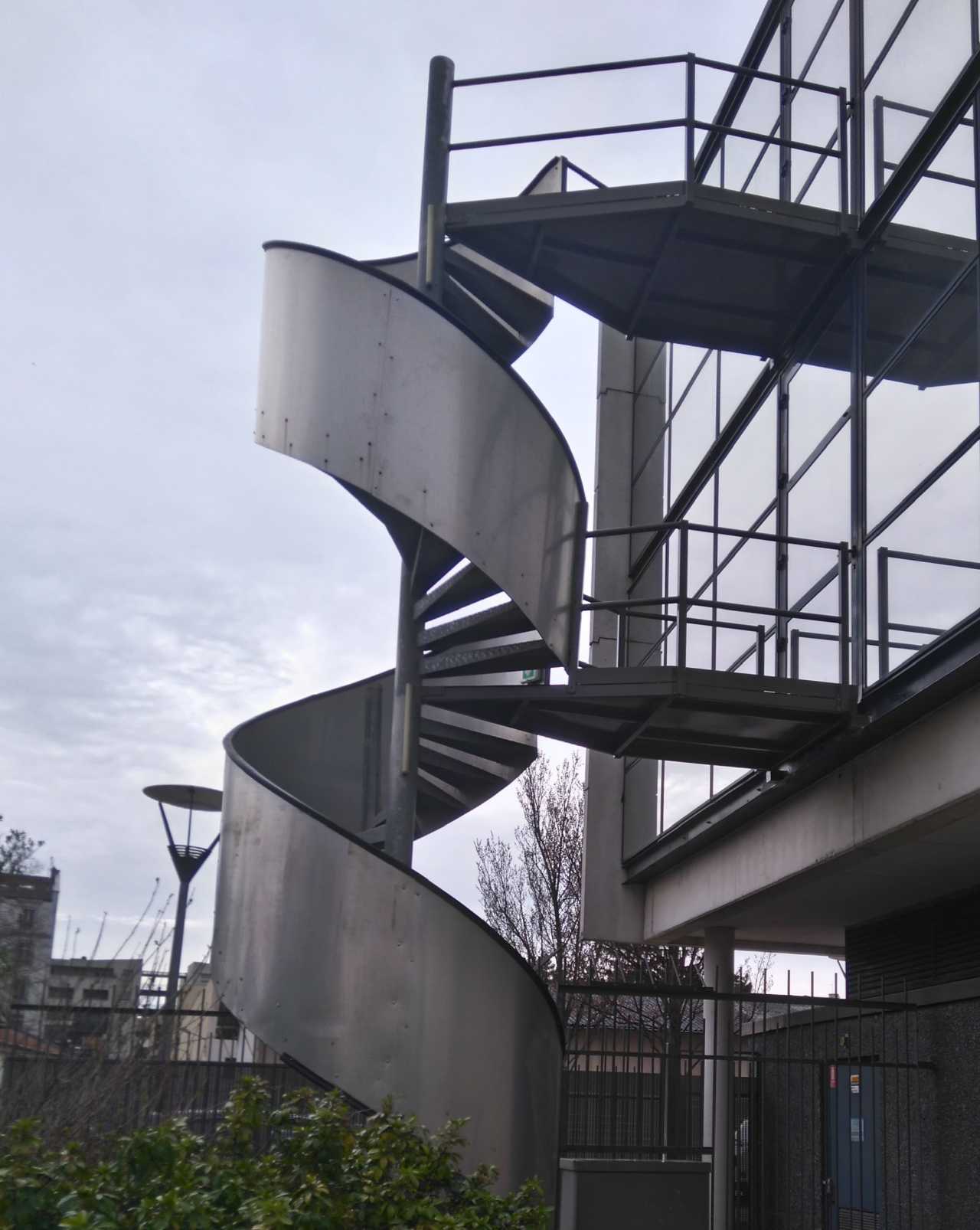
 Task: Serpent Surface (task number: 1129)

The metal railing of the fire stairs is in the form of a serpent line. Calculate the surface area in m².


 Before the students can begin to solve the problem, preliminary considerations are necessary, e.g. whether the slope of the railing is relevant or which formulas can be used to determine the length of the railing. The pupils should recognize the course of the serpent line as circular. In the case of two rotations of the staircase, the length of the railing corresponds to the double circumference of the circle with the step length as radius. With help of the circumference and height of the railing, the surface area of ​​the serpent surface can be determined.

This is a geometric problem which combines the subcategories “space and form” and “measuring” by recognizing geometric structures in the environment as well as measuring the sizes and using them for calculations. The task is assigned in particular to the theme “circle” and can thus be used with treatment of the formula for the circle circumference from class 8 onwards.

In addition, the task shows that many objects can motivate a wide range of questions. Besides the question of the surface area, it would for example be possible to calculate the slope of the railing.

Task of the Week: Illumination of the Castle Garden

This week the “Task of the Week” focuses on a typical application of the intercept theorems. In particular, it is about the height determination of objects using the interception theorems. This task type can be transferred to many different objects and can therefore be found in further MathCityMap trails. The here described example is about […]

Task of the Week

This week the “Task of the Week” focuses on a typical application of the intercept theorems. In particular, it is about the height determination of objects using the interception theorems. This task type can be transferred to many different objects and can therefore be found in further MathCityMap trails. The here described example is about the height determination of the lanterns in the garden of Erlangen’s castle.


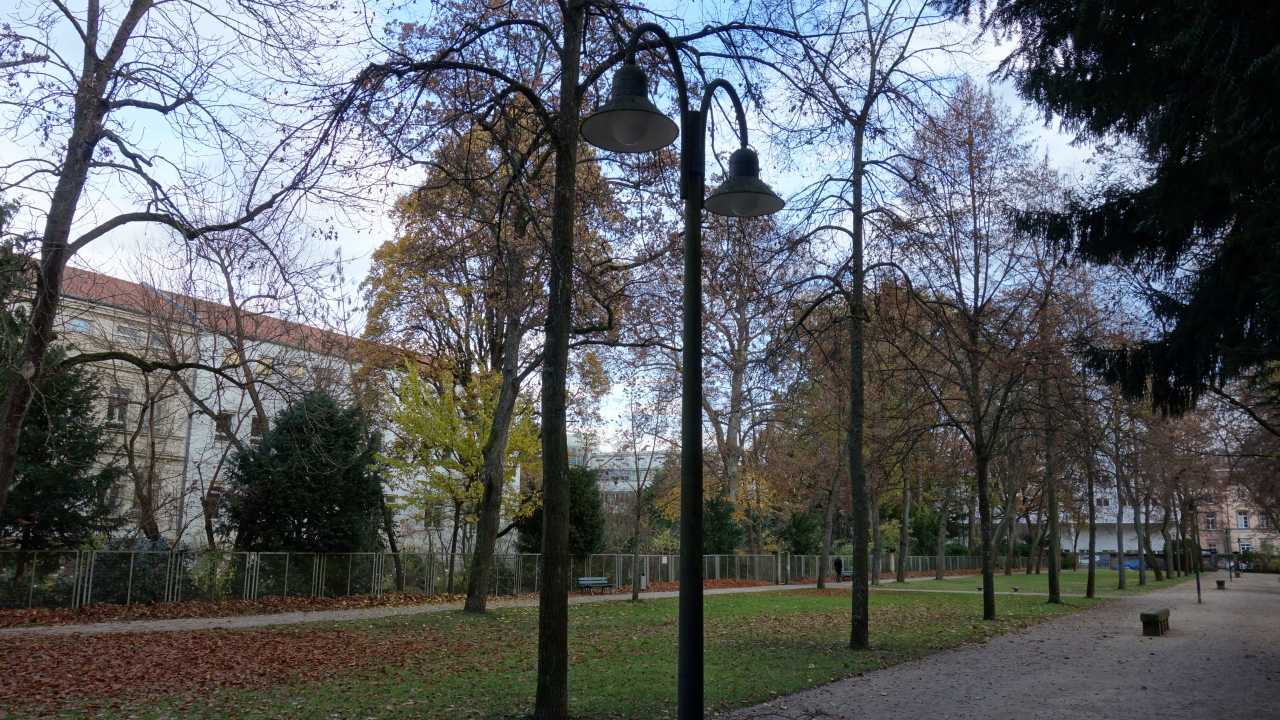
Task: Illumination of the Castle Garden (task number: 709)

Determine the height of the two-armed lamps in the castle garden in the unit cm.


To solve the problem, the second intercept theorem is required. For this purpose, the pupils position themselves a few meters away from the object and fix the object. The intercept theorem can then be applied using the measuring stick. For this, the eye height as well as the distance to the object must be measured. With the arm outstretched, the measuring stick is held so that its tip coincides with the upper end of the lantern. The length of the arm and the scale length, which corresponds to the height of the lantern from the height of the eye, lead to the height of the lantern.

This is a problem-solving situation in which initially missing values have to be determined by a suitable initial situation. The application of the interception theorem can in this case be facilitated through the preparation of a sketch. The task is particularly suited to show students the practical application of the interception theorem and to give a meaningful content to the calculus.

Task of the Week: Monument Erlangen/Brüx

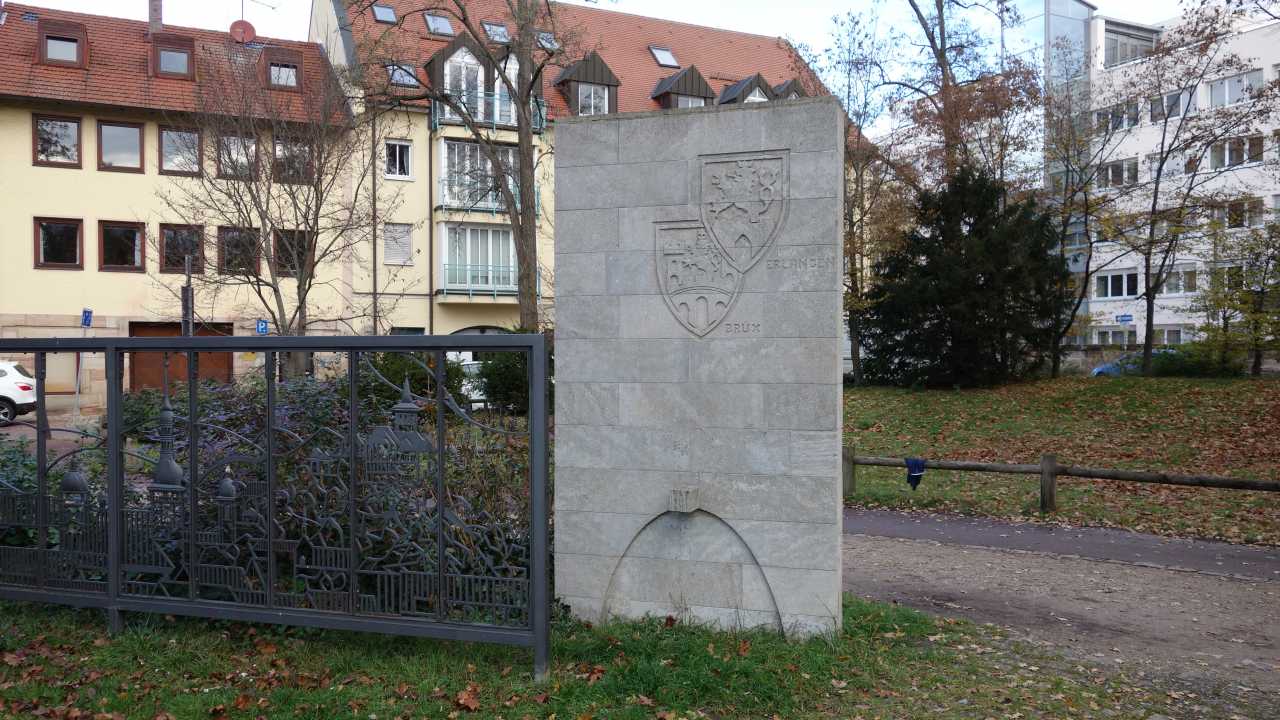
This time, the “Task of the Week” is part of the trail “Rund um den Erlangener Schlosspark”. It is called “Monument Erlangen /Brüx” with task number 704. Thematically, the task can be integrated into the topic parables and is therefore suitable from grade 9. Task: Monument Erlangen/Brüx Examine whether the “curve” in the lower quarter […]

Task of the Week

This time, the “Task of the Week” is part of the trail “Rund um den Erlangener Schlosspark”. It is called “Monument Erlangen /Brüx” with task number 704. Thematically, the task can be integrated into the topic parables and is therefore suitable from grade 9.


Task: Monument Erlangen/Brüx

Examine whether the “curve” in the lower quarter of the stone monument is a parable y= -ax². If not, enter a=0 as solution, otherwise enter the calculated value of a.

The task was written by Jürgen Hampp. In the following interview, he gives an insight into the idea behind the task and the aim of the task. At this point, we would like to take the opportunity to thank Mr. Hampp for his answers.

What made you consider including this task into the trail?

My concern was to develop a trail which is on the one hand easy to access in walking distance from our school, the Christian-Ernst-Gymnasium in Erlangen, and on the other hand leads through mostly car-free areas. Of course, the possible objects are limited. Under this perspective, the monument Erlangen/Brüx has an optimal position, the measuring is riskless – one does not have to climb etc. – and only simple resources are needed.

Where do you see the characteristic of the task? Which skills and ideas are especially supported?

I want to train the “mathematical view”, e.g. the recognition of mathematical objects in everyday life, and the activity with these objects with help of the methods which are known from class. This object mainly supports the competence branch K3 “Mathematical modelling”. Here, quadratic functions (topic in grade 9) present themselves. I did not want to use the common tasks with water fountains as they might be out of use, the water pressure may vary and the measuring is difficult. For me, the special attraction of this task is that a plain solution – as for usual schoolbook exercises – does not exist. Inaccurate measuring at the object or discrepancies at the object require skillful forming of averages and approximated values.