Task of the Week: A Giant from University

In Freiburg, student teacher Meryem Moll has created the task “The giant in front of the Albert-Ludwig University” which we present today. The aim of the task is to estimate the size of a statue: How tall would the statue pictured be if it stood up?  In the following interview, Meryem Moll talks about her […]

Task of the Week

In Freiburg, student teacher Meryem Moll has created the task “The giant in front of the Albert-Ludwig University” which we present today. The aim of the task is to estimate the size of a statue: How tall would the statue pictured be if it stood up?  In the following interview, Meryem Moll talks about her studies, MathCityMap and the task.


How did you come across the MathCityMap project? How do you use MCM?

I came across the MCM app while searching for a topic for my bachelor’s thesis in mathematics at the University of Education in Freiburg in the bachelor’s degree for primary education.

I am very interested in the meaningful use of digital media in elementary school as well as gamification of lessons, which is why my supervising lecturer made me aware of the MCM project.  My bachelor thesis was about how the process-related competencies “problem solving” and “modeling” can be promoted already in elementary school with the help of the MCM app.

I think working with the app is great, especially because it is also very naturally structured and easy to use, which is why I also think it can be used profitably for elementary school students. For my future teaching as a math teacher, it’s important to me that the children see a personal benefit and meaning behind the math tasks at school or in math in general, and that they apply them to their own learning. This is something that apps like the MCM app can contribute to enormously, as students nowadays grow up with digital media and these can be used in such a meaningful way.


What can the children learn by solving the task?

In the task “The giant in front of the Albert-Ludwig University”, I was concerned with the learners being able to decide which parts of the statue’s body are relevant for measuring the height of the body, as well as the correct use of or handling of measuring devices (meter stick/tape measure).

In addition, the children should use their previous ideas of size with the task by first estimating the size of the giant and then also comparing it with their own height through a personal reference. In general, however, I was primarily concerned that the children should be able to experience application-based math lessons with the help of the trail and learn to transfer the “theory” from the classroom to reality, thereby deepening their understanding of it.
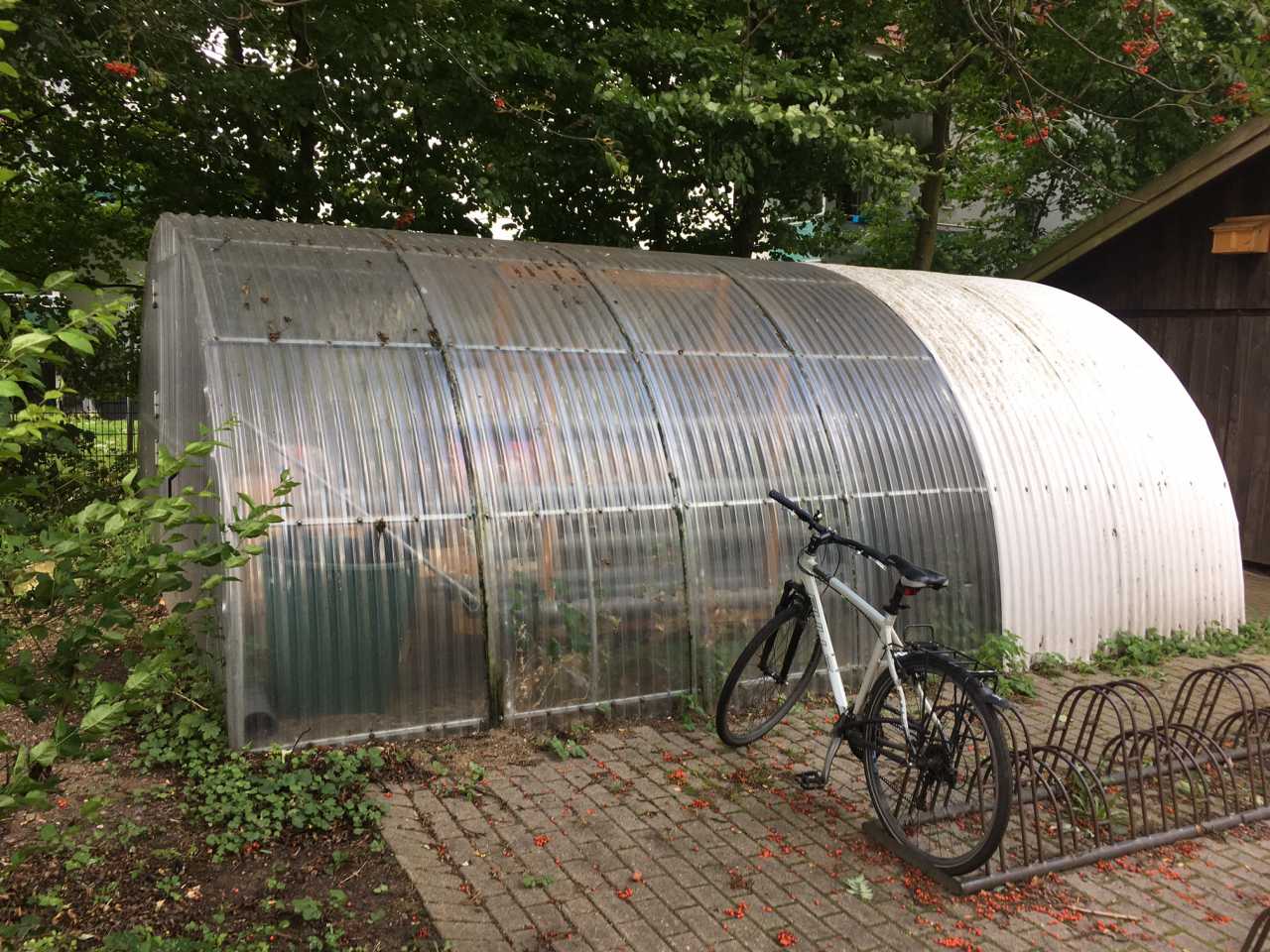
Task of the Week: Arched Greenhouse

As a task creator for MathCityMap, it is important to look at the environment through “mathematical glasses”. Thus, buildings become cuboids, lawns become polygons or – as in the current task of the week – greenhouses become half cylinders. Task: Arched greenhouse (task number: 1950) Calculate the material requirement for plastic for the greenhouse. Give […]

As a task creator for MathCityMap, it is important to look at the environment through “mathematical glasses”. Thus, buildings become cuboids, lawns become polygons or – as in the current task of the week – greenhouses become half cylinders.


Task: Arched greenhouse (task number: 1950)

Calculate the material requirement for plastic for the greenhouse. Give the result in m².


When solving the task, students’ mathematical view is also taught. This involves the recognition of the object as a lying half cylinder. Once this has been achieved, radius, the circumference of the semicircle and height must be measured, so that the material consumption can be calculated. This corresponds to the surface of the half cylinder, which can be determined by means of formulas for the area of ​​a circle and the surface of a cylinder.

Task of the Week: Jacobean Pilgrim

Today, we would like to introduce you a task from Speyer, which was created there by Katalin Retterath. It is about the famous Way of St. James, which leads through the city to Santiago de Compostela. Task: Jacobean Pilgrim (task number: 1614) Measure/estimate the step of the Jacobean Pilgrim. How many steps would he have […]

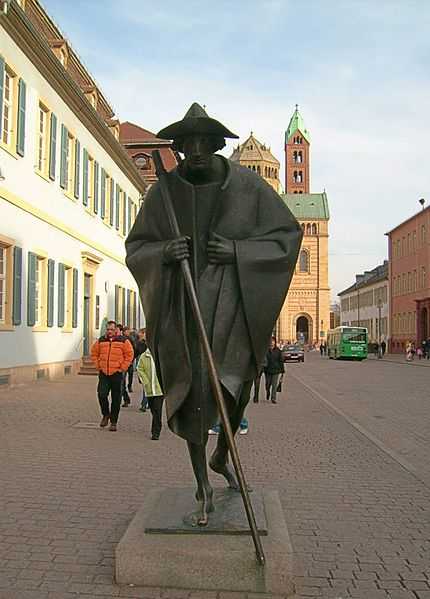
Today, we would like to introduce you a task from Speyer, which was created there by Katalin Retterath. It is about the famous Way of St. James, which leads through the city to Santiago de Compostela.


Task: Jacobean Pilgrim (task number: 1614)

Measure/estimate the step of the Jacobean Pilgrim. How many steps would he have to take if he were to travel the 2,500 kilometers to Santiago de Compostela?


How did you get the idea to create MathCityMap?

I am a consultant for teaching development in mathematics at the Pedagogical State Institute in Rhineland-Palatinate. For a number of years, we have been developing mathematical rallies, which are well received by both our pupils and the training events. First we experimented with LearningApps, then with Actionbound – both were OK, but not really satisfactory. We have become acquainted with MathCityMap and we would like to introduce the MathCityMap project here.

What are the mathematical competences and contents associated with the task?

Students must estimate and/or measure, work with large numbers. The task is solved by a group – thus, communicating plays a great role and if the students explain their their solution to one another (which would be desirable), then also argue.

Has the task already been tested by students or did you receive feedback in other forms?

The task itself has been tested by students (many different classes), but still with Actionbound. The students were able to solve the problem without major (content) difficulties – with the units and number of zeros, however, it was not so good. I have only entered two-three tasks at MathCityMap to test the software. A test of the tool will be considered in spring.  

The MCM team thanks for the interview and is looking forward to further tasks in Speyer!

Task of the Week: Spider Web

While searching for suitable MathCityMap tasks, creativity and a focus for mathematics in the environment are required. This is also shown by the current Task of the Week, created by Stefan Rieger, in which a climbing frame is converted into a math task. Task: Spider web (task number: 1662) How many meters of rope does […]

Task of the Week

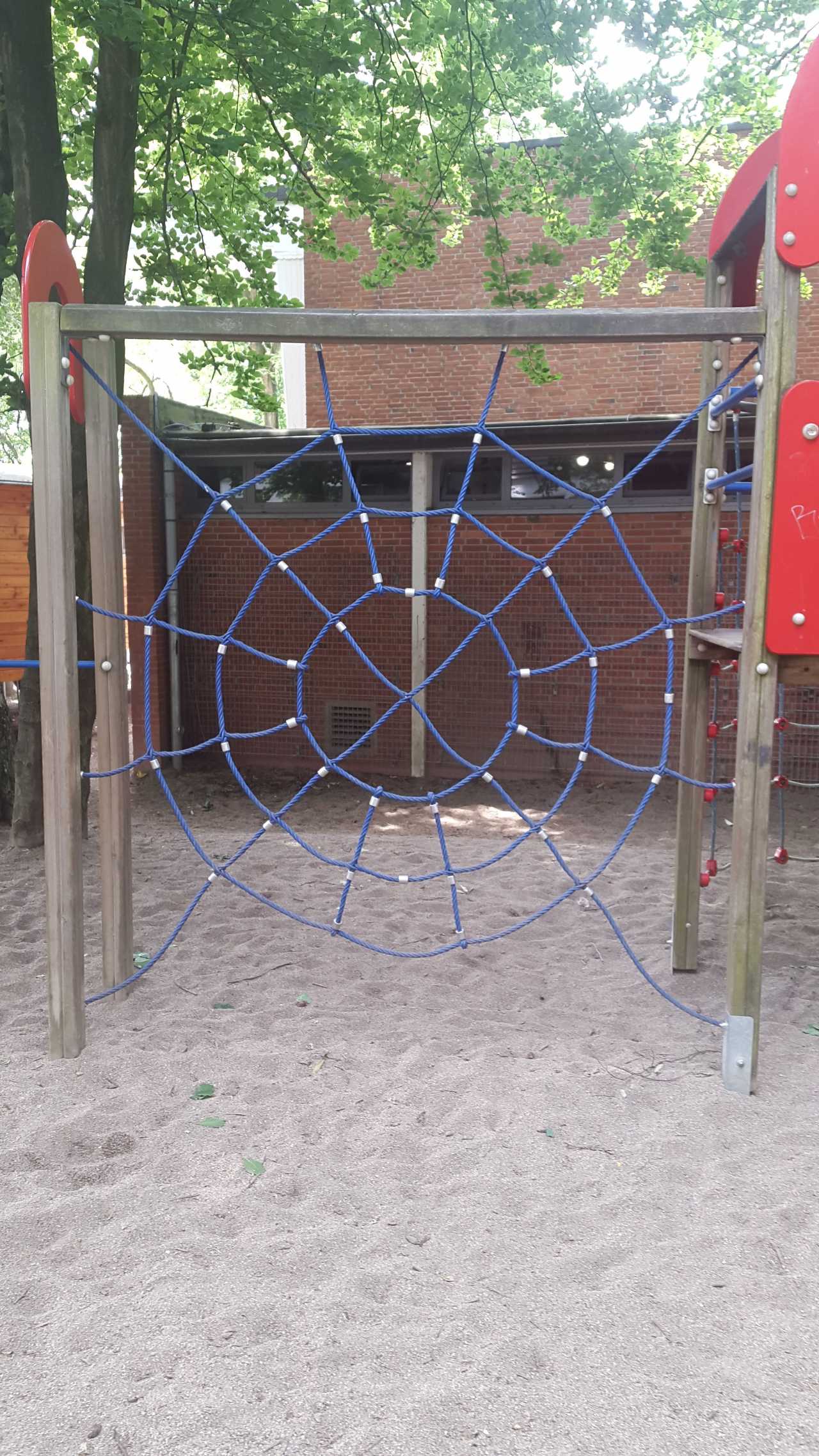
While searching for suitable MathCityMap tasks, creativity and a focus for mathematics in the environment are required. This is also shown by the current Task of the Week, created by Stefan Rieger, in which a climbing frame is converted into a math task.


Task: Spider web (task number: 1662)

How many meters of rope does this spider web consist of?


Thankfully Mr. Rieger was available for a short interview, so he could give an insight into the idea behind the task.

How did you get the idea to create this task for MathCityMap?

Three of us were walking around the schoolyard, looking for interesting tasks. This task offered itself directly, because it is challenging and can be solved by younger students.

What competencies and topics play a role in the problem solving?

Here, it will be important that the group works together when it tries to solve the task. There are several people needed for measuring and recording. Accurate measurement and safe handling of the measuring tape will be necessary to solve the problem. Since it is intended as a task for the grades 5/6, the measuring (here non-straight lines) will be relevant. Of course, older students can use knowledge from the circle calculation.

Have you tested the task with students or received other feedback on the task?

No. The task will be tested in the next school year with grade 5 as well as in the course of a further teacher training with colleagues. However, he climbing children had a lot of fun to help me as a climber for checking the measurements.  

We are pleased that MathCityMap finds more and more task authors from different regions and the task portal is expanded by a variety of tasks!

Task of the Week: Europe Tower

The current Task of the Week deals with one of the many landmarks of Frankfurt: the Europe tower, also known as “asparagus”. The related task is to estimate the own distance to the tower using the intercept theorems. Task: Europe Tower (task number: 1595) Determine the distance from your location to the Europe Tower. Give […]

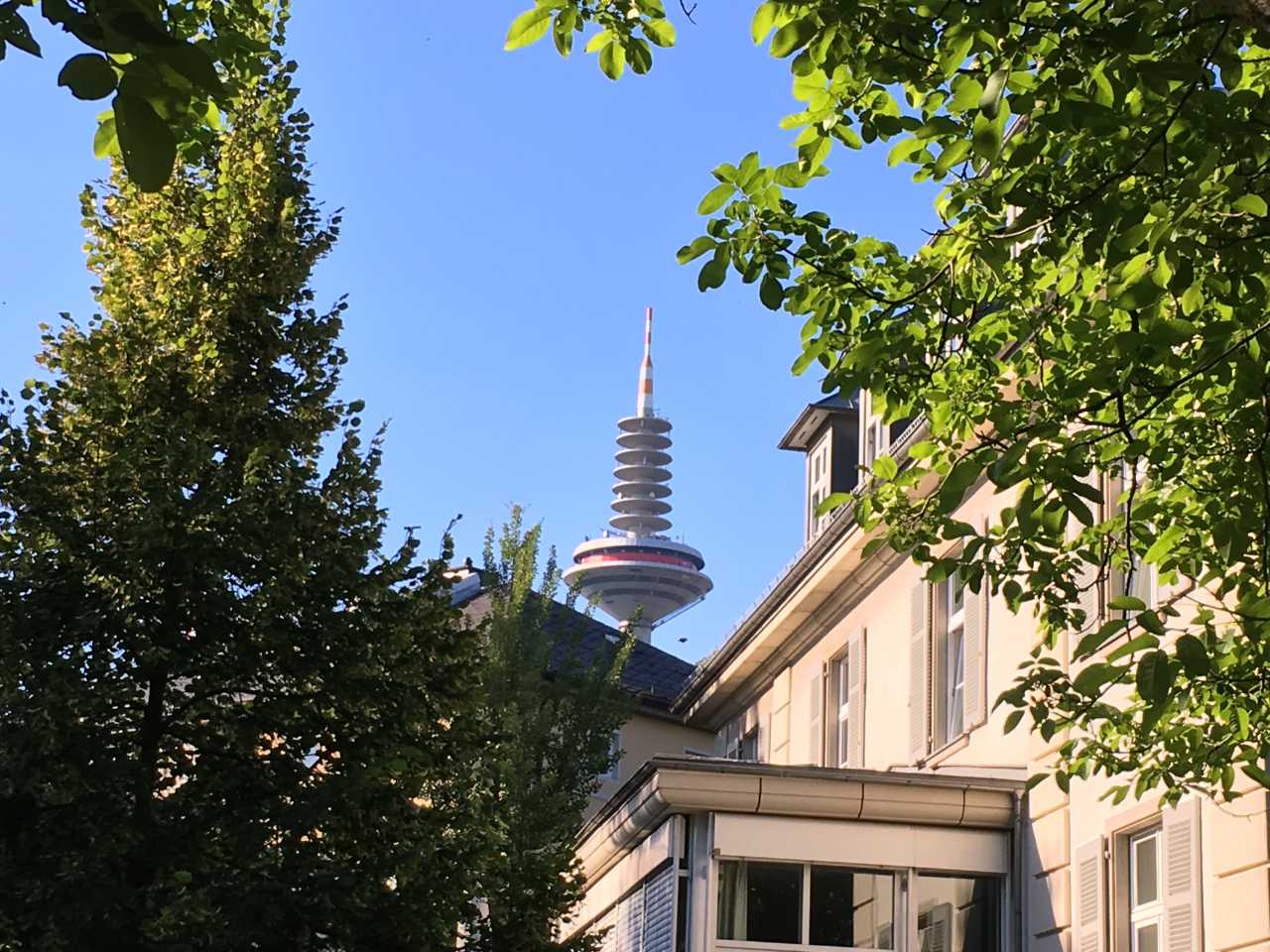
The current Task of the Week deals with one of the many landmarks of Frankfurt: the Europe tower, also known as “asparagus”. The related task is to estimate the own distance to the tower using the intercept theorems.


Task: Europe Tower (task number: 1595)

Determine the distance from your location to the Europe Tower. Give the result in meters. Info: the pulpit has a diameter of 59 m.


The first challenge is to find a suitable solution. With the aid of the intercept theorems, the task can be solved with the use of one’s own body. The arm and thumbs are streched so that the pulpit of the tower is covered with one eye opened. Afterwards the distance to the tower can be calculated with help of the thumb width and the arm length or distance from thumb to eye.

The task is a successful example of “outdoor mathematics” by using the theoretical formulas (here: intercept theorems) in an authentic application in the environment. To solve the problem, the students need knowledge about the intercept theorems. The task can thus be assigned to geometry and can be solved from class 9 onwards.

Task of the Week: Block of concrete at Camps Bay

The current “Task of the Week” is about determining the mass of a concrete sculpture in Camps Bay near Cape Town, the capital of South Africa. The special feature of this sculpture is that it is a composite geometric figure whose components are modeled and calculated individually. Task: Block of concrete at Camps Bay (task […]

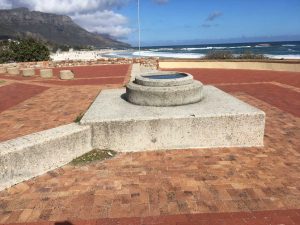
The current “Task of the Week” is about determining the mass of a concrete sculpture in Camps Bay near Cape Town, the capital of South Africa. The special feature of this sculpture is that it is a composite geometric figure whose components are modeled and calculated individually.


Task: Block of concrete at Camps Bay (task number: 1811)

Calculate the mass of this concrete sculpture. 1cm³ weighs about 2.8g. Enter the result in tons!


In order to solve the problem, it is necessary to divide the sculpture into three basic parts: a cuboid and two cylinders. Then, the necessary lengths are measured and the volumes of the bodies are calculated and added. In the last step, the total volume of the sculpture is multiplied with the density of concrete, which leads to the total weight of the sculpture.

This kind of task can easily be transferred to similar objects, whereby the degree of difficulty can be varied according to the composition of the figure. This type of task teaches the geometric view and understanding of composite bodies.

Task of the Week: Slope of the Roof

Today’s Task of the Week leads us to South Africa. Matthias Ludwig created three trails in Grahamstown as part of a teacher training course. You can learn more about the background here. The task described is about determining a roof slope using a gradient triangle. Task: Slope of the Roof (task number: 1697) Calculate the […]

Task of the Week

Today’s Task of the Week leads us to South Africa. Matthias Ludwig created three trails in Grahamstown as part of a teacher training course. You can learn more about the background here.

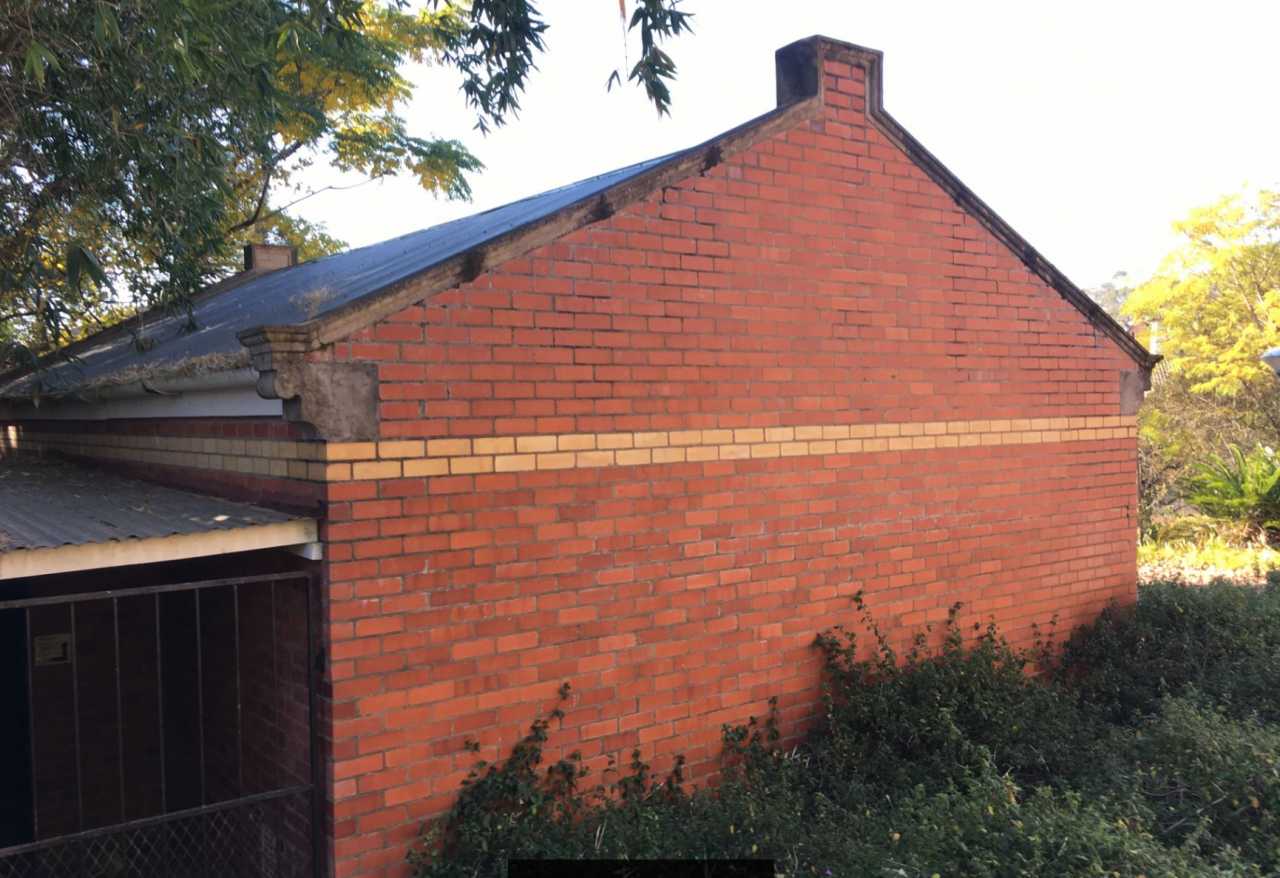
The task described is about determining a roof slope using a gradient triangle.


Task: Slope of the Roof (task number: 1697)

Calculate the slope of the roof. Give the result in percentage (%).


The task can be integrated in the topic of linear functions and their slope. The slope is determined by the quotient of vertical and horizontal length. For this purpose a suitable gradient triangle must be found. While the horizontal length can be determined by measuring, the height can be calculated using the number of stones. The task is therefore a successful combination of geometry and functions and can be used from class 8.

Task of the Week: Old Oak Tree

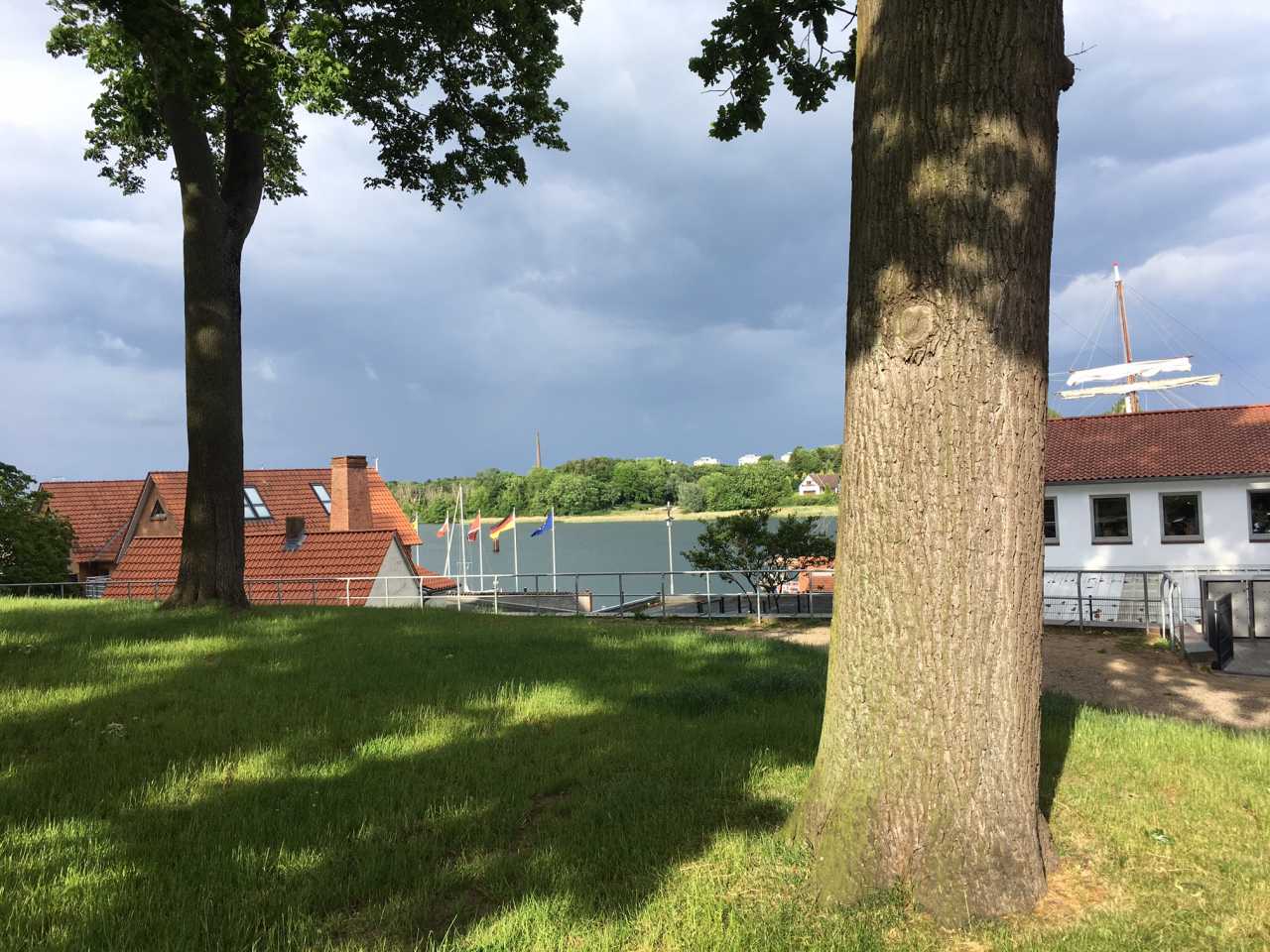
How can the age of a tree be approached using mathematics? This question addresses the current Task of the Week. It is placed in this form in Kappeln, but can be easily and quickly transferred to other places. Task: Old Oak Tree (issue number: 1473) How old is this oak tree? It is known that […]

Task of the Week

How can the age of a tree be approached using mathematics? This question addresses the current Task of the Week. It is placed in this form in Kappeln, but can be easily and quickly transferred to other places.


Task: Old Oak Tree (issue number: 1473)

How old is this oak tree? It is known that an oak with a diameter (in breast height) of 50 cm is about 110 years old.


In order to solve the problem, it is assumed that the growth of the oak is linear. This means that the average growth per year can be determined using the information in the text. Subsequently, the circumference in the height of the chest is measured and the diameter is determined by means of the relationship between the circumference and the diameter of a circle. This then leads to the age of the tree.

On the one hand, the problem can be classified in the geometric topic of the circle and, on the other hand, proportionality. If the relationship between the diameter and the circumference is already discussed at this time, the task can be used from class 6 onwards.

Task of the Week: Tank Filling

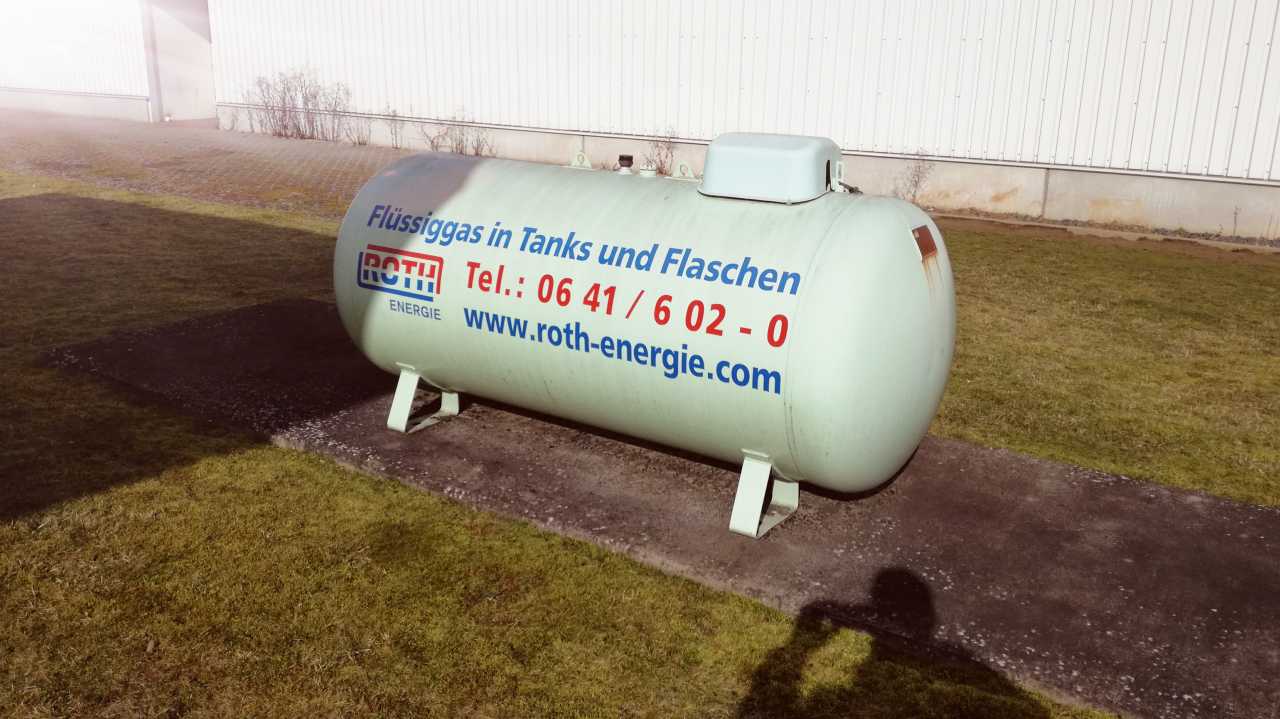
In today’s Task of the Week everything focuses on the geometrical body of a cylinder as well as the activities of measuring and modeling. The task is included in the Dillfeld Trail in Wetzlar. Task: Tank Filling (task number: 1098) Determine the capacity of the tank in liters. First of all, it is necessary to […]

Task of the Week

In today’s Task of the Week everything focuses on the geometrical body of a cylinder as well as the activities of measuring and modeling. The task is included in the Dillfeld Trail in Wetzlar.


Task: Tank Filling (task number: 1098)

Determine the capacity of the tank in liters.


First of all, it is necessary to recognize the object as a cylinder and to ignore minor deviations from the idealized body. The students then measure the necessary length. Since the result is to be expressed in liters, it is sufficient to record the data already at this point in decimetres. Subsequently, the capacity is determined by means of the volume formula for cylinders.

For the task, the students must have already gained experience with the geometrical body cylinder and its volume. The task is assigned to the spatial geometry and can be used from class 9 onwards.

Task of the Week: Mushroom

Today’s Task of the Week focuses a geometric question at the Aasee in Münster. More specifically, the surface content of a hemisphere is calculated by the students. Task: Mushroom (task number: 1400) Determine the area of ​​the mushroom. Give the result in dm². Round to one decimal. In order to solve the problem, the students have to […]

Task of the Week

Today’s Task of the Week focuses a geometric question at the Aasee in Münster. More specifically, the surface content of a hemisphere is calculated by the students.


Task: Mushroom (task number: 1400)

Determine the area of ​​the mushroom. Give the result in dm². Round to one decimal.


In order to solve the problem, the students have to approach and recognize the shape as a hemisphere. They then need the formula for the calculation of the spherical surface or here the hemispherical surface. For the determination, only the radius of the hemispheres is required. Since it can not be measured directly, this can be determined with help of the circumference.

The task requires knowledge of the circle and of the sphere and can therefore be applied from class 9 onwards.