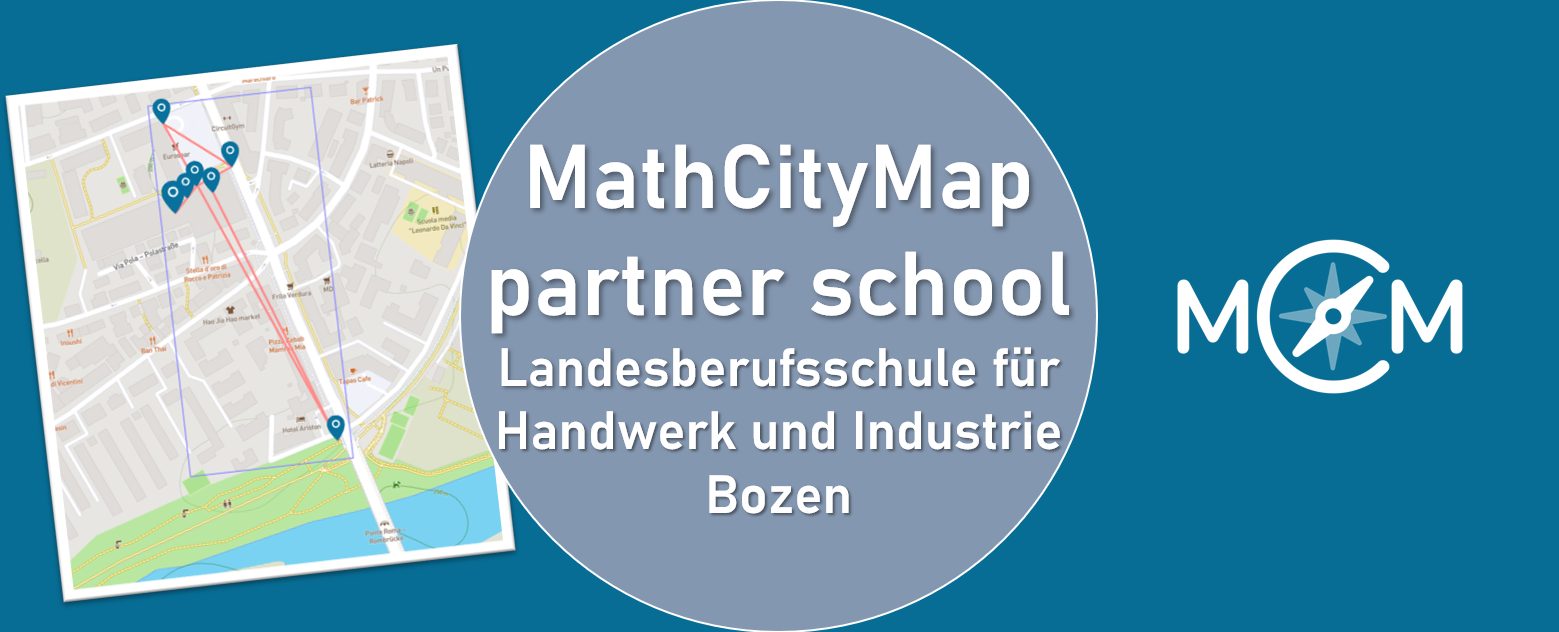
We are very pleased to welcome the Landesberufsschule für Handwerk und Industrie Bozen as a new MathCityMap partner school. After the school’s teachers participated in a MathCityMap training in 2024, the school has now officially published its first two trails:

The feedback from the students has been very positive. Designed as small outdoor learning activities, the trails offer a welcome change from regular classroom lessons. The spacious area in front of the school and the nearby river provide a pleasant outdoor learning environment.

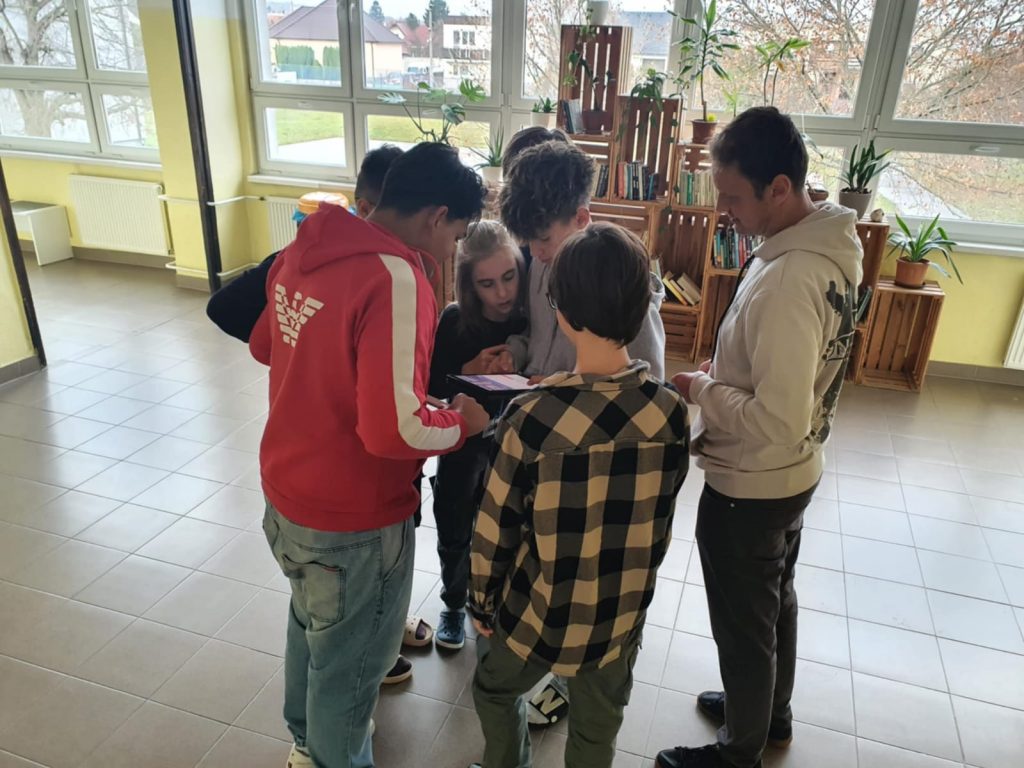
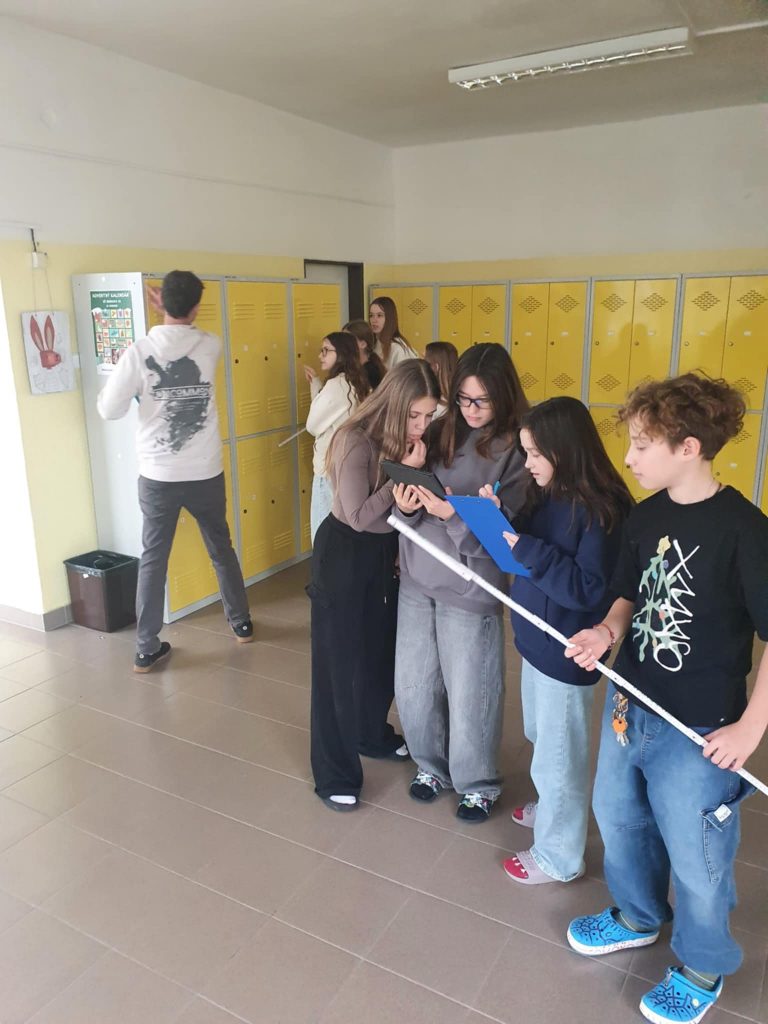
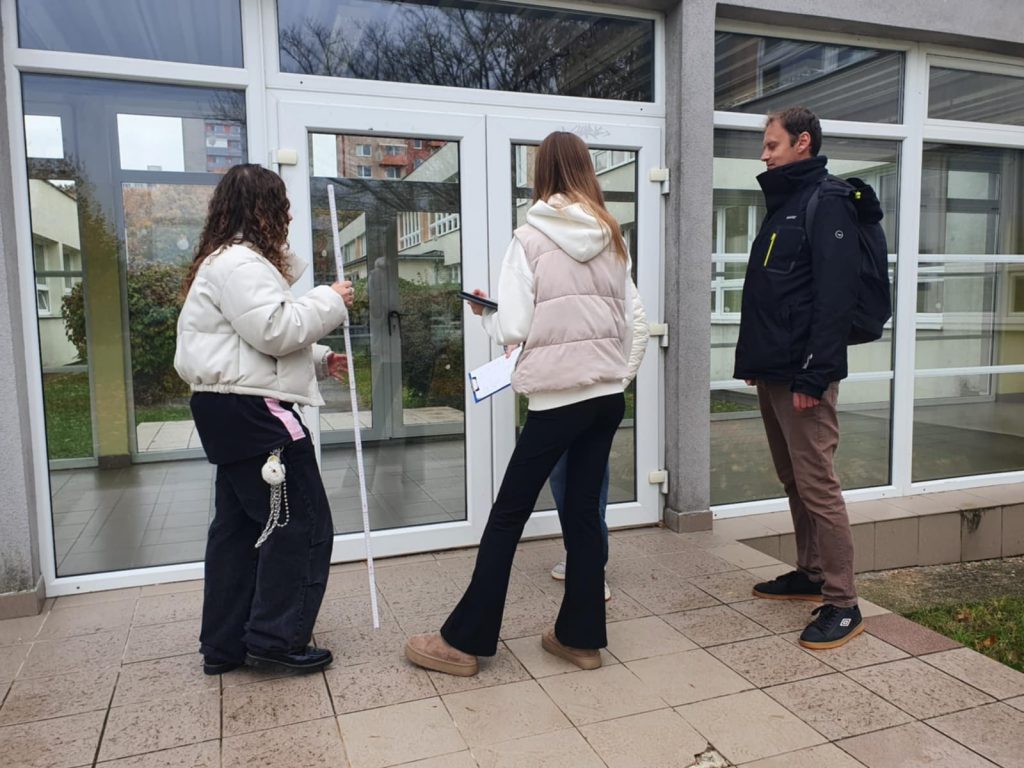
The trails were carried out with two fourth-year classes from the technical school for computer science as well as a basic vocational class. Equipped with the necessary tools, the groups were able to work independently, with occasional input from the teachers when needed. One important takeaway: a short briefing in the classroom makes the on-site activities run much more smoothly.

Thanks to the frequent double lessons, the trails with their seven tasks can easily be completed within one teaching unit – including travel time there and back.

We thank the Landesberufsschule für Handwerk und Industrie Bozen for their commitment and warmly welcome them to the MathCityMap community!

The package with the official partner school badge and the MCM measuring instruments is on its way and we are looking forward to receiving more applications from all over the world.

All further information on the partner school programme and the requirements for application can be found both in the article on the first MCM partner school and on the homepage of our MaSCE³ project.

On Thursday, December 4th, our third MathCityMap Partner School Meeting took place – once again a very enriching exchange on the use of MathCityMap in the classroom.

This time, the focus was on our new feature, the student accounts. With them, students can independently create their own MCM tasks and thus further develop their problem-solving and problem-posing skills. After an overview of other recent MCM updates and a short introduction, there was a hands-on phase during which participants could try out the new feature directly.

The meeting was attended by part of the MCM team, several project partners, and numerous teachers from Slovakia, Portugal, Spain, Germany, and Italy. Participants took the opportunity to ask many questions. We were particularly pleased with the positive feedback and the valuable suggestions for improvement, which will now be incorporated into the further development of the system.

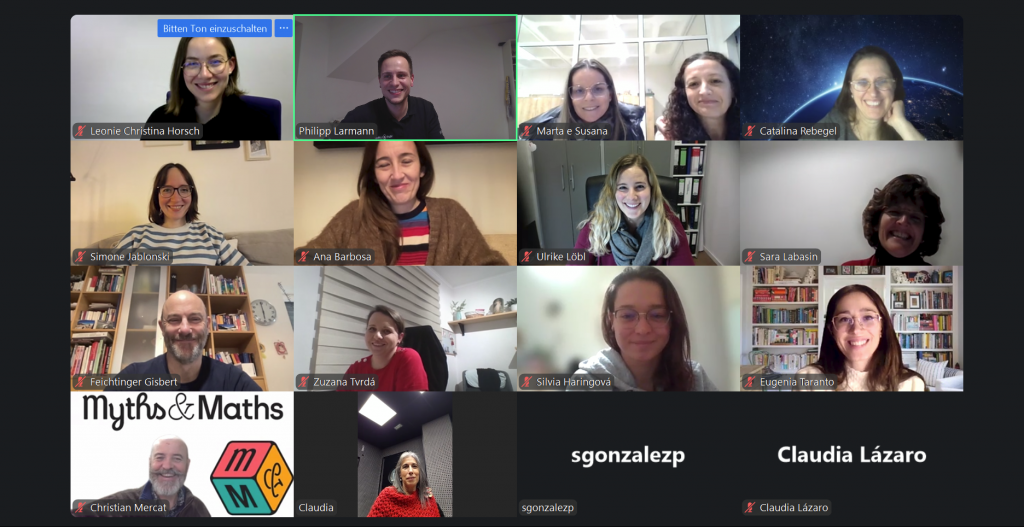
At the end of the online meeting, we took a group photo to capture this successful event.

We would like to thank all participants and are already looking forward to the next meeting!

On the weekend of September 19–21, there was a festive atmosphere on Frankfurt’s Opernplatz: the Polytechnic Society Foundation celebrated its 20th anniversary—and MathCityMap was there!

It was a special honor for us to be part of these celebrations. The foundation recognized the potential of MathCityMap early on and provided us with active support, especially in the early days. We were therefore all the more delighted to be there with our team.

At our booth, we were able to introduce MathCityMap to numerous visitors – from people who happened to be passing by to math enthusiasts to representatives of other projects. Many were interested and enthusiastic about the idea of learning math outdoors.

Away from our booth, the anniversary celebration also offered a diverse and exciting program: numerous initiatives and projects presented themselves and ensured a varied weekend full of exchange, discoveries, and inspiration.

We would like to thank the Polytechnic Society Foundation for the invitation and support. It was a pleasure to be part of this special celebration!

On Friday, June 13, 2025, Frankfurt’s Riedberg Campus once again became a hotspot for science: the Night of Science opened its doors from 5 p.m. until late into the night – and our MathCityMap team was right in the middle of it all with an interactive stand.

Our outdoor location offered the best conditions for our special hands-on offer: the “Night of Science 25” trail. Equipped with measuring materials, a clipboard and the MathCityMap app, many curious guests embarked on a mathematical discovery tour of the campus. The aim was to solve up to 12 tasks – and to look at everyday places such as stairs, benches or building facades through a mathematical lens.

We were delighted with the consistently positive feedback we received – both from those interested in mathematics and from guests who would not describe themselves as fans of maths.

We would like to thank all visitors for the exciting conversations, the interest and the great interaction. Special thanks also go to the Night of Science organization team for making this unique event possible.

See you next year – we are already looking forward to the Night of Science 2026!

Caros professores,


Estão interessados em modelação matemática? Ou na utilização de ferramentas digitais nas aulas de matemática? Temos a certeza de que estão interessados em ambas, uma vez que estão a utilizar o MathCityMap!

Com este inquérito pretendemos saber um pouco acerca da sua experiência e utilização de tarefas de modelação na aula de matemática. O objetivo do inquérito é conhecer as suas necessidades e motivações no âmbito da modelação matemática, tendo em vista um projeto a desenvolver futuramente. O seu feedback poderá contribuir para um desejável desenvolvimento de ideias relativas à prática e à investigação, no âmbito do tema da modelação na aula de matemática. O tempo necessário para responder ao questionário é de 10-15 minutos.
 
O inquérito (distribuído através do Google forms) está disponível nas seguintes línguas:
 

Aguardamos com expetativa a vossa participação até 23 de fevereiro de 2024, inclusive!

A equipa do MathCityMap desenvolveu recentemente novos formatos de resposta para as tarefas! Neste momento, o MathCityMap oferece nove tipos de formatos de resposta às tarefas, permitindo alargar as hipóteses das tarefas a propor e ainda a possibilidade de criar subtarefas. Os diferentes formatos de resposta das tarefas, são apresentados resumidamente a seguir. Além disso, disponibilizamos um exemplo de trilho matemático que inclui cada um destes tipos de formato. O trilho pode ser visualizado no web browser aqui, usando o código 065522 na app MathCityMap.


O Intervalo é o formato “clássico” para as tarefas MathCityMap. Deve ser usado sempre que for necessário fazer medições. Exemplo: determinar um comprimento, uma área ou um volume.

Intervalo

O formato Valor Exato pode ser usado para tarefas de contagem ou em problemas de combinatória. Exemplo: Quantas janelas observas na parede da casa? De quantas maneiras poderás estacionar a tua bicicleta neste suporte para bicicletas?

Valor exato

Para formular mais do que uma pergunta que envolva medição, pode ser usado o formato de tarefa Vetor (intervalo). Exemplo: Determina o comprimento, largura e altura do paralelepípedo. Além disso, pode também aplicar-se em questões de geometria espacial.

Vetor (intervalo)

NOVO FORMATO DE TAREFA!

Analogamente, o portal disponibiliza ainda o formato Vetor (valor exato) que pode ser usado para formular várias questões de contagem ou problemas de combinatória numa só tarefa.

Vetor (valor exato)

NOVO FORMATO DE TAREFA!

Se uma tarefa tiver várias soluções (números), cuja ordem não seja importante, pode ser usado o formato Conjunto. Na aplicação, devem ser apenas introduzidos os números nos campos de entrada. Pode ser encontrado um exemplo deste tipo de tarefa no trilho matemático mencionado acima.

Conjunto

NOVO FORMATO DE TAREFA!

A Estação de Informação é um formato de tarefa sem campo de entrada na aplicação. Implementa-se para apresentar factos importantes ao longo do trilho matemático, por exemplo, edifícios históricos, pessoas ou contextos.

Estação de Informação

NOVO FORMATO DE TAREFA!

Outro novo formato de tarefa é Preenche os espaços em branco: neste formato, podem ser facilmente trabalhados fora da sala de aula os textos com espaços, por exemplo, para analisar objetos ao ar livre em linguagem técnica, para lidar com dados de painéis de informação ou para formular questões sobre dados históricos.
Nota: Use o modo “rigoroso” se pretender que seja introduzido um número no espaço em branco.

Preenche os espaços em branco

NOVO FORMATO DE TAREFA!

Além disso, as tarefas podem ser formuladas no formato de Escolha múltipla, como num questionário. Neste formato, devem ser fornecidas pelo menos duas opções de resposta, das quais pelo menos uma está correta.

Escolha múltipla

O formato de tarefa GPS permite que os utilizadores formulem tarefas nas quais os alunos devem encontrar uma posição predefinida (por exemplo, o centro de um conjunto de pontos) ou posicionar-se numa figura predefinida (por exemplo, construir um triângulo equilátero).
Nota: Este tipo de tarefa funciona melhor em áreas rurais, pois o sinal de GPS costuma ser muito fraco nas cidades.

Tarefa GPS

Por último, existe a possibilidade de formular tarefas mais complexas, dividindo-as em subtarefas, opcionais ou obrigatórias. Apresenta-se um exemplo da utilização de subtarefas no trilho matemático mencionado acima. Subtarefa. One example for using Subtasks is given in the upper mentioned trail.

Subtask

NOVO FORMATO DE TAREFA!

A aplicação MathCityMap permite que estudantes de todas as idades observem objetos interessantes nas imediações da escola, no parque, na cidade ou em quase todos os lugares usando as suas capacidades matemáticas. Com o MathCityMap, os estudantes podem aplicar os seus conhecimentos matemáticos fora da sala de aula e descobrir o meio que os rodeia a partir de uma perspetiva matemática.

Além disso, a aplicação MathCityMap é gratuita e está disponível para Android e iOS.

Este vídeo explica como utilizar a aplicação MathCityMap (clique aqui para assistir ao vídeo no YouTube). Desejamos-lhe muito sucesso e diversão.