Portugals second MCM partner school

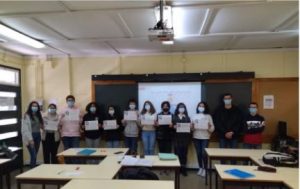
Only a few weeks after the presentation of our first MCM partner school in Portugal, we can already welcome another school in this great program! The “Escola EB1 do Cálvario” has successfully passed the application process and is now also an official MCM partner school. The process was initiated at the Portuguese elementary school by […]

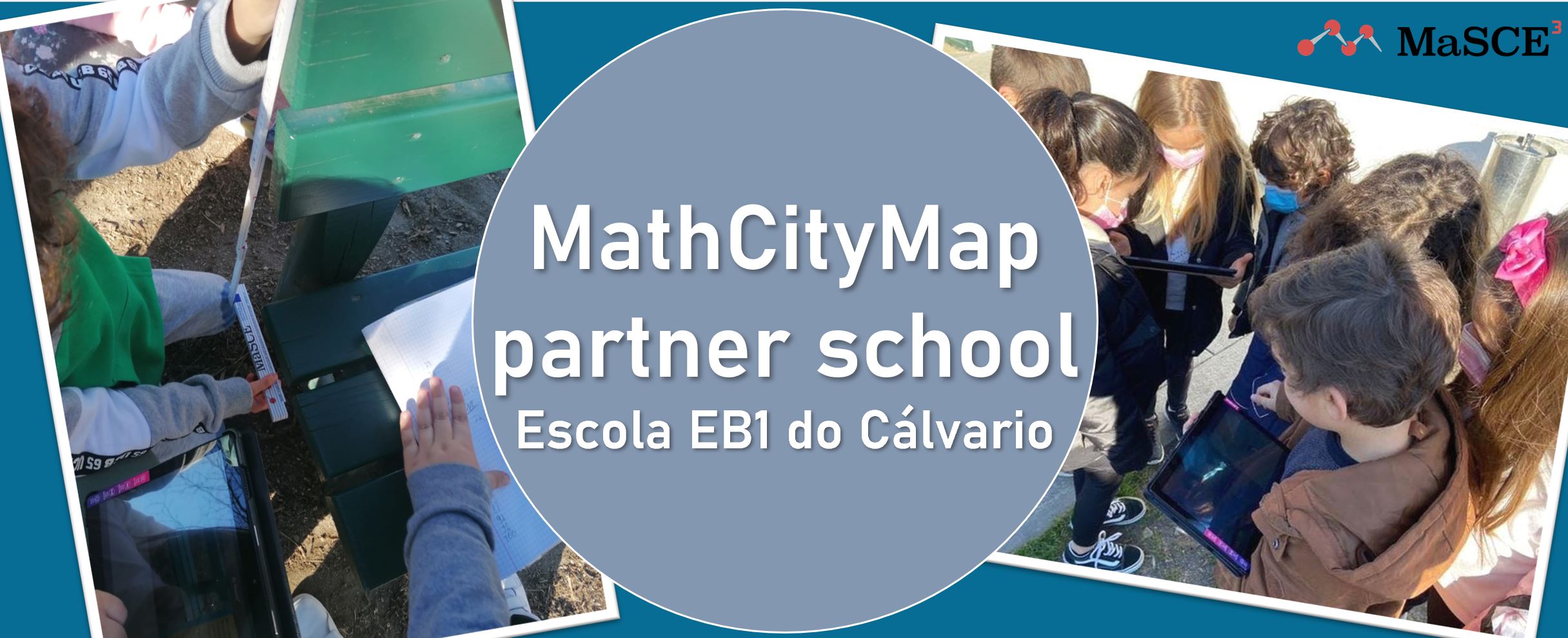
Only a few weeks after the presentation of our first MCM partner school in Portugal, we can already welcome another school in this great program! The “Escola EB1 do Cálvario” has successfully passed the application process and is now also an official MCM partner school.

The process was initiated at the Portuguese elementary school by three student teachers who came into contact with MathCityMap during their studies.

Again, the package with the measuring instruments and the official partner school badge is on its way to the school and we are looking forward to more applications from Portugal, but of course also from all other MCM countries.

You can read a brief report from one of the student teachers about the application process further down in this article, and all other information about the partner school program can be found in the article about the first MCM partner school.


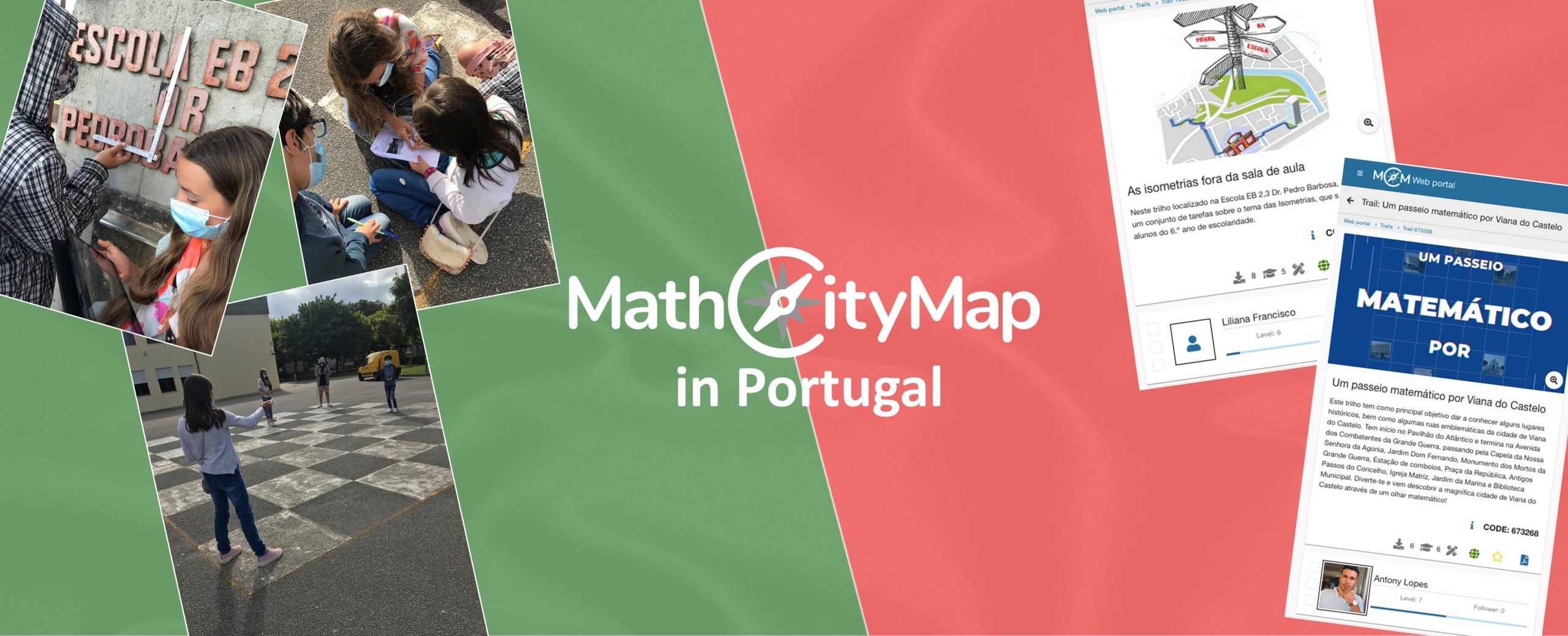
We are a group of pre-service teachers doing our internship at Escola EB1 do Calvário, in Viana do Castelo, Portugal. We developed an interest for MCM during our master’s course and decided to implement three trails with our students in the schoolyard. For the 1st graders we created two thematic trails related to the contents they were addressing in their lessons at the time, the number space to 10 and geometry, as for the 3rd graders we created a more diversified trail involving different mathematical topics.
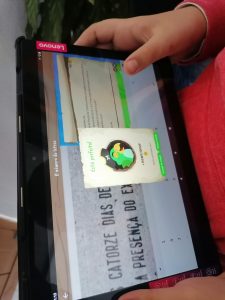
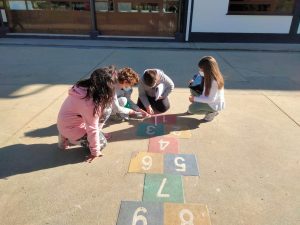


Testing out the trails was a successful activity that was done with both groups of students during math class. They were able to apply what they were learning, were motivated to get out of the classroom and collaborate using technology (tablets). The students had no difficulty using the app and recognizing the location of the objects, with the exception of the first graders who needed the help of the supervising teacher to read the tasks. For us as pre-service teachers, it was a very rewarding experience to perceive the positive impact of the MCM activity with the students and to have the opportunity to design tasks in a real-world context, making them more meaningful to the students than in the traditional classroom setting where they previously spent too much time. We will certainly continue to use MCM!
 

Introducing the next MCM patner school

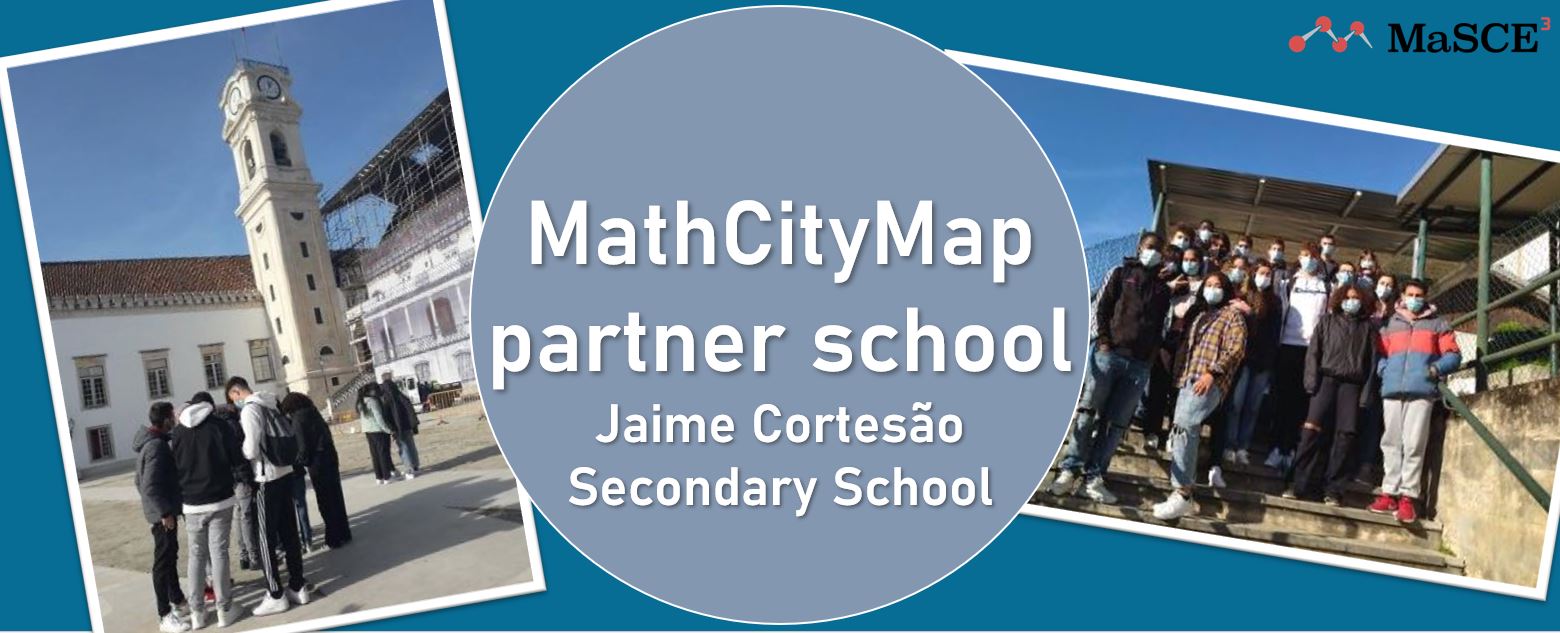
We are more than happy to welcome the next MCM partner school! The “Jaime Cortesão Secondary School” has successfully passed the application process and is now the first MCM partner school in Portugal. The teachers of the school were inspired by the MCM MOOC last year and the trails were created by master students working […]

We are more than happy to welcome the next MCM partner school! The “Jaime Cortesão Secondary School” has successfully passed the application process and is now the first MCM partner school in Portugal.

The teachers of the school were inspired by the MCM MOOC last year and the trails were created by master students working at the school and tested with the students.

The package with the measurement tools and the official partner school badge is now on its way to the school and we are very much looking forward to receiving more applications from schools.

A short report from the school on the application process can be read further down in this article and all further information on the partner school program can be found in the article on the first MCM partner school.


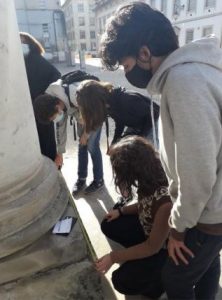
Together with the supervising teacher, the interns developed the activity “MathTrails” for the students from Escola Secundária Jaime Cortesão. This activity was created using the platform MathCityMap, explored in one of the interns’ subjects from the Math Teaching Masters Degree Course from the University of Coimbra.

The created trails are called “Matematicando por Coimbra” (Code: 497843) and “ πsando as ruas de Coimbra” (Code: 697842). Our students transferred the app into their phones which gave them access to the trails and to the digital classroom that was used by the interns to control them and check their scores. The students were given a participation diploma after completing all their tasks. The winners of the activity were also rewarded with medals created by the interns.


In general, the students liked the activity, stating that the tasks had the right amount of complexity and that said tasks allowed them to recall some of the concepts learned in previous years. They also agreed that the activity was useful in order to cement their new acquired math knowledge.

The interns’ goal was to show the students that math is everywhere through a different and dynamic activity where they could explore the world that surrounds them. According to the students that goal was successfully achieved.

MathCityMap in Portuguese Teacher Education

Two students of the Master degree course in Mathematics and Sciences Education of Instituto Politécnico de Viana do Castelo, Antony Lopes and Liliana Francisco, respectively under the supervision of Ana Barbosa and Isabel Vale, have focused their thesis in the use of MathCityMap. The work developed by Antony Lopes aimed to understand the way 6th […]

Two students of the Master degree course in Mathematics and Sciences Education of Instituto Politécnico de Viana do Castelo, Antony Lopes and Liliana Francisco, respectively under the supervision of Ana Barbosa and Isabel Vale, have focused their thesis in the use of MathCityMap.

The work developed by Antony Lopes aimed to understand the way 6th grade students apply Geometry concepts in a math trail using MathCityMap. Although it was not possible to collect data with students due to COVID-19, the published report grounds and explains all the methodological options and also presents all the data collection techniques, including the procedures that led to the trail submission in MCM. The author also presents a theoretical discussion of the expectations concerning the results. The report can be found here.

The work of Liliana Francisco is still under development and aims to understand how 6th grade students solve tasks, within the scope of isometries, designed to be applied outside the classroom through a math trail with MathCityMap. This study is being conducted with 23 students and data is being collected, resorting to observation, documents (task solutions), questionnaires, interviews and photographs. The report will be published soon.

Task of the Week: Trapézio

The task “Trapézio” [engl.: “Trapezoid”] by Isabel Figueiredo, who was one of our partner in the MoMaTrE project from 2017-2020, is chosen to be our new Task of the Week. The task is located in the north of the Portuguese city of Porto. How do you use MathCityMap? Please describe our European project here in […]

The task “Trapézio” [engl.: “Trapezoid”] by Isabel Figueiredo, who was one of our partner in the MoMaTrE project from 2017-2020, is chosen to be our new Task of the Week. The task is located in the north of the Portuguese city of Porto.

How do you use MathCityMap? Please describe our European project here in a few sentences.

MathCityMap is a project of the working group MATIS I of Goethe University Frankfurt. It is co-funded by the Erasmus+ project MoMaTrE [Mobile Math Trails in Europe]. Currently, seven institutions from five countries are participating in this project that englobe a web portal and the MCM app. Unfortunately, the MoMaTrE project ended after three years at August 31th.  

MathCityMap combines the well-known math trail idea with the current technological possibilities of mobile devices. I use MathCityMap for the dissemination and popularization of mathematics, to attract more students to continue their scientific and technological studies.

With the MathCityMap-Project we like to motivate students to solve real world tasks by using expedient mathematical modelling ideas outside the classroom in order to discover the environment that surrounds them from a mathematical perspective. Mathematics should be discovered and experienced and must be done on the spot.

Please describe your task. Where is it placed? What is the mathematical question? How could you solve it?

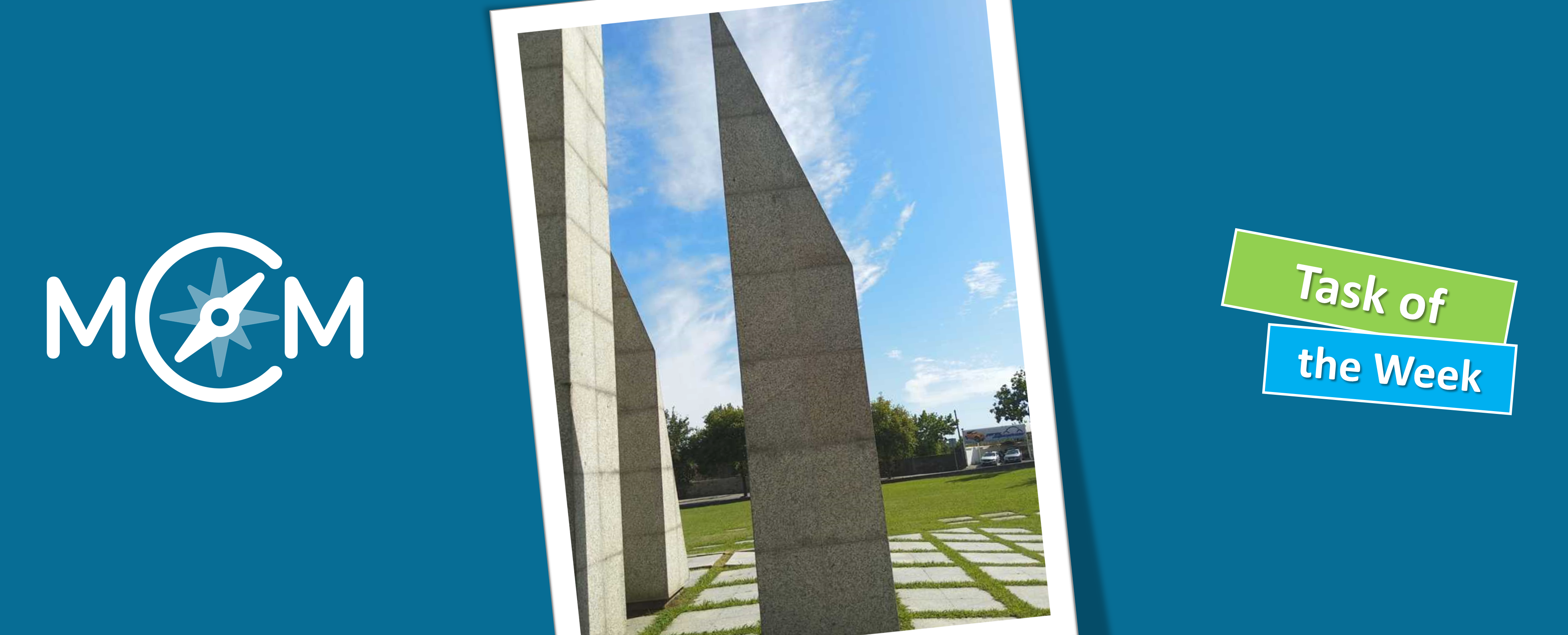
This task is placed in Maia, a Portuguese municipality in the district of Porto. In one of the entrances of this city there is a Monument located in the Jardim das Pirâmides. We ask for the area, in m², of the lateral surface that can be seen in the picture.

As the necessary data could not easily measured, the idea is to use a non-standard surface unit. The formula for the trapezoid area must be used, but the measurements to be used are determined by the rectangular plates that make up the structure. Students measure one of the plates and count the number of slabs on the trapezoid.

Which didactic aims do you want to stimulate through this task?

The task has as main objective to be able to apply the teaching content in the classroom to real objects and, thus, deepen the knowledge.
The advantage of this is that it is clear that prior knowledge is necessary to be able to see everyday life from a mathematical perspective by training an eye for simple geometric figures in architecture. Another advantage is to lead students to find a different way to solve problems and don´t give up in face of obstacles.

Do you have any other commentary on MathCityMap?

MCM project integrates advanced digital technology with the math trails concept to illustrate the use of a technologically supported outdoor trail to enhance the teaching and learning of outdoor mathematics.

MoMaTrE project in Portugal

The MathCityMap team thanks our MoMaTrE partners from Portugal for a special outdoor event with MCM. Read their impressions in the following article by Amélia Caldeira and Ana Moura: In the center of Matosinhos, a city in Porto’s metropolitan area, in Portugal, the mathematics was breathed with the event “Matemática vai ao Jardim” (Math goes […]

The MathCityMap team thanks our MoMaTrE partners from Portugal for a special outdoor event with MCM. Read their impressions in the following article by Amélia Caldeira and Ana Moura:

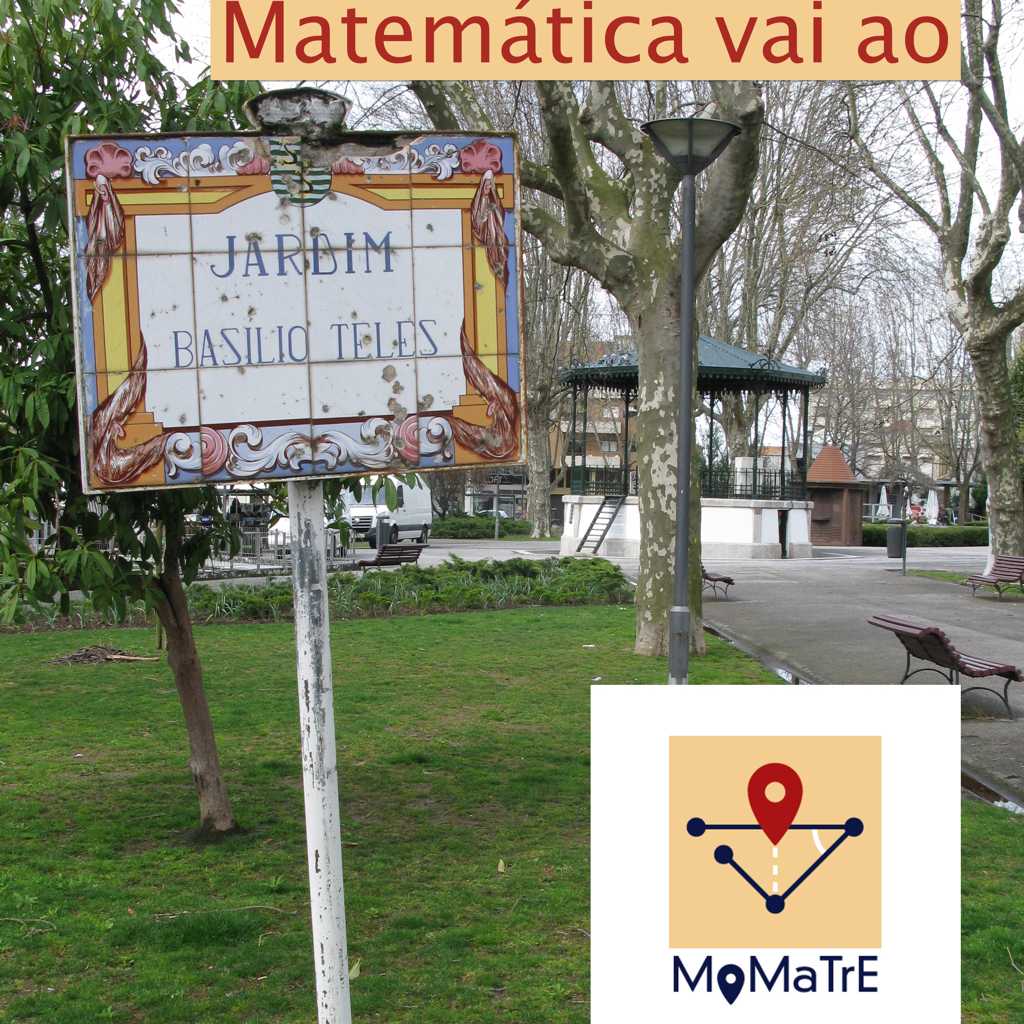
In the center of Matosinhos, a city in Porto’s metropolitan area, in Portugal, the mathematics was breathed with the event “Matemática vai ao Jardim” (Math goes to the Garden) on March 23rd. This event aims to celebrate mathematics and its relevance in everyday life, and in the progress of society. The main idea of this celebration was to use the students’ mathematical skills in the real world.

In a fun and innovative way, 170 students from Augusto Gomes Secondary School, equipped with a smartphone and the MathCityMap app (MCM app), answered several mathematical challenges, having as a backdrop the Garden Basílio Teles, in Matosinhos, and all its surroundings.

It was a competition between teams of three or four students.  All of them benefited from an outdoor activity: they left the school building, walked around and explorde the center of Matosinhos.

Using their mathematical knowledge, they solved the proposed tasks. All the tasks were in accordance with the knowledge level in which the team was in. Three math trails, with five tasks each, were designed: a route for 7th and 8th grade students, a route for 9th grade students, and another route for students from the 10th to the 12th grades.

Through the MCM app, students went on an outdoor walk along a route and solved math problems that were contextualized with the surrounding environment. The students passed through special places in Matosinhos, where math can be experienced in everyday situations. For example, a swing to calculate angles measures, lake bridge to calculate areas, garden benches to apply combinatorial calculus,…

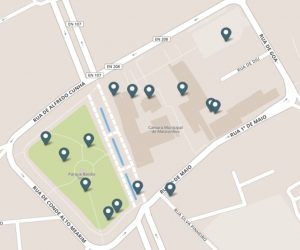
The map with the location of the fifteen tasks is showed in figure 1:

Fig.1 – location of the fifteen tasks

In the end, the best team was selected from each of the three routes. The criteria for choosing the best team was the highest number of correct answers. In case of equality, the team that answered in the minimum time.

Both students and teachers of Augusto Gomes enjoyed the event “Matemática vai ao Jardim”.

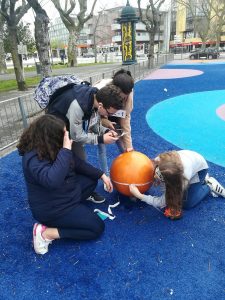
Fig.2 – students measure the circumference of a sphere

You can find a briefly video-report here (https://www.youtube.com/watch?v=Jr9XwMFfUnc&feature=youtu.be).

ISEP/P.Porto team who designed and invigorated the event:

Amélia Caldeira, Ana Moura, Ana Júlia Viamonte, Isabel Figueiredo, Helena Brás, Alexandra Gavina and Alzira Faria.