Task of the Week: Monument Erlangen/Brüx

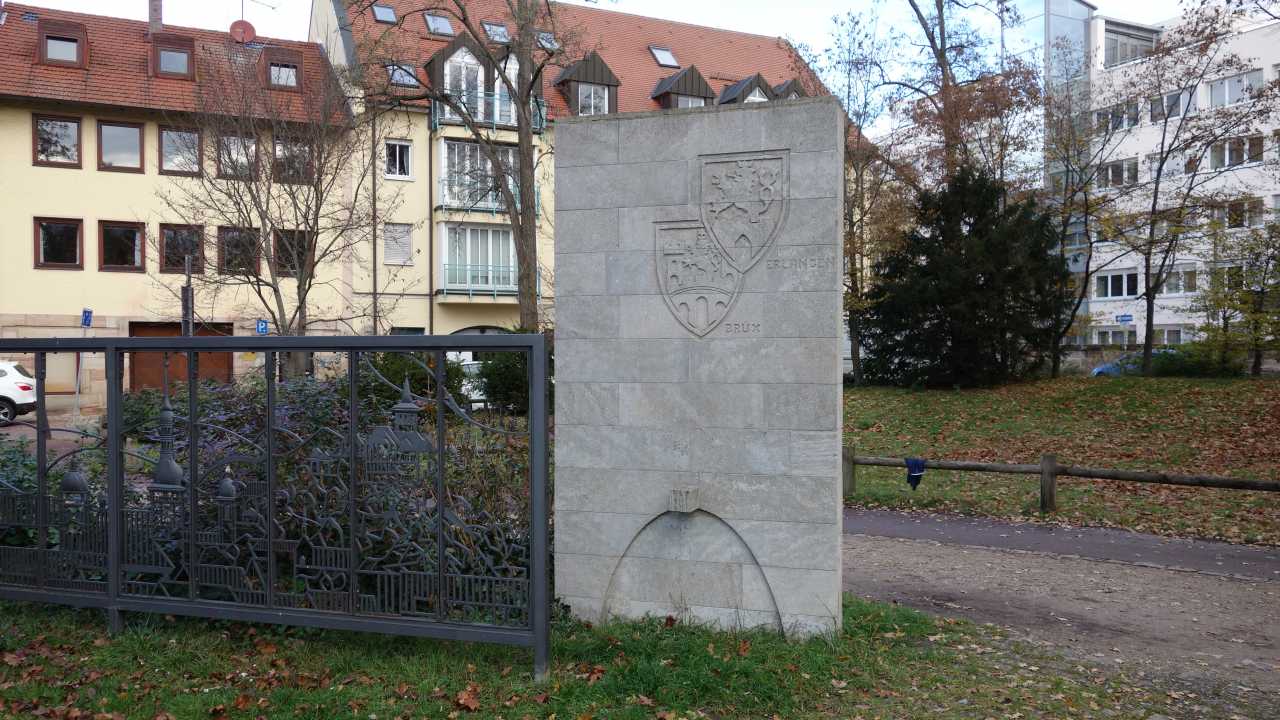
This time, the “Task of the Week” is part of the trail “Rund um den Erlangener Schlosspark”. It is called “Monument Erlangen /Brüx” with task number 704. Thematically, the task can be integrated into the topic parables and is therefore suitable from grade 9. Task: Monument Erlangen/Brüx Examine whether the “curve” in the lower quarter […]

Task of the Week

This time, the “Task of the Week” is part of the trail “Rund um den Erlangener Schlosspark”. It is called “Monument Erlangen /Brüx” with task number 704. Thematically, the task can be integrated into the topic parables and is therefore suitable from grade 9.


Task: Monument Erlangen/Brüx

Examine whether the “curve” in the lower quarter of the stone monument is a parable y= -ax². If not, enter a=0 as solution, otherwise enter the calculated value of a.
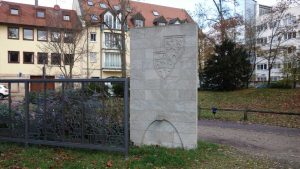

The task was written by Jürgen Hampp. In the following interview, he gives an insight into the idea behind the task and the aim of the task. At this point, we would like to take the opportunity to thank Mr. Hampp for his answers.

What made you consider including this task into the trail?

My concern was to develop a trail which is on the one hand easy to access in walking distance from our school, the Christian-Ernst-Gymnasium in Erlangen, and on the other hand leads through mostly car-free areas. Of course, the possible objects are limited. Under this perspective, the monument Erlangen/Brüx has an optimal position, the measuring is riskless – one does not have to climb etc. – and only simple resources are needed.

Where do you see the characteristic of the task? Which skills and ideas are especially supported?

I want to train the “mathematical view”, e.g. the recognition of mathematical objects in everyday life, and the activity with these objects with help of the methods which are known from class. This object mainly supports the competence branch K3 “Mathematical modelling”. Here, quadratic functions (topic in grade 9) present themselves. I did not want to use the common tasks with water fountains as they might be out of use, the water pressure may vary and the measuring is difficult. For me, the special attraction of this task is that a plain solution – as for usual schoolbook exercises – does not exist. Inaccurate measuring at the object or discrepancies at the object require skillful forming of averages and approximated values.
Task of the Week: Climbing Wall

Today’s “Task of the Week” leads to Hamburg, more precisely to the school Am Heidpark. Here, one can find the trail “Am Heidpark” which is a good example to show that already a schoolyard can be made for a MathCityMap trail. The selected “Task of the Week” is called “Climbing Wall” with task number 668. […]

Task of the Week

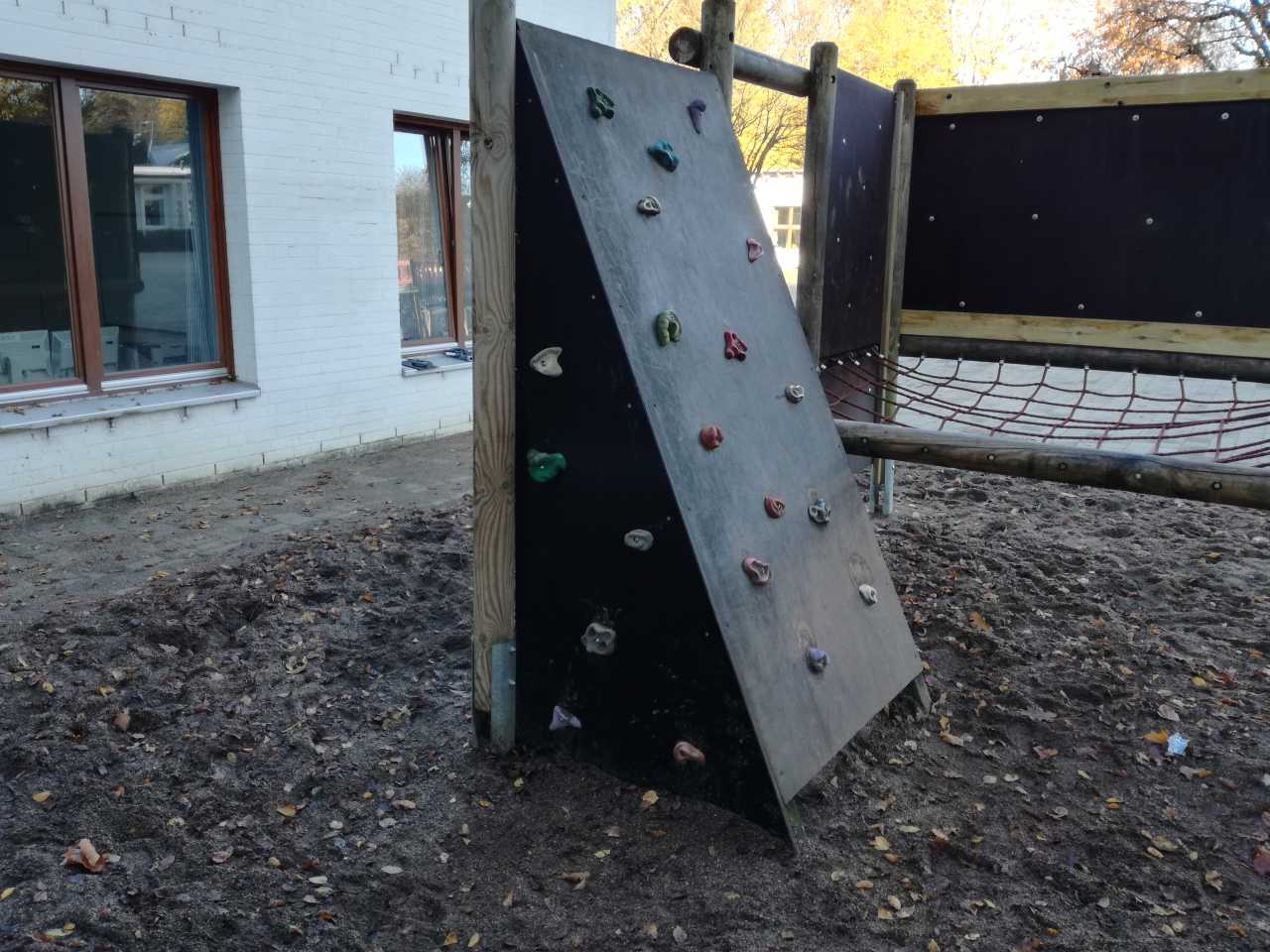
Today’s “Task of the Week” leads to Hamburg, more precisely to the school Am Heidpark. Here, one can find the trail “Am Heidpark” which is a good example to show that already a schoolyard can be made for a MathCityMap trail. The selected “Task of the Week” is called “Climbing Wall” with task number 668.


Task: Climbing Wall

Determine the slope of the climbing wall in percent.


The task enables a suitable embedding of the topic slope of linear functions. The slope of the climbing wall can be determined by recourse of the gradient triangle. In the coordinate system, the slope of a linear function can be calculated with help of two points on it. It is necessary to determine the difference of the y-coordinates (dy) and the difference of the x-coordinates (dx) and divide them afterwards. Corresponding in the real context, it is necessary to measure the height difference (dy) as well as the difference in length (vertical; dx). Afterwards, the slope can be calculated with help of a division and the conversion into percent. The task can be used from grade 8 and supports a basic understanding of the slope of a linear function and its determination with help of a gradient triangle. The task is especially suitable in the beginning of the topic as it already “predefines” a right-angled gradient triangle. Further tasks could for example involve the slope of a stair handrail. The task is a connection of algebra and geometry and can be related to the branches measuring and functional correlation.


Task of the Week: Hammering Man

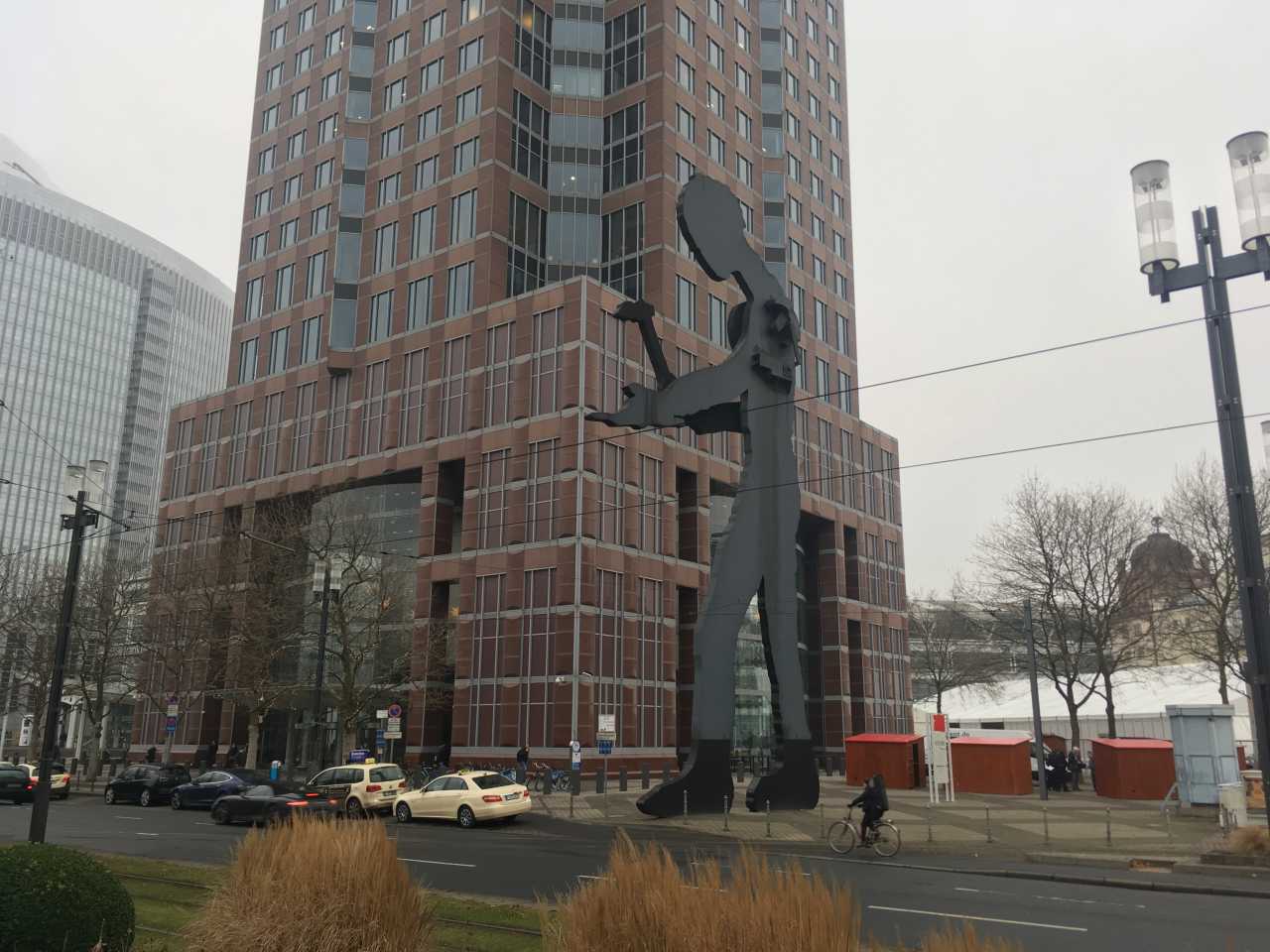
Today’s “Task of the Week”  focuses on the “Hammering Man”, a symbol of Frankfurt’s fair. The “Hammering Man” comes to one’s attention through his continuous hammering motion. The task is part of the “Weihnachtstrail” with task number 784. __ Task: Hammering Man The “Hammering Man” hammers continuously. How many hammer blows does the “Hammering Man” […]

Task of the Week

Today’s “Task of the Week”  focuses on the “Hammering Man”, a symbol of Frankfurt’s fair. The “Hammering Man” comes to one’s attention through his continuous hammering motion. The task is part of the “Weihnachtstrail” with task number 784.

__

Task: Hammering Man

The “Hammering Man” hammers continuously. How many hammer blows does the “Hammering Man” carry out in the month December?

__

To solve this problem, it is necessary to observe the motion of the “Hammering Man” and measure the duration of a blow (in seconds). This can be done through measuring the time for 10 cycles. Afterwards, the number of seconds for one day and for the month December should be determined. With help of a division, the number of hammer blows can be calculated for the month December.

In this task, the main part is to determine the frequence of a periodic motion through measuring. Therefore, the task can be seen as an examplary task which can be adapted to further locations where things move periodically. The focus is especially on the time units second, day and month, as well as their conversion. Further, the arithmetic operations multiplication and division are included. Therefore, the task is in connection with school mathematics and can be used from grade 4.

The task is very suitable, because it requires the presence and activity (measuring of the duration of a blow) of the pupils. Further, it is a realistic problem, which can be solved without special aid. The task offers the possibility to differentiate as the pupils can ask for help if needed. The sample answers can be found with the task in the portal.

Task of the Week: Advertisement Pillar

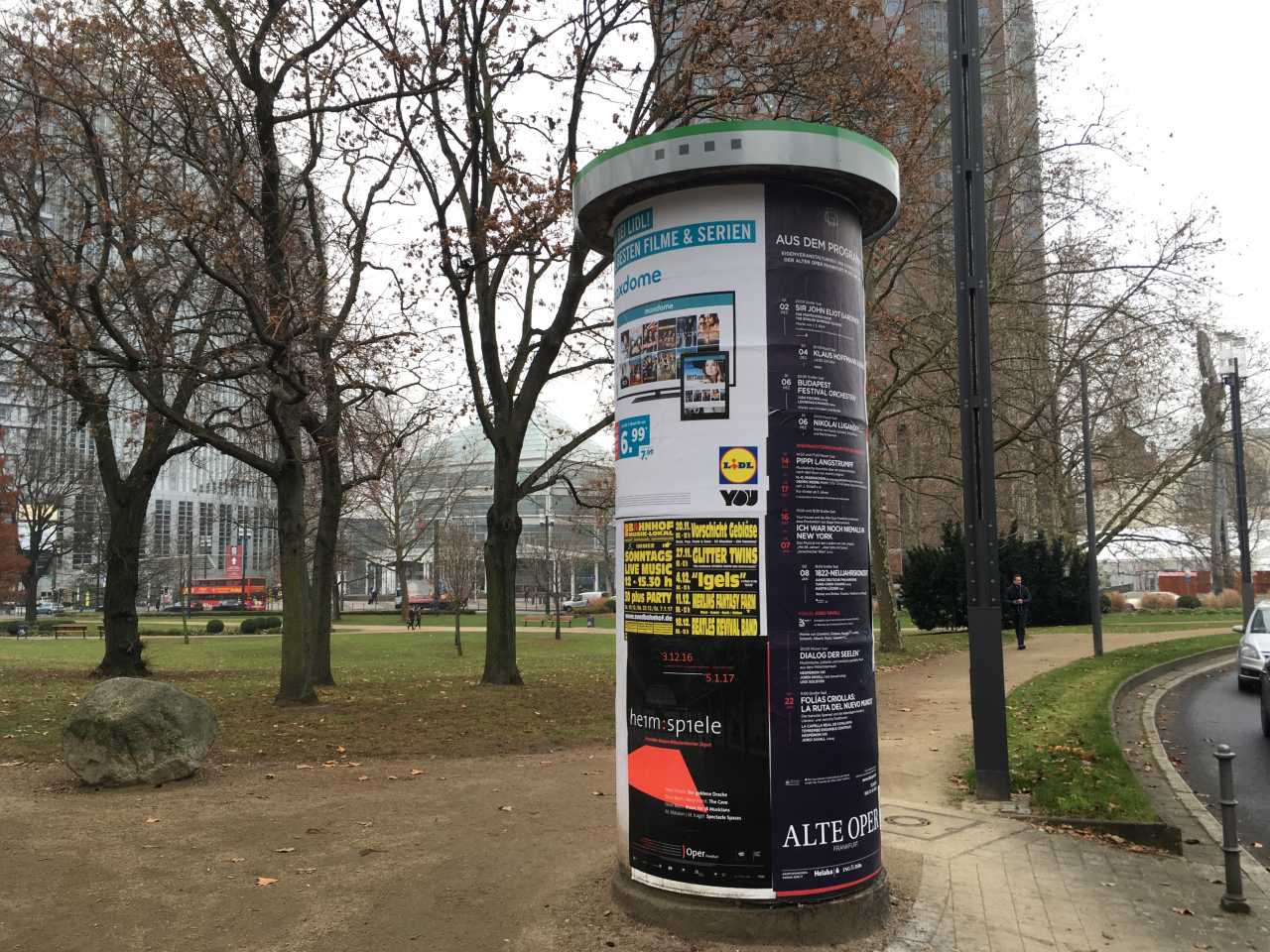
From now on, a selected task from the MathCityMap portal will be presented weekly. These tasks will be collected under the category “Task of the Week” and illustrate the diverse mathematic and realistic usages of the MathCityMap project. In this week, the focus is on the mathematic use of the advertisement pillar, exemplary included in […]

Task of the Week

From now on, a selected task from the MathCityMap portal will be presented weekly. These tasks will be collected under the category “Task of the Week” and illustrate the diverse mathematic and realistic usages of the MathCityMap project.

In this week, the focus is on the mathematic use of the advertisement pillar, exemplary included in the “Weihnachtstrail” in Frankfurt with task number 783.


Task: Advertisement Pillar

How many DIN A0  posters (84,1 cm x 116,9 cm) can be placed in portrait orientation and without overlapping?


To solve this task, it is necessary to measure the number of posters which can be placed in height and length. To do so, the perimeter and the height of the advertisement pillar have to be measured. Afterwards, the task can be solved with a multiplication. The task belongs to geometry, especially to the branches “space and shape” and “measuring” and can be used from grade 5. As it is asked for the number of posters, the solution must be a natural number.

This task is particularly suitable in terms of the MathCityMap concept as advertisement pillars exist in every city. Therefore, the task can be adapted easily and quickly to other surroundings which is underlined through the fact that similar tasks can be found in other trails as well. This task is an effective activity to do outdoor mathematics.