Task of the Week: Nine Figures

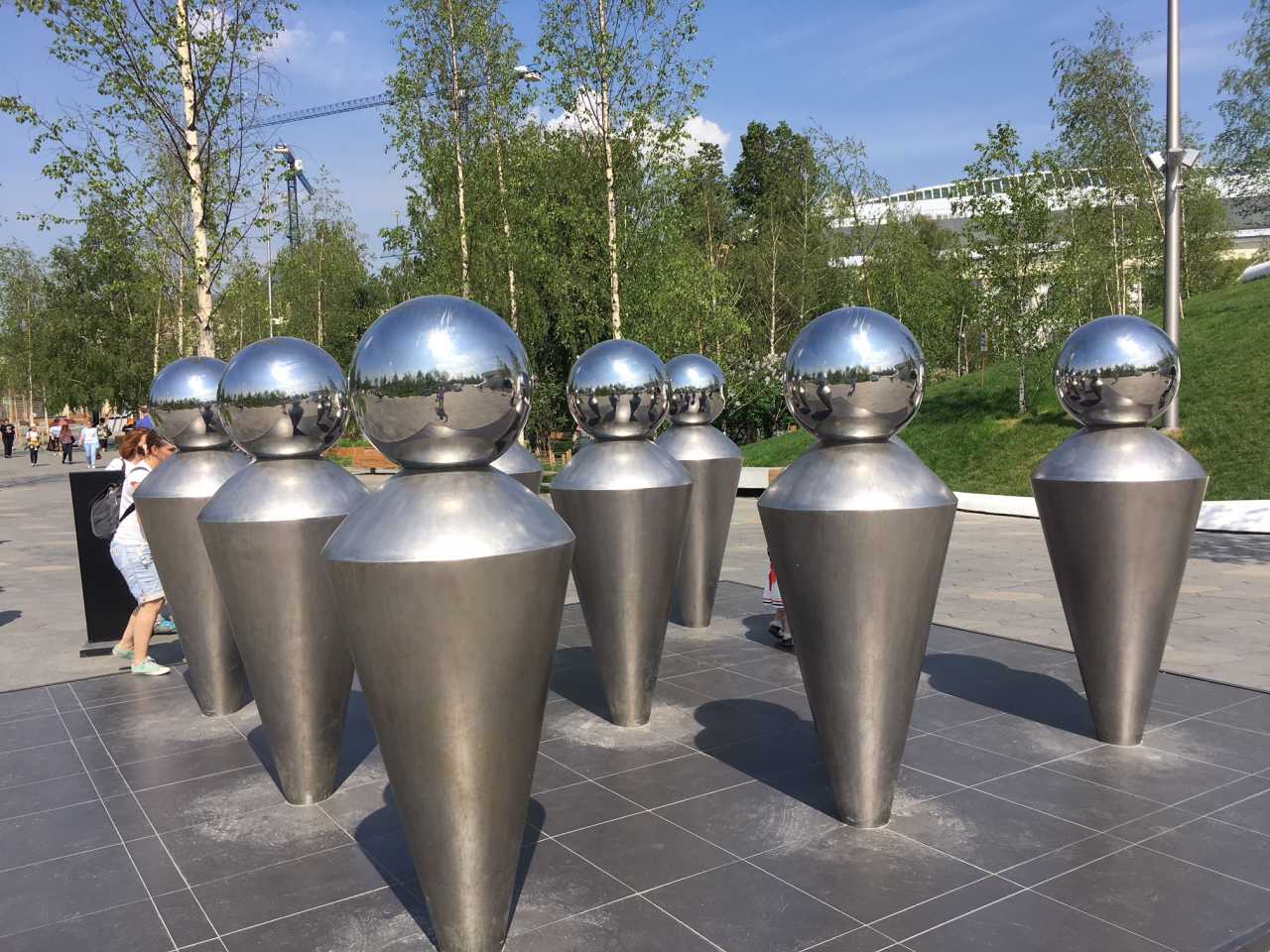
Today’s best practice example in the Task of the Week focuses on composite geometric bodies with truncated cones and a sphere. Task: Nine figures (Task number: 3780) Determine the volume of one of those figures. Give the result in liters. As mentioned, the figure can be divided into a large, a small truncated cone and […]
Today’s best practice example in the Task of the Week focuses on composite geometric bodies with truncated cones and a sphere.


Task: Nine figures (Task number: 3780)

Determine the volume of one of those figures. Give the result in liters.


As mentioned, the figure can be divided into a large, a small truncated cone and a sphere. This step is an important step by ignoring smaller derivations and through the mental disassembly of the figure. Afterwards, a clever and accurate way to determine the respecitve heights and/or radii must be chosen. By adding the volumes, the total volume results. By specifiying four possible solutions via multiple choice, it is possible to determine the result by approaching and estimating.

Task of the Week: Diogenes and his Barrel

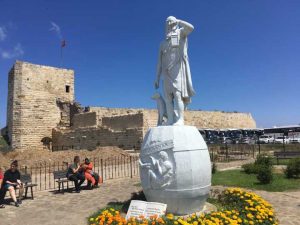
Doing mathematics surrounded by a fantastic setting – that promises the current Task of the Week to the statue of Diogenes of Sinope. Known as an influential Greek philosopher, he is said to have no permanent home and, instead, often spent the night in a barrel. This barrel is the core of our mathematical calculations. […]

Task of the Week

Doing mathematics surrounded by a fantastic setting – that promises the current Task of the Week to the statue of Diogenes of Sinope. Known as an influential Greek philosopher, he is said to have no permanent home and, instead, often spent the night in a barrel. This barrel is the core of our mathematical calculations.


Task: Diogenes and his barrel (task number: 4467)

Determine the volume of the barrel in which Diogenes lives. Give the result in liters.


How can the barrel best be described by known geometric bodies? Certainly different models are possible. A sufficiently accurate model is the use of two truncated cones, with each of the bases with the larger radius in the middle of the barrel abut each other.

The height is easily determined by measuring the height of the barrel divided by 2. By means of the circumference in the middle of the barrel and at the bottom / top each, the small and large radius can be determined. Hereby, the regular patterns on the barrel can help.

Using the formula for a truncated cone then results in the approximate volume for the entire barrel.

Task of the Week: Flowerpot

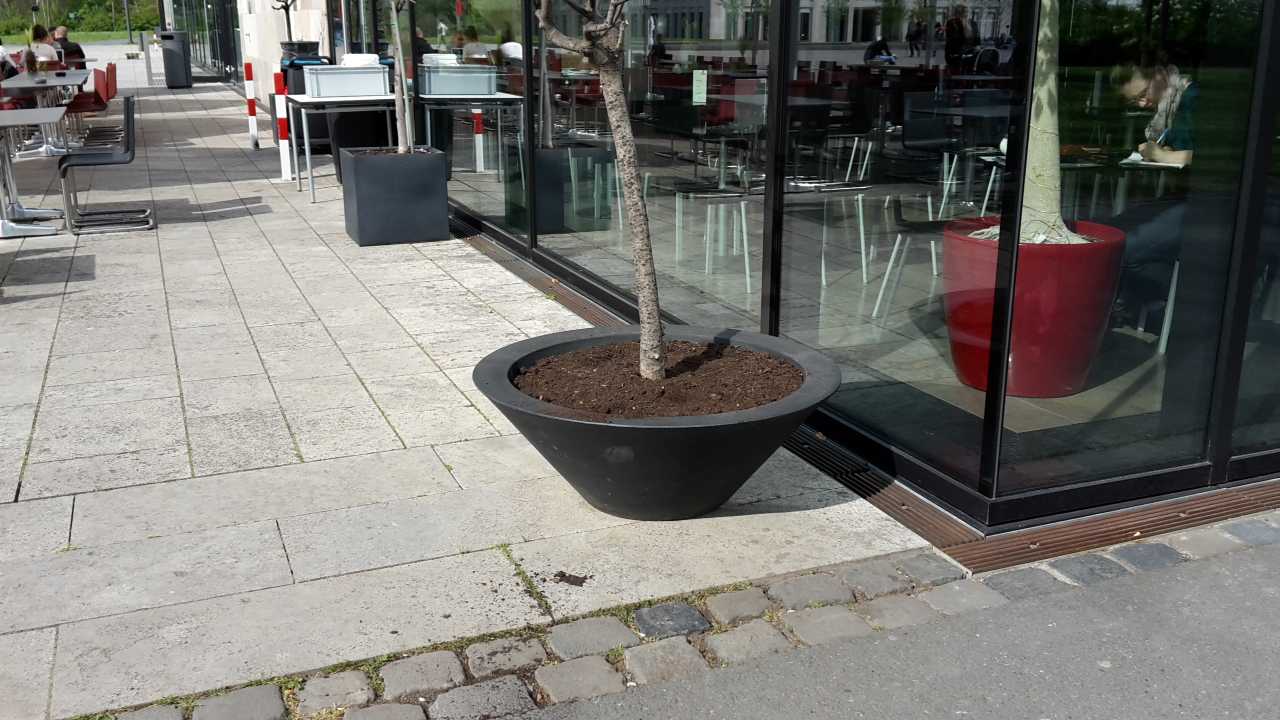
In case you search in our MathCityMap portal, you might notice that flowerpots enable various geometric tasks. Solely through the high frequency and the different shapes (cylinder, prismn with hexagonal area, etc.), the question how many liters of soil fit into the flowerpot, can be realised. In today’s Task of the Week, the flowerpot has […]

Task of the Week

In case you search in our MathCityMap portal, you might notice that flowerpots enable various geometric tasks. Solely through the high frequency and the different shapes (cylinder, prismn with hexagonal area, etc.), the question how many liters of soil fit into the flowerpot, can be realised. In today’s Task of the Week, the flowerpot has the shape of a truncated cone.


Task: Flowerpot (Task number: 1219)

How many liters soil fit into the flowerpot, when it is filled until the top?


The formula for the volume of a truncated cone might not be known by all students. Therefore, they need strategies in order to solve the task, e.g. by means of the difference of a big and a small come. Further challenges are the determination of the small radius with help of the circumference and the consideration of the edge/bottom, which is obviously not filled with soil.