Task of the Week: Combinatorical Stair

The focus of today’s Task of the Week is a combinatorial question. In addition to the typical combinatorical question for the number of possibilities, an application of the Fibonacci numbers, which can be discovered by the students, is included as well. Task: Combine Staircase (task number: 1199) How many options are available to climb the stairs […]

Task of the Week

The focus of today’s Task of the Week is a combinatorial question. In addition to the typical combinatorical question for the number of possibilities, an application of the Fibonacci numbers, which can be discovered by the students, is included as well.


Task: Combine Staircase (task number: 1199)

How many options are available to climb the stairs by climbing one or two steps per step? The steps can also be combined.

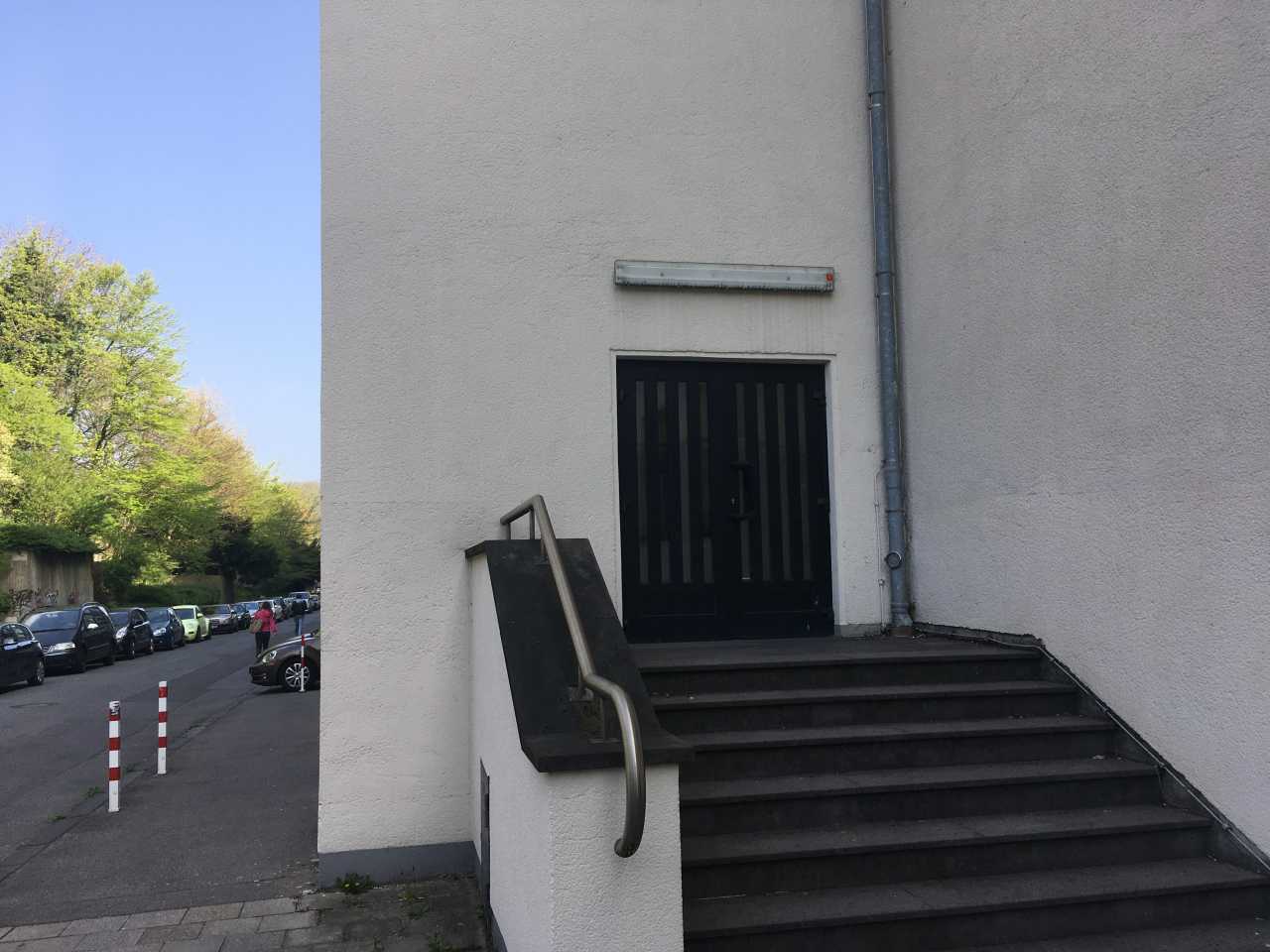
There are various possibilities for solving the problem. On the one hand, it is possible to systematically record different combinations of 1 and 2 steps. In doing so, the students can use the stairs directly and conclude which combinations are possible. In another consideration, the fact that the last step comprises either one step or two steps is used. Leaving this last step, the number of possibilities for a staircase with n steps can be determined using the possibilities for n-1 and n-2 steps. This reasoning leads to the Fibonacci numbers, a recursive sequence in which a number results from the addition of its two predecessors.

The task is therefore a successful example of “hidden” mathematics in simple everyday objects. It offers the possibility to go deeper into the topic Fibonacci numbers or to let the students discover them. At the same time, the problem can also be solved by systematic testing, so that it can be used from class 6. Its topic belongs to combinatorics.
Happy Birthday MCM-App! Numbers and Facts

At the 3rd of March, the MCM-App became one year old. At first, all the best to it! We would take this opportunity to draw an interim conclusion. Development The app did not always look the way as it does today (see cover picture). It was a long development process until the app satisfied the […]

General

At the 3rd of March, the MCM-App became one year old. At first, all the best to it! We would take this opportunity to draw an interim conclusion.

Development

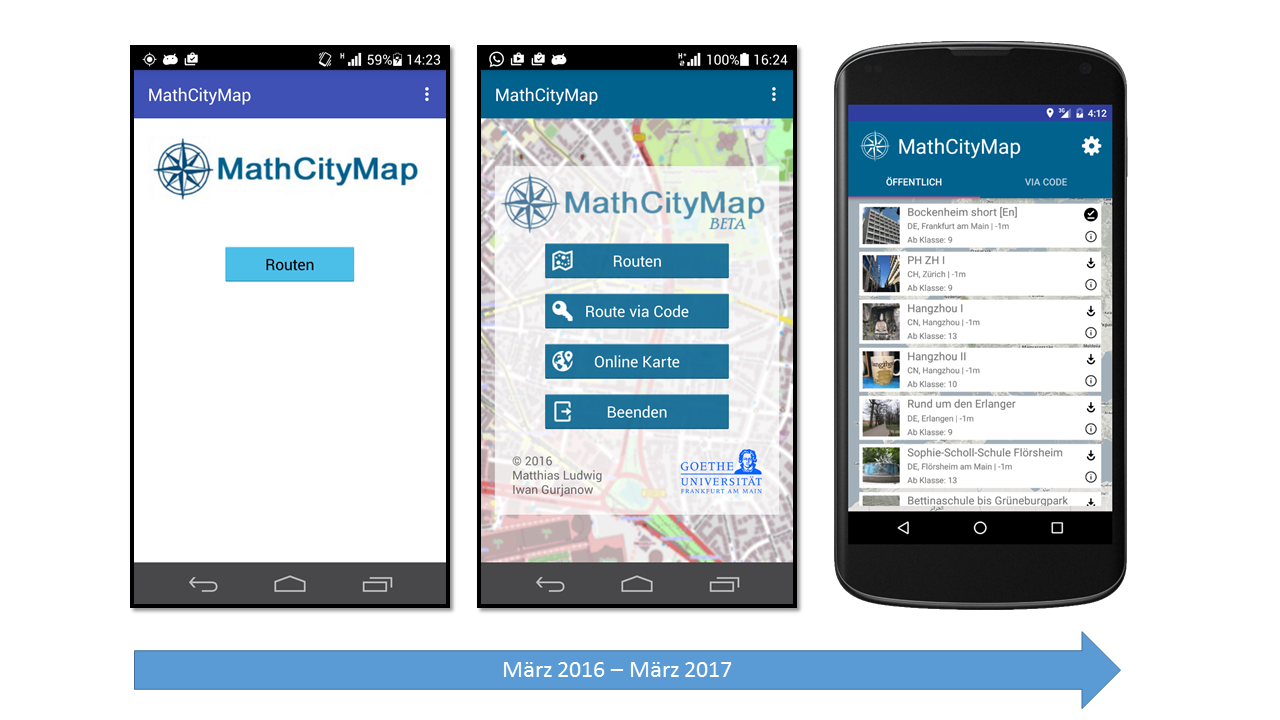
The app did not always look the way as it does today (see cover picture). It was a long development process until the app satisfied the demands. To do so, we presented and used the app in numerous events and let the feedback enter the further development. Through this, functions such as the guided tour (start from a selected task), the orange interval and first gamification elements were included. Meanwhile, the app arrived in its 14th version under the designation “1.82”. Nevertheless, we still have further ideas, which we want to implement in the future.

Prospects

We are pleased with the iOS-version of MCM, which will probably appear in the beginning of April. Further, in nearby future, it should be possible to create GPS-based tasks (e.g. to position oneself in a right angle from two points). More, task templates for objects which can be found often in the environment (e.g. advertisement pillars) should facilitate the creation of tasks extremely. The supplemental project “MCM-Control” should allow teachers to follow the learners’ progress and intervene if necessary.

Numbers

The MCM-App for Android has been downloaded and installed over 500 times and has an actual evaluation of 3,8/5 stars (we look forward to further evaluations!). Now, the MCM web portal includes over 1000 tasks, which are created and revised by about 200 registered users. The tasks can be located in different areas, e.g. Hamburg, Potsdam, Rhein-Main area, Erlangen, Wetzlar, Münster, Saarbrücken, Würzburg, Mannheim, Lyon (France), Semarang (Indonesia) and many more. In the past year, we offered ten events for teachers to get to know outdoor mathematics with MathCityMap.

It will be interesting to see what can be expected for 2017.