Task of the Week: Ei ei Käptn

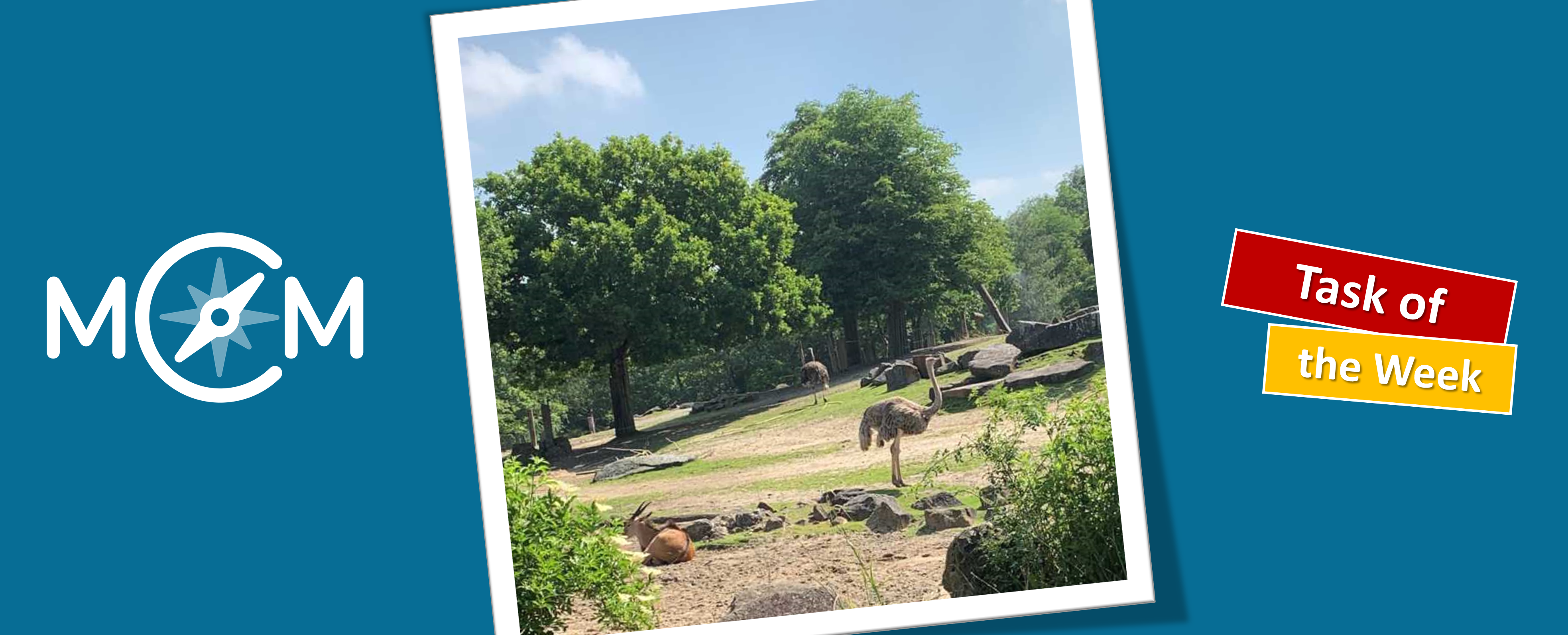
In Münster we find our new task of the week. Here the research assistant of the University of Münster Lea Schreiber has created some math problems in the zoo (trail code: 012859). Here we present the task “Ei ei Käptn”. How did you get in contact with MathCityMap? I work as a research assistant at […]

In Münster we find our new task of the week. Here the research assistant of the University of Münster Lea Schreiber has created some math problems in the zoo (trail code: 012859). Here we present the task “Ei ei Käptn”.

How did you get in contact with MathCityMap?

I work as a research assistant at the WWU Münster and came across the project at a conference. Since then I have been working with the app from time to time and create trails for my group of giftet students “Kleine Mathe-Asse” (see below for a project description). Additionally I participated in a workshop in Münster by the MathCityMap educators Matthias Ludwig and Iwan Gurjanow. I can well imagine using the app later in my math classes.

Describe your task. How can it be solved?

The task was created as part of an “excursion trail”, because the math students could not go on an excursion this year due to the Corona pandemic. Accordingly, I thought it would be a nice idea if the children could have the opportunity to do a little rally through the zoo on their own with the help of MCM. First of all, they have to find the information board about the African red-necked ostriches on which the information necessary to solve the actual task is written. This consists of finding out how many ostrich eggs are needed to bake a gigantic amount of pudding slices, if the remaining eggs could still be bought in the supermarket. Once the children have found out that 1 ostrich egg replaces about 25 chicken eggs, they can use the information from the recipe for the task (343 eggs) to determine how many ostrich eggs or normal eggs they need for baking. That would be 13 ostrich eggs (13 x 25 = 325 hen eggs) and 18 hen eggs. Since the children may also consider using only ostrich eggs and thus no supermarket eggs, a solution interval was given where the solution numbers 13 and 14 are correct.

What didactic goals do you pursue with this task?

For the solution of the task, different competences are required from the children/”Kleine Mathe-Asse”. On the one hand, they have to filter out the relevant information on the information board and from the task. In both cases, significantly more information is given than is actually necessary. Once they have done this, they have to come up with a solution strategy to get the number of ostrich eggs (e.g. by trying and approaching the 343 eggs). For this they need knowledge of division or multiplication and addition or subtraction. A mathematical sensitivity and the ability to structure on the pattern level are also helpful in order to quickly arrive at a solution or to think of a solution approach/strategy with meaningful number spaces. Less able-bodied children also have the chance to solve the task successfully by gradually extrapolating the 25 series up to 325 or 350. This takes a little more time, but ultimately gets them to the goal.

Information on the promotion of gifted children in Münster & Frankfurt:

Click here for the project “Mathe für kleine Asse” in cooperation with Lea Schreiber at the University of Münster. The Goethe University Frankfurt also offers a mathematical program for gifted students which is leaded by Simone Jablonski: “Die jungen Mathe-Adler Frankfurt”.
Task of the Week: Vertebra

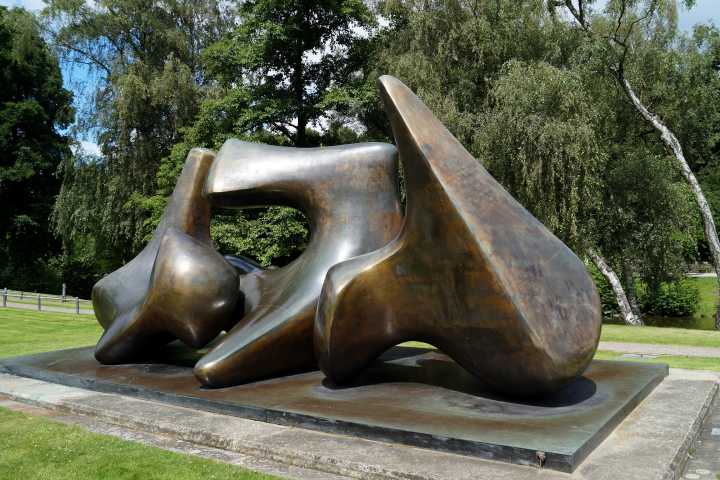
The city center of Münster provides several different tasks as one can notice within the portal map. Also in the trail around the Aasee, Münster presents itself from a various mathematical side. Aufgabe: Vertebra (Task Number: 4096). The work of art by Henry Moore created in 1974 represents several idealized vertebrae. These vertebrae are deliberately […]

Task of the Week

The city center of Münster provides several different tasks as one can notice within the portal map. Also in the trail around the Aasee, Münster presents itself from a various mathematical side.


Aufgabe: Vertebra (Task Number: 4096).

The work of art by Henry Moore created in 1974 represents several idealized vertebrae. These vertebrae are deliberately close, yet unconnected to each other. Imagine, they were being put together and seen as part of an adult’s human spine. In reality, an average vertebra of a 1.80 m adult is about 2 cm long. Guess how big a giant would be whose spine would consist of vertebrae of this size (in m).


In this task, especially estimation and modelling are forced. Through the detail on the relation of body size and size of a human vertebra in the task, the size of the vertebra can be determined as an object of reference. An adequate measurement and calculation by means of the realtion results the questioned size.

MCM is part of a project at Münster University

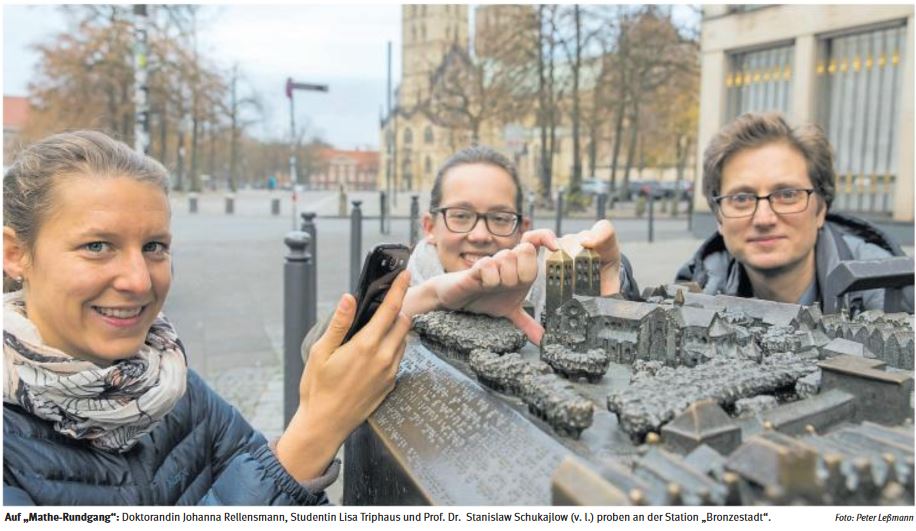
During summer, we visited Münster University. Even the WDR (a German TV station) reported on this. Since that, the work group headed by Stanislaw Schukaljow has developed several tasks and an own trail in Münster. Of course, we are very pleased to see that und hope for many visitors of the trail. On page 3 […]

General

During summer, we visited Münster University. Even the WDR (a German TV station) reported on this. Since that, the work group headed by Stanislaw Schukaljow has developed several tasks and an own trail in Münster. Of course, we are very pleased to see that und hope for many visitors of the trail. On page 3 of the university newspaper from December 2017, you can read the full article.

MCM at WDR

After our presentation in Münster at the beginning of the week, the WDR created a short video about our MCM app. A student tested the trail in Münster and did quite well. Have fun watching. Click here for the video.

General

After our presentation in Münster at the beginning of the week, the WDR created a short video about our MCM app. A student tested the trail in Münster and did quite well.

Have fun watching. Click here for the video.

MCM in Münster at the Aasee

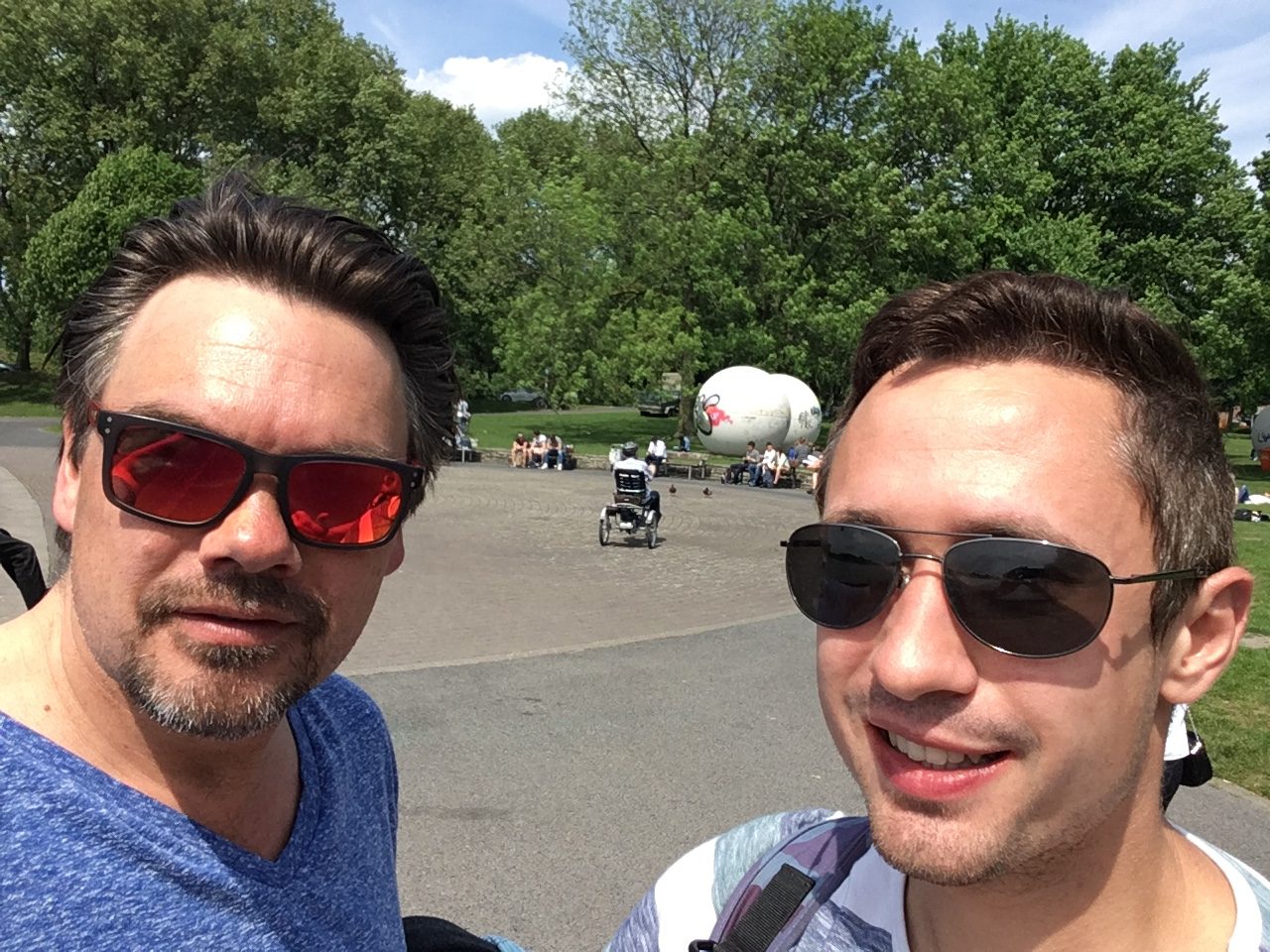
On Tuesday, 23.05.2017, members of the MCM team were invited by the research team of the University of Münster to create a Math Trail in the north of the Aasee. They also informed interested teachers about the basic didactic theories as well as the technical possibilities of the MCM project. 28 teachers and interested people followed the invitation and, according […]

EventsMath Trails

On Tuesday, 23.05.2017, members of the MCM team were invited by the research team of the University of Münster to create a Math Trail in the north of the Aasee. They also informed interested teachers about the basic didactic theories as well as the technical possibilities of the MCM project. 28 teachers and interested people followed the invitation and, according to the theory, tested the app and the tasks of the route Aasee Nord.