Task of the Week: Percentage Calculation at the Entrance

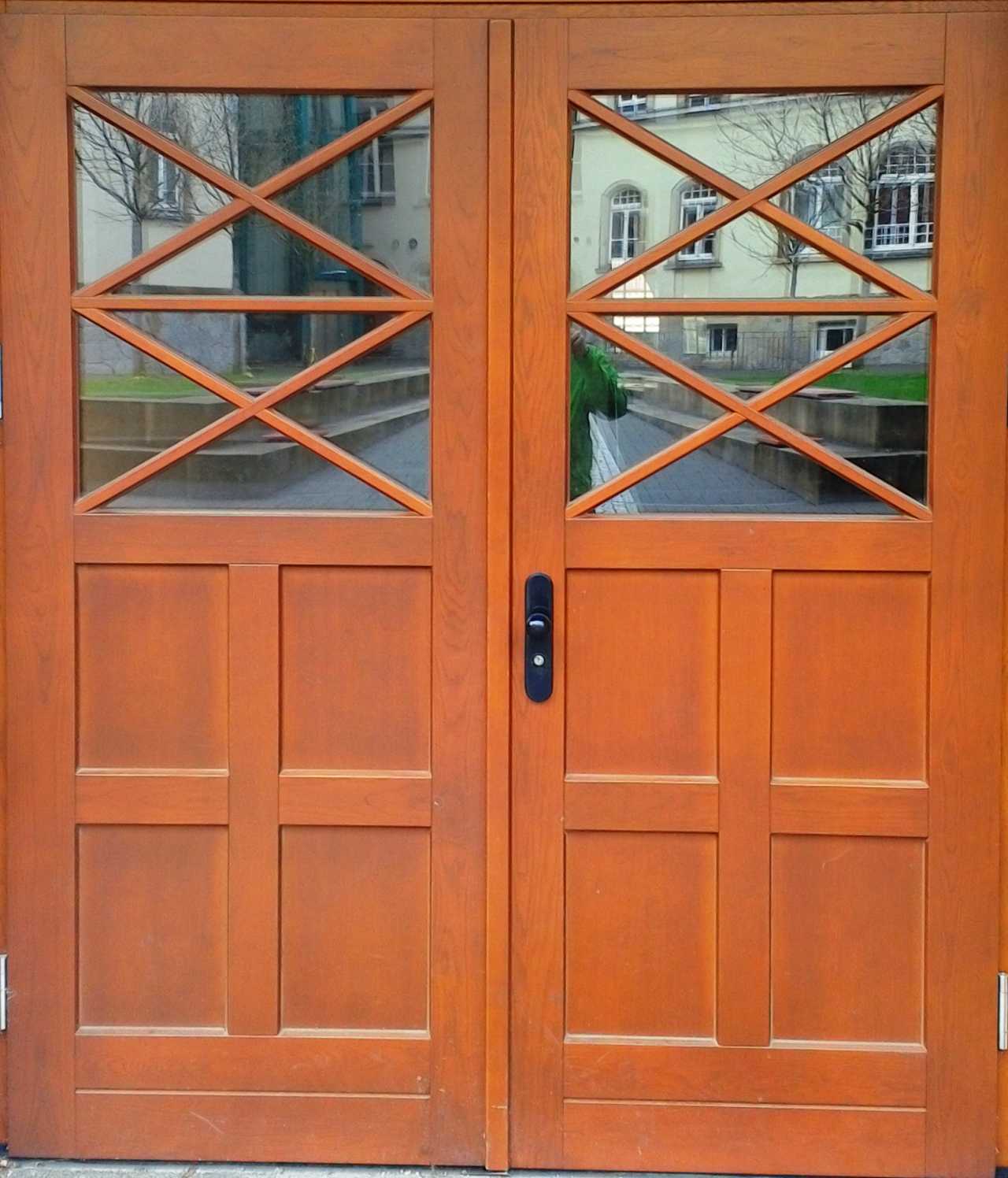
Today’s “Task of the Week” was created by Markus Heinze in the trail “Schillergymnasium” in Bautzen and combines percentage calculation with a geometric question. Task: Percentage Calculation at the Entrance (task number: 1262) Determine how many percent of the entrance doors are made of glass. Mr. Heinze was kindly available for a short interview so that we can present […]
Task of the Week

Today’s “Task of the Week” was created by Markus Heinze in the trail “Schillergymnasium” in Bautzen and combines percentage calculation with a geometric question.


Task: Percentage Calculation at the Entrance (task number: 1262)

Determine how many percent of the entrance doors are made of glass.


Mr. Heinze was kindly available for a short interview so that we can present his assessment and experience with the task. We would like to thank him very much!

How did you get the idea for this task?
I wanted to create different tasks for an 8th or 7th class. I had a free time but it rained right at that time. That’s why I stood at the entrance at first and thought about how to install the entrance door and so, the idea arose to connect triangular areas and percentage calculation.

Which mathematical skills and competencies should be addressed in the task?
On the one hand, of course, modeling and problem solving is of high importance, because I had noticed deficits in the competence test in this area among the students in the 8th class. But also the visual ability is strengthened, of course, since real objects are being worked with and the students receive an idea of ​​areas and percentages.

Has the task already been solved by pupils? If so, what feedback was given?
The task was solved by students of a 9th class and they found it relatively simple but interesting, but this is also because they had not worked with the app before and were generally enthusiastic about the matter. I think for a 7th or 8th class it is suitable.
Task of the Week: Stone

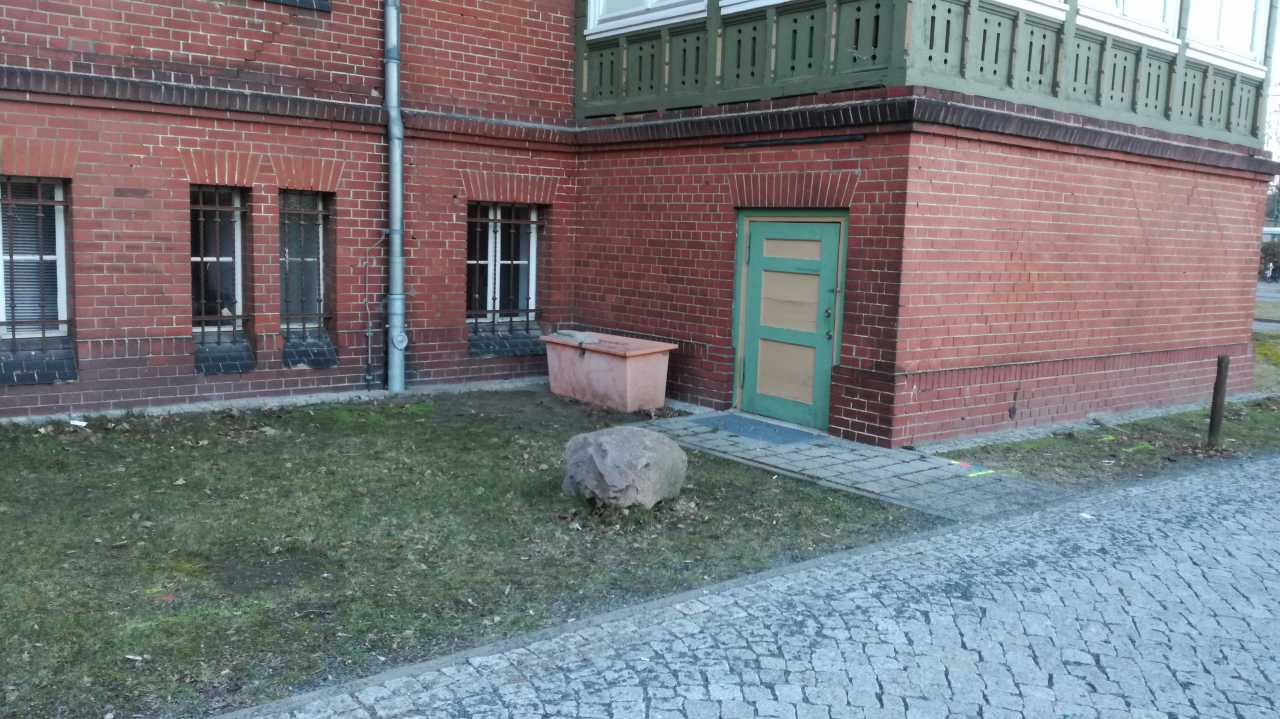
This week’s Task of the Week addresses, in particular, the modeling competence of the students. It is a question of approximating the weight of a stone as closely as possible by approximating the stone through a known body. Task: Stone (task number: 1048) What is the weight of the stone? 1cm³ weighs 2.8g. Give the […]

Task of the Week

This week’s Task of the Week addresses, in particular, the modeling competence of the students. It is a question of approximating the weight of a stone as closely as possible by approximating the stone through a known body.


Task: Stone (task number: 1048)

What is the weight of the stone? 1cm³ weighs 2.8g. Give the result in kg.


In order to approach the object by means of a geometrical basic body, the students must refrain from slight deviations of the real object and the ideal body. In particular, a prism with a trapezoidal base side is suitable. If this step is done, the students determine the pages relevant to this body through measurements and then calculate its volume. The last step is the calculation of the weight with the given density as well as the conversion in kilograms.

With this task, it is especially nice to see that there is not always one correct result for mathematical questions. Through different approaches and measurements the pupils receive different results. In order to obtain the most accurate result as possible, the determined values ​​must be within a defined interval. Translating from reality into the “mathematical world” also plays a decisive role here in the sense of modeling competence.

The task requires knowledge about the basic geometrical bodies and in particular about the prism with a trapezoidal base surface. It is therefore to be classified in spatial geometry and can be solved from class 7.

Task of the Week: Pavilion

The present task of the week is about a geometric question. It involves the area calculation of the roof surface of the illustrated pavilion. Task: Pavilion (task number: 665) Determine the roof surface of the pavilion! Give the result in m². For this purpose, the pupils should recognize that the roof surface consists of several isosceles […]

Task of the Week

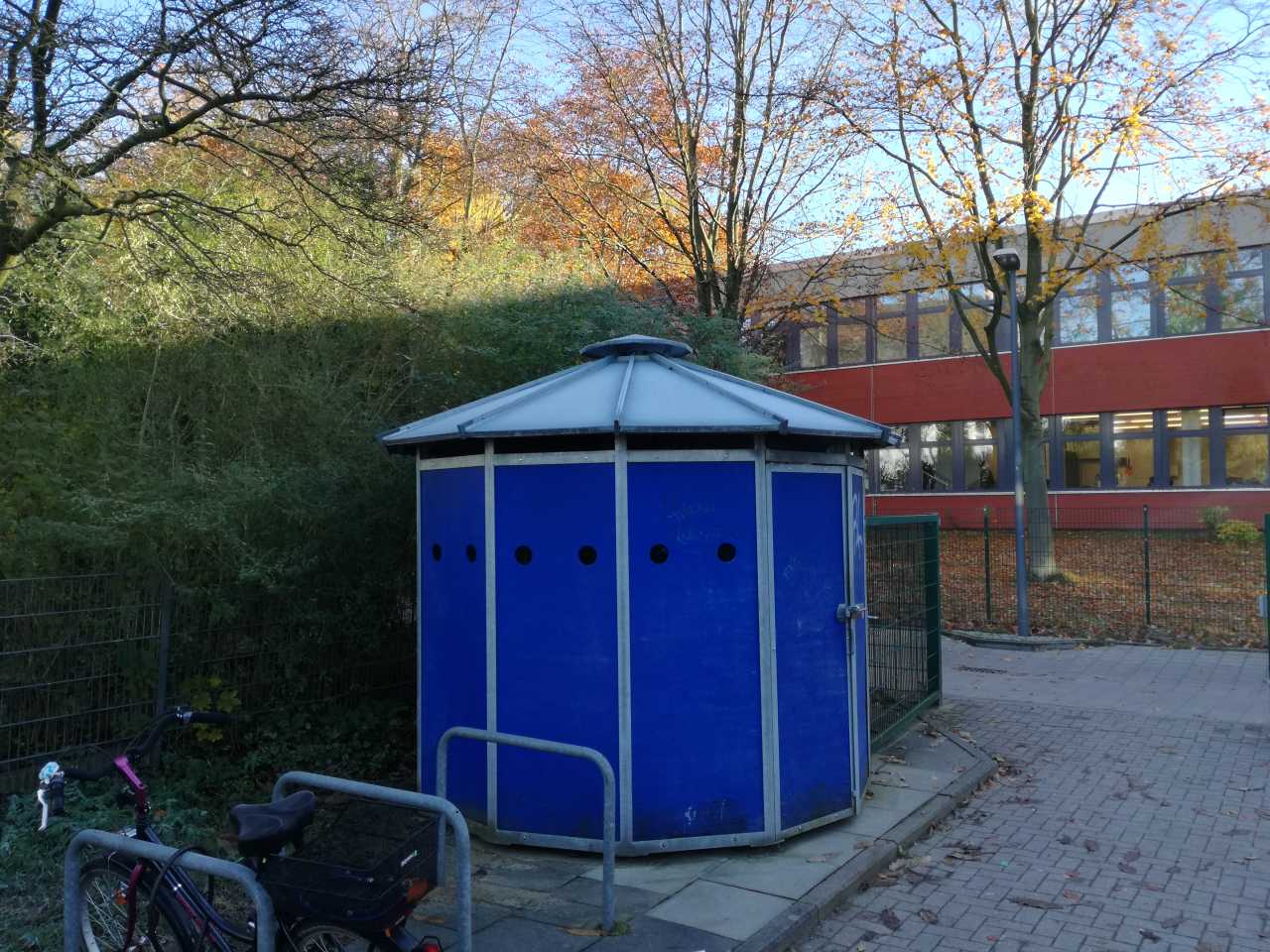
The present task of the week is about a geometric question. It involves the area calculation of the roof surface of the illustrated pavilion.


Task: Pavilion (task number: 665)

Determine the roof surface of the pavilion! Give the result in m².


For this purpose, the pupils should recognize that the roof surface consists of several isosceles triangles. It is therefore sufficient to measure the height and base of one triangle and to calculate the surface content using the formula for the area content of triangles. The total area can then be determined by multiplication by the number of triangles.

In order to solve the problem, the pupils must therefore be familiar with the area calculation for triangles. In the task, the “geometrical view” is trained by the triangular shape being recognized in a composite figure. Here, an essential aspect of outdoor mathematics is found, namely the recognition of mathematical concepts and objects in reality, as well as the use of mathematical knowledge to solve everyday questions. Solving the task is possible from class 6 onwards with the topic triangles.

Task of the Week: Passage prohibited

The current “Task of the Week” shows that many geometrical questions can be found in different traffic signs. This concerns the circular “passage prohibited” sign and, in particular, the question of the ratio of red and white surfaces. Task: Passage prohibited (task number: 1102) How many percent of the area of ​​the “passage prohibited” sign is red? […]

Task of the Week

The current “Task of the Week” shows that many geometrical questions can be found in different traffic signs. This concerns the circular “passage prohibited” sign and, in particular, the question of the ratio of red and white surfaces.


Task: Passage prohibited (task number: 1102)

How many percent of the area of ​​the “passage prohibited” sign is red?


For the calculation, the pupils have to use their knowledge about the area of ​​the circle. In addition, it must be noted that the shield is not only white on the inside, but has a white edge as well, which must be considered for an exact calculation. The pupils measure the different radii, calculate the total area and the area of ​​the two white surfaces. By means of subtraction the surface content of the red ring is obtained. In the last step, the percentage of the red area has to be calculated.

The task can be classified in the area of ​​geometry, more specifically in circles and area contents, and is releasable from class 7 onwards. Other traffic signs can be integrated in a similar way into geometric questions, such as the “entrance prohibited” sign on a one-way street. In particular, the different flat figures on street signs (circle, triangle, rectangle, octagon) motivate different tasks.

Task of the Week: Cylinder on the Rhine

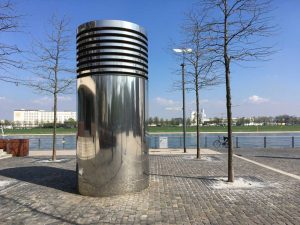
The present task of the week is about geometric figures. In the task “Cylinder on the Rhine”, located in Cologne, the aim is to determine the radius of a cylinder by means of measurements or the relationship between radius and circumference of a circle. Task: Cylinder on the Rhine (task number: 1183) Determine the radius of […]

Task of the Week

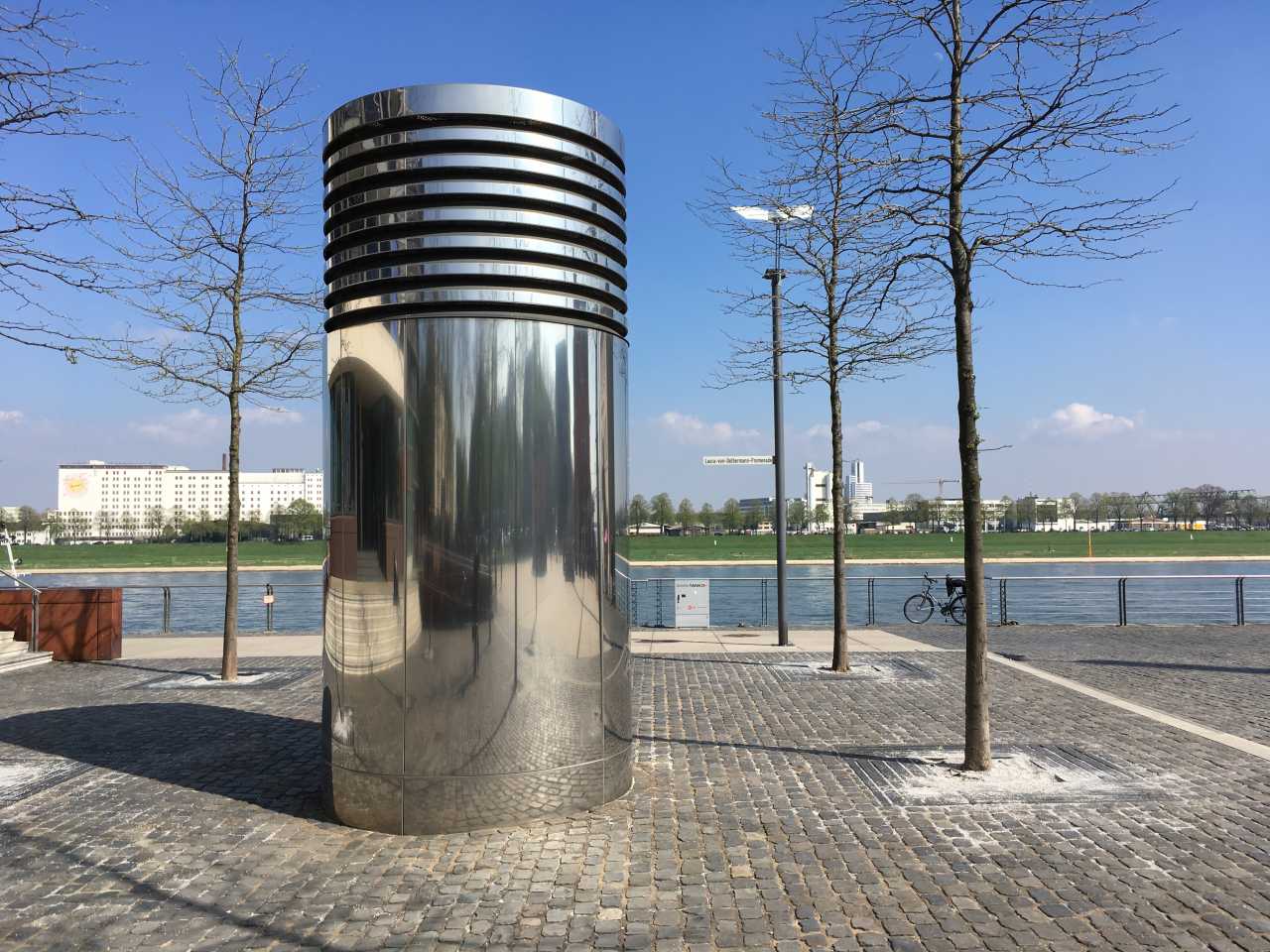
The present task of the week is about geometric figures. In the task “Cylinder on the Rhine”, located in Cologne, the aim is to determine the radius of a cylinder by means of measurements or the relationship between radius and circumference of a circle.


Task: Cylinder on the Rhine (task number: 1183)

Determine the radius of the cylinder. Give the result in m.


The task can be solved in different ways. One possibility is to use the relationship between the circumference of the circle and the diameter or radius. The result is then obtained by measuring the circumference. Alternatively, the radius can be determined by means of the inch post and suitable application (here the right angle plays a role). The task can therefore be classified into the topic circle, in particular the formula for the calculation of the circumference. The task shows that mathematical tasks can often be solved in various ways without calculation. Although the task does not require any profound knowledge of the cylinder (apart from the fact that the base is circular), it can be precisely in this aspect, and a connection of planar and spatial geometry can be made clear.

It can be used starting from class 9.

Task of the Week: The Hand

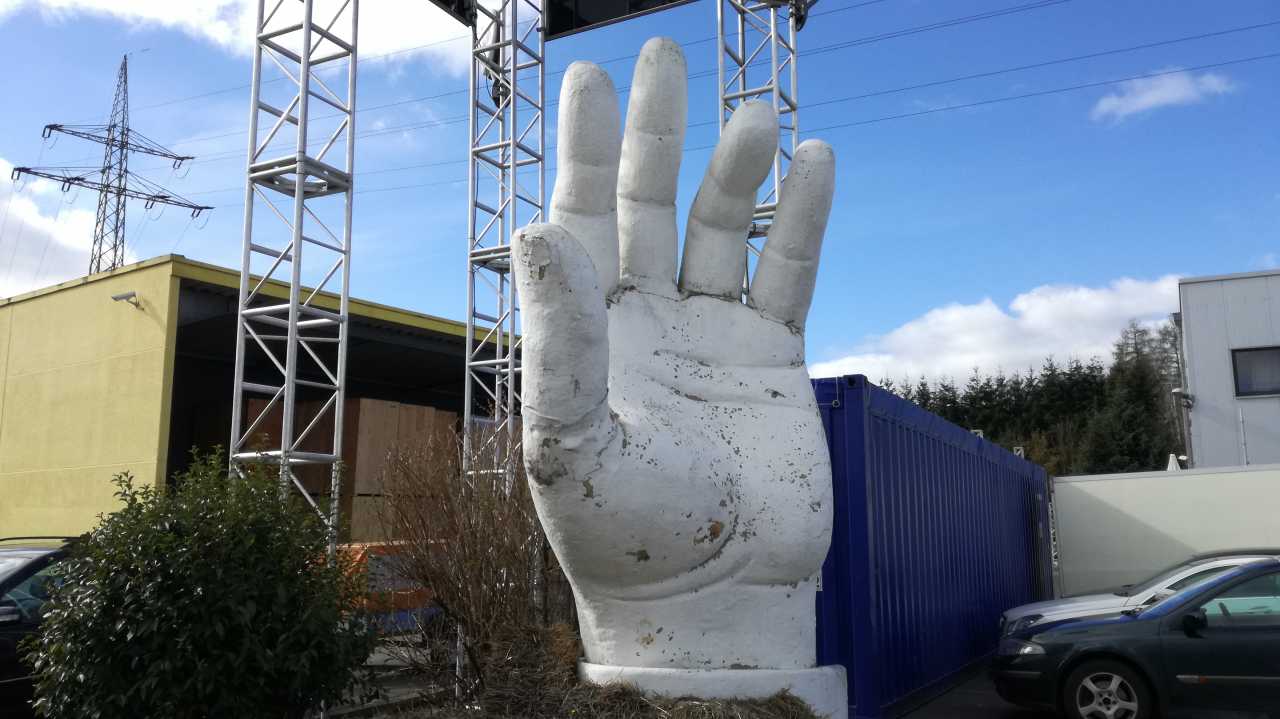
The present task of the week is about a sculpture in form of a hand. In this form, it can be found in the Dillfeld Trail in Wetzlar. The aim of the task is to determine the body size of the person to whom this hand would fit.  Task: The Hand (task number: 1092) How big […]

Task of the Week

The present task of the week is about a sculpture in form of a hand. In this form, it can be found in the Dillfeld Trail in Wetzlar. The aim of the task is to determine the body size of the person to whom this hand would fit.


 Task: The Hand (task number: 1092)

How big would a man be in meters with a hand of this size?


The pupils should measure a finger that is easily accessible to them. Especially the thumb offers itself for it. How can the thumb size be related to the body size? For conversion, the own body can play a role by correlating the thumb size and the body size. Then the body size of the human with the shown hand can be determined. The students use the idea of ​​measuring their own body and the hand sculpture. In particular, relations and sizes play a role. The task can be used from class 6 on with the development of relations.

Task of the Week: On large Feet

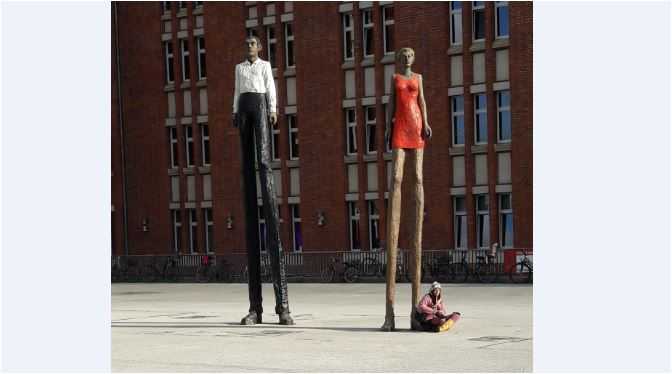
This week we would like to present the task “On a big Foot”. It is located close to the main railway station in Hamburg and is part of the trail “In and around St. Georg”. Task: On large feet (task number: 647) These figures are created by the contemporary German sculptor Stephan Balkenhol. I would […]

Task of the Week

This week we would like to present the task “On a big Foot”. It is located close to the main railway station in Hamburg and is part of the trail “In and around St. Georg”.


Task: On large feet (task number: 647)

These figures are created by the contemporary German sculptor Stephan Balkenhol. I would like to know from you: What shoe size does the man have? For shoe sizes, there are four common systems worldwide. In Germany, European shoe sizes are the usual measure. They are based on the so-called “Parisian Stitch”. The stitch is a length measure with which a shoemaker specifies the length of a stitch and thus also the shoe size of the complete shoe. A French stitch or Parisian stitch is ⅔ centimeters long. The shoe last is a piece of wood, plastic or metal which is modeled on the shape of a foot and used to build a shoe. Since the feet should have some space, the length of the shoe last corresponds approximately to the foot length + 15 mm.


For the task, the pupils first measure the length of the man’s shoe and calculate the length in “stitches” so that the European shoe size can be specified. A major component of the task is the measurement and conversion of quantities. In doing so, the unity of the stitch, which should be unknown to most students, is used. It can be used from class 6 onwards. In addition, the first proportional basic ideas can be formulated for the conversion and could be a suitable transition to the proportionality and the rule of three.

The task was created by Dunja Rohenroth. She has already been able to test this task with her students and sees in this task the special advantage that the result cannot be solved by means of an internet search. The aspects of the presence and activity of the pupils are thus particularly emphasized.

Task of the Week: Serpent Surface

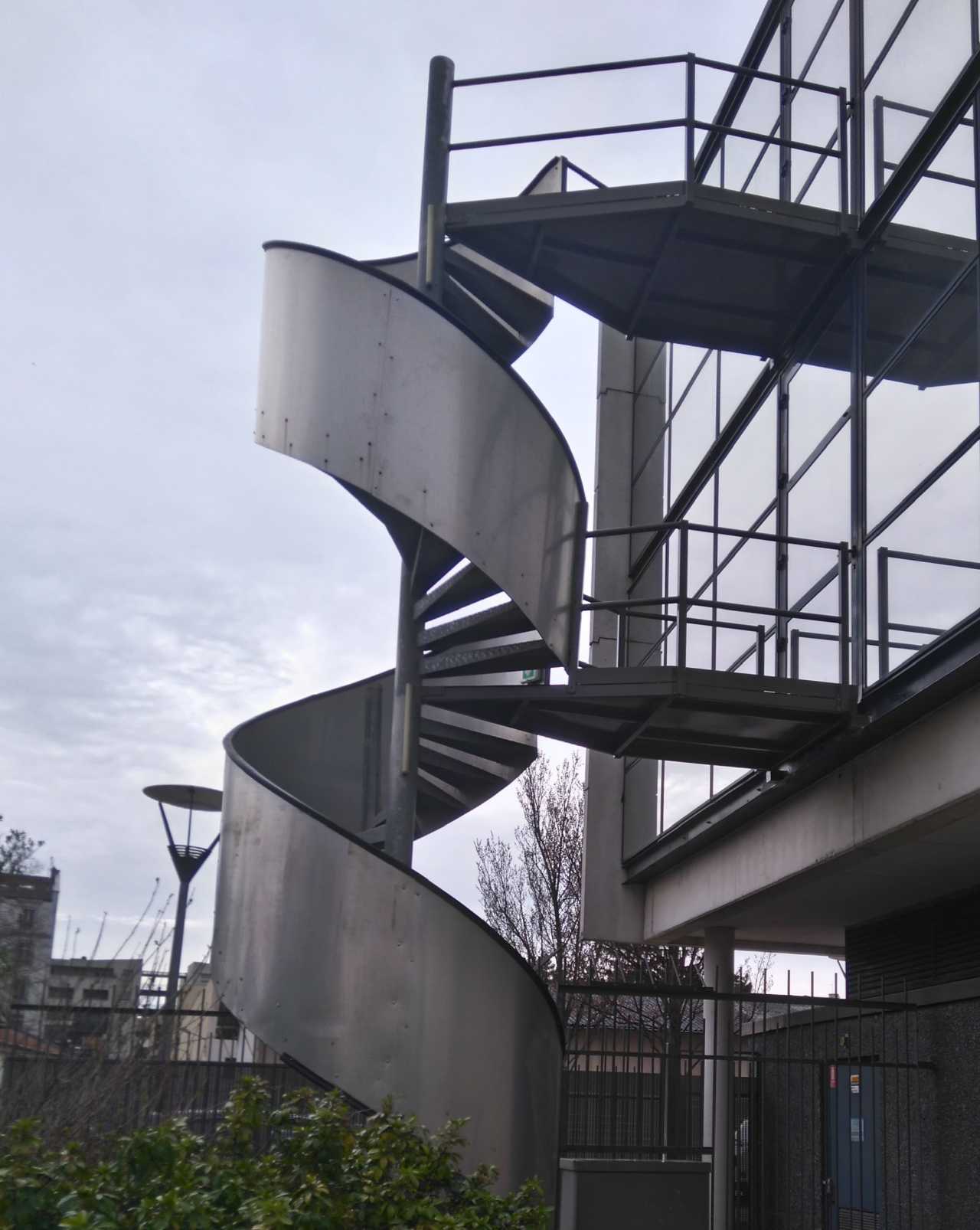
Today’s “Task of the Week” leads to Lyon, France, included in the trail “IFE”. It deals with an area calculation of a particular kind and shows in an exciting way which varied mathematical ideas are in everyday objects.  Task: Serpent Surface (task number: 1129) The metal railing of the fire stairs is in the form of a […]

Task of the Week

Today’s “Task of the Week” leads to Lyon, France, included in the trail “IFE”. It deals with an area calculation of a particular kind and shows in an exciting way which varied mathematical ideas are in everyday objects.


 Task: Serpent Surface (task number: 1129)

The metal railing of the fire stairs is in the form of a serpent line. Calculate the surface area in m².


 Before the students can begin to solve the problem, preliminary considerations are necessary, e.g. whether the slope of the railing is relevant or which formulas can be used to determine the length of the railing. The pupils should recognize the course of the serpent line as circular. In the case of two rotations of the staircase, the length of the railing corresponds to the double circumference of the circle with the step length as radius. With help of the circumference and height of the railing, the surface area of ​​the serpent surface can be determined.

This is a geometric problem which combines the subcategories “space and form” and “measuring” by recognizing geometric structures in the environment as well as measuring the sizes and using them for calculations. The task is assigned in particular to the theme “circle” and can thus be used with treatment of the formula for the circle circumference from class 8 onwards.

In addition, the task shows that many objects can motivate a wide range of questions. Besides the question of the surface area, it would for example be possible to calculate the slope of the railing.

Task of the Week: Illumination of the Castle Garden

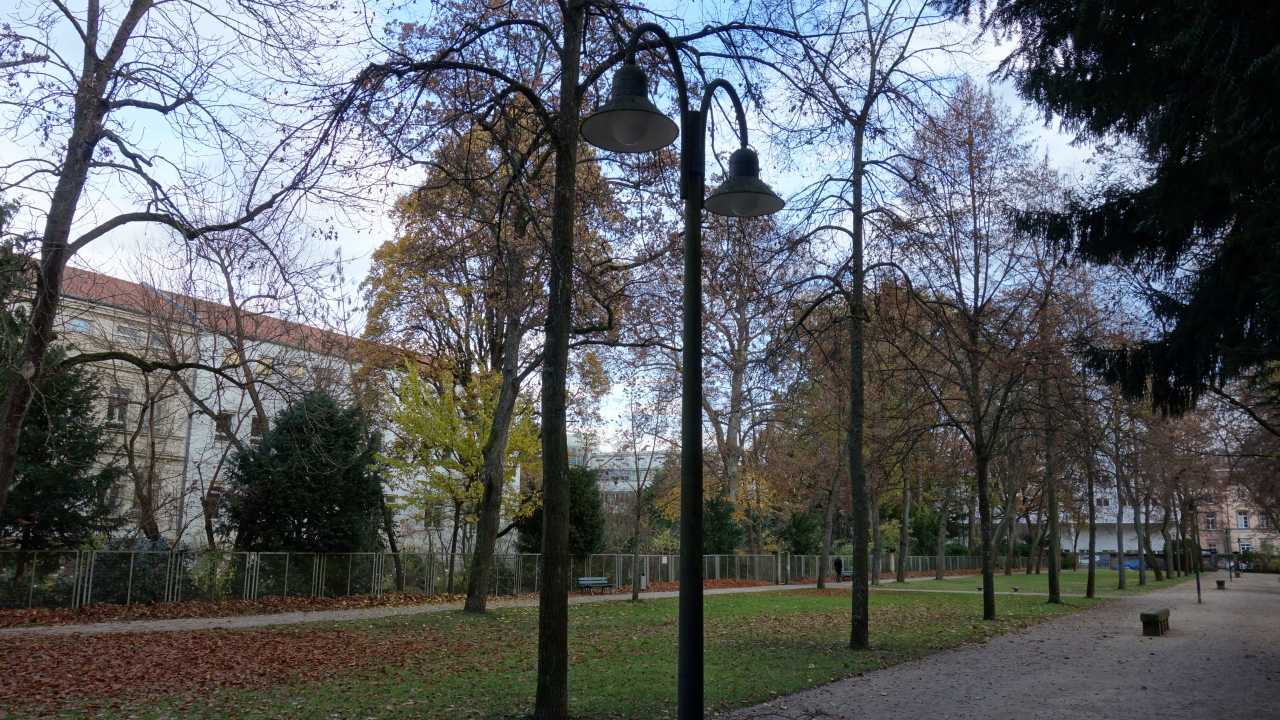
This week the “Task of the Week” focuses on a typical application of the intercept theorems. In particular, it is about the height determination of objects using the interception theorems. This task type can be transferred to many different objects and can therefore be found in further MathCityMap trails. The here described example is about […]

Task of the Week

This week the “Task of the Week” focuses on a typical application of the intercept theorems. In particular, it is about the height determination of objects using the interception theorems. This task type can be transferred to many different objects and can therefore be found in further MathCityMap trails. The here described example is about the height determination of the lanterns in the garden of Erlangen’s castle.


Task: Illumination of the Castle Garden (task number: 709)

Determine the height of the two-armed lamps in the castle garden in the unit cm.


To solve the problem, the second intercept theorem is required. For this purpose, the pupils position themselves a few meters away from the object and fix the object. The intercept theorem can then be applied using the measuring stick. For this, the eye height as well as the distance to the object must be measured. With the arm outstretched, the measuring stick is held so that its tip coincides with the upper end of the lantern. The length of the arm and the scale length, which corresponds to the height of the lantern from the height of the eye, lead to the height of the lantern.

This is a problem-solving situation in which initially missing values have to be determined by a suitable initial situation. The application of the interception theorem can in this case be facilitated through the preparation of a sketch. The task is particularly suited to show students the practical application of the interception theorem and to give a meaningful content to the calculus.

Task of the Week: Weight of the Quai 43

The current “Task of the Week” from the trail “La Doua” in Lyon, France, shows that the MathCityMap project is already implemented internationally. Originally, the task is in French and will be translated for the Analysis. Task: Weight of the Quai 43 (Task Number: 855) The building “Quai 43” has the shape of an ocean […]

Task of the Week

The current “Task of the Week” from the trail “La Doua” in Lyon, France, shows that the MathCityMap project is already implemented internationally. Originally, the task is in French and will be translated for the Analysis.


Task: Weight of the Quai 43 (Task Number: 855)

The building “Quai 43” has the shape of an ocean liner, which is built on ten concrete columns. Determine the weight of the building in tons (reinforced concrete weights 2.5t/m³).


To approximate the weight, it is necessary to calculate the volumes of the individual walls and floor slabs. To do so, the length and width of the building are determined through measuring. Afterwards, the area and the perimeter of the building (idealized as a rectangle) can be calculated. The building includes two floors and therefore the area can be counted three times. To determine the volume of the walls and floor slabs, it is further necessary to determine the height of the building and the thickness of a wall/floor slab. Afterwards, the students can calculate the different volumes through the formula of a cuboid. With help of a multiplication with the density, the approximate weight of the building can be found.

This task is a geometric and architectural problem which includes measuring of lengths as well as determining of field volumes. Especially modelling is in the center as the form of the building is approximated to a cuboid. Afterwards, the students have to consider which walls and floor slabs are relevant for the building’s weight. The task can be used from grade 7, especially in the context of cuboids and compound fields.

This task is only one of many examples which show that the MathCityMap project is an international project which stands out due to its universal use at several locations.